When you click on links to various merchants on this site and make a purchase, this can result in this site earning a commission. Affiliate programs and affiliations include, but are not limited to, the eBay Partner Network.
Hi guys! I didn't want to start a new thread, but the welcome introduction thread doesn't attract attention over time. That's why I decided to start a new "V6 British racing green" thread, where I will gradually add questions/answers to which I may not have found the right answer on the forum. And maybe in time I will be of use to other F-type owners who are looking for answers. Here is a link to a video from my first oil service, which I spent time with this week. When the package with the aluminum conversion kit for replacing all plastic cooling parts arrives, I will decide to dismantle the SC and subsequently replace all weak engine parts, the compressor clutch and dismantle the Sympozer. Despite the attempt of the German JLR service center, I still have a small oil leak on the right side of the timing chain cover, which cost the original owner two unnecessary alternator replacements. Hopefully I will have time to make all the major adjustments by spring...
1. List of essential tools for onboard the F-type
I would like to know what tools/parts you would recommend for a holiday, for example? I would like to go to Sardinia again...
I have already configured the necessary tools for the XK-8 or Tdi Land Rover Defender (and there are quite a few), but with the limited space available in the F-type convertible boot, I really have to save space. I can fix a lot of things myself... but it's just not possible without a wrench. What would you recommend? Thanks for the ideas and your own experience.
2. Is that okay?
I saw this cable/line/bowden when changing the oil in AT. According to the JLR part number it should be the Keyless Vehicle Module / RFA (Remote Control). I'm a little scared that it almost touches the cardan shaft... It has free movement. Is this correct or is there a mistake somewhere?
Thank you very much for your observations.
Last edited by Cyrilmoto; Jan 15, 2026 at 12:00 PM.
The line drawings you have are for a vintage Jaguar E type.. (series 1 @1961 through 68 or series 2@ 1968-71) and probably not needed for a modern Jaguar...
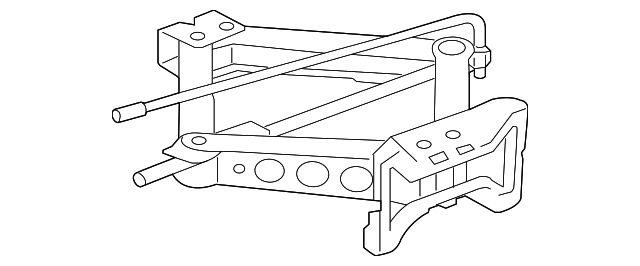
1. The F takes its own specialized (for the most part) jack. The car comes with a bottle of white sealant and an air compressor that is supposed to push the sealant in to the problem tire to seal it and hopefully get you to a repair facility. Often the tire sealant has passed its useful date and you then should get a replacement. Amazon has a universal tire sealant (Airman 450 ML unibottle) that fits perfectly in the same foam spot in my 2017 coupe. Besides buying the F jack, I purchased the wheel lug nut socket and a breaker bar that would be needed to remove a wheel. There is ample space in the boot/trunk to store all this.
2. carry fluids that may be needed.. Spec coolant, maybe spec brake fluid and also a good fire extinguisher with EN3-7 or EN3-8 ratings.
3. perhaps some extra fuses in a variety of amperages.
4. Read other threads to decide on buying a OBD reader.. if the car presents with a check engine light, the reader may be able to guide you as to what is going on with the car, and if it is safe to continue driving.
5. A tow/rescue service membership. It may not be safe to try to fix the car where it is... get it and you to a better location.
I'm sure there will be other owners respond, who have done long distance drives in an F and can suggest additional tools/parts.
Thanks for your insights gentlemen.
I have been driving Land Rovers and X100s for many years, and I use Mongoose (for X100), Aircarsoft JLR, Dashcommand and Cars Scanner diagnostics).
I carry a small mobile workshop and spare parts as needed.
But I don't have that much space in the trunk of the F-type, so I'm looking for inspiration for what is really necessary.
Thank you very much for your advice! I immediately ordered the Airman Unibottle 450 set, also a tow hook (20 Eur) it wasn't in the car.
I have a fire extinguisher,
I will monitor the fluids and take them with me if necessary.
I will only take simple tools - a screwdriver, battery contact wrenches for resetting after diagnostics - it never sleeps.
I haven't found a small wheel nut wrench, a jack yet. On the Defender I used a special air bag connected to the exhaust - it lifted the car without any problems. But it won't fit here.
I will read the forum again and maybe I will discover other ideas.
If possible, I will repair the car myself.
I don't have a warranty on my F-type and I don't have accident, theft or breakdown insurance. It's very expensive here.
Now I'm going to replace the cooling pipes and e.t.c.
There is also a holder for the tow hook as well if you are interested. It is hard to track down as on the parts diagrams it is listed as "foam block". It is literally a block of Styrofoam. The part number for the coupe is T2R13381. It goes next to the battery. I am not sure if it is the same part number for the vert. Maybe someone with a vert can chime in?
4. Read other threads to decide on buying a OBD reader.. if the car presents with a check engine light, the reader may be able to guide you as to what is going on with the car, and if it is safe to continue driving.
You made reference to resetting the car if it won't sleep, but I'll post the longer explanation for those that
Do not leave anything plugged into the OBD port. After anything is connected to the OBD port -- emissions check, dealer visit, etc -- disconnect the battery for at least 10 seconds, to reset the car. If you do not, the body control module will not put the car to sleep and it will drain the battery. You can verify whether the car is asleep by closing the door and coming back in about 15 minutes without the key. If the red triangle on the hazard button is still illuminated, the car is awake and will not go to sleep until you reset it. It takes a couple of days on a good, fully charged battery before you start getting a low battery warning on the dash when you get in the car. At four to five days, you will have completely discharged the battery. You will need a charger than can handle a completely dead AGM battery and trickle charge it back to the point where a normal charger cycle works.
This is a bug in the firmware on the body control module. Jaguar hasn't fixed it and based on the rather flowery commentary the last time I chatted with my service writer and the dealership, it won't ever be fixed and it causes no end of problems, even for the dealership.
As far as what to carry in the car? Tow hook, OBD reader, and air pump are all I carry. I don't bother with fluids on the theory that if fluids are good when I leave, and something goes wrong while driving, there is a 99% chance that I won't be able to add fluids to limp home -- cooling line splits, for example. As others have noted, an OBD reader gives you an idea of whether a CEL is an pull over and wait for a tow or reseat the fuel cap and drive on kind of problem. A tire problem, that results in a leak fast enough that you can't pump it up and drive somewhere to get it checked, probably isn't going to be helped by sealant and using sealant is guaranteed to result in buy a new tire (probably two) and a full TPM module. Anything else is going to result in use of the tow hook to load it on a flatbed and get it home or to a shop.
That said, I live in a major metro area and don't regularly drive my F-Type to places where it would be hard to get service. If I live way out in West Texas where it's 100 miles to the nearest town, I might approach things differently.
We carry a tire plug kit in our 'Vert. It is stored 'out of sight' below the removable trunk floor panel.
Murphy's Law: by being prepared, we have never needed to use it.
What's the old joke? "All the tools you need are a working cell phone and an AAA card!"
++++++++++++
Does anyone else store an umbrella in the elastic straps in the boot?
I also carry a plug kit as well as the standard sealant and compressor. However, plugging a tire while its on the car is difficult at best on a front wheel and nearly impossible on a rear wheel. Therefore, on longer drives away from home and into more remote areas, I also bring a 19mm plastic-sleeved socket, a 1/2" breaker bar, and this jack:
Sure it takes some space (especially in the vert) but being able to get the tire off the car to either plug it or bring it to a shop to replace/repair is priceless. Plus, the car is so low that most normal jacks won't work (especially if the car has a flat which makes it even lower still.
I drive with the peace of mind knowing that because I have all that I will never get a flat.
Last edited by Thunder Dump; Jan 30, 2026 at 08:21 PM.
Y
Do not leave anything plugged into the OBD port. After anything is connected to the OBD port -- emissions check, dealer visit, etc -- disconnect the battery for at least 10 seconds, to reset the car. If you do not, the body control module will not put the car to sleep and it will drain the battery. You can verify whether the car is asleep by closing the door and coming back in about 15 minutes without the key. If the red triangle on the hazard button is still illuminated, the car is awake and will not go to sleep until you reset it.
I'd do the check before the battery disconnect since not all things plugged into the OBD port will trigger the drain. None of my dealer (or indie) visits have triggered the drain, so they seem to know what they're doing.
Yes, do look for the jack ThunderDump posted. I did find one and tested it out. I had a slow leak in a tire, shop said they could get to it faster if I just brought the wheel in. Don't have a lift anymore, so the jack worked perfectly. The photo showing the jack is a bit blurry, but it measured out to about 3.5 inches. If the car has been lowered, that IS a concern for using this type of jack.
There are little arrow'notches' in the underside of the car to show where the jack should be placed.
This link has some fairly decent photos, go to POST # 20
My 2014 F-Type came with a space-saver spare as standard so it also came with the same jack as Valerie shows.
I have used it two or three times on the side of the road and it worked perfectly OK (albeit slow and tedious) even with VAP lowering springs.
But the OEM wheel brace is pretty useless, it's too short to get decent leverage and the socket slips easily on the stock crappy two piece wheel nuts, so one of the first things I did was invest in a collapsible 1/2" breaker bar and a plastic coated 19 mm socket which I store in the rear cubby along with a range of basic tools and equipment.
Also another thing I did early on was to get a set of Gorilla brand one-piece wheel nuts which are waaaay better than the stock nuts and a piece of cake to remove and refit. Also a plug type puncture repair kit, Stop N Go brand, used twice and worked a charm each time, and last but not least a lithium battery tyre inflator (NOCO brand).
With these basics you can fairly easily fix a simple nail/screw puncture on the side of the road yourself.
For those with no spare or jack I would create your own kit - scissor jack, plug kit, compressor, breaker bar and socket, tarp to lay on, and LED headlamp. I also have some basic tools, multimeter, and duct tape as well in case other issues arise. Yes it will take up space in the small trunk but being able to address a flat on your own is peace of mind.
My flats occurred late at night and in dangerous situations. Not having a kit and not having the tow truck show up when expected on the AAA app made me vow to never be put in that position again.
You can plug a tire without removing the wheel f you move the car enough to get the right angle to push the plug in. The key with a DIY kit is to do a dry run to make sure everything flows, as you will want to do this quickly when the real thing happens.
.... Also a plug type puncture repair kit, Stop N Go brand, used twice and worked a charm each time, and last but not least a lithium battery tyre inflator (NOCO brand).
With these basics you can fairly easily fix a simple nail/screw puncture on the side of the road yourself.
I got a screw in my left rear tyre and tried to fix it with the Stop N Go kit but couldn't get the screw out! It was deeply embedded and not enough showing to get a good grip on it. So, two new tyres instead, and the pressures don't need topping up every couple of days!



 Questions and answers-my 2017 V6 Convertible