When you click on links to various merchants on this site and make a purchase, this can result in this site earning a commission. Affiliate programs and affiliations include, but are not limited to, the eBay Partner Network.
4 days ago, after a P0301 fault code, I changed the cylinder 1 coil (replaced with a NGK). I got rid of the code and during 2 days, the car ran fine (but to be honest I'm not self convinced of that. A idle, with P engaged, there is a kind of very little shaking and I'm pretty sure it was not the case before the replacement).
Today, I noticed that at full load, I have huge misfires. I don't know exactly how can I name this behavior : misfire or a fuel-cut. Let say the car is stopped, you engage full throttle, the rpm rise to 2k, there is a kind of fuel-cut, then the power come back, the rpm rise to 3k, there another kind of fuel cut and so one. It behaves exactly like if the traction control tried to stop a wheelspin. But there was not wheelspin... I'm sure this behavior was not present 2 days ago.
I tried several things to try to isolate the problem:
- de-activate the TCS: no success;
- block the gearbox on 2: no success;
- fill the tank with 98RON fuel instead of E10: no success.
The MIL is off, there is no DTC. The fuel trim is strange but I don't know if it's related: when idle, the LTFT is approx +16% and the STFT is approx -9% ...I don't understand these values, I was thinking that instead of +16/-9 I would have 0/+7...
The car is going to 6,5k rpm with mid load or low load. The problem seems to disappear after 4,5rpm.
Except the weird fuel trim values, the values in the data-stream are correct when idle: fuel pressure @350kpa, MAF @4g/s... I will try to graph them when the problem occur but they don't seem to change a lot... May be it's a resolution problem and my obd2 reader is not able to capture bad values because they are too ephemerals ?
An idea of what can be this problem? Another tests I could lead?
Thanks,
Laurent
Last edited by essomba421; Feb 14, 2019 at 05:03 PM.
Reason: typo
4 days ago, after a P0301 fault code, I changed the cylinder 1 coil (replaced with a NGK). I got rid of the code and during 2 days, the car ran fine (but to be honest I'm not self convinced of that. A idle, with P engaged, there is a kind of very little shaking and I'm pretty sure it was not the case before the replacement).
Today, I noticed that at full load, I have huge misfires...
Hmm, your description offers one big clue. After replacing the coil, you then had new symptoms. That would suggest the new coil was bad from stock. Rare, but it happens.
Before entering FullPanicMode™, I'd suggest gambling on another coil. Don't get the same brand from the same source, in case that vendor had a bad batch on the shelf. Been there, done that, got the T-shirt.
The other possibility is something else was disturbed during the replacement. Carefully inspect anything in the area in case a connector wasn't fully seated, a vacuum line got left off, etc.
Recommend you get the fuel trims under control before anything else. In the old days this engine would be fixed already but modern day combustion calculates tight requirements for air metering so any vacuum leak can cause issues. Search this forum for 'Fuel Trim Primer' to get an idea of the scope and people having similar issues. Have a smoke test done before replacing more parts.
If your car was surging at idle the vacuum leak would be easier to call, but the higher RPM complicates it. My guess is unmetered air entering intake, fuel trim compensating by dumping more fuel, O2 sensor cutting fuel due to very rich condition. I am just learning as problems come up and someone with more experience can correct as appropriate.
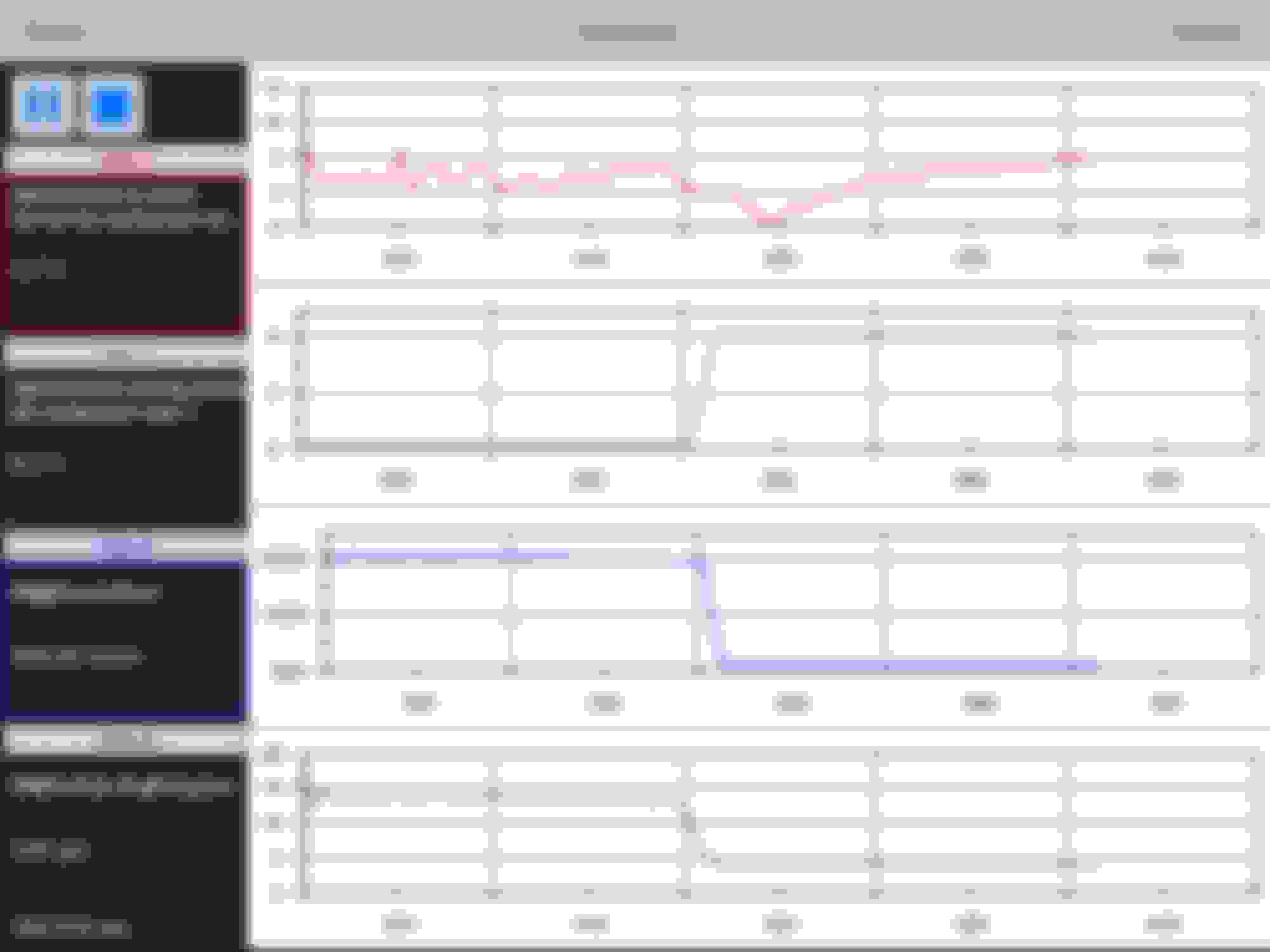
Red curve : STFT Green curve : LTFT Blue curve : rpm Purple curve : Calculated load
As expected, STFT is 0.0 and LTFT is blocked at a value. Do you know which value is selected? Is there somewhere stored a LTFT for high load?
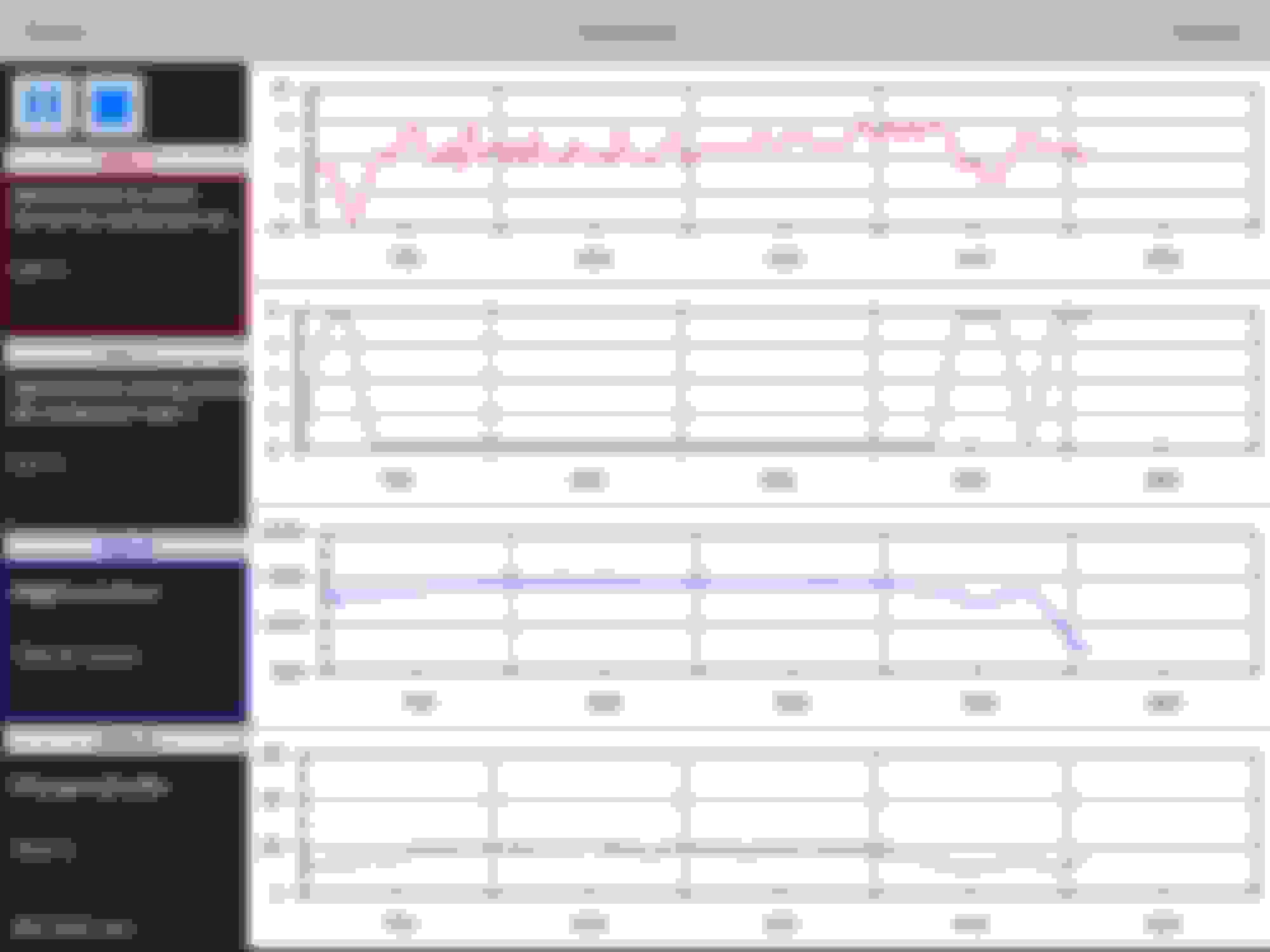
Here another test with the cruise control engaged @50 km/h (31mph):
Red curve : STFT Green curve : LTFT Blue curve : rpm Purple curve : Calculated load
The LTFT decrease near -2% while the STFT oscillated between 0 and 5%. I think it's normal. What do you think about these values ? Why the LTFT is not set to 0% and the ECU just plays with STFT?
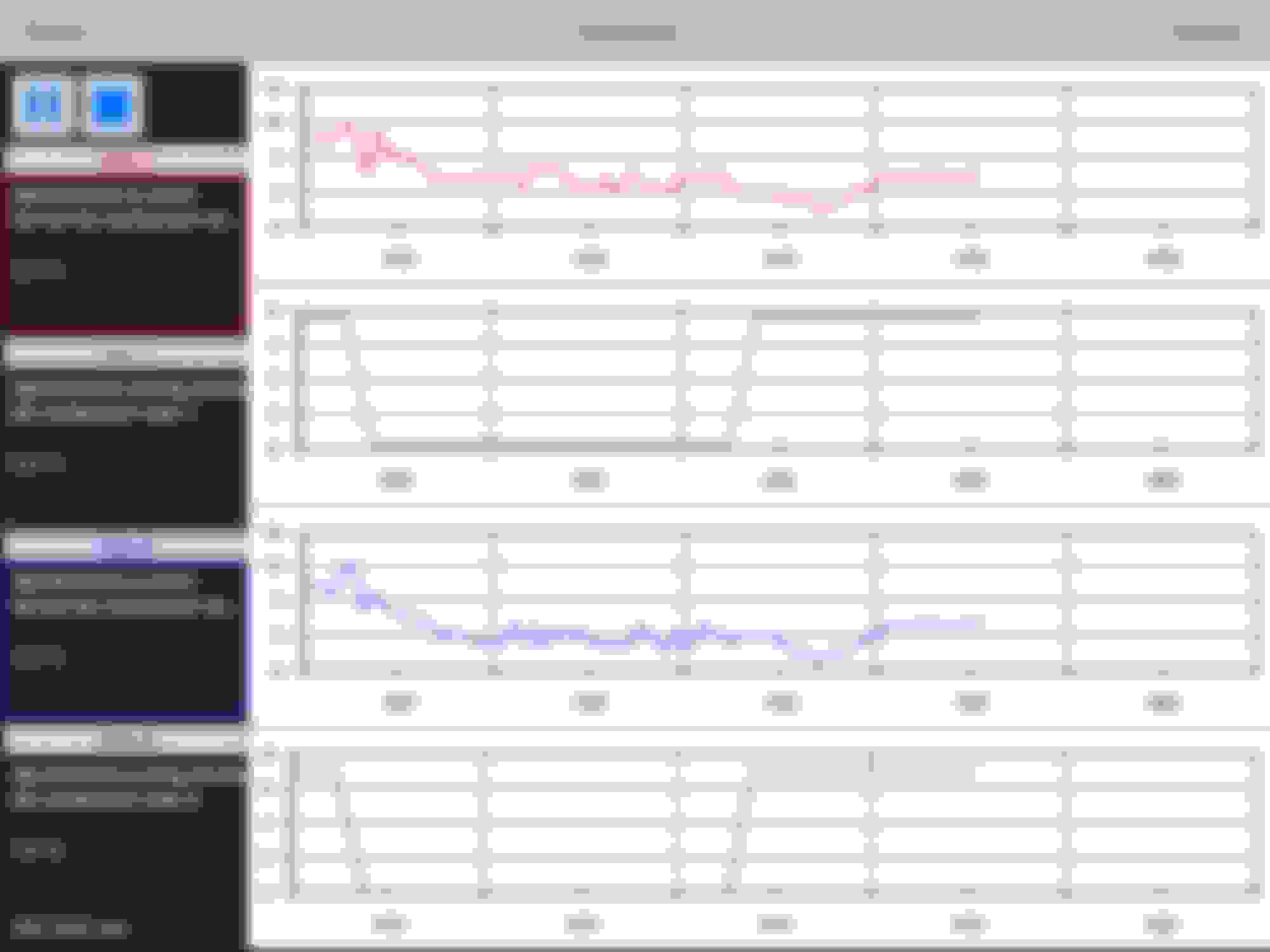
Here the STFT and LFTF for the 2 banks à@idle, @2,5k rpm and idle. The values are similar but I guess they are a little bit too high. Red curve : STFT bank 1 Green curve : LTFT bank 1 Blue curve : STFT bank 2 Purple curve : LTFT bank 2
What do you think about these valus ? Another vacuum leak ?
To run the engine across a wide range of situations, the PCM stores many LTFT (per bank) values. They're typically stored depending on things like Load and Rpm - a quite big table of values. It tries to get STFT fairly close to zero at each of those and where it finds it needs STFT quite far from zero it will change the stored LTFT (i.e. STFT migrates into LTFT so as to make STFT nearer zero).
Bear in mind that small LTFTs (say within 5 of zero but you could argue 3 of zero or 7 from zero) is normal.
A typical catalytic converter complicates this because it needs to store O2 briefly and release it and keep cycling like that - so you can expect STFT to be swinging around to make that happen.
A further complication is that at WOT (wide open throttle) it's common to run OL (open loop) and then the PCM aims to run richer than usual (to protect the engine from any risk of lean - which is an engine killer).
They're all cleared if you disconnect the battery but so also are the OBD monitors. With a car without faults (that means without ones you don't know about as well as any you do!) the monitors will set again quite quickly, but you can get a sort of Catch-22 where there's some fault you perhaps didn't know about which stops the monitors setting and also can't be flagged by any codes because the PCM isn't sure what to trust.
It's fairly rare but I don't like taking chances - you may be happier...
Another question: at WOT, the PCM switch to OL. The STFT is set to 0% but if I remember well I read that on some cars, a LTFT value is used (which make sens to take into account the injectors fatigue for instance). But on my graph, the LTFT is set to 0 at WOT. Does it mean that this is the value my PCM is using @WOT or does it mean that LTFT is ignored as well as the STFT at WOT on these cars ?
Thanks!
Laurent
Last edited by essomba421; Feb 15, 2019 at 02:00 PM.
Reason: typo
I don't know for sure but I suspect it just uses rich yet reports the values as 0 (it's allowed by OBD I believe). It trusts the MAF (and perhaps MAP) and from that can set the AFR to rich.
I look at the workshop manual. The injection mechanisms are not described. It's not so easy to find fine grain information in this area (concerning a precise model!)
Hmm, your description offers one big clue. After replacing the coil, you then had new symptoms. That would suggest the new coil was bad from stock. Rare, but it happens.
Before entering FullPanicMode™, I'd suggest gambling on another coil. Don't get the same brand from the same source, in case that vendor had a bad batch on the shelf. Been there, done that, got the T-shirt.
The other possibility is something else was disturbed during the replacement. Carefully inspect anything in the area in case a connector wasn't fully seated, a vacuum line got left off, etc.
do you know the right Spark plugs gap for 2004 Jaguar XJ8 ?
I look at the workshop manual. The injection mechanisms are not described. It's not so easy to find fine grain information in this area (concerning a precise model!)
The workshop manual is typically just remove/install instructions. You may be able to find more details in one of the training guides, courtesy of Gus:
The layout of the training guides can get a little confusing, as some cover more than one engine or vehicle model. Make sure any info you find is applicable to your specific application.




 V8 4.2 NA misfire on high load