When you click on links to various merchants on this site and make a purchase, this can result in this site earning a commission. Affiliate programs and affiliations include, but are not limited to, the eBay Partner Network.
My 2c worth.
I had VAP springs fitted some 2.5 years ago now.
I went with VAP because although the Eibachs and H&Rs were cheaper and promised a better (lower) drop/look, my garage entrance has a big dip and the parking stops around here are front splitter killers at the best of times, so I didn't want to go too low.
I also liked the idea of the advertised progressive spring rates.
I've been fairly happy with the look although a bit lower would be nice, and the handling was improved (flatter and less body roll through the twisties).
BUT - it pogoes (bounces) a LOT when encountering dips and yumps in the road at anything over "normal" speed, way more than with the stock springs and Dynamic setting doesn't help, so much so that it feels like I am almost losing control and I need to slow right down.
Interesting. I came out of an XKR on 20's (with Dunlops) and dont think that the ride in my F Type on 21's is any harder, once the seat got some flex in it. Not knocking the VAP springs though, if I didnt scrape the plastic thing every few weeks I'd look at them.
My 2c worth.
I had VAP springs fitted some 2.5 years ago now.
I went with VAP because although the Eibachs and H&Rs were cheaper and promised a better (lower) drop/look, my garage entrance has a big dip and the parking stops around here are front splitter killers at the best of times, so I didn't want to go too low.
I also liked the idea of the advertised progressive spring rates.
I've been fairly happy with the look although a bit lower would be nice, and the handling was improved (flatter and less body roll through the twisties).
BUT - it pogoes (bounces) a LOT when encountering dips and yumps in the road at anything over "normal" speed, way more than with the stock springs and Dynamic setting doesn't help, so much so that it feels like I am almost losing control and I need to slow right down.
I had the pogo going on with the H&Rs as well until I reduced the unsprung weight. The pogoing has now disappeared. The issue could be resolved for any wheel/rotor combo if we could find a real adjustable shock as opposed to the OEM 2-way. ( sloppy, and slightly less sloppy)
Progressive springs in the past, were less than ideal for performance/track driving. Since the tension in the spring isn't constant, it would make the behavior of the weight of the vehicle which is less than ideal. However, for street driving, they can provide a more comfortable ride while not under load. I'm sure the technology has gotten better but these are some things to consider when picking a spring upgrade (i.e. think about your primary use).
Progressive springs in the past, were less than ideal for performance/track driving. Since the tension in the spring isn't constant, it would make the behavior of the weight of the vehicle which is less than ideal. However, for street driving, they can provide a more comfortable ride while not under load. I'm sure the technology has gotten better but these are some things to consider when picking a spring upgrade (i.e. think about your primary use).
That was conventional wisdom when I was racing motorcycles. With spring rate changing by position and damping rates not, there's really only one position where damping is ideal. I'll eventually get my springs installed (VAP progressive rate). Until then, I can only speculate and weigh the reports here. I'm sure technology has improved; in this case, the dampers. Quality dampers make all the difference. These seem decent, but I haven't tracked the car yet.
Progressive springs in the past, were less than ideal ... Since the tension in the spring isn't constant, it would make the behavior ... less than ideal.
A factory Lotus suspension expert told me the same thing.
For you folks with Dynamic Suspensions on your F-Types,
Could some 'tweak' to the shock settings help? (I haven't ever seen this mentioned, so I don't know if it is possible)
A factory Lotus suspension expert told me the same thing.
For you folks with Dynamic Suspensions on your F-Types,
Could some 'tweak' to the shock settings help? (I haven't ever seen this mentioned, so I don't know if it is possible)
An active suspension system is supposed to constantly vary the damping settings as conditions vary. Adjustable damping coil-over systems are available (KW for example) at a price, and I considered these, having suspected the F-Type’s problem was too much compression damping. But a change of spring has given the lie to this - the dynamic performance with VAP springs is extraordinary. The suspension is still stiff, but it absorbs bumps much more effectively whilst the lower stance, particularly the lower rear end, provides improved stability in high-speed bends.
Given the fact that F1 technology has spearheaded active variable suspension technology, I don’t see why a variable-rate spring should be a problem in a sports or racing context...
Given the fact that F1 technology has spearheaded active variable suspension technology, I don’t see why a variable-rate spring should be a problem in a sports or racing context...
Price.. You can't serious believe that you are going to get F1 performance at consumer prices? Equating F1 technology to what we have at our disposal is a serious stretch.
It really depends on an owners goals. I've raced and tracked cars with linear springs and with progressive springs. Unfortunately, not the same cars and/or dampers to do back to back comparisons so it's not directly apples to apples. Racers still prefer linear springs and that's what the majority use today for dedicated racing/track cars. Granted, no one here uses an F-Type as a dedicated racing/track car so progressive springs won't be a concern. Some people who are more sensitive to 'suspension feel' may notice scenarios like OzXFR mentioned above. Those who are not overly sensitive may never notice. For me, I notice when one tire is .5 psi less than others so it does matter to me. But I also understand that I'm not the typical F-Type owner.
Price.. You can't serious believe that you are going to get F1 performance at consumer prices? Equating F1 technology to what we have at our disposal is a serious stretch.
It really depends on an owners goals. I've raced and tracked cars with linear springs and with progressive springs. Unfortunately, not the same cars and/or dampers to do back to back comparisons so it's not directly apples to apples. Racers still prefer linear springs and that's what the majority use today for dedicated racing/track cars. Granted, no one here uses an F-Type as a dedicated racing/track car so progressive springs won't be a concern. Some people who are more sensitive to 'suspension feel' may notice scenarios like OzXFR mentioned above. Those who are not overly sensitive may never notice. For me, I notice when one tire is .5 psi less than others so it does matter to me. But I also understand that I'm not the typical F-Type owner.
I mentioned F1 simply as reference to the principle of active suspensions. Your points about track experiences are interesting and well taken. I too am very sensitive to handling variables, having learned a lot from racing motorcycles and modifying car suspensions - adjustments to the F-Type’s camber and particularly its caster have made significant improvements.
My main point has always been that sports cars don’t need hard suspensions, as Porsche and Lotus demonstrate. And the handling of the F-Type is improved (I think) by a lower stance and better springs. Implicit in this is the shallower caster angle caused by the slightly lowered rear end.
I suppose that JLR could have licensed the magnetorheological damper technology, but instead went for a two position valve. Having rebuilt motorcycle shocks and forks before, I gave a passing thought to an oil change in the F-type's dampers. It really was just a passing thought though, as they're not the weak link at present. Once I get to installing my springs I may change my mind. As a side note, I need to measure current clearance as they've just added a new speed bump between home and the rest of the world.
Anyway, there is an abundance of "weights" of oil available in the motorcycling world, so it would be possible to tune the shocks to the spring. If it were a dedicated track car and I had the resources, I'd consider it.
My previous car had a slight deficiency in rebound damping that gave an extra half oscillation on rolling freeway bumps, so I went with Bilsteins. I think I was only at 5K miles on a new car when I did that. I got a little harshness on expansion joints, but anything bigger they absorbed far better than the stock dampers did. I'm sure the stockers would have gotten bouncier with age.
My one significant criticism of the F-Type (mine is a V6S) is its very stiff suspension, in both Default and Dynamic modes. Particularly at lower speeds, it crashes over pot holes, broken and washboard surfaces and if the seat back is reclined to any degree, the experience can be like being repeatedly punched in the back - it's highly uncomfortable. But I've found a cure.
Velocity AP lowering springs, available from davidapplebyengineering.com, are advertised as being made from tapered wire, which permits more progressive absorption of bumps, and the Velocity AP website claims this "may" improve ride quality. I've just had some fitted, and I can confirm they most certainly do. For the first time I can make progress over broken and pot-holed country roads with the suspension absorbing the irregularities and the car flowing over them rather than crashing into them. In both Default and Dynamic modes, the car is now more comfortable than even my previous XK. Characteristic F-Type steering precision is retained, and stability in high speed corners seems improved.
Lotus and Porsche prove that sports cars don't need to be uncomfortably hard - Velocity AP springs show that an F-Type doesn't either. Sadly its an expensive modification at around £1000 fitted, but if you want to keep an F-Type long-term, I think it's worth the investment.
Hi, I feel that the ride on my 2017 F-Type R coupe is extremely harsh, just as you mentioned on all washboard or irregular roads, it is quite jarring. And like you I do not feel any change from dynamic to comfort. Like you I have fitted the VAP springs which do help a little, but nowhere near enough. Have you done any more to fix this?
Can you email me at stefandwornik@msn.com
My one significant criticism of the F-Type (mine is a V6S) is its very stiff suspension, in both Default and Dynamic modes. Particularly at lower speeds, it crashes over pot holes, broken and washboard surfaces and if the seat back is reclined to any degree, the experience can be like being repeatedly punched in the back - it's highly uncomfortable. But I've found a cure.
Velocity AP lowering springs, available from davidapplebyengineering.com, are advertised as being made from tapered wire, which permits more progressive absorption of bumps, and the Velocity AP website claims this "may" improve ride quality. I've just had some fitted, and I can confirm they most certainly do. For the first time I can make progress over broken and pot-holed country roads with the suspension absorbing the irregularities and the car flowing over them rather than crashing into them. In both Default and Dynamic modes, the car is now more comfortable than even my previous XK. Characteristic F-Type steering precision is retained, and stability in high speed corners seems improved.
Lotus and Porsche prove that sports cars don't need to be uncomfortably hard - Velocity AP springs show that an F-Type doesn't either. Sadly its an expensive modification at around £1000 fitted, but if you want to keep an F-Type long-term, I think it's worth the investment.
unfortunately you bought the 380bhp V6 version because it has higher spec and slightly more power than the base model that i own which has 335 net bhp,.however, the suspension on my late 2016 6 speed manual is superb, it glides over speed bumps with ease and absorbs them very nicely and that makes me happy and makes a much better drive, my Jag has 18 inch rims all round, 245/45×18 on the front and 275/40×18 on the rear, this makes the ride more comfortable without upsetting the handling, low profile 40 tyres are always going to be hard over bumps and potholes..apart from fitting slightly higher or wider tyres to your 380 you aren't going to improve the ride much better, i tried doing this to my other car that has lower Eibach springs as well and KYB gas shocks, a Alfa Romeo Guilietta but it only makes a slight difference, try test driving an F-Type with 18 inch wheels like mine and sacrificing 40bhp but make sure it has decent spec as my F-Type doesn't have cruise control or full memory seats, however, it is still a truly fabulous car in Firesand orange, very rare.
Last edited by pahar911; Dec 13, 2025 at 07:39 AM.
Hi, I feel that the ride on my 2017 F-Type R coupe is extremely harsh, just as you mentioned on all washboard or irregular roads, it is quite jarring. And like you I do not feel any change from dynamic to comfort. Like you I have fitted the VAP springs which do help a little, but nowhere near enough. Have you done any more to fix this?
Can you email me at stefandwornik@msn.com
It is just how the stock suspension is. Lowering springs btw do not improve the ride, even if progressive. Eventually the progressive windings need to stiffen up to the point where they get very firm, or you get into your bump stops which is even harsher. Couple of ideas:
1) get quality coilovers like kw v3, and have compression and rebound set up correctly for street use. Here you can set the ride height and still keep the damping matched to the spring rate. Although I am unclear if KWs are available to fit all models of F-Type.
2) get lighter forged rims. Stock F-Type rims are very heavy, decreasing unsprung weight will allow the suspension to control the wheels better, and likely lead to a less jarring ride (and better handling). You can also take this further with lighter brakes.
It is just how the stock suspension is. Lowering springs btw do not improve the ride, even if progressive. Eventually the progressive windings need to stiffen up to the point where they get very firm, or you get into your bump stops which is even harsher. Couple of ideas:
1) get quality coilovers like kw v3, and have compression and rebound set up correctly for street use. Here you can set the ride height and still keep the damping matched to the spring rate. Although I am unclear if KWs are available to fit all models of F-Type.
2) get lighter forged rims. Stock F-Type rims are very heavy, decreasing unsprung weight will allow the suspension to control the wheels better, and likely lead to a less jarring ride (and better handling). You can also take this further with lighter brakes.
....Lighter wheels are a good idea but can be prone to cracking on the inside edge because of excessive potholes in Britain that are never repaired properly, Jaguar have always made strong heavy cars even though the F-Type is completely made from aluminium alloy, remember also that thick wide tyres will make the wheels heavier, aluminium alloy brake calipers as on my other car, a Alfa Romeo Guilietta Speciale will make a big difference but they will be very expensive for an F-Type, fit genuine lightweight Jaguar wheels otherwise your insurance company will regard your Jaguar as modified but don't tell then either.
Hi, I feel that the ride on my 2017 F-Type R coupe is extremely harsh, just as you mentioned on all washboard or irregular roads, it is quite jarring. And like you I do not feel any change from dynamic to comfort. Like you I have fitted the VAP springs which do help a little, but nowhere near enough. Have you done any more to fix this?
Can you email me at stefandwornik@msn.com
There is a definite change in the suspension in my 2018 R-Dynamic from dynamic to comfort. Are you sure the adaptive suspension is working? I am not sure how you can check that, but the obvious easy thing to check would be fuses. I am sure there is a fuse for the adaptive suspension.
....Lighter wheels are a good idea but can be prone to cracking on the inside edge because of excessive potholes in Britain that are never repaired properly, Jaguar have always made strong heavy cars even though the F-Type is completely made from aluminium alloy, remember also that thick wide tyres will make the wheels heavier, aluminium alloy brake calipers as on my other car, a Alfa Romeo Guilietta Speciale will make a big difference but they will be very expensive for an F-Type, fit genuine lightweight Jaguar wheels otherwise your insurance company will regard your Jaguar as modified but don't tell then either.
Nah. Quality lightweight *billet forged* rims do not crack as you say, and are pretty big bang for the buck if you are looking for improved handling and better ride. Technically, if you hit something hard enough, even most factory F-Type rims will crack as they are just very thick and heavy cast rims - quality forged rims usually bend but won't crack. I think VAP has a set of lightweight front and rear brakes for a bit over $2000 usd. I have hear British backroads are notoriously terrible, thank God we live in the US! Cheers
It is just how the stock suspension is. Lowering springs btw do not improve the ride, even if progressive. Eventually the progressive windings need to stiffen up to the point where they get very firm, or you get into your bump stops which is even harsher. Couple of ideas:
1) get quality coilovers like kw v3, and have compression and rebound set up correctly for street use. Here you can set the ride height and still keep the damping matched to the spring rate. Although I am unclear if KWs are available to fit all models of F-Type.
2) get lighter forged rims. Stock F-Type rims are very heavy, decreasing un-sprung weight will allow the suspension to control the wheels better, and likely lead to a less jarring ride (and better handling). You can also take this further with lighter brakes.
Here are my thoughts on your post.....1st let me clarify, when I'm talking about Harsh ride, I'm talking about going down the road.....normal road, either in city or country or motorway, and these conditions are where my car does not ride the bumps well and jiggles a lot.....I have a lot of small bump vertical reaction. And I'm talking about road bumps that are 1/4" to 3/4" which is about 90% of what we drive on.
Your 1st comment about Lowering springs btw do not improve the ride, even if progressive. is completely wrong....just the facts. The whole idea of progressive springs is that they ARE softer on the first 1-2" of wheel travel....that's what they are designed to do. And yes, they do get into a stiffer rate, WHEN the wheel is compressed a lot more, like when you are cornering fast and need the support. Progressive rate springs will make the ride quality soft for most of your driving.......one caveat, if you spend all your time on the race track, then defiantly, you do NOT want progressive springs, but that is so far removed from what 98% of F-Type owners do.
Next, you talk about contacting the bump rubbers and that can make the ride harsh. The normal available shock travel in the compression direction, from the starting ride height when you just get into your car, to the point that the bump rubber starts contact is about 2.0" of shock travel (and they have about 3" range when the shock when opening). By simple math and measuring the lower wishbone at 3 points......pivot, shock bolt and center of tire contact patch, you will see that the motion ratio is 2.57. This means that for 1" of shock travel, the wheel will move 2.57". So we have 2.57 x 2.0 = 5.12" wheel travel before the bump rubber even STARTS contact, then it is able to compress (at a steep raising rate) for another 1.5" (the bump rubber is 2.5" long). The next time I go over a 5" bump, will be the very first time in my cars entire life. The bump rubber is designed to cushion the shock body to chassis impact in severe conditions, or in fast cornering, like on a race track.
Your comment...kw v3, and have compression and rebound set up correctly for street use is EXACTLY my point......set-up correctly for street use !! The Jag is designed by a lot of people who spec the heavy wheels and brakes, and they have not made the shock valving and spring rate match these heavy wheels & brakes.....think about a 7000 pound Roll Royce that has 24" wheels & tires, and Huge brakes....I bet they are double the weight of what we have on the F-Type, but that car doesn't have a harsh ride....the engineers matched everything.
And your final comments about sourcing lighter wheels and brakes is 100% correct....YES, lighter is better. Why do you suspect that I still have the heavy stock wheels, I don't.
The whole point of my original post was agreeing that the ride quality is harsh. I dislike it when somebody makes a bunch of comments that are either wrong or very misleading, leaving a lot of less informed readers thinking you are correct.........just the facts
Here are my thoughts on your post.....1st let me clarify, when I'm talking about Harsh ride, I'm talking about going down the road.....normal road, either in city or country or motorway, and these conditions are where my car does not ride the bumps well and jiggles a lot.....I have a lot of small bump vertical reaction. And I'm talking about road bumps that are 1/4" to 3/4" which is about 90% of what we drive on.
Your 1st comment about Lowering springs btw do not improve the ride, even if progressive. is completely wrong....just the facts. The whole idea of progressive springs is that they ARE softer on the first 1-2" of wheel travel....that's what they are designed to do. And yes, they do get into a stiffer rate, WHEN the wheel is compressed a lot more, like when you are cornering fast and need the support. Progressive rate springs will make the ride quality soft for most of your driving.......one caveat, if you spend all your time on the race track, then defiantly, you do NOT want progressive springs, but that is so far removed from what 98% of F-Type owners do.
Next, you talk about contacting the bump rubbers and that can make the ride harsh. The normal available shock travel in the compression direction, from the starting ride height when you just get into your car, to the point that the bump rubber starts contact is about 2.0" of shock travel (and they have about 3" range when the shock when opening). By simple math and measuring the lower wishbone at 3 points......pivot, shock bolt and center of tire contact patch, you will see that the motion ratio is 2.57. This means that for 1" of shock travel, the wheel will move 2.57". So we have 2.57 x 2.0 = 5.12" wheel travel before the bump rubber even STARTS contact, then it is able to compress (at a steep raising rate) for another 1.5" (the bump rubber is 2.5" long). The next time I go over a 5" bump, will be the very first time in my cars entire life. The bump rubber is designed to cushion the shock body to chassis impact in severe conditions, or in fast cornering, like on a race track.
Your comment...kw v3, and have compression and rebound set up correctly for street use is EXACTLY my point......set-up correctly for street use !! The Jag is designed by a lot of people who spec the heavy wheels and brakes, and they have not made the shock valving and spring rate match these heavy wheels & brakes.....think about a 7000 pound Roll Royce that has 24" wheels & tires, and Huge brakes....I bet they are double the weight of what we have on the F-Type, but that car doesn't have a harsh ride....the engineers matched everything.
And your final comments about sourcing lighter wheels and brakes is 100% correct....YES, lighter is better. Why do you suspect that I still have the heavy stock wheels, I don't.
The whole point of my original post was agreeing that the ride quality is harsh. I dislike it when somebody makes a bunch of comments that are either wrong or very misleading, leaving a lot of less informed readers thinking you are correct.........just the facts
Uh... way to wig out man. Trying to help you, and I am not spreading misinformation. Good luck to you, you seem to have al the answers.
P.s. jiggly over little bumps is very likely your progressive rate lowering springs not being an ideal match for your dampers. But right, lets just wig out some more because of all the gross misinformation here lol
All I can say is my 2024 R in comfort mode is perfect, but I am aware that significant changes to the suspension on the newer gen cars has been made, so I guess it makes some sense. Even the sport mode is not horrible, but noticeably harsher, and certainly feels more on rails.
Several on here have made the comment that Michelins allow the sport suspension to ride much nicer than the stock tires. I can’t wait for that down the line when I dump these stock tires.
All I can say is my 2024 R in comfort mode is perfect, but I am aware that significant changes to the suspension on the newer gen cars has been made, so I guess it makes some sense. Even the sport mode is not horrible, but noticeably harsher, and certainly feels more on rails.
Several on here have made the comment that Michelins allow the sport suspension to ride much nicer than the stock tires. I can’t wait for that down the line when I dump these stock tires.
I think I read somewhere they did update the dampers settings and spring rates for the face-lift cars (don't quote me! ). The newer models inherited a lot of the upgrades introduced with the SVR and made the cars feel more refined. Are you on lowering springs? Tires can bring a pretty big change - I am happy with the PS4S's on my car now, although those are the only tires I have run so far.
I am hoping to start a thread on my upgrades to document from my POV the effects of upcoming mods. I.E. before/after with lighter rims, brake upgrade, maybe KW V3's and a few other tweaks to "sharpen the edges" a bit. That or I get complete ADD and get a Lotus.



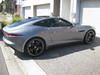






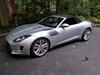




 ). The newer models inherited a lot of the upgrades introduced with the SVR and made the cars feel more refined. Are you on lowering springs? Tires can bring a pretty big change - I am happy with the PS4S's on my car now, although those are the only tires I have run so far.