When you click on links to various merchants on this site and make a purchase, this can result in this site earning a commission. Affiliate programs and affiliations include, but are not limited to, the eBay Partner Network.
Those heads look beautiful! Do you have a color code or other identifier so I could source the paint locally?
No colour code ~ Sorry. Print it out and go to your hardware store and pick a rattle can that is closest in colour. All the paint manufacturers make a metallic blue that is spot on. High temperature paint is not necessary.
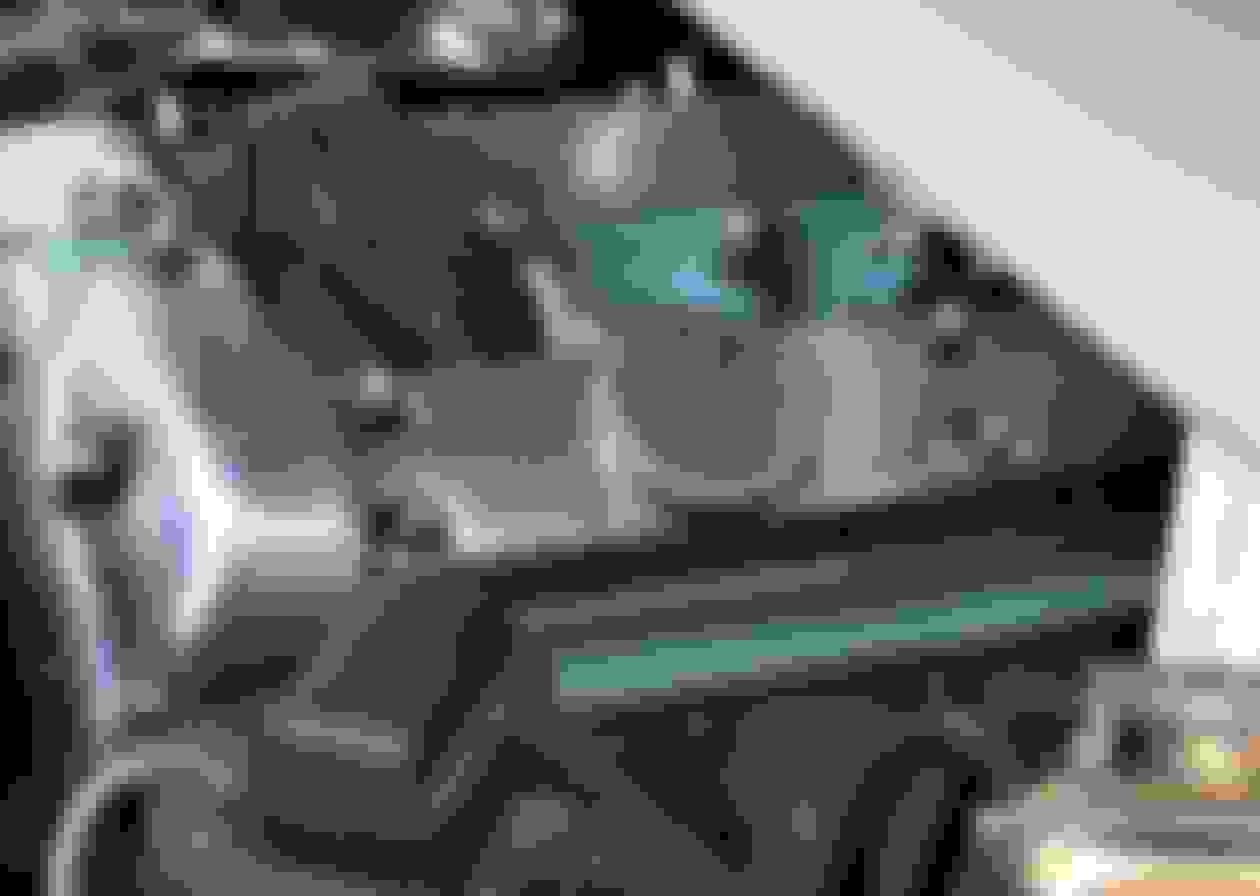
I wonder why the factory painted 3.8 heads blue and the 3.4 duck egg (a light blue that's almost green or a light green that's almost blue)? According to my service and parts books, the two heads are identical (apart from the paint). Some sources have suggested the inlet valves of the 3.4 and 3.8 B type heads are cut at different angles, but that seems unlikely and isn't (as far as I can make sense of them) supported by the parts and service books.
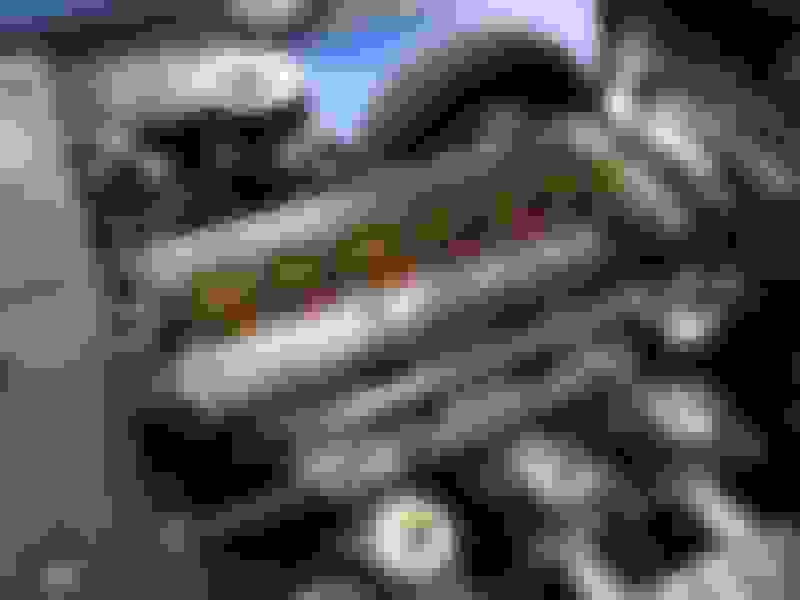
A photo of my 1968 3.4s head painted in Duck Egg Blue. Not the best photo but then it was not taken to specifically show the colour of the head.
George Camp in post #10 stated Jaguar stopped painting the heads in 1967 but did not give a month. My S Type was built Dec 1967 according to my Heritage cert but the Log book stated Sept 1967 and then registered for the road in March 1968. When I stripped the engine although there was not a lot of paint left on the head it was originally painted Duck Egg Blue. From 1968 and the demise of the S Type, Series one E Type, 240 and 340 were there any Jaguars still using the 3.4 and 3.8 version of the XK engine? The 1968 series one XJ6 used the 2.8 and 4.2 versions of the straight six. Even the E Type series 2 from 1968 only used the 4.2.
I think the precise nature of the gold paint changed over the years, but the general intention was always the same. And of course restorers and the suppliers add more variation. Pumpkin might be the least yellow/silver, most opaque, and sometimes least metallic and is possibly more common on the earliest cars (or perhaps some of that is more years of heat, oil, grime, etc).
I think the precise nature of the gold paint changed over the years, but the general intention was always the same. And of course restorers and the suppliers add more variation. Pumpkin might be the least yellow/silver, most opaque, and sometimes least metallic and is possibly more common on the earliest cars (or perhaps some of that is more years of heat, oil, grime, etc).
See pic of pumpkin above. Not metallic. Never was.
Last edited by Glyn M Ruck; Feb 2, 2024 at 03:43 PM.
As far as I recall, I've seen the real pumpkin only on XK150 straight port heads. It likely changed into metallic gold with or before the E type. Even the metallic gold seems to vary quite a lot.
I wonder how the marine protection that was mentioned (by David?) a while ago would protect the unpainted 'silver' heads down in the valley?
Metallic Gold paint A) changes more with age & B) varies from restoration to restoration. The Metallic Blue paint on my S Type head had barely changed in 90,000 miles.
Last edited by Glyn M Ruck; Feb 6, 2024 at 05:12 PM.