


02 S-Type 3.0 V6 water pump repacement


Thread Starter
|
Junior Member
Joined: Jul 2015
Posts: 20
Likes: 0
From: Florida
 02 S-Type 3.0 V6 water pump repacement
OK, so the cooling fan IS running, but car is overheating and loosing water. When adding water, it's not bubbling or doing anything that makes me suspect a head gasket, so I'm thinking water pump. I have been looking for diagrams of how to do the R&R on the pump, but haven't been able to find anything. Anything would be greatly appreciated, Please Help!!!
Thanks, Dan
Thanks, Dan

Senior Member
Joined: Mar 2016
Posts: 859
Likes: 322
From: Auckland NZ/ Houston, TX
Remove fuse 38 from the engine compartment fuse box prior to performing any under hood service in the area of the cooling fan.
Drain the cooling system.
For additional information, refer to Cooling System Draining, Filling and Bleeding in this section.
Lower the vehicle.
Remove the air cleaner outlet pipe. For additional information, refer to Section 303-12A Intake Air Distribution and Filtering / 303-12B Intake Air Distribution and Filtering / 303-12C Intake Air Distribution and Filtering.
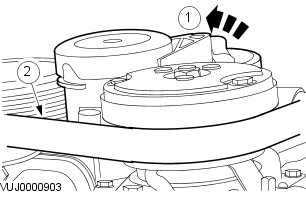
Remove the accessory drive belt.Rotate the accessory drive belt tensioner counter-clockwise.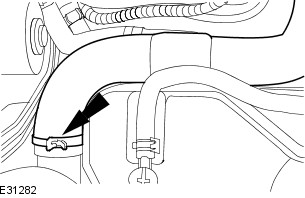
Disconnect the radiator top coolant hose.
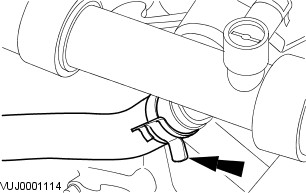
Detach the coolant hose from the housing assembly.
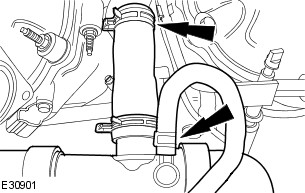
Remove the hose assembly.
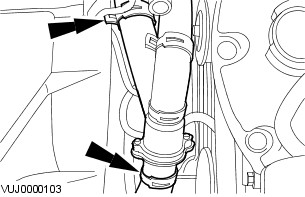
Disconnect the hose assembly from the water pump and lower hose.
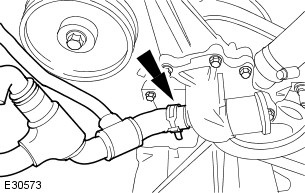
Remove the coolant hose.
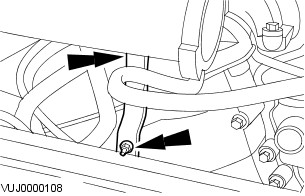
Remove the intake manifold support bracket.
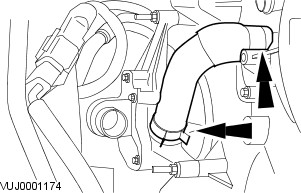
Remove the coolant hose from the water pump to lower housing.
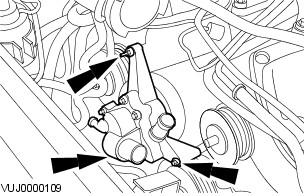
Remove the water pump.
Installation
To install, reverse the removal procedure.
Tighten to 25 Nm.
Fill the cooling system.
For additional information, refer to Cooling System Draining, Filling and Bleeding in this section.
Drain the cooling system.
For additional information, refer to Cooling System Draining, Filling and Bleeding in this section.
Lower the vehicle.
Remove the air cleaner outlet pipe. For additional information, refer to Section 303-12A Intake Air Distribution and Filtering / 303-12B Intake Air Distribution and Filtering / 303-12C Intake Air Distribution and Filtering.
Remove the accessory drive belt.Rotate the accessory drive belt tensioner counter-clockwise.
- Use a 3/8 inch square drive bar to rotate the accessory drive belt tensioner.
-
- Remove the accessory drive belt.
Disconnect the radiator top coolant hose.
Detach the coolant hose from the housing assembly.
Remove the hose assembly.
Disconnect the hose assembly from the water pump and lower hose.
Remove the coolant hose.
Remove the intake manifold support bracket.
Remove the coolant hose from the water pump to lower housing.
Remove the water pump.
Installation
To install, reverse the removal procedure.
Tighten to 25 Nm.
Fill the cooling system.
For additional information, refer to Cooling System Draining, Filling and Bleeding in this section.


Dan, that's a fair amount of labor to engage on a guess. Are you not aware of the myriad of leak points on the 3.0L....ALL of which are more likely than the water pump? By all means, dive in and change the WP if you are of a mind to, but I'd advise you to read up on DCCV, Coolant Expansion tank, and "turret" first.
You don't mention the time-frame involved. Does it trip the low-coolant warning immediately after topping up? (hard to imagine this if you can't see it running out from somewhere) or does it require a few days' worth of driving? Is the overheating only after you get the low-coolant level warning? or do you overheat with a full coolant system?
You don't mention the time-frame involved. Does it trip the low-coolant warning immediately after topping up? (hard to imagine this if you can't see it running out from somewhere) or does it require a few days' worth of driving? Is the overheating only after you get the low-coolant level warning? or do you overheat with a full coolant system?

Veteran Member


Joined: Jan 2009
Posts: 13,076
Likes: 4,724
From: Raleigh, NC
As previously suggested, do a cooling system pressure test before taking any other action. You can borrow pressure-testing kits from many of the big-box auto parts stores such as Advance Auto Parts, Autozone, CARQUEST, etc. You put down a deposit on your credit card, take the kit home and use it, then return it for a full refund. Just make certain that the kit has the appropriate ice cream cone-shaped adapter to fit down into your coolant expansion tank's top opening (where the cap screws off and on). These kits will usually reveal the source of your leak very quickly....