When you click on links to various merchants on this site and make a purchase, this can result in this site earning a commission. Affiliate programs and affiliations include, but are not limited to, the eBay Partner Network.
Mark, the TPS was replaced with a part from a different car, "known" to be good, but the symptoms in my car didn't change at all. That makes me think the TPS is in the clear. I just went through the EGR valve. It looks like a replacement, and I noticed that one of the two bolts holding it in place was not fully seated. It didn't want to go down, so I figured it was bottomed out. I pulled the whole assembly, which looked to be in pretty good shape, and put it back in place with a shorter bolt that I could fully seat. No joy - the problem persists, the car dies while idling in the driveway, which is much easier to deal with than it dying miles from home. What is the "CTS" you're suggesting I replace next?
Mark, the TPS was replaced with a part from a different car, "known" to be good, but the symptoms in my car didn't change at all. That makes me think the TPS is in the clear. I just went through the EGR valve. It looks like a replacement, and I noticed that one of the two bolts holding it in place was not fully seated. It didn't want to go down, so I figured it was bottomed out. I pulled the whole assembly, which looked to be in pretty good shape, and put it back in place with a shorter bolt that I could fully seat. No joy - the problem persists, the car dies while idling in the driveway, which is much easier to deal with than it dying miles from home. What is the "CTS" you're suggesting I replace next?
coolant temperature sensor (not the one for the gauge, rather the one for the ECU) it’s part LHE1600AA, if it’s failed it will cause stalling. If you put the part number into the search function you will see that it has solved stalling in a few AJ16 engines
I'm not sure how to do this on pre-OBDII car, but on the later cars using SDD you can record signals from the various inputs to the ECU. If there is a way to do this, record or monitor the signals, then you could look for a drop out or anomaly that causes the the ECU to think it should do something that would lead to shutdown or a stumble. IOW, the ECU might be perfectly fine, but reacting to a garbage in/garbage out condition.
Anyone know if there is way to do that on this particular vehicle?
The Coolant Temp Sensor is what I recommended in my earlier posts. Easy and cheap.
Did you check the EGR to see if it was operating well? There's a spring inside that gets gunked up and causes it to fail...which would provide the symptoms you were reporting.
Vee, I inspected the EGR, which looked pretty clean, but didn't test the spring because I didn't know there was one or how to test it. I'll see what I can find. Thanks.
For 90 XJS the only diagnostic tool I know of is the Jaguar PDU.
It has all the software discs and the various connectors for different model year Jaguars.
The system has a 'portable' unit that connects to your OBD connector.
You need to program the PDU with your VIN and some other particulars.
Then you transfer the parameters to the portable unit.
After you drive it around, You then need to download the data to the PDU base unit.
We had one at the shop that I worked at years ago.
I don't know if there is anyone in the Bay Area that has one or knows how to use one.
Some forum members have bought parts of dealer PDUs and have been successful using them.
The dealers won't even know what they are.
Update: I was starting to wonder if the "dying while driving" and "dying while idling" problems were two different problems. (There another thread about how low transmission fluid can lead to dying at an idle.) So today I got the car good and warm and found some level ground in my hilly neighborhood to check the trans fluid. By the time the car was warm, I could hardly keep it running, but managed just long enough to find the trans fluid between the marks. So, it seems clear they are the same problem.
I have a Bluetooth-connected OBD-II scanner that connects to an app on my phone, and I figured out that I can monitor and even record readings from most of the car's sensors. Here's a list of what's available, other than the usual fuel consumption, speed, distance, etc. One question is: Which sensors should I record and analyze to help zero in on the root problem, or are none of these useful? Another question is: What other rocks should I be looking under?
Engine RPM
Instant engine power
Power from MAF
OBD module voltage
Engine load value
Short term fuel trim Bank 1 (&2)
Long term fuel trim Bank 1 (&2)
Timing advance
Intake air temperature
MAF air flow rate
Throttle position (should be able to see TPS errors here)
you should have that too. maybe called ECT? Have you ordered this $20 part?
LTFT
what is the percentage? Are they the same for both Banks 1 & 2?
MAF
does it increase as you put your foot on the gas?
TPS
what percentage is it at idle?
you wouldn’t necessarily see errors here, but let’s see where we’re at. If there are dead spots, a digital reader might not report it as the blue tooth reports data every second or maybe some fraction thereof. Definitely not instantaneous and definitely not instantaneous. An analog reader would be better here.
Vee, I haven't yet swapped the ECT sensor, but I just tried the "Paper Clip Trick" with it. The car would hardly start with the sensor leads shorted, but I'm not sure what that tell you. The ECT data recorded from a recent drive looks odd, so I'll have to repeat the experiment when the car is willing to run again. Actually, all the data from the last drive looks weird, so let me report what I have with a caution that I really have to repeat it.
LTFT is about 51.55 for both banks.
I'll have to watch MAF while driving, when the car will run again
Throttle position is zero at idle. Max on my drive was just over 20%.
Again, the data look weird so don't put too much stock on these numbers yet.
The TPS should be at 12.9% when at idle. Maybe a few tenths of a percent off, but never at 0%. Now that might mean your TPS is bad, or the butterfly isn't set properly, or both. This is a big clue. There should be air getting past the throttle butterfly, even at idle with the foot off the gas otherwise the engine would be starved of air.
I hope you jumped the harness leads, and not the sensor leads.
I noticed your mechanic cleaned the throttle body. Are you sure he checked the throttle plate opening. It's very simple to check and could lead to the problems you are having.
- a sensor functions correctly at cold / startup and then starts to send inappropriate signals when hot - eg coolant sensor
- a component breaks down when hot and doesn't run properly - eg coils, fuel pump relay etc
- a component that "spikes" the ecu when hot - coils can do this
- a sensor whose reading is not used when cold, but is used when warmed up and malfunctions eg lambda sensor
This last one is one that we don't seem to have discussed, and I don't think you've referred to your sensors in previous posts?
The app can see the lambda voltage readings, so I would look at those and see what they are showing, particularly as the car warms up and moves towards failure mode.
Also, do you have the means of recording the readings together, either in the app or by videoing the phone with all the relevant readings together? If so, and you can pinpoint exactly the stall point, you might see a sudden reading drop or change.
Lambda, or oxygen sensors will be difficult to diagnose remotely, unless the OBD2 reader shows a flat line.
As long as the numbers are swinging up and down, the oxygen sensors could be doing it’s thing….but even then, if they’re on their way out, they could be swinging, just not fast enough, and create this problem.
A non switching oxygen sensor (or sensors) would cause this as well, as the car comes off of closed loop, and into open loop. I think you’ll primarily be interested in Banks 1&2, Sensors 2, or the downstream sensors. Sensor 1, or the upstream is simply used as a check. A failure there would most likely trigger a code.
I think jumping that ECT harness takes that out of the running.
I kept thinking that the car was also sputtering when cold. I can’t believe that this hasn’t come up before! Oxygen sensors completely lines up with these symptoms. That should be the prime suspect, once the TPS values are confirmed. Any values lower than 12.9% will create these issues as well.
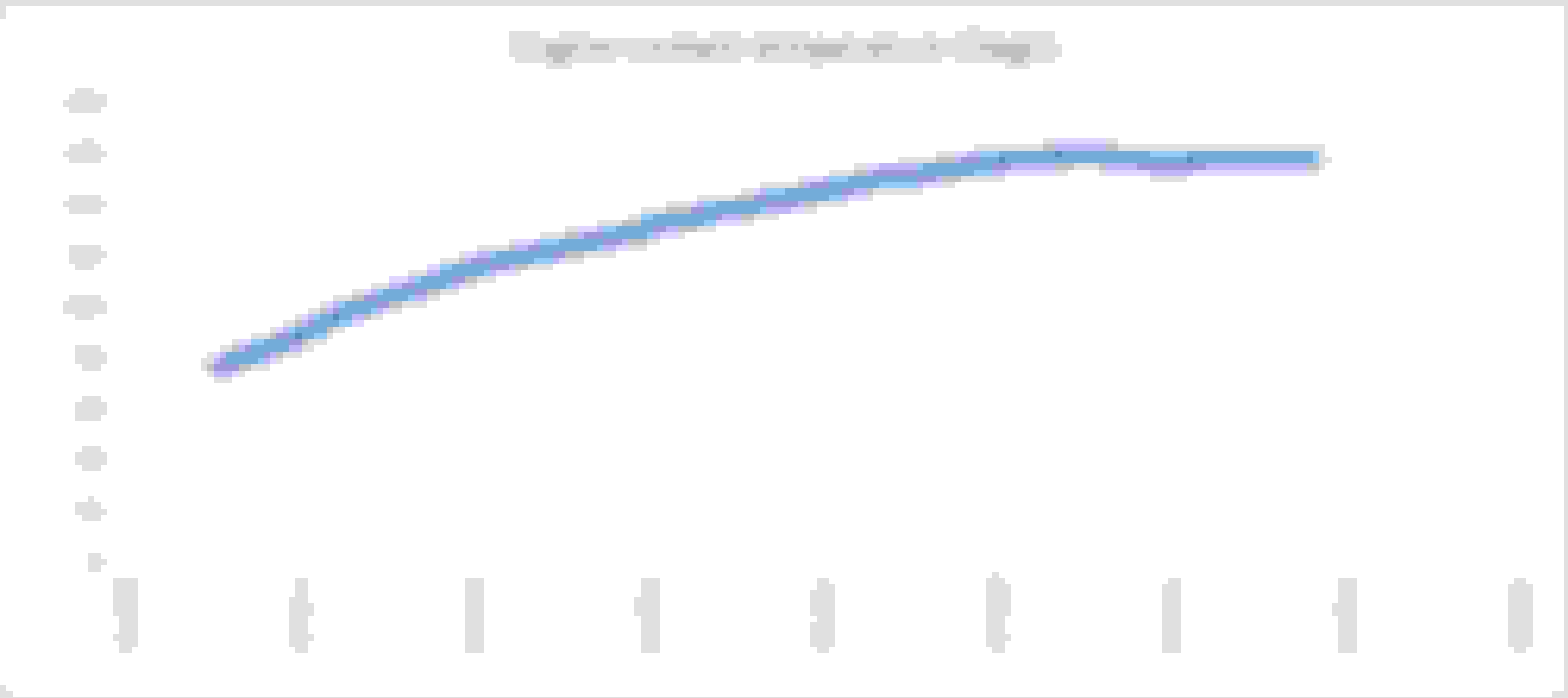
Thanks, Guys. This is a really helpful conversation. This morning I started the data recorder and ran the engine in the driveway for about 9 minutes while recording the RPM, TPS %, and Coolant Temp. Here are the charts. I pushed the throttle from time to time, and every response you see below is due to that. If I pushed the throttle very briefly and timed it just right, the recorder did not pick it up (between readings). The car was idling cold most of the time, and stuttering or "burping" consistently. It was much more obvious that it had been, maybe supporting Vee's idea. We can see from the chart that the TPS readout at idle is not in the range specified by Vee, but also it is not fluctuating randomly. Of course, the car is still idling and not showing its main failure mode. I can do this again when the day is hotter and I can get into failure mode.
Paul, I can record the oxygen sensor readings as well. I have watched them and they flip up and down, I guess as they're supposed to. I used to get an OBD code for a bad oxygen sensor. That sensor has since been replaced and no code since. Please let me know your thoughts and what other experiments you suggest I try. Thanks, again!
The next step here is to get the voltage reading of the TPS wires. I believe you need to shove a pin up into the back of the middle wire on the TPS, and tie the red probe of a multimeter and the black probe can be on any ground source.
I need to know what the voltage reading is. It should be 0.6v at idle. I think this can be done with the car on, but engine off. If your graph is to be believed, your TPS, or the butterfly, needs attention.
Vee: I shoved a probe up the middle wire on the backside of the TPS harness connector, ensured I had zero ohms to the middle contact on the business end, plugged it in, turned on the ignition but not the engine, and took a DC voltage reading: 0.59 V. Foot on the floor full throttle: 4.4 V, both values give or take. Seems like things are in range. Where do I find info on checking the butterfly? BTW, I have a CTS on order, expected in a few days.
It does appear that your TPS is within acceptable range...however, 0.59 could simply be below the 0.63V that the ECU is expecting to see.
I would recommend loosening that throttle body by a little bit and see if you can adjust the TPS enough to increase the TPS to the other side of 0.60v and see if that makes a difference. Maybe 0.62v?
Over time the ECU adjusts to a bogged down TPS. That usually means the voltage INCREASES over time. You have one that has decreased. That is unusual. A PDU/WDS could reset the ECU so that it would accept the 0.59v as the new baseline, but I'm not sure anyone has done that.