


Three hoses attached to the EGR and Throttle, part numbers?


Thread Starter
|
Member
Joined: Mar 2010
Posts: 37
Likes: 17
From: USA
 Three hoses attached to the EGR and Throttle, part numbers?
I've been paging through the JTIS and I cannot find these.
Anyone have a diagram of these three hoses and a link to where I can find them?
I could use bulk hose, but the two 90 degree bends will be a bit tight.
Anyone have a diagram of these three hoses and a link to where I can find them?
I could use bulk hose, but the two 90 degree bends will be a bit tight.
Thread Starter
|
Member
Joined: Mar 2010
Posts: 37
Likes: 17
From: USA
Of all people I should know better.......Sig updated - 97 Convertible
Does anyone ever cap off the hoses to the throttle body? I've never been a big fan of heating up the air intake. Or will simply connecting the two ports on the driver’s side of the EGR prevent the EGR from functioning properly? I figure I would have to make a custom hose that does a 180 around the EGR.
On two of my other cars I have the computers to completely disable the EGR system remove it; I don’t have that luxury with the Jaguar.
Also the rubber gasket / seal in the intake manifold to the TB housing, is this replaceable or do most just not touch it?
Does anyone ever cap off the hoses to the throttle body? I've never been a big fan of heating up the air intake. Or will simply connecting the two ports on the driver’s side of the EGR prevent the EGR from functioning properly? I figure I would have to make a custom hose that does a 180 around the EGR.
On two of my other cars I have the computers to completely disable the EGR system remove it; I don’t have that luxury with the Jaguar.
Also the rubber gasket / seal in the intake manifold to the TB housing, is this replaceable or do most just not touch it?




Joined: Dec 2011
Posts: 120,439
Likes: 17,016
From: Durham, UK
Are items 3, 10 and 11 the three pipes?
1997 Jaguar XK8 - EGR Valve.pdf
This is from the parts manual and is the best drawing I can find.
The rubber seal on the intake trunk to the TB is available separately for the 4.0 litre vehicles but shouldn't need replacing.
Graham
1997 Jaguar XK8 - EGR Valve.pdf
This is from the parts manual and is the best drawing I can find.
The rubber seal on the intake trunk to the TB is available separately for the 4.0 litre vehicles but shouldn't need replacing.
Graham

Veteran Member
Joined: Aug 2011
Posts: 1,294
Likes: 372
From: South Carolina
I've got a 1997, and a few photographs, so I'll try to help.
First off, the two small hoses that connect to the EGR on the driver's (left) side are coolant hoses, which work to cool down the valve a bit. You should leave those in place.
The third "hose," which is really a pipe, connects your right-hand exhaust manifold to the EGR and your intake. If you want to stop pumping exhaust gas into your intake, you should be able to remove the pipe between the exhaust manifold and EGR, and cap the openings on both.
As I understand it, you and I are lucky that we have early cars, at least in regards to this issue. Later cars evidently have an additional sensor in the EGR valve that monitors whether exhaust gas is moving through or not. Our 1997s do not have this sensor, which means we can remove the pipe, cap off the openings and the ECM will never know the difference.
After reading about this in other threads, I did some poking around and discovered that my EGR pipe had already been removed, with the openings well capped. Excellent.
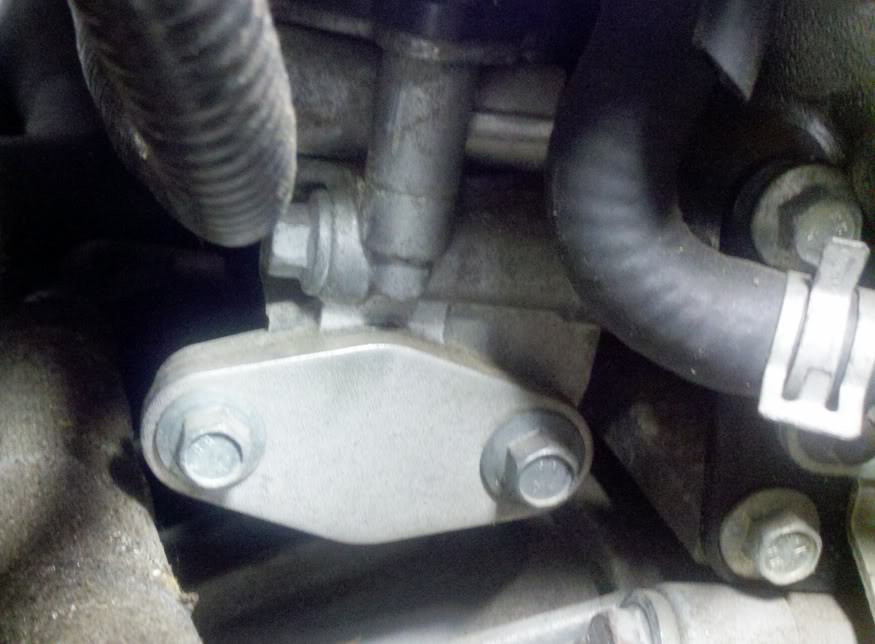
Here's a photo of the right-hand side of my EGR valve, with the exhaust manifold connection removed and the EGR opening capped off:
And here's a photo of the cap on my exhaust manifold:
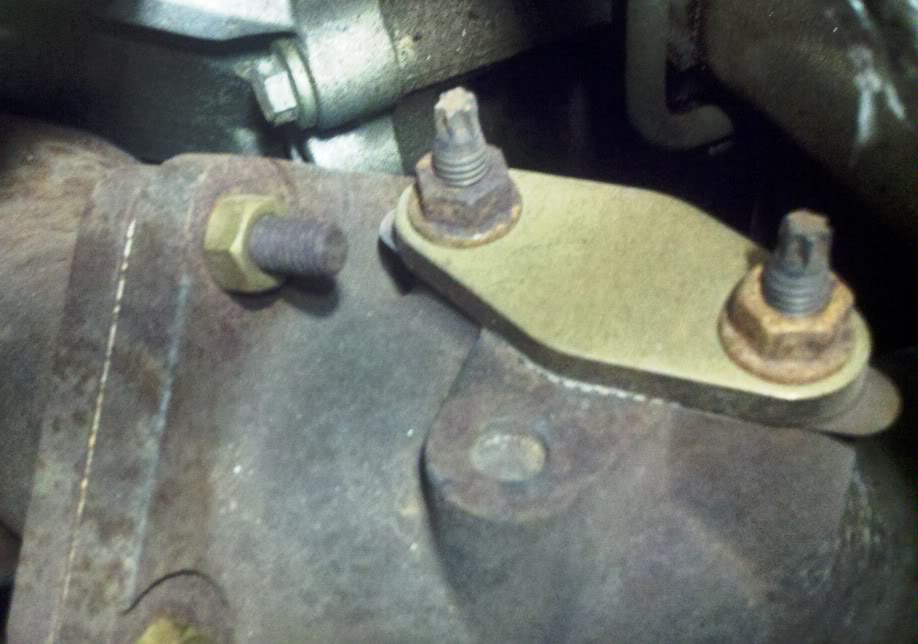
On my 1997, I get no trouble codes with the pipe removed, and a cleaner intake. My coolant hoses are still attached to the EGR, and the electrical connection must remain in place or the ECM will give you a check engine light.
Good luck.
First off, the two small hoses that connect to the EGR on the driver's (left) side are coolant hoses, which work to cool down the valve a bit. You should leave those in place.
The third "hose," which is really a pipe, connects your right-hand exhaust manifold to the EGR and your intake. If you want to stop pumping exhaust gas into your intake, you should be able to remove the pipe between the exhaust manifold and EGR, and cap the openings on both.
As I understand it, you and I are lucky that we have early cars, at least in regards to this issue. Later cars evidently have an additional sensor in the EGR valve that monitors whether exhaust gas is moving through or not. Our 1997s do not have this sensor, which means we can remove the pipe, cap off the openings and the ECM will never know the difference.
After reading about this in other threads, I did some poking around and discovered that my EGR pipe had already been removed, with the openings well capped. Excellent.
Here's a photo of the right-hand side of my EGR valve, with the exhaust manifold connection removed and the EGR opening capped off:
And here's a photo of the cap on my exhaust manifold:
On my 1997, I get no trouble codes with the pipe removed, and a cleaner intake. My coolant hoses are still attached to the EGR, and the electrical connection must remain in place or the ECM will give you a check engine light.
Good luck.
Thread Starter
|
Member
Joined: Mar 2010
Posts: 37
Likes: 17
From: USA
That is two of them......not sure about the one I cut in half (see the photo).
I thought those were coolant hoses.....except I cannot remember where they plug into the coolant system. I still have the top end all torn apart so it will probably make more sense when I start putting it back together.
I know which one you are referring to, but see the below photo, I have three small rubber hoses. Two have been identified above, third one still a mystery.
Usually I take much better photos as I tear into project like this.....
So if I eliminate the exhaust to the EGR I no longer need the cooling lines too and I can eliminate those to the TB...... I like this idea.
The hose cut in half goes to the throttle body. I planned on replacing all rubber hoses so cutting it made sense at the time since it was stuck on pretty good.
-
I know which one you are referring to, but see the below photo, I have three small rubber hoses. Two have been identified above, third one still a mystery.
Usually I take much better photos as I tear into project like this.....
As I understand it, you and I are lucky that we have early cars, at least in regards to this issue. Later cars evidently have an additional sensor in the EGR valve that monitors whether exhaust gas is moving through or not. Our 1997s do not have this sensor, which means we can remove the pipe, cap off the openings and the ECM will never know the difference.
After reading about this in other threads, I did some poking around and discovered that my EGR pipe had already been removed, with the openings well capped. Excellent.
Here's a photo of the right-hand side of my EGR valve, with the exhaust manifold connection removed and the EGR opening capped off:
On my 1997, I get no trouble codes with the pipe removed, and a cleaner intake. My coolant hoses are still attached to the EGR, and the electrical connection must remain in place or the ECM will give you a check engine light.
After reading about this in other threads, I did some poking around and discovered that my EGR pipe had already been removed, with the openings well capped. Excellent.
Here's a photo of the right-hand side of my EGR valve, with the exhaust manifold connection removed and the EGR opening capped off:
On my 1997, I get no trouble codes with the pipe removed, and a cleaner intake. My coolant hoses are still attached to the EGR, and the electrical connection must remain in place or the ECM will give you a check engine light.
The hose cut in half goes to the throttle body. I planned on replacing all rubber hoses so cutting it made sense at the time since it was stuck on pretty good.
-
Veteran Member
Joined: Aug 2011
Posts: 1,294
Likes: 372
From: South Carolina
OK, that third little hose likely connects the coolant flow from the engine block to the throttle body on the RIGHT side. At the back of the engine block on the right hand side (passenger side in the US), there is a small metal tube which rises from the engine block and makes a 90 degree turn to approach the throttle body. A small hose runs between this tube and a coolant connection on the RIGHT hand underside of the throttle body. I can't remember the exact shape of this hose, but that's probably it.
If you want to delete the coolant hoses to the EGR, then you'll need to come up with a custom piece of hose that runs from the LEFT hand underside of the throttle body to the heater hose assembly that normally connects to the EGR. There's no real gain in doing this, but OK...but make sure you've removed the exhaust feed pipe from the manifold and capped off both openings tightly. You don't want hot exhaust gas running through the valve with no coolant flow through the valve to prevent it from getting to hot and melting a connector or something else.
If you want to delete the coolant hoses to the EGR, then you'll need to come up with a custom piece of hose that runs from the LEFT hand underside of the throttle body to the heater hose assembly that normally connects to the EGR. There's no real gain in doing this, but OK...but make sure you've removed the exhaust feed pipe from the manifold and capped off both openings tightly. You don't want hot exhaust gas running through the valve with no coolant flow through the valve to prevent it from getting to hot and melting a connector or something else.
Trending Topics
Thread Starter
|
Member
Joined: Mar 2010
Posts: 37
Likes: 17
From: USA
OK, that third little hose likely connects the coolant flow from the engine block to the throttle body on the RIGHT side. At the back of the engine block on the right hand side (passenger side in the US), there is a small metal tube which rises from the engine block and makes a 90 degree turn to approach the throttle body. A small hose runs between this tube and a coolant connection on the RIGHT hand underside of the throttle body. I can't remember the exact shape of this hose, but that's probably it.
So the coolant comes up that pipe to the TB, out the drivers side of the TB then down to the EGR.....where does the EGR exit hose go? The only place I can think of is the bottom of the expansion tank.
If you want to delete the coolant hoses to the EGR, then you'll need to come up with a custom piece of hose that runs from the LEFT hand underside of the throttle body to the heater hose assembly that normally connects to the EGR. There's no real gain in doing this, but OK...but make sure you've removed the exhaust feed pipe from the manifold and capped off both openings tightly. You don't want hot exhaust gas running through the valve with no coolant flow through the valve to prevent it from getting to hot and melting a connector or something else.
Worst case scenario I get my hands on those hoses down the road and install. No harm done in the meantime.
Veteran Member
Joined: Aug 2011
Posts: 1,294
Likes: 372
From: South Carolina
The coolant exit from the EGR valve goes to a t-connection in the heater hose just below and to the left of the EGR. This hose comes from underneath the intake manifold on the left side. You should see the connection there.
Thread Starter
|
Member
Joined: Mar 2010
Posts: 37
Likes: 17
From: USA
Any reson why I cannot cap off both ends of this "system" or does the coolant coming up from the right side of the block have to make its way over to this T-connection?
Veteran Member
Joined: Aug 2011
Posts: 1,294
Likes: 372
From: South Carolina
The coolant flow is:
RIGHT SIDE ENGINE BLOCK ---- THROTTLE BODY ---- EGR VALVE ------ HEATER HOSE.
You MUST keep the coolant flow through the throttle body. Once the EGR exhaust tube is removed and the openings capped, the coolant chould be able to bypass the EGR and go straight from the throttle body to the heater hose with no problems.
RIGHT SIDE ENGINE BLOCK ---- THROTTLE BODY ---- EGR VALVE ------ HEATER HOSE.
You MUST keep the coolant flow through the throttle body. Once the EGR exhaust tube is removed and the openings capped, the coolant chould be able to bypass the EGR and go straight from the throttle body to the heater hose with no problems.

Thread Starter
|
Member
Joined: Mar 2010
Posts: 37
Likes: 17
From: USA

I forgot about the T fitting between those other two hoses....
Why? I've removed similar lines from other cars without any negative side effects.
Veteran Member
Joined: Aug 2011
Posts: 1,294
Likes: 372
From: South Carolina
I suggest you download your engine's technical guides from the sticky FAQ area of the forum. Here's why you must keep coolant flowing through the throttle body, as quoted in the AJV8 technical guide:
Thermostatic Air Valve
"The thermostatic air valve is a wax capsule operated valve that enables engine starting at low engine temperatures (with the accelerator pedal in the idle position, the degree of throttle valve movement available between fully closed and the mechanical guard is insufficient to start the engine at low temperatures). The thermostatic air valve is fully open at a coolant temperature of approximately -30°C (-22°F) and progressively closes until it is fully closed at +40 °C (+104°F). A flow of engine coolant through the throttle body provides the temperature source to operate the thermostatic air valve."
Besides, what do you gain by disconnecting the coolant flow from the throttle body? Even if it didn't present the problem shown above, you would then have to rig a hose from the coolant outlet at the rear right engine block to the heater hose connection at the rear left engine block. Why is that better?
I've also attached a PDF from the technical guide that shows the location and connections of the coolant hoses around the throttle body and EGR. See below.
Thank you...good night....signing out...happy Fourth!
.
Thread Starter
|
Member
Joined: Mar 2010
Posts: 37
Likes: 17
From: USA
There you go, first time I've ever seen a legit reason to keep coolant flowing through the thermostat of a car with EFI.
Simplicity, less places for leaks to occur.
One 6" (or shorter) straight hose with two clamps versus six hoses with various curves and 6 clamps.
I don't like needless complexity.
Oh well.....stock it stays.
Awesome, thanks! Now where would someone find the part numbers for those three hoses?
By the time I get 100% familiar with this car my mother will probably sell it.
I can't complain, in 10+ years and 125,000 miles I've only had to work on it three times. All the rest has been routine maintenance.
I don't like needless complexity.
Oh well.....stock it stays.
By the time I get 100% familiar with this car my mother will probably sell it.
I can't complain, in 10+ years and 125,000 miles I've only had to work on it three times. All the rest has been routine maintenance.
Last edited by hacker-pschorr; Jul 3, 2012 at 07:43 PM.

Veteran member


Joined: Mar 2007
Posts: 11,345
Likes: 1,165
From: Oak Ridge, TN
hacker, scroll down a bit on the FAQ thread that The Coupe mentioned above, and score yourself the jaguar electronic parts catalogue. There's instructions on how to install it onto your hard drive, even on a Windows 7 machine (mine works a peach) and you can find all the parts numbers you'll ever need. good luck! every jag owner should have this program, and the JTIS.
Thread Starter
|
Member
Joined: Mar 2010
Posts: 37
Likes: 17
From: USA
hacker, scroll down a bit on the FAQ thread that The Coupe mentioned above, and score yourself the jaguar electronic parts catalogue. There's instructions on how to install it onto your hard drive, even on a Windows 7 machine (mine works a peach) and you can find all the parts numbers you'll ever need. good luck! every jag owner should have this program, and the JTIS.
I was going to make my own using bulk tubing but one of them is a bit tight. It would probably work but I'm not happy with how it's sitting.
Unfortunately I wasn't able to finish the XK before leaving on vacation and I had another car that needed to be prepped for a Concours tied into the vacation.
Finally back at home, time to finish this one up. Everything is assembled except the three hoses.....


Veteran Member
Joined: Sep 2012
Posts: 1,473
Likes: 655
From: Devon. U.K.
Early UK cars don't have the EGR valve - I suspect the only reason it is there was to comply with US emissions regulations.
So - no problem with removing it providing various orifices are properly sealed up !!
So - no problem with removing it providing various orifices are properly sealed up !!
