

Veteran Member
test point
Veteran Member
close
Sep 19, 2024
- Join DateMar 2008
- LocationEllijay
- Posts:5,390
-
Likes:295
-
Liked:1,116 Times in 935 Posts
Quote:
I was concerned about the mpg also and kept careful track of it through the shortage and again back with premium when it was available. There was no difference so I switched back to 89 octane. I do live in a rural area and do not spend much time in traffic or at red lights. In fact, the county only has 5 traffic lights total and it is a big county.Originally Posted by plums
On the other hand, there is a measurable and repeatable increase in MPG when using premium. With a price differential between regular and premium, the resulting MPG can be competitive.
Between the non aggressive way I drive and above traffic situation I get consistently just under 20 mpg (US gal).
Mikey

close

Jan 14, 2020
- Join DateOct 2009
- LocationPerth Ontario Canada
- Posts:11,057
-
Likes:503
-
Liked:2,272 Times in 1,848 Posts
test point-
I had the same experience with my S-type 4.2L. No difference in fuel consumption or performance.
I had the same experience with my S-type 4.2L. No difference in fuel consumption or performance.

Senior Member
Here in the US, New York Sate in particular they add 10 percent Ethanol to the Fuel. The standard premium gasoline in my area is 91 Octane with 10 % Ethanol.
I run 93 Octane with no Ethanol in my 04 XKR which can be purchased at a few select stations. No Ethanol is not available in any other grade here. My personal rationale for that choice is the Ethanol. I don't put a lot of miles on and she's stored winters with an 80% full tank to keep the inside of the tank from rusting (added Stabil conditioner) for storage. Ethanol degrades pretty quickly and can gum up the fuel system and in some cases eat away at seals. The Fuel pumps have check valves internally, which can stick and cause Fuel pump failure after sitting idle for months during the winter. So far so good.
I run 93 Octane with no Ethanol in my 04 XKR which can be purchased at a few select stations. No Ethanol is not available in any other grade here. My personal rationale for that choice is the Ethanol. I don't put a lot of miles on and she's stored winters with an 80% full tank to keep the inside of the tank from rusting (added Stabil conditioner) for storage. Ethanol degrades pretty quickly and can gum up the fuel system and in some cases eat away at seals. The Fuel pumps have check valves internally, which can stick and cause Fuel pump failure after sitting idle for months during the winter. So far so good.

Quote:
Not sure about your logic here, but you may need a new calculator.Originally Posted by test point
... Five hundred times 60 seconds is 3,000 rpms...
GGG

close



Apr 28, 2024
- Join DateDec 2011
- LocationDurham, UK
- Posts:120,439
-
Likes:7,142
-
Liked:17,009 Times in 12,222 Posts
Quote:
I have my 2000model XKR and also run a 2010 5.0L XJ ...........
Adrian,Originally Posted by Rocky15
HiI have my 2000model XKR and also run a 2010 5.0L XJ ...........
We resolved your petrol dilemma very early on in this thread.
Now, when you go touring in the USA and Canada you'll know exactly what to buy there too!

Joking aside, it looks like everyone agrees that using anything more than the basic Jaguar recommended fuel is just a waste of money.
Graham

JonWat
Senior Member
close
May 8, 2026
- Join DateDec 2012
- LocationSwansea, Wales
- Posts:402
-
Likes:307
-
Liked:99 Times in 72 Posts
Quote:
Graham
Only if you're not bothered about ethanol eating away at your rubber seals & gumming up your valves & fuel injectors.Originally Posted by GGG
Joking aside, it looks like everyone agrees that using anything more than the basic Jaguar recommended fuel is just a waste of money.Graham


Veteran Member
plums
Veteran Member
close
Jun 13, 2020
- Join DateFeb 2011
- Locationon-the-edge
- Posts:9,733
-
Likes:1,037
-
Liked:2,202 Times in 1,633 Posts
In the case of the X308, both NA and SC variants, regular is not really
in play.
Fuel Requirements
Use only Premium Unleaded gasoline with a minimum
Anti-Knock Index (AKI) of 91.
Since the local market has 91 AKI sans ethanol available,
that is the poison of choice.
Again, there is a measurable difference in MPG as compared
to 87 AKI.
in play.
Fuel Requirements
Use only Premium Unleaded gasoline with a minimum
Anti-Knock Index (AKI) of 91.
Since the local market has 91 AKI sans ethanol available,
that is the poison of choice.
Again, there is a measurable difference in MPG as compared
to 87 AKI.
Mikey
close
Jan 14, 2020
- Join DateOct 2009
- LocationPerth Ontario Canada
- Posts:11,057
-
Likes:503
-
Liked:2,272 Times in 1,848 Posts
Quote:
Again, no mention was made of ethanol, only octane ratings.Originally Posted by JonWat
Only if you're not bothered about ethanol eating away at your rubber seals & gumming up your valves & fuel injectors.
Maybe you could explain something. E10 has been on the market across much of North America for 30+ years. The only thing 'new' about it are the signs on the pumps informing consumers of it's presence.
If it is the devil incarnate as many people portray- where are all the cars broken down on the side of the road or in the garage for repair? Where is the public outrage?
I would think with the millions of cars driven billions of miles over the decades, even the slightest genuine issue would have surfaced.

Veteran Member
max224
Veteran Member
close
Dec 30, 2025
- Join DateJul 2014
- LocationLima, PA
- Posts:1,000
-
Likes:288
-
Liked:164 Times in 135 Posts
E10 is not the devil incarnate, but it's on a first-name basis with him. It's had a horrible effect on some of the older boat and motorcycle engines. I have a friend with a twin-engine boat with gas engines that spent over $ 10,000 in repairs directly attributable to E10, and it's almost certainly a culprit in the failure of Jag fuel pumps if the car is stored for several weeks. Agreed, the evidence is anecdotal, but there's enough of it out there to convince most people.
Mikey
close
Jan 14, 2020
- Join DateOct 2009
- LocationPerth Ontario Canada
- Posts:11,057
-
Likes:503
-
Liked:2,272 Times in 1,848 Posts
Most boats and old motorcycles (as well as garden equipment) have OPEN fuel systems which allow air to freely enter the tank. This is where the problems of condensation and water saturation originate, especially if the equipment is allowed to sit unused. Clogged and corroded fuel systems are nothing new and did not start with E10. Read up on the history of Seafoam if you like. It's well documented to have affected pre-WWII marine engines just as much as todays.
Modern cars (newer than ~1971) have SEALED fuel systems that do not allow air to directly enter the fuel tank, hence no moisture. I can re-post a pic I took of the inside of the gas tank of my old Corvette. It has had a steady diet of E10 for over 20 years and has 2 year old gas sitting in it at the time.
There is no sign of any water nor any corrosion.
My S-type sits over the long Canadian winter (months, not weeks) with E10 in the tank. It, and all the summer other toys start up first crank of the key in the spring.
Modern cars (newer than ~1971) have SEALED fuel systems that do not allow air to directly enter the fuel tank, hence no moisture. I can re-post a pic I took of the inside of the gas tank of my old Corvette. It has had a steady diet of E10 for over 20 years and has 2 year old gas sitting in it at the time.
There is no sign of any water nor any corrosion.
My S-type sits over the long Canadian winter (months, not weeks) with E10 in the tank. It, and all the summer other toys start up first crank of the key in the spring.
Veteran Member
test point
Veteran Member
close
Sep 19, 2024
- Join DateMar 2008
- LocationEllijay
- Posts:5,390
-
Likes:295
-
Liked:1,116 Times in 935 Posts
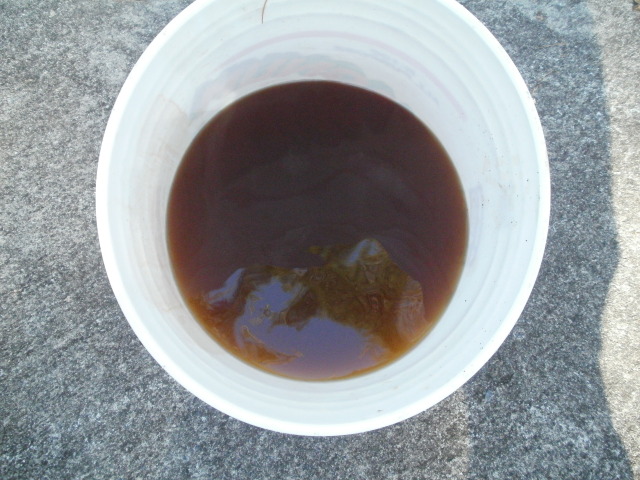
Even old non ethanol gas can rust the tank. This gas had been in the tank for at least 19 years. Car didn't run well.

I use 93 octane (R+M/2) E10 usually Cheveron or Texaco which both have Techron.
If I could I would go with pure gasoline instead of E10 but that is hard to find in the US any more. There is only one place in town that sells it, it is 15 miles from my house and it is an off brand, "liberty pure" or something like that.
If I could I would go with pure gasoline instead of E10 but that is hard to find in the US any more. There is only one place in town that sells it, it is 15 miles from my house and it is an off brand, "liberty pure" or something like that.
Quote:
That is particularly true on older It is particularly troublesome in older vehicles where the alcohol eats the rubber in o-rings and seals. I had a 64 buick Skylark convertible until 2010, the last 5 years or so I owned it I to rebuild the carburetor every spring because the E10 would destroy the seals.Originally Posted by max224
E10 is not the devil incarnate, but it's on a first-name basis with him. It's had a horrible effect on some of the older boat and motorcycle engines. I have a friend with a twin-engine boat with gas engines that spent over $ 10,000 in repairs directly attributable to E10, and it's almost certainly a culprit in the failure of Jag fuel pumps if the car is stored for several weeks. Agreed, the evidence is anecdotal, but there's enough of it out there to convince most people.
Theoretically newer cars built since 1990 are designed to use E10, I don't know if the anecdotal evidence is real or not ... but why chance it if you don't have to (unfortunately I do)