Jaguar Forums - Jaguar Enthusiasts Forum
  • LOG IN
  • REGISTER
  • Forums
    • General Jaguar Forums
      • New Member Area - Intro a MUST
      • Jaguar Forums Feedback & Suggestion Center
      • General Tech Help
    • Jaguar Models ( Current )
      • XF (X260)
      • F-Type ( X152 )
      • XE ( X760 )
      • E-Pace
      • F-Pace (X761) / C-X17
      • I-Pace EV
    • Jaguar Models ( Modern )
      • XF and XFR ( X250 )
      • XJ ( X351 )
      • X-Type ( X400 )
      • S-Type / S type R Supercharged V8 ( X200 )
      • XJ XJ6 / XJ8 / XJR ( X350 & X358 )
      • XJ XJ8 / XJR ( X308 )
      • XJ XJ12 ( X305 )
      • XJ XJ6 / XJR6 ( X300 )
      • XK8 / XKR ( X100 )
      • XK / XKR ( X150 )
    • Jaguar Models ( Classics )
      • Mark V - X 420G
      • MKI / MKII S type 240 340 & Daimler
      • XK120 XK140 XK150
      • E type ( XK-E )
      • XJ6 & XJ12 Series I, II & III
      • XJS ( X27 )
      • XJ40 ( XJ81 )
      • XKSS
      • XJ220
    • Other Jaguars
      • Other Jaguar Models / Concepts / Replicas
    • Diesel variants
      • Diesel variants - All models
    • Non Jaguar vehicles
      • Non-Jaguar Vehicles
    • Brand Review
      • Jaguar Press release
      • Jaguar Customer Relationship Centre
      • Jaguar Engines & transmissions
      • Wheels / Tires, Suspension & handling
      • Interior
      • Exterior
      • Audio/Visual Electronics
      • Detailing / Car care
      • Motorsports
    • Jaguar Classifieds
      • Marketplace
      • PRIVATE For Sale / Trade or Buy Classifieds
      • VENDOR 'For Sale' Classifieds
    • Regional
      • US Northeast
      • US Central
      • US Southwest
      • US Western
      • US Northwest
      • US Midwest
      • US Mid Atlantic
      • US Lower Atlantic
      • US Southern Midwest
      • Canada
      • Mexico, South America
      • UK & Eire
      • Europe
      • Australia - Queensland
      • Australia - New South Wales / ACT
      • Australia - Victoria / Tasmania
      • Australia - Western
      • Australia - South / NT
      • New Zealand
      • Other Areas
    • Official Site Sponsors
      • VENDOR Threads
    • General Interest / History
      • Sights N Sounds
      • Photography
      • Forum announcement archives / Forum History
      • Jaguarforums Merchandise
      • Memorial Section
  • News
  • Marketplace
    • Vendor Directory
    • Become a Vendor
    • Member Marketplace
    • Vendor Marketplace
    • Site Store
  • New Posts
  • Tools
    • Car Payment Calculator
    • Tire Rim Calculator
    • Vin Decoder
    • Recalls
    • Technical Service Bulletins (TSBs)
    • Members List
    • Live Feed
  • Gallery
  • View Dark Mode
    • Please register or login to enable Dark Mode.
  • Log In
  • Register
Jaguar Forums - Jaguar Enthusiasts Forum
    • Threads
      • Advanced
Dark Mode

Please register or login to enable Dark Mode.

Log In

Forgot your Password?

By logging into your account, you agree to our Terms of Use and Privacy Policy, and to the use of cookies as described therein.
or
 
  • Recent
  • Commented
  • Albums
  • My Pictures

Transfer Case

jfenley
February 5, 2009
 12
 1
Description:
TC broken down, show guts

Read more ยป
Sort:
Default
  • Default
  • Most Recent
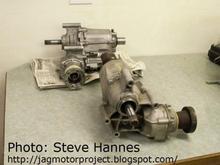
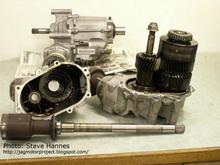
Steve Hannes: The fill plug can barely be seen on the case against the wall, just adjacent to the top bolt mounting flange. The drain plug can barely be seen just below the output shaft on the case in the forefront.
***** more info: http://jagmotorproject.blogspot.com/2007/02/motor-project-17-transfer-time.html   *****
Steve Hannes: The fill plug can barely be seen on the case against the wall, just adjacent to the top bolt mounting flange. The drain plug can barely be seen just below the output shaft on the case in the forefront. ***** more info: http://jagmotorproject.blogspot.com/2007/02/motor-project-17-transfer-time.html *****

1 2009/02/05 18:32:15 jfenley
Steve Hannes: The case splits in half to reveal a very simple, two shaft gear design. The shaft assembly to the right is the DRIVE, being fed from the transmission output spline. I'll break it down in a minute. The shaft assembly to the left is the DRIVEN countershaft and is the output to the rear wheels via the driveshaft. There is a bevel gear at the base of the left shaft. It mates with a matching bevel gear (1:1) and makes the 90 degree turn necessary to line up with the driveshaft. 
***** more info: http://jagmotorproject.blogspot.com/2007/02/motor-project-17-transfer-time.html   *****
Steve Hannes: The case splits in half to reveal a very simple, two shaft gear design. The shaft assembly to the right is the DRIVE, being fed from the transmission output spline. I'll break it down in a minute. The shaft assembly to the left is the DRIVEN countershaft and is the output to the rear wheels via the driveshaft. There is a bevel gear at the base of the left shaft. It mates with a matching bevel gear (1:1) and makes the 90 degree turn necessary to line up with the driveshaft. ***** more info: http://jagmotorproject.blogspot.com/2007/02/motor-project-17-transfer-time.html *****
0 2009/02/05 18:32:15 jfenley
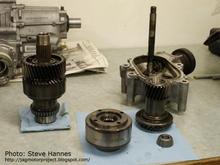
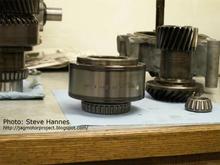
Steve Hannes: First the small shaft (Driven). It is now on the right in this picture. It is a solid shaft containing two gears, the upper gear gets its drive from the main shaft, transferred to the bevel gear just visible at the base of the shaft. Again, this is the torque delivery (the 60%) to the rear wheels. Now for the larger shaft assembly (on the left in this pic). This assembly has a lot going on. In this picture I've removed the upper assembly. It now is positioned in the forefront and turned upside down. It is the sealed viscous coupler unit. It is driven on the mainshaft by four dowel pins and resides right above the mating primary drive gear for the rear wheels.
***** more info: http://jagmotorproject.blogspot.com/2007/02/motor-project-17-transfer-time.html   *****
Steve Hannes: First the small shaft (Driven). It is now on the right in this picture. It is a solid shaft containing two gears, the upper gear gets its drive from the main shaft, transferred to the bevel gear just visible at the base of the shaft. Again, this is the torque delivery (the 60%) to the rear wheels. Now for the larger shaft assembly (on the left in this pic). This assembly has a lot going on. In this picture I've removed the upper assembly. It now is positioned in the forefront and turned upside down. It is the sealed viscous coupler unit. It is driven on the mainshaft by four dowel pins and resides right above the mating primary drive gear for the rear wheels. ***** more info: http://jagmotorproject.blogspot.com/2007/02/motor-project-17-transfer-time.html *****
0 2009/02/05 18:32:15 jfenley
The assembly seen below the main drive gear on the mainshaft is the planetary gear set. This is the assembly that "splits" the incoming torque from the transmission into the 61%/39% ratio. Here is what the gearset looks like:  Look closely and you can see the planetary gears in a carrier on the mainshaft. Next to it on the right is the mating gear housing. Essentially the way this works is: The mainshaft on the left is actually two shafts, one inside another. The outside shaft receives all of the torque from the transmission output.
The assembly seen below the main drive gear on the mainshaft is the planetary gear set. This is the assembly that "splits" the incoming torque from the transmission into the 61%/39% ratio. Here is what the gearset looks like: Look closely and you can see the planetary gears in a carrier on the mainshaft. Next to it on the right is the mating gear housing. Essentially the way this works is: The mainshaft on the left is actually two shafts, one inside another. The outside shaft receives all of the torque from the transmission output.
0 2009/02/05 18:42:53 jfenley
Steve Hannes: Now back to the viscous coupler. It is a sealed unit containing the series of discs, alternating, every other one drive, then the even ones driven. The viscous coupler actually has two moving components - the outer shell, and an inner hollow splined shaft. The driven discs in the sealed VC are connected to the output shaft to the front wheels. The drive discs are connected to the inner shaft fed by the planetary gearset on the 39% side.
**** more info: http://jagmotorproject.blogspot.com/2007/02/motor-project-17-transfer-time.html   ****
Steve Hannes: Now back to the viscous coupler. It is a sealed unit containing the series of discs, alternating, every other one drive, then the even ones driven. The viscous coupler actually has two moving components - the outer shell, and an inner hollow splined shaft. The driven discs in the sealed VC are connected to the output shaft to the front wheels. The drive discs are connected to the inner shaft fed by the planetary gearset on the 39% side. **** more info: http://jagmotorproject.blogspot.com/2007/02/motor-project-17-transfer-time.html ****
0 2009/02/05 18:42:53 jfenley
Steve Hannes: These discs are "slipping" in normal operation. When there is a significant difference in rotational speed between the drive and driven discs (as in rear wheel slippage), the special viscous fluid heats up, expands (actually gels) and the friction between the drive and driven discs locks them causing a torque transfer to the front wheel output shaft. As soon as the drive and driven shafts slow to a closer matching speed, the fluid cools, thins, and unlocks the drive/driven discs freewheeling the front wheels again. This is all there is to the X-Type AWD Transfer system. There are no electronics controlling the torque distribution in this system. 
**** more info: http://jagmotorproject.blogspot.com/2007/02/motor-project-17-transfer-time.html   ****
Steve Hannes: These discs are "slipping" in normal operation. When there is a significant difference in rotational speed between the drive and driven discs (as in rear wheel slippage), the special viscous fluid heats up, expands (actually gels) and the friction between the drive and driven discs locks them causing a torque transfer to the front wheel output shaft. As soon as the drive and driven shafts slow to a closer matching speed, the fluid cools, thins, and unlocks the drive/driven discs freewheeling the front wheels again. This is all there is to the X-Type AWD Transfer system. There are no electronics controlling the torque distribution in this system. **** more info: http://jagmotorproject.blogspot.com/2007/02/motor-project-17-transfer-time.html ****
0 2009/02/05 18:42:53 jfenley
Steve Hannes: Also, and to dispel some rumors, there is no way this transfer case can function without the VC and with the existing gearset design. Here is another picture of the mainshaft. You can see the inner and outter shafts clearly here. The outer spline is "fed" by the transmission; the inner splined shaft is the output to the front wheels and reduced in RPM by the planetary gearset. Both shafts in this case have tapered roller bearings on both ends. Tapered roller bearings must be loaded properly or they will quickly wear out. If too much pressure (load) is applied, the bearing will, in a sense, crush itself, quickly run very hot and scorch the rollers and races. On the other hand, if not enough load is applied, then the bearing will run loose, rattle and eventually destroy itself that way. Too loose and the shafts will chatter causing the mating gearsets to mesh incorrectly, eventually destroying the gearsets. But, the bearings will go way before these gearsets are destroyed.
***** more info:   http://jagmotorproject.blogspot.com/2007/02/motor-project-17-transfer-time.html     *****
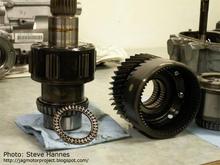
Steve Hannes: Also, and to dispel some rumors, there is no way this transfer case can function without the VC and with the existing gearset design. Here is another picture of the mainshaft. You can see the inner and outter shafts clearly here. The outer spline is "fed" by the transmission; the inner splined shaft is the output to the front wheels and reduced in RPM by the planetary gearset. Both shafts in this case have tapered roller bearings on both ends. Tapered roller bearings must be loaded properly or they will quickly wear out. If too much pressure (load) is applied, the bearing will, in a sense, crush itself, quickly run very hot and scorch the rollers and races. On the other hand, if not enough load is applied, then the bearing will run loose, rattle and eventually destroy itself that way. Too loose and the shafts will chatter causing the mating gearsets to mesh incorrectly, eventually destroying the gearsets. But, the bearings will go way before these gearsets are destroyed. ***** more info: http://jagmotorproject.blogspot.com/2007/02/motor-project-17-transfer-time.html *****
0 2009/02/05 18:49:58 jfenley
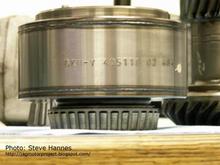
Steve Hannes: The mainshaft has no visible means of bearing load adjustment. It is fixed by the inner case dimensions. The tapered bearing races at either end are fitted to the case housings. That means then, load is set by bearing positions on the shaft. Those are pressed on. There are standards in the industry for endplay on a shaft assembly like this, so in the instance of a transfer case rebuild (where this posting is going), an endplay tolerance of .001" or less is probably acceptable. For the countershaft, it first uses a "thickness" thrust washer to "ballpark" fit into the case. Then there is an external nut with a crush collar threaded on to the countershaft end that is torqued (to an unknown spec) to achieve proper load on the tapered bearings.
***** more info:   http://jagmotorproject.blogspot.com/2007/02/motor-project-17-transfer-time.html     *****
Steve Hannes: The mainshaft has no visible means of bearing load adjustment. It is fixed by the inner case dimensions. The tapered bearing races at either end are fitted to the case housings. That means then, load is set by bearing positions on the shaft. Those are pressed on. There are standards in the industry for endplay on a shaft assembly like this, so in the instance of a transfer case rebuild (where this posting is going), an endplay tolerance of .001" or less is probably acceptable. For the countershaft, it first uses a "thickness" thrust washer to "ballpark" fit into the case. Then there is an external nut with a crush collar threaded on to the countershaft end that is torqued (to an unknown spec) to achieve proper load on the tapered bearings. ***** more info: http://jagmotorproject.blogspot.com/2007/02/motor-project-17-transfer-time.html *****
0 2009/02/05 18:49:58 jfenley
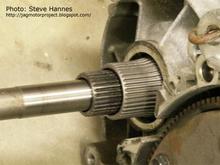
Steve Hannes: Here is a picture of an auto trans with the output shaft to the front wheels in place as it would go through the transfer case. You can see both left/right CV axle housings in place on either side of the transmission output housing. This "driven" shaft assembly actually runs through the center of the "drive" or output spline feeding the transfer case. Again, the outer shaft is running at one speed, the inner shaft has a reduced speed because of the planetary set and sheared off by the viscous coupler.
***** more info:   http://jagmotorproject.blogspot.com/2007/02/motor-project-17-transfer-time.html     *****
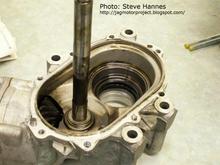
Steve Hannes: Here is a picture of an auto trans with the output shaft to the front wheels in place as it would go through the transfer case. You can see both left/right CV axle housings in place on either side of the transmission output housing. This "driven" shaft assembly actually runs through the center of the "drive" or output spline feeding the transfer case. Again, the outer shaft is running at one speed, the inner shaft has a reduced speed because of the planetary set and sheared off by the viscous coupler. ***** more info: http://jagmotorproject.blogspot.com/2007/02/motor-project-17-transfer-time.html *****
0 2009/02/05 18:49:58 jfenley
Steve Hannes: This is a closeup look at the output of the auto trans. The outer (larger spline) is drive coming from engine torque; the inner (smaller spline) is driven coming from the 39% torque output side of the transfer case.  Finally, I'd like to say the purpose of this project is to open up the case, show you what's inside and propose that some simple repairs to it might be possible if parts can be sourced.
******   more info:   http://jagmotorproject.blogspot.com/2007/02/motor-project-17-transfer-time.html     ******
Steve Hannes: This is a closeup look at the output of the auto trans. The outer (larger spline) is drive coming from engine torque; the inner (smaller spline) is driven coming from the 39% torque output side of the transfer case. Finally, I'd like to say the purpose of this project is to open up the case, show you what's inside and propose that some simple repairs to it might be possible if parts can be sourced. ****** more info: http://jagmotorproject.blogspot.com/2007/02/motor-project-17-transfer-time.html ******
0 2009/02/05 18:55:34 jfenley
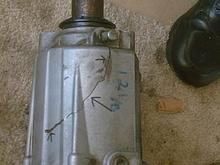
Cracked Transfer Case
0 2009/02/16 14:03:15 jfenley
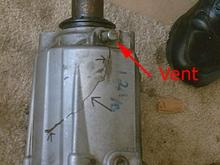
TC vent
TC vent
0 2009/06/12 10:23:16 jfenley

Top
Jaguar Forums - Jaguar Enthusiasts Forum
  • Contact Us
  • FAQ
  • Archive
  • Advertising
  • Cookie Policy
  • Privacy Statement
  • Terms of Service
  • Your Privacy Choices
  • Manage Preferences

© 2026 MH Sub I, LLC dba Internet Brands

Follow Us        


When you click on links to various merchants on this site and make a purchase, this can result in this site earning a commission. Affiliate programs and affiliations include, but are not limited to, the eBay Partner Network.