Jaguar Forums - Jaguar Enthusiasts Forum
  • LOG IN
  • REGISTER
  • Forums
    • General Jaguar Forums
      • New Member Area - Intro a MUST
      • Jaguar Forums Feedback & Suggestion Center
      • General Tech Help
    • Jaguar Models ( Current )
      • XF (X260)
      • F-Type ( X152 )
      • XE ( X760 )
      • E-Pace
      • F-Pace (X761) / C-X17
      • I-Pace EV
    • Jaguar Models ( Modern )
      • XF and XFR ( X250 )
      • XJ ( X351 )
      • X-Type ( X400 )
      • S-Type / S type R Supercharged V8 ( X200 )
      • XJ XJ6 / XJ8 / XJR ( X350 & X358 )
      • XJ XJ8 / XJR ( X308 )
      • XJ XJ12 ( X305 )
      • XJ XJ6 / XJR6 ( X300 )
      • XK8 / XKR ( X100 )
      • XK / XKR ( X150 )
    • Jaguar Models ( Classics )
      • Mark V - X 420G
      • MKI / MKII S type 240 340 & Daimler
      • XK120 XK140 XK150
      • E type ( XK-E )
      • XJ6 & XJ12 Series I, II & III
      • XJS ( X27 )
      • XJ40 ( XJ81 )
      • XKSS
      • XJ220
    • Other Jaguars
      • Other Jaguar Models / Concepts / Replicas
    • Diesel variants
      • Diesel variants - All models
    • Non Jaguar vehicles
      • Non-Jaguar Vehicles
    • Brand Review
      • Jaguar Press release
      • Jaguar Customer Relationship Centre
      • Jaguar Engines & transmissions
      • Wheels / Tires, Suspension & handling
      • Interior
      • Exterior
      • Audio/Visual Electronics
      • Detailing / Car care
      • Motorsports
    • Jaguar Classifieds
      • Marketplace
      • PRIVATE For Sale / Trade or Buy Classifieds
      • VENDOR 'For Sale' Classifieds
    • Regional
      • US Northeast
      • US Central
      • US Southwest
      • US Western
      • US Northwest
      • US Midwest
      • US Mid Atlantic
      • US Lower Atlantic
      • US Southern Midwest
      • Canada
      • Mexico, South America
      • UK & Eire
      • Europe
      • Australia - Queensland
      • Australia - New South Wales / ACT
      • Australia - Victoria / Tasmania
      • Australia - Western
      • Australia - South / NT
      • New Zealand
      • Other Areas
    • Official Site Sponsors
      • VENDOR Threads
    • General Interest / History
      • Sights N Sounds
      • Photography
      • Forum announcement archives / Forum History
      • Jaguarforums Merchandise
      • Memorial Section
  • News
  • Marketplace
    • Vendor Directory
    • Become a Vendor
    • Member Marketplace
    • Vendor Marketplace
    • Site Store
  • New Posts
  • Tools
    • Car Payment Calculator
    • Tire Rim Calculator
    • Vin Decoder
    • Recalls
    • Technical Service Bulletins (TSBs)
    • Members List
    • Live Feed
  • Gallery
  • View Dark Mode
    • Please register or login to enable Dark Mode.
  • Log In
  • Register
Jaguar Forums - Jaguar Enthusiasts Forum
    • Threads
      • Advanced
Dark Mode

Please register or login to enable Dark Mode.

Log In

Forgot your Password?

By logging into your account, you agree to our Terms of Use and Privacy Policy, and to the use of cookies as described therein.
or
 
  • Recent
  • Commented
  • Albums
  • My Pictures

Rob Evenson's Photos

View Profile
Sort:
Most Recent
  • Most Recent
  • Most Comments
  • Albums
  • Photos
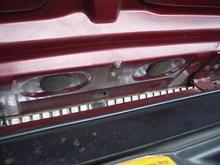
Measurement from first hole center to bonnet edge
0 2014/03/26 15:56:25 Rob Evenso
Leaper
Leaper
0 2014/03/26 15:54:31 Rob Evenso
Don't over-tighten.....you'll dent the bonnet!!!
0 2014/03/26 15:54:31 Rob Evenso
Don't over-tighten.....you'll dent the bonnet!!!
0 2014/03/26 15:54:31 Rob Evenso
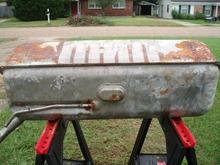
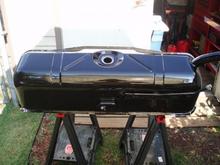
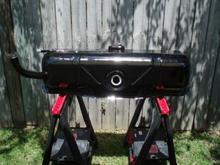
Tank out of vehicle, rear-facing side.
0 2014/03/13 21:23:28 Rob Evenso
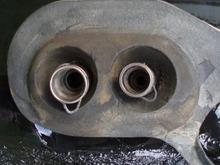
Tank out of vehicle, bottom-facing side.
0 2014/03/13 21:23:28 Rob Evenso
Tank out of vehicle, front and bottom-facing sides.
0 2014/03/13 21:23:28 Rob Evenso
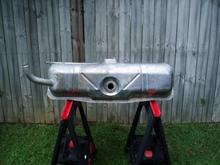
Tank out of vehicle, front and top-facing sides.
0 2014/03/13 21:22:37 Rob Evenso
Close-up of bottom, drain plug to the left.  When the tank is in the vehicle the plug is to the right of the feed/return lines when looking up from under the vehicle.  There is only one way to get to the lines, get under the vehicle from the drivers side, back far enough to view over the top of the differential.  You'll see the fuel lines, each with their respective retaining clips.  Reach up and turn the clips counter clock-wise a quarter turn.  DON'T YANK THEM OUT!!! Leave them attached to the tank.
Close-up of bottom, drain plug to the left. When the tank is in the vehicle the plug is to the right of the feed/return lines when looking up from under the vehicle. There is only one way to get to the lines, get under the vehicle from the drivers side, back far enough to view over the top of the differential. You'll see the fuel lines, each with their respective retaining clips. Reach up and turn the clips counter clock-wise a quarter turn. DON'T YANK THEM OUT!!! Leave them attached to the tank.
0 2014/03/13 21:22:37 Rob Evenso
Tank after clean up and lots of sanding, then more rust removal solution, then more sanding and another round of solution followed by a clean rinse.
0 2014/03/13 21:22:37 Rob Evenso
Another close-up to tank bottom after initial cleaning.  Can you see the leak culprit?  It's directly above the drain hole. I sealed the hole with Quick Steel putty, letting it set, then sanding it smooth.  I applied the Quick Steel to several other areas for suspect weak spots.
Another close-up to tank bottom after initial cleaning. Can you see the leak culprit? It's directly above the drain hole. I sealed the hole with Quick Steel putty, letting it set, then sanding it smooth. I applied the Quick Steel to several other areas for suspect weak spots.
0 2014/03/13 21:20:31 Rob Evenso
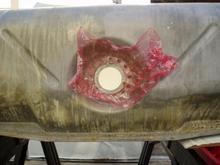
The interior of the tank needs to cleaned as well.  This pic and the following few demonstrate how to seal the various openings on the tank in order to use the rust removal solution on the interior of the tank.  In this pic, for the sending unit opening, cut a piece of cardboard that has the same thickness of the sending unit, I had to use two or three pieces to get the desired thickness.  Place a piece of plastic wrap first to protect the cardboard, then insert the cardboard, followed by the retaining ring used for the sending unit.  This opening is the one used for adding the solution and rinsing the interior of the tank.
The interior of the tank needs to cleaned as well. This pic and the following few demonstrate how to seal the various openings on the tank in order to use the rust removal solution on the interior of the tank. In this pic, for the sending unit opening, cut a piece of cardboard that has the same thickness of the sending unit, I had to use two or three pieces to get the desired thickness. Place a piece of plastic wrap first to protect the cardboard, then insert the cardboard, followed by the retaining ring used for the sending unit. This opening is the one used for adding the solution and rinsing the interior of the tank.

0 2014/03/13 21:20:31 Rob Evenso
Opening seal - duct tape with tie strap
0 2014/03/13 21:20:31 Rob Evenso
Opening seal - duct tape with tie strap
0 2014/03/13 21:19:08 Rob Evenso
Opening seal - duct tape with tie strap
0 2014/03/13 21:19:08 Rob Evenso
Opening seal - duct tape with tie strap
0 2014/03/13 21:19:08 Rob Evenso
After the first application of rust aversion paint, I applied a layer of fiberglass on the bottom of the tank in order to provide an extra barrier from moisture in the event the boot sprung another leak. The fiberglass is painted onto the surface.  You simply keep applying the rust aversion paint until there is full coverage over the fiberglass.  

It is important to mention to use only one layer of fiberglass.  The reason is after the paint is applied the thickness increases and if any additional layers of fiberglass is applied, it will be a real challenge to get the tank back into it's allotted space.  The space is very tight, even with the single layer, it was difficult to get the tank back in.
After the first application of rust aversion paint, I applied a layer of fiberglass on the bottom of the tank in order to provide an extra barrier from moisture in the event the boot sprung another leak. The fiberglass is painted onto the surface. You simply keep applying the rust aversion paint until there is full coverage over the fiberglass. It is important to mention to use only one layer of fiberglass. The reason is after the paint is applied the thickness increases and if any additional layers of fiberglass is applied, it will be a real challenge to get the tank back into it's allotted space. The space is very tight, even with the single layer, it was difficult to get the tank back in.
0 2014/03/13 21:16:06 Rob Evenso
After several coats of rust aversion paint.
0 2014/03/13 21:16:06 Rob Evenso
After several coats of rust aversion paint.
0 2014/03/13 21:16:06 Rob Evenso
After several coats of rust aversion paint.
0 2014/03/13 21:14:22 Rob Evenso
Getting ready to put the tank back in the vehicle, ensure the fuel line clips are in place before you put the tank in.  Note the orientation of the clips, they are in the locked position.  It is darn near impossible to get the clips on the tank after the tank has been installed.
Getting ready to put the tank back in the vehicle, ensure the fuel line clips are in place before you put the tank in. Note the orientation of the clips, they are in the locked position. It is darn near impossible to get the clips on the tank after the tank has been installed.
0 2014/03/13 21:14:22 Rob Evenso
Ready to go back in.
0 2014/03/13 21:14:22 Rob Evenso
Ready to begin the process.  You can see I had already started a pilot hole, it's to the right of the large access hole.
Ready to begin the process. You can see I had already started a pilot hole, it's to the right of the large access hole.
0 2014/03/13 08:33:53 Rob Evenso
Safety first, covered the fuel tank with plactic to prevent rogue sparks from the hole saw going where I didn't want them. I also disconnected the negative post of the battery. A few extra minutes, with no regrets.... some things you don't get a do-over.
0 2014/03/13 08:33:53 Rob Evenso
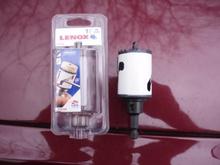
1 1/2" All Metal hole saw bit.  Place a little oil on either the bit edges or surface being cut to reduce heat/extra spark.  With an all metal bit, you'll be done in about three seconds.
1 1/2" All Metal hole saw bit. Place a little oil on either the bit edges or surface being cut to reduce heat/extra spark. With an all metal bit, you'll be done in about three seconds.
0 2014/03/13 08:33:31 Rob Evenso
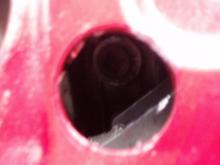
Cut the new access hole to remove the differential fill plug.  If i had a do-over, I would have moved the hole about a 1/2" to the left.  I sprayed a little primer on the new cut to cover the exposed metal.
Cut the new access hole to remove the differential fill plug. If i had a do-over, I would have moved the hole about a 1/2" to the left. I sprayed a little primer on the new cut to cover the exposed metal.
0 2014/03/13 08:33:31 Rob Evenso
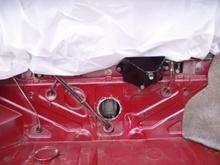
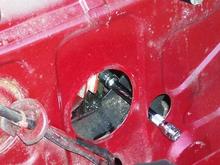
The differential fill plug is clearly visible.  My camera angle is to the right of the hole, so it appears there is more clearance on the left side than there actually is, thus I should have cut the hole slightly more to the left.
The differential fill plug is clearly visible. My camera angle is to the right of the hole, so it appears there is more clearance on the left side than there actually is, thus I should have cut the hole slightly more to the left.
0 2014/03/13 08:33:31 Rob Evenso
I used a 6". 1/2 extension to remove the plug.  You can see I was right up against the left side of the hole.  You don't need any socket on the end, just the extension.  The extension end fits into the differential filler plug socket. Use  a 3' extension to remove the differential drain plug, except reverse the extension and use either a 1/2' open end wrench or a vice grip placed at the socket end of the extension.  The Haynes manual makes reference to needing a "special pipe plug socket", this isn't necessary when utilizing the 1/2' extensions.
I used a 6". 1/2 extension to remove the plug. You can see I was right up against the left side of the hole. You don't need any socket on the end, just the extension. The extension end fits into the differential filler plug socket. Use a 3' extension to remove the differential drain plug, except reverse the extension and use either a 1/2' open end wrench or a vice grip placed at the socket end of the extension. The Haynes manual makes reference to needing a "special pipe plug socket", this isn't necessary when utilizing the 1/2' extensions.
0 2014/03/13 08:33:01 Rob Evenso
This funnel has a one quart capacity, you need to add 2.2 qts to refill the differential.  The funnel also has a valve at the base (blue part) that you can open once you've filled the funnel. The hose has an outside diameter of 3/4".  I replace the hose that came with the funnel because it was a little short and I didn't want it coming out of the fill hole with the when I opened the valve. Having the valve allows you to have both hand available, one to secure the hose, the other to open the valve.
This funnel has a one quart capacity, you need to add 2.2 qts to refill the differential. The funnel also has a valve at the base (blue part) that you can open once you've filled the funnel. The hose has an outside diameter of 3/4". I replace the hose that came with the funnel because it was a little short and I didn't want it coming out of the fill hole with the when I opened the valve. Having the valve allows you to have both hand available, one to secure the hose, the other to open the valve.
0 2014/03/13 08:33:01 Rob Evenso
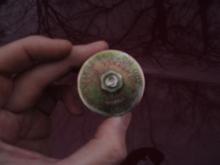
This is the top view of a device called an "Expand-Tite".  It's basically a bushing between two large washers with a bolt to tighten.  When tightened, the bushing is expanded to plug the newly drilled access hole.
This is the top view of a device called an "Expand-Tite". It's basically a bushing between two large washers with a bolt to tighten. When tightened, the bushing is expanded to plug the newly drilled access hole.
0 2014/03/13 08:33:01 Rob Evenso
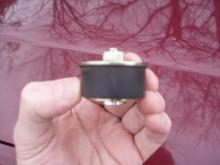
Side view
Side view
0 2014/03/13 08:32:22 Rob Evenso
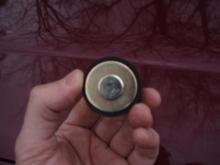
Bottom view
Bottom view
0 2014/03/13 08:32:22 Rob Evenso
Differential filled and all buttoned up with the Expand-Tite plug.
0 2014/03/13 08:32:22 Rob Evenso
 
 
First
Page
2 of 2
Last
Go To
Page
  • 1
  • 2
2 of 2
Go To GO
Go to page of 2 pages
  • 1
  • 2

Top
Jaguar Forums - Jaguar Enthusiasts Forum
  • Contact Us
  • FAQ
  • Archive
  • Advertising
  • Cookie Policy
  • Privacy Statement
  • Terms of Service
  • Your Privacy Choices
  • Manage Preferences

© 2026 MH Sub I, LLC dba Internet Brands

Follow Us        


When you click on links to various merchants on this site and make a purchase, this can result in this site earning a commission. Affiliate programs and affiliations include, but are not limited to, the eBay Partner Network.