Screw in a tire, replace or repair?


Thread Starter
|
Senior Member
Joined: Jan 2014
Posts: 969
Likes: 270
From: Las Vegas
 Screw in a tire, replace or repair?
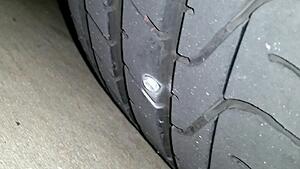
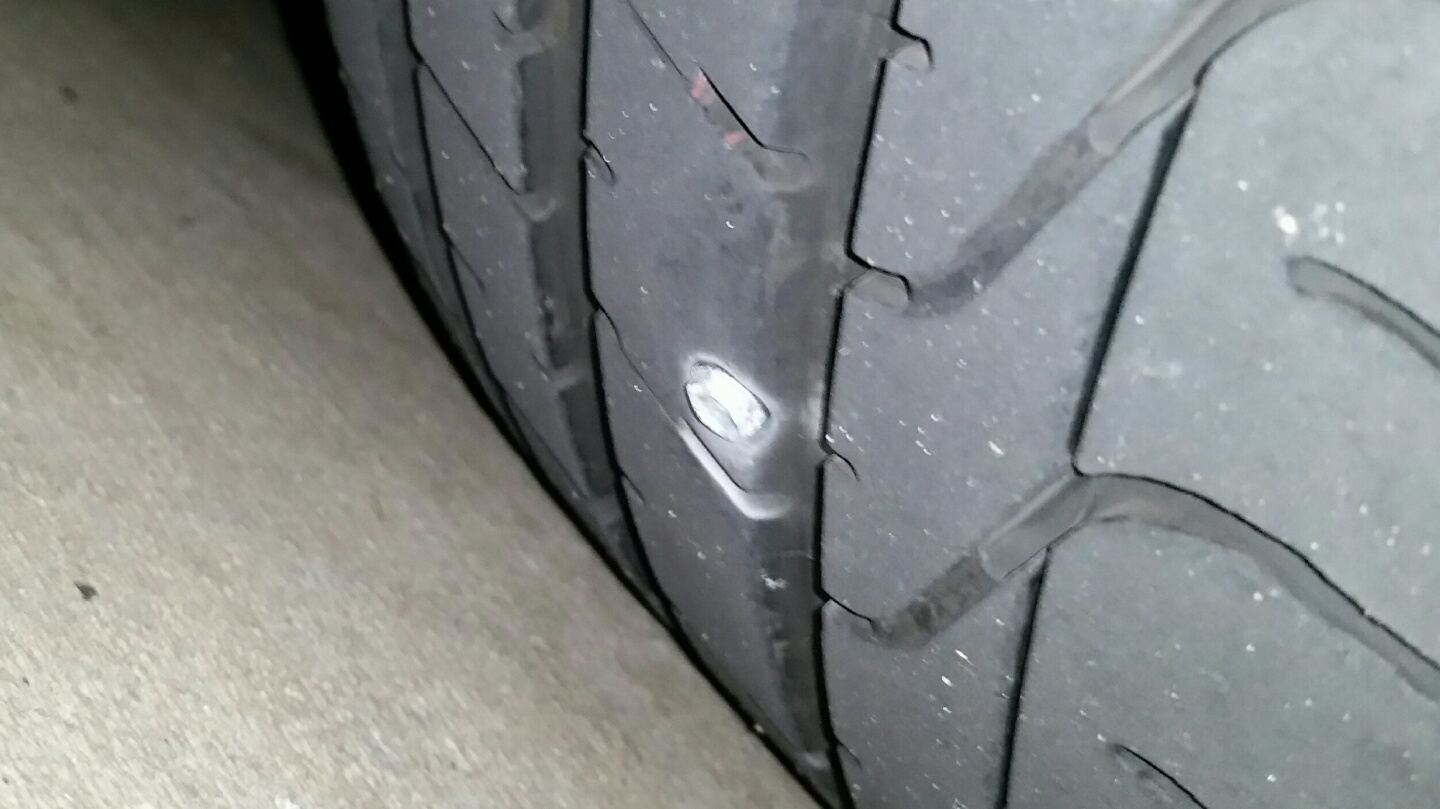
I had the unfortunate luck to get a screw in my front tire. Tire has 3700 miles on it. Pirelli doesn't recommend repairing these tires. So Now I'm left with should I get it plugged or do I need to replace.
If I replace I wanted to go with the Michelin Pilot Super Sport as I planned to eventually. But the tires don't have much mileage on them, so could I get away with just replacing the flat one with another Pirelli and only switch out when I'm ready to replace all 4?
If I replace I wanted to go with the Michelin Pilot Super Sport as I planned to eventually. But the tires don't have much mileage on them, so could I get away with just replacing the flat one with another Pirelli and only switch out when I'm ready to replace all 4?


Veteran Member
Joined: May 2014
Posts: 1,420
Likes: 265
From: Mulmur, Ontario, Canada
As others say, plug should be good.. although dismounting the tire and patching from the inside is supposed to be better, at least according to a couple of tire shops I've been to over the years.. I can't remember if it was patch and plug or just patch.
Lawrence.
Thread Starter
|
Senior Member
Joined: Jan 2014
Posts: 969
Likes: 270
From: Las Vegas
Yeah, did some searching and the general consensus seems to be patch > plug especially if you plan on driving faster than highway speeds.
In may I'm doing a rolling half-mile drag event so I'll probably want to replace both front tires then. Not sure I want to risk it with a patched tire even though some say with a properly patched tire they could do runs all day long. :/
In may I'm doing a rolling half-mile drag event so I'll probably want to replace both front tires then. Not sure I want to risk it with a patched tire even though some say with a properly patched tire they could do runs all day long. :/

Senior Member
Joined: Apr 2014
Posts: 921
Likes: 82
From: Canada
Trending Topics

Senior Member
Joined: Apr 2014
Posts: 111
Likes: 20
From: DFW
Ditto. First, are you sure the screw penetrated to the air chamber?? I ride motorcycles and this is a common problem, plug or replace? I carry plugs & a small compressor to get me to a shop then have the tire dismounted and a patch applied from inside. They actually have a plug that pulls from inside through to the outside attached to a patch for the inside. Never had one fail. Those are EXPENSIVE tires.

A dealer would refuse to plug. I do it all the time and have never had an issue. For most street driving, no problem. However, a plugged tire is no longer suitable for tracking the car. It certainly will no longer deserve a ZR rating. The cord may have been compromised.

Member
Joined: Sep 2014
Posts: 92
Likes: 9
From: Aptos, California, USA
As long as you don't do any prolong high speed driving, it should be fine. I've had the same thing happen to me and I just keep my highway speed to no more than 70mph except for an occasional burst to get around someone. I used it for several thousand miles before I had to replace it. This happened on a non Jaguar for the record, but still a Z rated tire. The main thing is not to get the tire to hot. Cecil...........

Veteran Member
Joined: Jul 2014
Posts: 2,056
Likes: 584
From: San Francisco
Depends on your driving. If you will be doing any track days or very high speeds then I would not get it patched. But if you're just cruising around then a patch is probably not a big deal. You will lose the speed rating and some shops will refuse to repair it.

Senior Member


Joined: Jun 2014
Posts: 408
Likes: 97
From: Bellevue, WA
Replace the two tires now and you'll be set up for your May event (which is only a few short weeks away anyway). From what you're saying, it doesn't look like you want to run 140-150+ trap speeds with a repaired tire. (I wouldn't either.) With new fronts, you can move past any "plug-patch" concerns the moment those bad boys are bolted on. And, if your installer finds the screw didn't penetrate, you'll have a spare.

Totally agree, no issues with plugging that damage in that location. I think it'd be crazy to replace that tyre in that good a condition with that tread left available, but each to their own


Veteran Member
Joined: Jul 2014
Posts: 6,176
Likes: 1,039
From: Maryland, USA
That looks like a sheet metal screw of the type used to attach sections of gutter together. If' so, the threaded part is about 1/4" long and hasn't come close to the inner structure of the tire.
It quite likely won't even need a patch or plug, but it will need to be extracted to know for sure. If it does need a patch, as the vast majority have said, given it's location, it would be crazy to replace it unless you see yourself running at 150mph for extended periods.
EDIT: Disregard, given additional info from the OP. Poster had not previously mentioned the tire was losing air.
It quite likely won't even need a patch or plug, but it will need to be extracted to know for sure. If it does need a patch, as the vast majority have said, given it's location, it would be crazy to replace it unless you see yourself running at 150mph for extended periods.
EDIT: Disregard, given additional info from the OP. Poster had not previously mentioned the tire was losing air.
Last edited by Foosh; Mar 15, 2015 at 10:33 AM. Reason: Clarification

Senior Member
Joined: Mar 2015
Posts: 678
Likes: 104
From: Enumclaw, Washington U.S.A.
My wife drove the F-Type for less than a mile and picked up a similar tire issue. I got to try out the jack that came with the spare tire kit. Not the right jack per the manual based on the shape of the jacking surface but I found a jacking point that looked ok. Now the tire is patched and I have an excuse to shop for new tires. Thinking about the trying the continental streetable track compound ones they now have at tire rack.
Senior Member
Joined: Jun 2014
Posts: 408
Likes: 97
From: Bellevue, WA
It's difficult to tell visually how stable the tire really is, at least from LynxFX's pic, even though it presents a goodly amount of tread and low miles. Neither plugs nor patches have ever given me an issue either, but I ran those patched tires on the street with no concerns whatsoever. Though I realize many have do so, there's just something about running a plugged/patched tire on the track or for that matter, on some strip for a few high-speed runs. But, as you say, to each their own. Peace of mind, at least for me, is worth the bucks.
Thread Starter
|
Senior Member
Joined: Jan 2014
Posts: 969
Likes: 270
From: Las Vegas
Thanks for all the input. I'll take it in with the expectation of getting it plugged/patched for now. Once we see how long the screw is and how much actual damage will determine if I order a pair of new tires. I just hate to waste money if it isn't needed. It is a slow leak, as I lost about 18 PSI over the course of 12 hours.

Senior Member
Joined: Sep 2014
Posts: 196
Likes: 38
From: USA.
Plugging is the easiest, I have done hundreds without a problem. You can buy a kit or have it done at a tire shop. Patching is more trouble and expense. Requires removing the tire from the rim patching the hole and reinstall and rebalance.