When you click on links to various merchants on this site and make a purchase, this can result in this site earning a commission. Affiliate programs and affiliations include, but are not limited to, the eBay Partner Network.
I will talk to my contact at DM. I have attached a photo of my bracket which I know as Rear Engine Stabiliser. I was thinking the bracket you were referring to was underneath somewhere!
So the bushes in this stabiliser were both renewed. I cannot see the rear but guess it is the same bracket in the parts manual which only shows one such bracket.
The thread was adjusted so it was just snugged up to take the engine weight and then locked off.
We managed along with some foul language. Is it any easier on the Auto with the larger tunnel or is the space eaten up by the larger bell housing for the flexplate & ring gear? As you say miles of space on the V8.
Last edited by Glyn M Ruck; Apr 27, 2023 at 05:04 AM.
We managed along with some foul language. Is it any easier on the Auto with the larger tunnel or is the space eaten up by the larger bell housing for the flexplate & ring gear? As you say miles of space on the V8.
Auto is the same. No room as this is the back of the cam covers and heads that get in the way as the room between them and the bulk head is the issue. When I put the mount in with the engine I found it easier as the heater and the heater pipes were not in place but when I replaced mine a couple of years ago it was a real struggle to get down to the bottom bolt.
Do you have a Parts Manual? Do you know the part number?
If it is C22112 there is one on Ebay at present.
Non Jaguar spares are hard to come by for the Daimler V8
To clarify you were talking about a plate between the sump and bellhousing? This part number is for the Engine Stabiliser so I do indeed need to look under the car to see if I have the reinforcement bracket? I have no idea what part number this may be.....
Thanks
There's a real need for a good photo or a spare parts book here (or someone who has one and can copy the relevant drawing). Once you know what it bolts to, it shouldn't be difficult to make something to perform the same function.
FWIW, i've recently become familiar, too familiar AFAIC, with a "stabilizer". as it was very much in the way when replacing the steering rack on my '53 MG.
mine sits a bit higher on the block than the engine mounts and appears to moderate the amplitude of side-to-side motion.
There's a real need for a good photo or a spare parts book here (or someone who has one and can copy the relevant drawing). Once you know what it bolts to, it shouldn't be difficult to make something to perform the same function.
Indeed Peter. That's why I asked if the OP had a Parts Manual. I don't have a picture in my mind of what the darn thing looks like.
Last edited by Glyn M Ruck; Apr 27, 2023 at 03:27 PM.
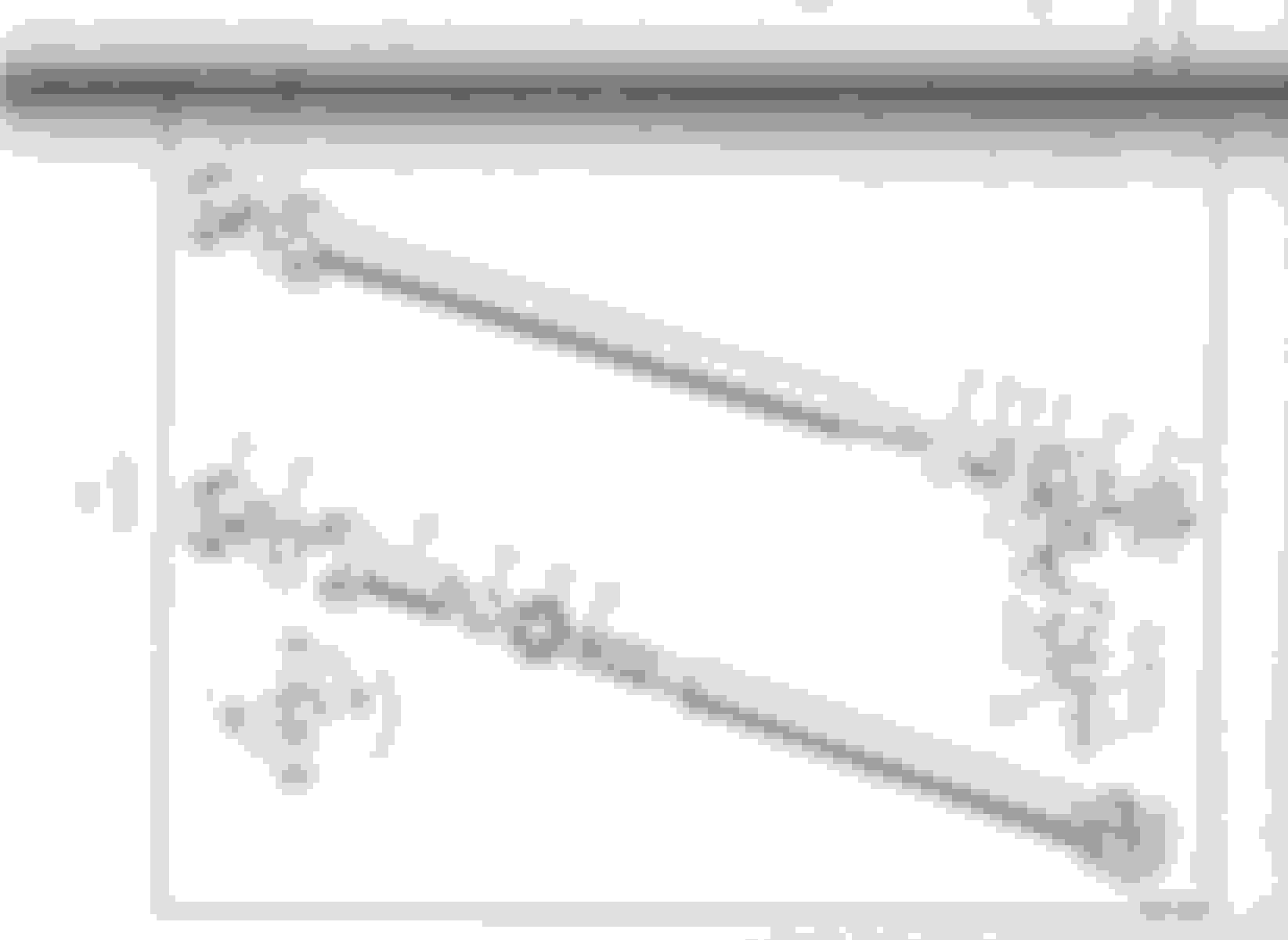
I have the parts manual although difficult to scan. I attach the relevant pages. All the rubber parts and bearing parts and UJ's on these images were replaced plus the engine mounts. I cannot see any additional items to perform a strengthening function. I did not fit these parts myself.
I have also investigated the tyres which I believe were fitted some years ago and whilst they have not done any mileage may require replacement anyway. I have looked but cannot see any date marks. They are Avon steel radials made in UK. The DOT code is CA347. That does not register anywhere I can find. There is no 4 digit date code.
So far there doesn't seem to be a sign of Taylor's strengthener/stiffener as a separate part. Is it possible the extra strengthening is a gusset in the casting (of the bell and/or gearbox case) rather than a bolted on bracket?
Indeed! Daimler V8's are few & far apart in SA. I know of no one in Cape Town that I could crawl under. There is a silver one in Johannesburg I know of.
Last edited by Glyn M Ruck; Apr 28, 2023 at 03:46 AM.
If the centre bearing on the propshaft isn't in the proper alignment you can have vibration. It's caused by the driveline angles across the U joints being incorrect. There is usually a side to side adjustment on the centre bearing to enable getting the angles correct, plus shims to adjust the height. Ideally, the difference in compound angle ( the net angle calculated in both the horizontal and vertical planes) across each joint should be within 1°. For example, if the net angle across the joint at the differential is 1½°, then the others should fall in the 1½°-2½° range. The smaller the difference between the joints, the better.
I doubt it's tires, as you said the car was smooth before and now it isn't after the work done, and the tires haven't changed. It's most likely due to the parts that were disturbed/replaced, rather than a tire spontaneously going bad.
Last edited by Jagboi64; Apr 28, 2023 at 12:19 PM.
I think Peter is likely right. That Jaguar made a permanent change in a component & not a bolt on afterthought.
We should also remember that Daimler's ran split, as in two piece, propshafts IIRC. It's been a long time since I looked at one on a hoist. Hence JB's centre bearing comment.
Last edited by Glyn M Ruck; Apr 28, 2023 at 01:08 PM.
I'm too lazy to read through the thread, so I'll put this out there.
Are the ends of the U-Joints in the same plane ? See photo.
And that's not good enough, things have to marked so they are not 180 degrees out from where they were.
About the centre engine support hanger, when I did mine, I snugged it up just to take up the slack, plus 1 flat, I virtually put none of the engine weight on it.
I thought putting too much engine weight on the support would start lifting the engine of its mounts, this in turn would cause the engine to move around and cause unwanted vibration.
I thought it was to take the torque of the engine, not so much the weight ?
It may also pull the back of the engine up enough to throw things out of alignment if tightened too much.