When you click on links to various merchants on this site and make a purchase, this can result in this site earning a commission. Affiliate programs and affiliations include, but are not limited to, the eBay Partner Network.
Yes, there isn't much to remove there. Although we don't know how much or how hard the engine was driven. Has it reached maximum heat to produce the scoring or was it just slow trips around town?
I think Chris has given us as much history as he knows. He does say ~ "My engine ran briefly when I bought the car but hasn't run before that for 8 years or so". This might have been a mistake, who knows? When I bought my car I just made sure it was not seized by hand & towed it home for stripping. 4 ring piston sets run very dry from a lubrication perspective.
Anyway it is what it is. He must now move forward with enthusiasm & enjoy it.
Last edited by Glyn M Ruck; May 24, 2021 at 07:34 AM.
I think remove some metal where the piston is scuffed, clean and reasseble and it will probably be good to go. Agreed, some polishing of the bore where there is some rust and that will likely take care of the block.
Last edited by Jagboi64; May 24, 2021 at 03:53 PM.
The 4 ring piston was developed to reduce oil consumption & especially on 3.8's. Both 3 & 4 ring pistons are still available. It might be my imagination but engines with 4 ring pistons seem to pick up revs slightly more slowly but it's not an issue. We are not on a race track.
Flex Hone.
Last edited by Glyn M Ruck; May 24, 2021 at 07:13 PM.
The photos of the bores are not great, but from what I can tell, those areas with the pitting and rust are not acceptable.
Using a flex hone may remove too much material in those areas and cause a not so true bore.
Just fudging it along like this will eventually cause failure in the end.
While getting there, there will be lots of "blow-buy" piston slap and other sounds coming from the rings in an untrue bore.
These hand held honing stones can't compare to a proper job at the machine shop.
Again thanks for the comments and guidance
I'm taking it to a specialist to be measured up and appraised and I'll report back on what they say/recommend.
I am certainly only doing this once and will do what needs to be done without any unnecessary work.
In general from the comments the engine isn't in too bad a state.
Lets see what the engine guy says
Wise move!. I know I'm like a stuck record. Be guided by the measurements. The place for that is a pro machine shop.
The pictures were more to show the process of honing. Like Fraser my use of a flex hone has only ever been a once through. Otherwise over to the machine shop. I agree wholeheartedly with Jeff
If it ends up needing a rebore so be it. That also solves the piston doubt. Don't be surprised if that ends up being the recommended route. We can't evaluate the corrosion from those pictures. The machine shop also has a name & warranty to protect.
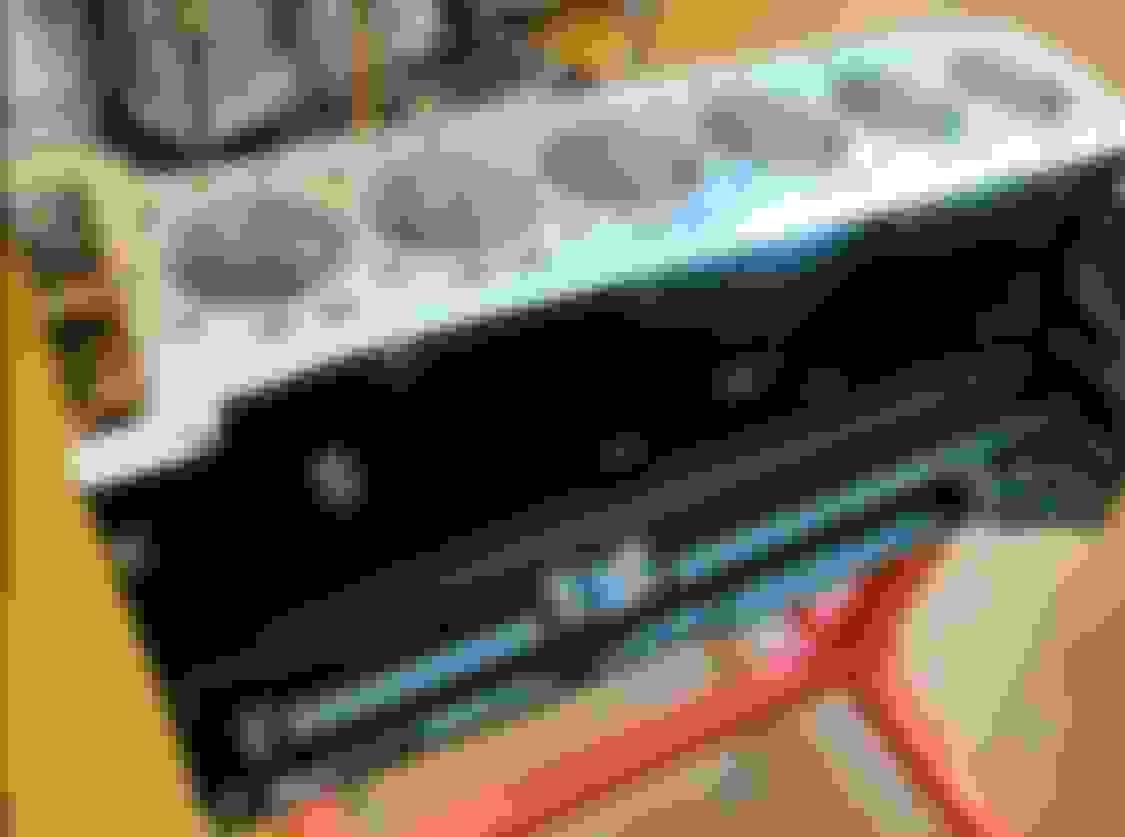
You want a rebored or cleaned up block to look like this.
This is a 4.2 but gives you the idea.
3.8. This lighting accentuates the honing more.
Last edited by Glyn M Ruck; May 25, 2021 at 09:22 AM.
Yes, a machine shop will measure up the bores for "parallel".
With out checking, I believe no more then 5 thou "out" for parallel. (I like to see it perfect)
Any thing more then that, it the rings won't stay seated under normal driving conditions and you will see blue smoke and blow-by.
They'll check the deck too of course, 5 thou there as well.
There are different types of honing stones other then the ball type for the back yard mechanic and one can achieve fairly parallel bores, but then the bore simply gets too big and you have piston slap and blow by from low ring tension.
And if one then installs rings to compensate for larger bore, that still doesn't deal with the piston's being too small.
Plus the piston then moves around and causes excessive wear on the ring landings and binding there.
The only solution are new pistons when properly cleaning up the bores.
Can you post a photo of the bores? There should be a crosshatch pattern, if that is there, that is good. vertical marks may not be too bad. If you run a fingernail over them can you feel a groove? Or is it more of bit of burnishing that isn't really material removed from the bore?
Yes, the pisons have been oversize, and the crankshaft ground undersize. The pistons are odd, I've not seen a oil ring under the pin before. The specs are in the manual for the side clearance of the rings, you should measure that with a feeler gauge. Typically the rings will rock back and forth as they go up and down in the bore and that opens up the groove in the piston over time. Too much rocking and the engine becomes an oil burner.
Wouldn't hurt to take it in for an appraisal, obviously you want a shop experienced in the XK engine. Sorry I can't suggest one near you. The camshafts were made of very good material, they are virtually indestructible, and essentially never wear.
You can certainly assemble an engine yourself with basic handtools and a few specialist tools. Obviously you need an inch sized wrench and socket set, torque wrench, timing chain tensioner tool, camshaft setting gauge, and piston ring compressor and piston rign installer pliers. There are other nice to haves, like a tap and die set to clean up all the threads. Most are UNF, the ones into aluminium are UNC. Pick up the Jaguar World XK engine rebuild book ( the yellow one) it's a good picture guide.
Please don’t use a feeler gauge to measure piston to wall clearance. You are using a flat blade to measure a round object. It simply won’t work. A vernier caliper is better, but a micrometer measuring the piston and a inside micrometer measuring the bore is best.
Please don’t use a feeler gauge to measure piston to wall clearance. You are using a flat blade to measure a round object. It simply won’t work. A vernier caliper is better, but a micrometer measuring the piston and a inside micrometer measuring the bore is best.
The feeler gauge is for measuring the side clearance of the ring on the piston in it's groove, not piston to wall.
Vernier calipers are not accurate enough for any engine measurement, they are only accurate to 0.002" no matter how finely they are graduated. Fine measurement requires a micrometer.
Last edited by Jagboi64; Apr 17, 2024 at 08:41 PM.