When you click on links to various merchants on this site and make a purchase, this can result in this site earning a commission. Affiliate programs and affiliations include, but are not limited to, the eBay Partner Network.
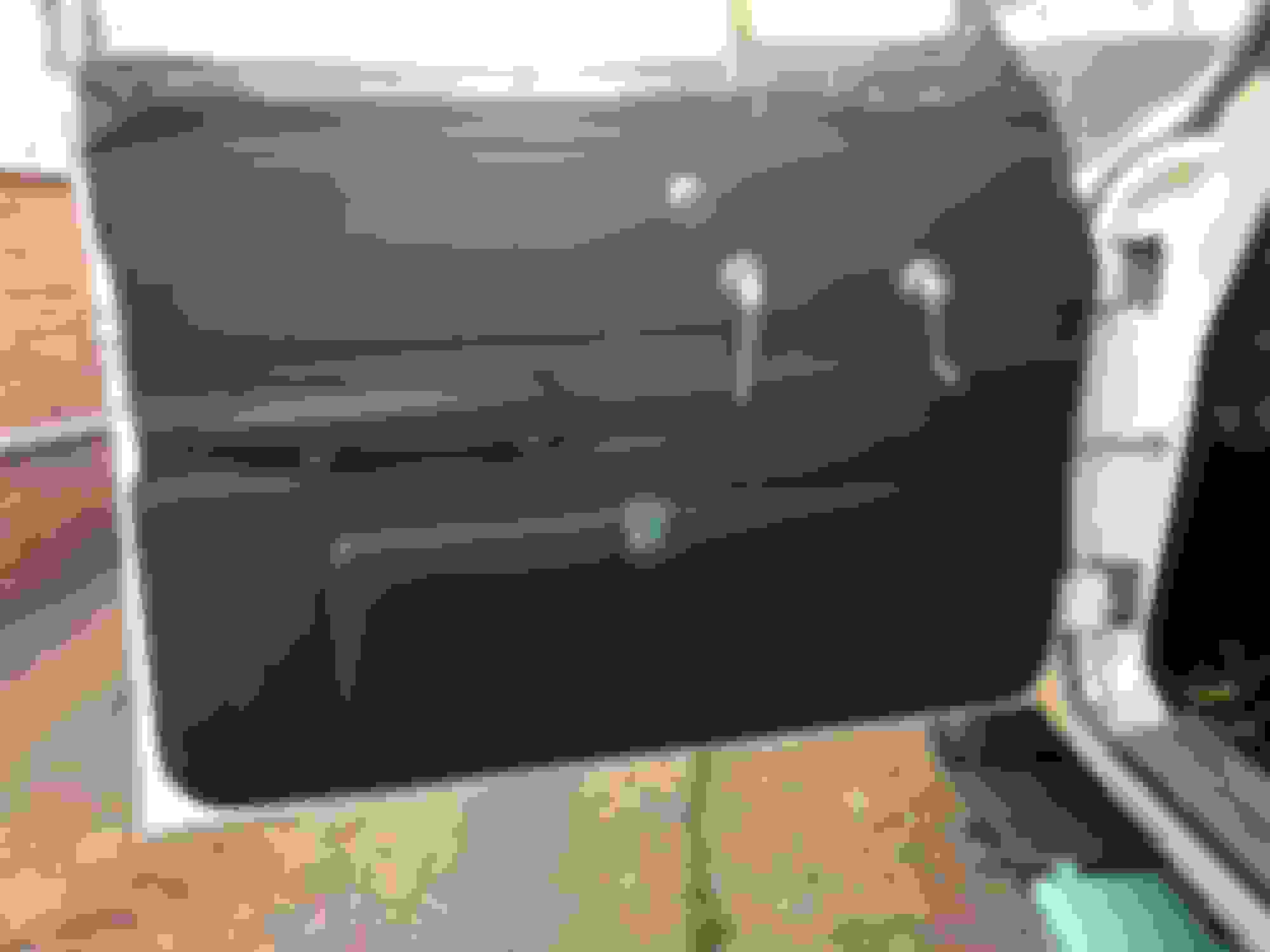
today, in order to lubricate the left side door handle (it's the terrible grinding when opening the door was driving me crazy), i had to remove the handles and then the door card. of course, once the door card was off, lubrication of the opening mechanism took about 10 seconds.
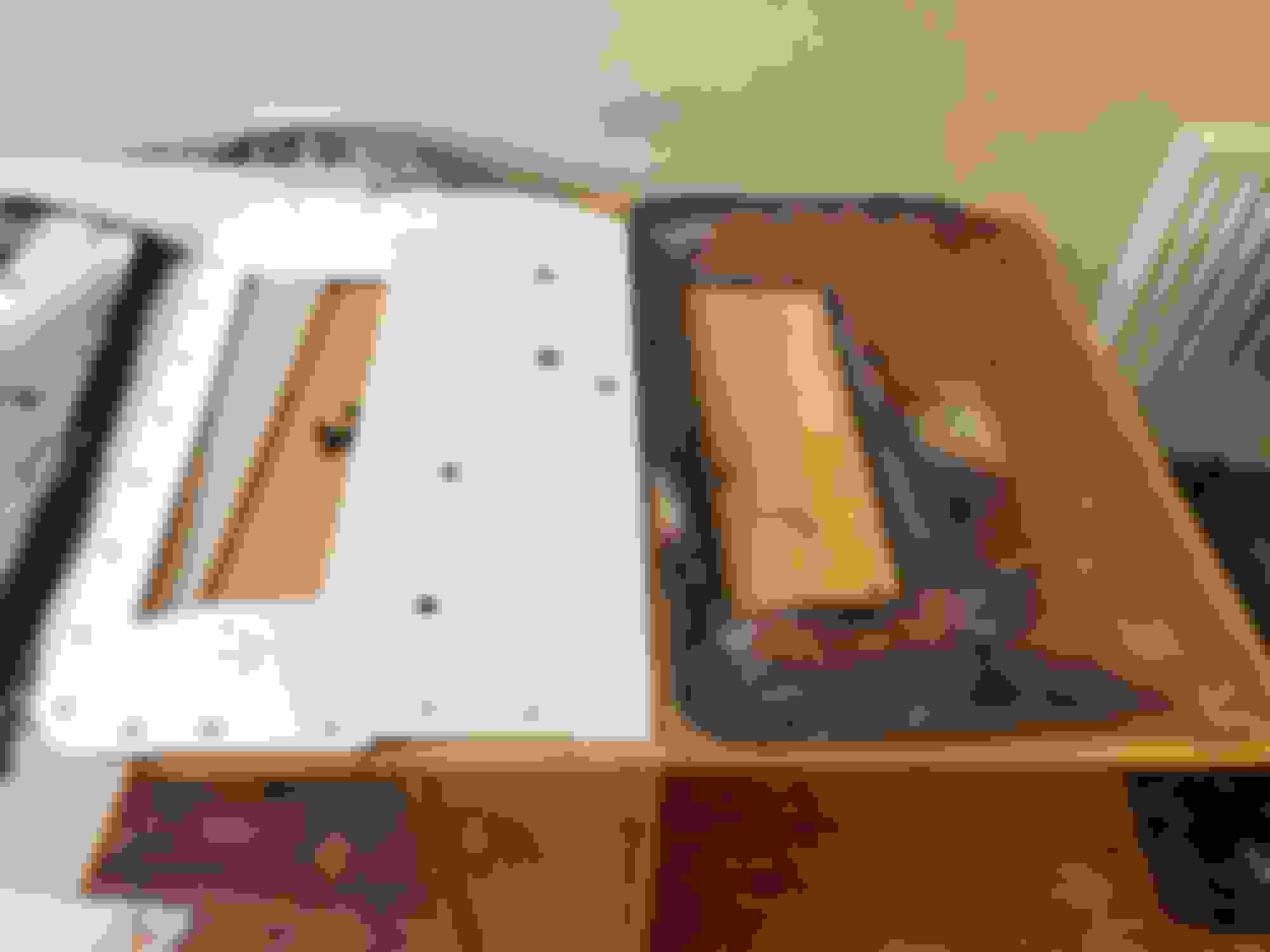
but now i'm left with an, i'm sure, original left side door card panel with an acceptable vinyl covering but an unacceptable cardboard backing. and so, need a new card backing panel. i'll assume that if i'm lucky i can find a set for just the front doors. if so, does anyone have a preference as regards sources. if i'm not convinced otherwise, i'll be ordering them, for no particular reason, from here:
on closer inspection, it looks as though they are made out of birch plywood...not cardboard. wondering if they will by pliable enough...hmmmm. i DO NOT want to fight them! and am perfectly fine with wimpy cardboard.
Last edited by hueyhoolihan; Aug 20, 2024 at 07:27 PM.
The originals were made of hardboard, or sometimes the trade name is Masonite.
i've worked with Masonite on occasion, and i'm not doubting you, but if they were Masonite, they are now more like a cardboard box that's been sitting on a boat for about a decade. most of the retaining clips decided to pull through the cardboard rather than releasing themselves from the metal door. i should probably replace all the cards, but that's not likely to happen anytime soon.
fun fact: the Masonite International Company, founded by William H. Mason in 1926 was sold, just three months ago to Owens-Corning for almost four billion.
Hardboard comes in several varieties. Some are more water resistant than others. Those that are not will deteriorate. There should be a sheet of polythene glued to the door to keep water away from the hardboard.
Hardboard is used as it has good resistance to local impact loads, has some flexibility and, compared with similar sheet materials, damps noise and vibration.
These days, a host of alternative sheet materials exist for making door panels. Still, water resistant hardboard might be the best option.
Several years ago I replaced my door cards as they had seen better days. Warped due to water ingress, mouldy in places and the clips pulled out. I sourced a set of door cards from Lithuania I think it was made from Millboard which is a composite material that is fully water proof and very resilient. Can't recall the name or exact location of the seller but some searching on Google might help. All cut to shape with all the holes needed. All I did was transferred the original door card vinyl across by carefully peeling it off and then using adhesive spray glue to attached it to the cards. You can buy new door Vinyl if required but I wanted to keep the patina of the originals without the damp warped backing boards.
Hardboard in the UK is made of wood normally like a chip board. Made with cuttings and saw dust mixed with a glue and then pressed into a shape normally flat. From Google
The following are the disadvantages of hardboard:
Moisture – hardboard products are prone to moisture and, therefore not ideal for outdoor applications.
It is not durable as compared to its counterparts, such as Plywood or MDF.
Hardboard construction components and furniture require regular inspection and maintenance.
Good choice. The hardest part of the job I found was lining up the new clips with the holes in the door. The clips can rotate 360 degrees when attached to the cards but that means you have to lie on the floor and peer up between the card and the door to line the clips up with the holes. Fiddly job and the clips being metal scratch the paint work when they are not quite lined up correctly.
Good choice. The hardest part of the job I found was lining up the new clips with the holes in the door. The clips can rotate 360 degrees when attached to the cards but that means you have to lie on the floor and peer up between the card and the door to line the clips up with the holes. Fiddly job and the clips being metal scratch the paint work when they are not quite lined up correctly.
thanks for your interest and concern, but the painted metal between the door and the door card is not of much concern to me. it's not pristine, and although what's left of the paint is original, the rest is superficially rusty. truth is that i'll be more than happy to just have it covered up again and the door handle lubricated.
as i might have mentioned previously, i may have the reattachment of the vinyl to the new card done by a profe$$ional. as i'm not particularly good at "arts and crafts" work. and MIGHT look into installing some self-adhesive sound proofing to temper the hollow "oil can" sound i hear when closing the door. (anyone have any ideas on that?) then i can install the clips and hammer it (so to speak) back together again and be done.
Hardboard comes in several varieties. Some are more water resistant than others. Those that are not will deteriorate. There should be a sheet of polythene glued to the door to keep water away from the hardboard.
Hardboard is used as it has good resistance to local impact loads, has some flexibility and, compared with similar sheet materials, damps noise and vibration.
These days, a host of alternative sheet materials exist for making door panels. Still, water resistant hardboard might be the best option.
What we call hardboard is extremely water resistant plus it's plastic protected. Also known as Millboard
.
Last edited by Glyn M Ruck; Aug 22, 2024 at 01:50 AM.
If you are using any type of wood-based product as a base it is a good idea to provide further protection against moisture.
A couple or three coats of acrylic clear lacquer will provide reasonable protection against moisture and wood rot.
Make sure you get plenty on the edges.
One of my next projects is to do the rear arm rests in my car which are original and have seen better days. A bit warped and one of the screws has pulled out holding it to the door card.
Once again, the meaning changes with location: in the UK chipboard looks like something made from wood shavings. It's usually over half an inch thick, quite strong and stable. They use it for floor boarding in modern houses and veneered for furniture.



 just cardboard backing for doorcards: sources