When you click on links to various merchants on this site and make a purchase, this can result in this site earning a commission. Affiliate programs and affiliations include, but are not limited to, the eBay Partner Network.
I've googled reservac and it seems Jaguar started fitting it in the late 1950s. It's not clear that it was to give more reserve brake assistance after the engine had stopped or, as some suggest, to give a smoother and more consistent assistance from the servo. There are many retrofits. If the story is correct, there should quite a few MK1, Mk VII and XK that left the factory without one.
Bill Mac, that dash is pretty much exactly like mine. Did you guys switch out the handbrake ? I've pretty much decided to go without the vacuum reserve tank on my installation, but will add the inline one-way check valve. - which may not even be in my current system.
Peter, interesting to see that the reserve tank may not have been fitted at the factory - would explain the tank and setup I have in this Mark 1
Schmitty
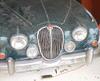
The handbrake was changed as per the picture. Otherwise, this car was dead set original but clearly in need of refurbishment or revival. Mk 1 changed from LHD to RHD. Handbrake transferred.
I've googled reservac and it seems Jaguar started fitting it in the late 1950s. It's not clear that it was to give more reserve brake assistance after the engine had stopped or, as some suggest, to give a smoother and more consistent assistance from the servo. There are many retrofits. If the story is correct, there should quite a few MK1, Mk VII and XK that left the factory without one.
I have a mk1-56 and my father a mk1-57 and there has never been a vacuum tank in either of the cars but they do have non return valves. They also use a smaller type of Lockheed remote servo and the cutout in the right hand fender housing it is smaller than on later cars, therefore mk2 servos cannot be easily retrofitted to early mk1’s.
I have a mk1-56 and my father a mk1-57 and there has never been a vacuum tank in either of the cars but they do have non return valves. They also use a smaller type of Lockheed remote servo and the cutout in the right hand fender housing it is smaller than on later cars, therefore mk2 servos cannot be easily retrofitted to early mk1’s.
Most of the time, you'll not notice the absence of the non return valve. When you're braking, the throttle is closed and the engine is either idling or driven by the momentum of the car so there's a good vacuum supply. However, if the engine stops turning over, reserve assistance will disappear more or less immediately. In addition, there will be a much greater flow of air through the vacuum cylinder of the servo, which tends to dry out the seals (if the servo is the older piston type rather than diaphragm) and make the piston stick.
I didn't know the check valve on my car had failed until I took things apart because the servo was sticking on.
Are we talking Mk1's fitted with front discs/rotors or drums all round?
Jaguar provided update kits.
Our cars are on drums. Early cars on drums had a small servo 5,1/2”. Then a larger servo was introduced 6,7/8” for both drum and discs when discs were introduced. Late cars got the vacuum tank as it states in the supplementary documentation. Disc brakes were an option all the way up to very early mk2, at least on some markets. I believe very few 3,4L cars were sold with drums though.
Thanks for this additional info Sventek . I am hopeful that my 1959 with disc brakes was fitted with the larger servo, so its not a total nightmare getting the new aftermarket one (about 7" in diameter) installed. I am hoping to find a one-way inline check valve to get that plumbed into the vacuum hose. Peter : thanks for info on running w/o a check valve ! I'm scheduled to have car over to mechanic this week to get the new servo installed.
Schmitty
The disc brake option was available for Mk1s from late 1957
Out of the six Mk1s (2x2.4 and 4x3.4 I have owned only one had disc brakes.
I wonder if that is because the Australian importer/distributor only brought in "standard" cars unless a special option was specified.
A small point is that drum braked cars with the larger servo/booster had a restrictor on the output line.
I presume it was to slow down the onset of brake force as drums are more sensitive than discs and will lock up at lower pressures.
I have experienced this extra sensitivity when replacing the original booster with Australian made PBR VH40 boosters.
Another common aftermarket modification on Aus. MK1 cars was to substitute a MK2 front end with discs and leave the drums on the rear.
That worked quite well