When you click on links to various merchants on this site and make a purchase, this can result in this site earning a commission. Affiliate programs and affiliations include, but are not limited to, the eBay Partner Network.
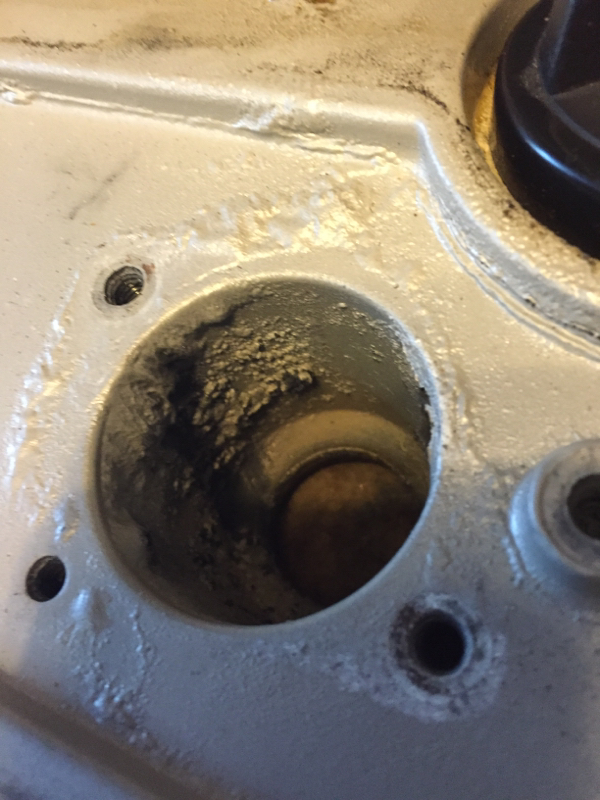
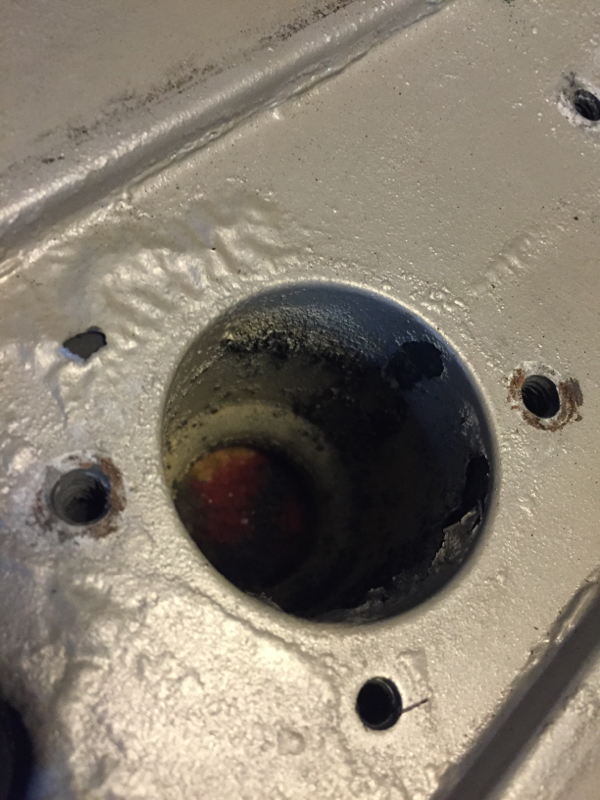
I am not as concerned about the outside finish as I am the corrosion of the plug wells. When one of those corrodes through the cover is junk. I think it is entirely possible to make a plug well replacement out of a compatible material. This would involve a lot of machining. I know a good machinist and will toss out this idea to him. The plug well is where the greatest problem is due to the electrolysis being the greatest. I'll report back on this idea. I welcome any ideas along this line.
How about milling the plug well tube off, then threading the hole and using ABS pipe as
a replacement for the tube. The hole and pipe can be threaded if enough thickness.
What is the advantage of using magnesium rather than aluminium for this part? What is the disadvantage?
I imagine that if the engine ever catches fire..........it might be SPECTACULAR!!
Good luck with that magnesium fire!!!
If y'all ever want to scrap the cam cover in a dramatic way, get a torch and light it up!!!!!!!!!!! Post a video on the internet and you will get plenty of 'views/hits'.
Purple K will help control the fire (sometimes).
Could one also coat the inside of the wells with something like a vinyl dip that could withstand oil and heat?
I started down that road, Al, and eventually arrived at the POR15 product line. I guess they make a rubberized truck bed coating, perhaps. Anyway, I searched for "high temperature rubberized coatings" and started clicking returns and searching out temp specs. I was even willing to gamble on a 300 degree F coating but didn't find any that went even that high. My idea was to use a rubberized coating in the wells and along the center coil-mounting strip, and a more conventional coating on the rest. I've since unsubscribed from the theory of arcing damage from the coils. I still maintain corrosion in the plug wells is the greatest threat to the integrity of the part, but I'm dubious of the notion that the coils play any role in it.
Still working on the "Mother of All Cam-Cover" posts, possibly by week's end, though we have a kid graduating college this weekend, so time to work on it (the 2nd cam-cover refurbishment, let alone the documenting post!) may be limited by travel.
If electrolysis is a problem perhaps it is possible to electrically isolate the cam cover from the other engine parts. This would require that the spark plug tubes are isolated and the cover bolts also.
The coils don't appear to be electrically connected to the cover (which means the HT must go via the LT wires, can anybody confirm this?).
It is a nice shine but I confess it is not my cam cover! I posted the pic because it shows what is under the tired-looking finish most of us have seen. Here is the site Jaguar XJ6 (X300) Straight Six - Detailing World
I have just measured between the head and the cover and get no continuity ie they are electrically isolated from each other. So I would not expect electrolysis to be an issue.
I'm calling BS on the corrosion on our cam covers not being from electrolysis . For corrosion you need an anode/cathode and electron path. Three of my plug wells had direct arcing as well as arcing out of the seam in the coil boot where it connects to the coil directly across from the arc marks. Our aircraft has tons of magnesium parts and operate in an extreme moist saltwater environment and I've never seen corrosion like I have on our cam covers on any of those parts. Difference, the aircraft parts are not exposed to electrical arcing. Coat your plug wells liberally and insulate your boots with sections of inner tubes.
I'm calling BS on the corrosion on our cam covers not being from electrolysis .
I was immediately convinced one of the plug wells was damaged by electrolysis - it was so obvious simply by observation. One tell-tale sign was the fact that the coil in that position was the worse of the lot. The cracks were so bad, the light show was better than any disco I'd been in.
I don't see how the metal (bottom of well bore) was that cleanly "cut" because of some other type of corrosion. That area is not subject to vibration or any "odd" chemicals. It sits on top of a rubber type o-ring seal.
Would the heat insulating socks for spark plug boots be of any benefit? It looks like they would fit over the end of the coil pack but not sure if there is enough room in the plug well.