


Step-by-step guide to rotor/brake pad replacement(with pics) FAQ


Senior Member
Joined: Mar 2011
Posts: 473
Likes: 17
From: Tucson

ap (from you know where)

Senior Member
Joined: Nov 2011
Posts: 343
Likes: 36
From: Manchester, Ohio
Good show. I can relate to the pics because I also replaced my pads. Fronts are ceramic. Had front rotors turned, still very good shape. Rears good, new pads. Pretty easy if you take your time and pay attention.Thanks, Dave
Senior Member
Joined: Nov 2011
Posts: 343
Likes: 36
From: Manchester, Ohio
Thanks for the great write up on the brakes. I redid mine a couple months ago. Although I took my time and all went well this would have been a great help. I did not do a fluid flush but now I am going to, so thanks again.
Dave
Dave

Senior Member
Joined: Nov 2011
Posts: 322
Likes: 27
From: Finland
Thanks for the instructions and pics!
My rear pads are nearly gone, rear discs have a slight lip on them and one of the front discs is slightly warped. I have pads and discs and steel braided brake lines waiting in the garage, and I'm planning to attack the brakes next weekend. And I've just sourced a 7mm hex ratchet bit locally.
I also have caliber seal kits both front and rear... I wonder if those are worth doing on a car that has done 75k miles? Just thought I'd do them 'cause the fluids will be drained and brake lines are coming off anyway...
My rear pads are nearly gone, rear discs have a slight lip on them and one of the front discs is slightly warped. I have pads and discs and steel braided brake lines waiting in the garage, and I'm planning to attack the brakes next weekend. And I've just sourced a 7mm hex ratchet bit locally.
I also have caliber seal kits both front and rear... I wonder if those are worth doing on a car that has done 75k miles? Just thought I'd do them 'cause the fluids will be drained and brake lines are coming off anyway...

Senior Member
Joined: May 2012
Posts: 184
Likes: 18
From: Boise, ID
Nice write-up!
Any squealing brakes after the swap? My passenger rear will let out a squeal every now and then - more-so when it rains. I've read brake squeal is very common on these cars and only one brand of pad stops it - Akebono. Is this true?
FWIW, on ABS equipped vehicles, like steve11, I recommend cracking the bleeder before compressing your caliper pistons. You could opt to use a large set of channel locks to compress the pistons, just be sure you don't mar the piston surface and go easy on it. You'll want to crack the bleeder open while compressing the piston and close the bleeder BEFORE you let off the piston. Cracking the bleeder will allow the dirty fluid to evacuate while compressing the piston and alleviates the pressure required to compress the piston. I've been told to follow this procedure on ABS equipped vehicles because you could send some bad fluid into your ABS sensor at the wheel and cause damage. I'm not sure if true or not, but have followed procedure after being told by several mechanics.
Any squealing brakes after the swap? My passenger rear will let out a squeal every now and then - more-so when it rains. I've read brake squeal is very common on these cars and only one brand of pad stops it - Akebono. Is this true?
FWIW, on ABS equipped vehicles, like steve11, I recommend cracking the bleeder before compressing your caliper pistons. You could opt to use a large set of channel locks to compress the pistons, just be sure you don't mar the piston surface and go easy on it. You'll want to crack the bleeder open while compressing the piston and close the bleeder BEFORE you let off the piston. Cracking the bleeder will allow the dirty fluid to evacuate while compressing the piston and alleviates the pressure required to compress the piston. I've been told to follow this procedure on ABS equipped vehicles because you could send some bad fluid into your ABS sensor at the wheel and cause damage. I'm not sure if true or not, but have followed procedure after being told by several mechanics.

Thread Starter
|
Senior Member
Joined: Mar 2010
Posts: 576
Likes: 119
From: Tampa
Nice write-up!
Any squealing brakes after the swap? My passenger rear will let out a squeal every now and then - more-so when it rains. I've read brake squeal is very common on these cars and only one brand of pad stops it - Akebono. Is this true?
FWIW, on ABS equipped vehicles, like steve11, I recommend cracking the bleeder before compressing your caliper pistons. You could opt to use a large set of channel locks to compress the pistons, just be sure you don't mar the piston surface and go easy on it. You'll want to crack the bleeder open while compressing the piston and close the bleeder BEFORE you let off the piston. Cracking the bleeder will allow the dirty fluid to evacuate while compressing the piston and alleviates the pressure required to compress the piston. I've been told to follow this procedure on ABS equipped vehicles because you could send some bad fluid into your ABS sensor at the wheel and cause damage. I'm not sure if true or not, but have followed procedure after being told by several mechanics.
Any squealing brakes after the swap? My passenger rear will let out a squeal every now and then - more-so when it rains. I've read brake squeal is very common on these cars and only one brand of pad stops it - Akebono. Is this true?
FWIW, on ABS equipped vehicles, like steve11, I recommend cracking the bleeder before compressing your caliper pistons. You could opt to use a large set of channel locks to compress the pistons, just be sure you don't mar the piston surface and go easy on it. You'll want to crack the bleeder open while compressing the piston and close the bleeder BEFORE you let off the piston. Cracking the bleeder will allow the dirty fluid to evacuate while compressing the piston and alleviates the pressure required to compress the piston. I've been told to follow this procedure on ABS equipped vehicles because you could send some bad fluid into your ABS sensor at the wheel and cause damage. I'm not sure if true or not, but have followed procedure after being told by several mechanics.

Thread Starter
|
Senior Member
Joined: Mar 2010
Posts: 576
Likes: 119
From: Tampa
It is absolutely necessary to remove the calipers. The pads are fitted in and you must compress the pistons. It's very simple, my guide shows exactly how to do it.
Last edited by plums; May 15, 2012 at 04:20 PM.

Senior Member
Joined: Aug 2011
Posts: 824
Likes: 84
From: Chicagoland
On my 911 Turbo you just remove a pin and both pads slide out of the caliper. The only thing to unbolt is the wheel.
Last edited by plums; May 15, 2012 at 04:21 PM.
 Various designs
Sorry to see that some of us get a little heated while helping others.
While I am not a professional mechanic I have seen 3 different styles of calipers. on some cars I have had
Floating caliper, single sided pistons with 2 pins float the caliper that wraps over the pads.
Pins need to be removed and caliper/pistons removed to allow pistons to be compressed and pads to be replaced.
Jags, Ford, Dodge
Floating but only one pin needs to be removed and the caliper to be 'swung' on the other pin and pads replaced. Saves the need to hold the caliper up .
Mazda
Caliper is bolted in place, normally double sided pistons. Pads are help in place with light pins that can be removed and pads replaced. Caliper is not removed at all in this case. Many motor bikes and some BMW's.
As with any engineering problem, there are many solutions, and what some people have seen, may be a new to others.
While I am not a professional mechanic I have seen 3 different styles of calipers. on some cars I have had
Floating caliper, single sided pistons with 2 pins float the caliper that wraps over the pads.
Pins need to be removed and caliper/pistons removed to allow pistons to be compressed and pads to be replaced.
Jags, Ford, Dodge
Floating but only one pin needs to be removed and the caliper to be 'swung' on the other pin and pads replaced. Saves the need to hold the caliper up .
Mazda
Caliper is bolted in place, normally double sided pistons. Pads are help in place with light pins that can be removed and pads replaced. Caliper is not removed at all in this case. Many motor bikes and some BMW's.
As with any engineering problem, there are many solutions, and what some people have seen, may be a new to others.


Member
Joined: Apr 2012
Posts: 84
Likes: 0
From: edinburgh
New to all car mechanics. Can someone tell me how you would know when a disc is ready to be replaced. I have discs fitted by my garage and not sure what make they are. I am thinking that each make would have a certain thickness that they would be reaplced at or am I in correct in saying that?
Senior Member
Joined: Nov 2011
Posts: 322
Likes: 27
From: Finland
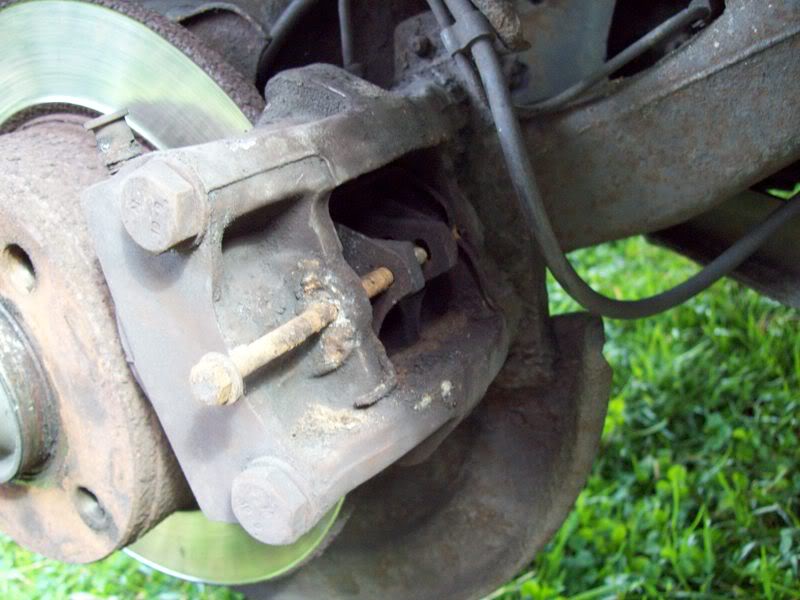
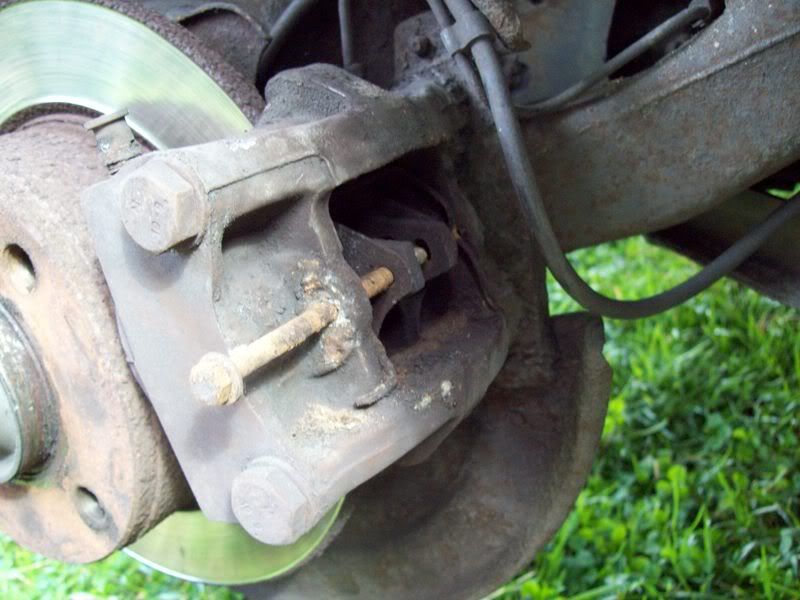
Downside to this arrangement in the Citroën case is that when you eventually need to remove the calibers, the bolts will probably snap due to corrosion...
Last edited by plums; May 15, 2012 at 04:32 PM.
Senior Member
Joined: Mar 2011
Posts: 473
Likes: 17
From: Tucson
Interesting, how does the piston compress?
Many Citroëns with hydropneumatic suspension have this type of rear brakes. No need to take the caliber off to change pads. Just remove one long thin bolt and a metal clip, and the pads slide out. Caliber bolts and caliber stays put. Eg. my ex Xantia V6 Activa had this type of rear brakes.
Downside to this arrangement in the Citroën case is that when you eventually need to remove the calibers, the bolts will probably snap due to corrosion...
Downside to this arrangement in the Citroën case is that when you eventually need to remove the calibers, the bolts will probably snap due to corrosion...
New to all car mechanics. Can someone tell me how you would know when a disc is ready to be replaced. I have discs fitted by my garage and not sure what make they are. I am thinking that each make would have a certain thickness that they would be reaplced at or am I in correct in saying that?
See https://www.jaguarforums.com/forum/x...-rotors-35881/ #6 suggests min is 30mm.
Senior Member
Joined: Nov 2011
Posts: 322
Likes: 27
From: Finland
It has two pistons. And the caliber is made of two pieces. When you remove the two large bolts holding the caliber to the trailing arm the caliber will break in half from the middle.
If you want to remove the caliber without spilling brake fluid (which is LHM hydraulic fluid in this case) you remove the pads, then put the long thin bolt back in to hold the halves together, and then remove the caliber bolts.
Citroën - Créative Technologie
If you want to remove the caliber without spilling brake fluid (which is LHM hydraulic fluid in this case) you remove the pads, then put the long thin bolt back in to hold the halves together, and then remove the caliber bolts.
Citroën - Créative Technologie