When you click on links to various merchants on this site and make a purchase, this can result in this site earning a commission. Affiliate programs and affiliations include, but are not limited to, the eBay Partner Network.
Hi All
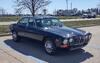
I bought my Daimler 4,2 12 months ago and it ran well at speed but was lumpy at tick over but it started and ran well. Shortly after purchase I took it on a trip to Holland where the lumpy running started to progress up the rpm range. A few tweaks of the mixture screws ( by the roadside ) and it ran a lot better. I checked the plugs and found them to be ok /rich other than one plug which had a lot of ash on it ( oil burn ). During the trip I kept to 60mph and achieved 20mpg !
On my return I checked the ignition which was 10 degrees advanced !! , balanced the carbs and set the mixture screws as per the owners handbook manual. I also checked the compression with was well down at 102psi to 110 psi . Oil pressure does not pass 40 psi and drops to near 0 when hot and ticking over so the engine is worn out . After this work It didn't run much better. I then replaced the AED with a manual version ( sits on top of the AED ) as during this time frame , the winter set in and when cold the car would not start ( oddly enough the AED seemed to be letting no extra fuel in rather than too much ) The car would then start fine when cold on the manual choke. I also checked the valve clearances which were ok.
I then bought a colour tune and found the front 3 cylinders were running very rich so I set the carbs up with that and the car would hardly run !! Richening up the fuel solved the issue.
I think I now need to strip the carbs ( they had been rebuilt ) and check all the parts are correct. Looking up the various data sheets there seems to be loads of sizes of jets and needles etc.
Can anyone give me advice on what jet sizes etc I should be looking for ? when I strip the carbs.
I am also considering buying another set of carbs and drilling them out for a proper manual choke conversion.
I cannot advise you on what needles to fit as my car still has the original needles but does have new jets which I think are standard for all HS8 carbs. So If I were you I would assume the needles are standard. Your post is a bit confusing, I assume your timing was 10 degrees BTDC, which may be a bit too far advanced for much of todays petrol. Start with a setting of 6 and work up to 8 BTDC. Your compression is down (if the gauge is correct) and this will affect the idle significantly. You mention that you reset the mixtures as per the handbook. The handbook does not give this information, in fact the HS8 were set at the factory and not supposed to be disturbed - yes I know every one does but that is the official line.
I would remove both suction pistons and you can then see the jet level. Set both jets to around 2.5mm below the bridge to start with and then go for a drive. If too lean, your idle will be a bit rough - lower the jets 1/2 a turn. I have tuned my 73 car by trial and error. It has the manual choke that lowers the jets, which I only use for about the first 2 miles of running. The idle is a bit lumpy held in Drive, as I like the car lean for economy. And I get 24.2mpg at 70 mph - proven on long drives a couple of times (I have the 3.,07 diff) The car's performance is superb.
Added later.............
Simon, I am assuming that you are using the correct terms. A 1972 car is fitted with an AED and HS8 carbs. Earlier cars have an auxiliary starting carb, and HD8s.
My post is based on the information you have given.
Last edited by The Mekon; Jul 31, 2020 at 02:09 AM.
Thanks for the prompt reply !
The 10 degrees was in advance of the mark on the crank pulley ( can't remember what the standard BTDC mark is but it was 10 degrees in advance of that !! ) oddly enough no pinking though which was probably down to the low compression .
The handbook I refer to is the original one that came with the car ( about 20 pages ) and sits in the glove compartment i.e. the drivers handbook .
My carbs have the "3rd carb" not electrical.
I have earmarked today to have another go ( if I can bare the heat !) and I will report back with pictures later.
Your car is probably an early car. All XJ6 from March 1971 were fitted with HS8 and the AED.
The handbook for these cars is much more than 20 pages. Someone else will have to help if you have the HD8, I do not have much experience with them aside from my E type which was almost 40 years ago.
I attach some pics , yes the owners manual is more than 15 pages !
Working on a hot engine in this heat is not pleasant but I have made some progress.
Having said the car started ok I went to the garage today and the car wouldn't start ( which is why I keep a can of easy start ) choke on or off .
Having got the car the 500 yards to my house and warmed it up I disconnected the AED and put a bung in the hose just to take it out of the equation.
The needles would not come out ( with the screw removed ) so I gave up on checking them.
I then decided to follow your advice and just see where the engine was happy.
I played around with the ignition timing and the engine was much happier as I advanced it. Strange but now I think the 123 electronic ignition / distributor has been put in a tooth out
My strobe gun then packed up but I realised it wasn't the gun but a fouled plug which didn't help the idle at all !
I have reset the jet heights and balanced the carbs but I reckon the AED manual override could do with a return spring.
I am now sure the worsening problem in Holland was caused be the mixture screws unwinding as there were no springs or lock nuts under them although I now have lock nuts
I will correct the distributor when my burns have healed but there is still a slight lumpiness so
I will check out the coil next and take the car for a few longer runs as I lean out the mixture.
Good job Simon,
You definitely have the 72 model with AED and HS8 carbs. They look nice and clean. The manual choke system you have keeps the AED, but manually shuts the fuel down once you consider the engine is warm. I have (and prefer) the system that lowers the jets and removes the need for the AED altogether. It is interesting that the AED manual choke system was developed many years after the jet lowering one.
I was unaware you were timing dynamically with an electronic ignition. I would set it around 12 degrees BTDC at idle (700rpm) if you are using the strobe.
The needles can be difficult to remove from the pistons. They are easier to remove if you apply some heat from a heat gun. There is a small spring behind so do not lose it when removing. Warm up, hold needle tightly by hand and tap piston down (all on the bench over a clean cloth). But I see no reason to do so unless they are damaged.
You seem to be making some good progress, so persevere.
I have just realised that even with a tooth out tdc is tdc as defined by the crank pulley so either the crank pulley may have been been put on without a key . I did buy the kit to check the cam timing so will do that along with checking the piston position manually.but something odd is going on !
I think I will go for the choke solution you have , I have seen some fitting instruction so will have a look.



 1972 Daimler XJ6 4.2 running issues