


Buying xj6 87


Thread Starter
|
Member
Joined: Aug 2018
Posts: 83
Likes: 14
From: Quebec

So i have a lead on an 87. The stake down kit has not been installed. As long as the engine isn’t chattering at speed can I assume that there has not yet been damage and I can fit the stake down kit when/if I purchase it? Or could there be as yet undetectable problems even without a noticeable sound?
Senior Member
Joined: Jan 2014
Posts: 577
Likes: 246
From: Seattle
Quebec
If you are thinking of buying a Jag xj6. Forget the ones in Canada - most are rust buckets,... because of winter conditions - they salt the hell out of the roads. No... Save your dough and take a trip to Arizona or California or Washington State. Buy one there, and at least have a good low rust body.
Ship it home or drive it but in the end you will spend less money and not have to settle for a patched up Jag.
How do I know this??
I am a Canadian from Montreal / Vancouver.... living in USA
I own a XJ6 VDP that spent its early life in California then WA St. I have owned it since 1995 Very little rust - what was there - now removed and POR 15 applied.
One of the most expensive repair items you will encounter will be rust repairs. Remember this car does not have a proper frame. its a series of differently shaped boxes welded together. So the integrity of the body is critical especially at suspension mounting points and windshield apertures.
When I lived in Quebec ( "La Belle Province" ) I owned several English sports cars MGs ,TR3s, Bugeye Sprites, ALL of them turned into rust buckets because of the salt that was used on the roads in the winter. A "non salt state " car is what you need as a base to start with... my 2 cents..
Ship it home or drive it but in the end you will spend less money and not have to settle for a patched up Jag.
How do I know this??
I am a Canadian from Montreal / Vancouver.... living in USA
I own a XJ6 VDP that spent its early life in California then WA St. I have owned it since 1995 Very little rust - what was there - now removed and POR 15 applied.
One of the most expensive repair items you will encounter will be rust repairs. Remember this car does not have a proper frame. its a series of differently shaped boxes welded together. So the integrity of the body is critical especially at suspension mounting points and windshield apertures.
When I lived in Quebec ( "La Belle Province" ) I owned several English sports cars MGs ,TR3s, Bugeye Sprites, ALL of them turned into rust buckets because of the salt that was used on the roads in the winter. A "non salt state " car is what you need as a base to start with... my 2 cents..
Last edited by alynmurray; Aug 6, 2018 at 07:14 PM.
Thread Starter
|
Member
Joined: Aug 2018
Posts: 83
Likes: 14
From: Quebec
Thanks for the input Alyn. I appreciate it. Would you feel the same way about a low mileage vehicle that was not driven in winter and garaged and shows little or no rust anywhere? Because that’s what I’m looking for. As I wrote up above in response to Ken, body or structural rust is a non starter for me. Unless I need to worry about it hiding somewhere I can’t see it!
Thread Starter
|
Member
Joined: Aug 2018
Posts: 83
Likes: 14
From: Quebec
Hi again all. I just lost out on a really great 87 xj6 sovereign, low miles, no rust, great shape, reasonable price. Kind of gutted. But I have learned of an 87 xj12 VdP also in fantastic shape. I’ve been warned against the 12 but would be interested in your thoughts on this babied, single owner car. Thanks.

Veteran Member


Joined: Mar 2008
Posts: 25,529
Likes: 11,724
From: Pacific Northwest USA
Hi again all. I just lost out on a really great 87 xj6 sovereign, low miles, no rust, great shape, reasonable price. Kind of gutted. But I have learned of an 87 xj12 VdP also in fantastic shape. I’ve been warned against the 12 but would be interested in your thoughts on this babied, single owner car. Thanks.
A Series III V12 is desirable. In top shape and with everything sorted out, a real treat to own and drive.
But.....very few used V12s are 'sorted out'.
What's your experience level? If you're a reasonably experienced DIY mechanic then the sorting-out process isn't so bad. There's a learning curve, sure, but the end result is quite rewarding.
In good conscience, though, I wouldn't recommend a 30 year old V12 Jag as good stepping-off point to someone just getting his feet wet in the world of DIY auto repair. And, if DIY repairs are not part of the plan, then you're pockets should be rather deep....and you'll have to search for a shop that knows the V12 tricks and quirks.
Cheers
DD
Thread Starter
|
Member
Joined: Aug 2018
Posts: 83
Likes: 14
From: Quebec
Thanks Doug. That’s exactly what the mechanic who has worked on it told me. Phenomenal car to drive and own, but probably not a good candidate for a first timer. I appreciated his candour. And yours.
Thread Starter
|
Member
Joined: Aug 2018
Posts: 83
Likes: 14
From: Quebec


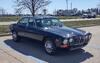
Just by way of closure, please see my new 87 XJ6 Sovereign. It has 47,000 miles on it and is in wonderful condition. Very excited to sort out the inevitable small issues that will arise. Thanks for all your help everyone.



Thread Starter
|
Member
Joined: Aug 2018
Posts: 83
Likes: 14
From: Quebec
Yes it is black on black. Not my favorite but the car was just so good and was otherwise exactly what I was looking for. Even has the three “goat hair” passenger rugs in perfect shape. I asked the seller how the wipers worked and he told me he didn’t know because he’d never driven it in the rain. Manufactured in January 1987 so I guess it’s one of the last six cylinder XJs ever produced. I’ve been trying to find out the serial number of the actual last one produced for comparisons sake but haven’t been able to find it anywhere.
Veteran Member
Joined: Mar 2008
Posts: 25,529
Likes: 11,724
From: Pacific Northwest USA
The very last six-cylinder Series III was built in April 1987, VIN 477824. It was kept by Jaguar.
The last one sold to the public was 477823, sent to Los Angeles in May 1st, 1987
Cheers
DD
The last one sold to the public was 477823, sent to Los Angeles in May 1st, 1987
Cheers
DD
Veteran Member
Joined: Mar 2008
Posts: 25,529
Likes: 11,724
From: Pacific Northwest USA
I can't recall the source: perhaps Nigel Thorley? It been in my folder of notes for nearly 20 years.
As for VIN assignment, I'm not sure. It's a fair bet that the VINs were assigned before the car was built. When a bare shell hit station #1 on the assembly line, the VIN (and build spec) was already locked in, I reckon.
Now, if you're asking if a period of time may have elapsed between (let's say) 477823 and 477824, it seems plausible. As far as I know all variants were inter-mingled during production. That is, they didn't use a block of VINs nor a block of time for production xxx-specification models. A V12 German market car may have been on the assembly line after a USA-spec XJ6 and before a Canadian-market Sovereign....and I doubt the VINS were in numerical sequence.
The one exception would have been the last of the Series III V12 cars, circa 1991-92. My understanding is that they were built on they're own dedicated assembly line. These were limited production units and, I presume, so old school that building them together with the then-current XJS and XJ40 cars would've been too difficult.
Hopefully someone will come along with some concrete info.
Cheers
DD

Veteran Member

Joined: Feb 2011
Posts: 3,918
Likes: 2,524
From: Victoria, Canada
I can't recall the source: perhaps Nigel Thorley? It been in my folder of notes for nearly 20 years.
As for VIN assignment, I'm not sure. It's a fair bet that the VINs were assigned before the car was built. When a bare shell hit station #1 on the assembly line, the VIN (and build spec) was already locked in, I reckon.
Now, if you're asking if a period of time may have elapsed between (let's say) 477823 and 477824, it seems plausible. As far as I know all variants were inter-mingled during production. That is, they didn't use a block of VINs nor a block of time for production xxx-specification models. A V12 German market car may have been on the assembly line after a USA-spec XJ6 and before a Canadian-market Sovereign....and I doubt the VINS were in numerical sequence.
The one exception would have been the last of the Series III V12 cars, circa 1991-92. My understanding is that they were built on they're own dedicated assembly line. These were limited production units and, I presume, so old school that building them together with the then-current XJS and XJ40 cars would've been too difficult.
Hopefully someone will come along with some concrete info.
Cheers
DD
As for VIN assignment, I'm not sure. It's a fair bet that the VINs were assigned before the car was built. When a bare shell hit station #1 on the assembly line, the VIN (and build spec) was already locked in, I reckon.
Now, if you're asking if a period of time may have elapsed between (let's say) 477823 and 477824, it seems plausible. As far as I know all variants were inter-mingled during production. That is, they didn't use a block of VINs nor a block of time for production xxx-specification models. A V12 German market car may have been on the assembly line after a USA-spec XJ6 and before a Canadian-market Sovereign....and I doubt the VINS were in numerical sequence.
The one exception would have been the last of the Series III V12 cars, circa 1991-92. My understanding is that they were built on they're own dedicated assembly line. These were limited production units and, I presume, so old school that building them together with the then-current XJS and XJ40 cars would've been too difficult.
Hopefully someone will come along with some concrete info.
Cheers
DD
And with respect, I must disagree with Alyn's statement about Canadian cars in general. Cars from Montreal and Ottawa and Toronto can be a rust disaster; in fact, I bought car #100/100 (the very last V12 Vanden Plas). It came to me from Montreal, so full of bondo-hidden rust that I declined to restore it. But cars from southern British Columbia do not rust...if you see a rusty car in Victoria or Vancouver or Kelowna, it has come from the east. A Series III from Vancouver or Victoria or indeed, Kelowna will be essentially rust-free ( the area around the front and rear screens may have some rust bubbles, but often not). And more modern Jaguars from this geographical area will be totally rust free. My 1988 Taurus (not a Jag in any way...) is completely rust-free despite having been exposed to the elements for every hour of its life. The same is true of our 2002 X-Type. These cars experience a more benign climate (less rain!) than cars south of the border (in Seattle, for example) - and they are not exposed to road salt (the real killer).
Thread Starter
|
Member
Joined: Aug 2018
Posts: 83
Likes: 14
From: Quebec
Thanks for the info Gregory. I agree. Indeed the best cars in NA may be from Oregon, Washington State and BC for the reasons you’ve described. Southern and California cars typically have no rust it’s true, but their interiors and paint are usually fried. And there are exceptions. My car spent its whole life in New Brunswick. But it was always garaged and never driven by either of its two previous owners in the winter and rarely if ever even in the rain. That will be true of my, now, Quebec car also. No rust. Original paint in near perfect condition. Interior clean. No doubt there are one and two owner cars throughout the northern states and Canada that are the same. It’s all about the pre-purchase inspection. Bring a magnet!

Thread Starter
|
Member
Joined: Aug 2018
Posts: 83
Likes: 14
From: Quebec
Thread Starter
|
Member
Joined: Aug 2018
Posts: 83
Likes: 14
From: Quebec
The problem with black and black on black interior (as mine is) is the heat from the sun. My mechanic suggests a slight tint on the windows to reduce the interior heat but not sure I want to go that route.

Veteran Member

Joined: Jun 2015
Posts: 1,514
Likes: 687
From: Florida


(This is it today)Image 2
My 85 Series 3 lived in NY where during the wintertime the salt is just as bad.
The PO never drove this car during the winter and as a result I got an almost totally rust free car.
The rust was here.(Image 1)
Last edited by sanchez; Sep 3, 2018 at 04:05 PM. Reason: add info
Veteran Member
Joined: Feb 2011
Posts: 3,918
Likes: 2,524
From: Victoria, Canada
Your black interior is almost unique because a black interior on a Series III (and, for that matter, Series I and II as well) was always a special order. Black and black is one of my favourite combinations.
Your car is beautiful!
Thread Starter
|
Member
Joined: Aug 2018
Posts: 83
Likes: 14
From: Quebec

Thanks for the great pictures Sanchez. It looks just like mine! Thanks also Gregory for the interesting information about the colour combination. Doug had alluded to its rarity but I did not know the reason for it.