When you click on links to various merchants on this site and make a purchase, this can result in this site earning a commission. Affiliate programs and affiliations include, but are not limited to, the eBay Partner Network.
I've finally gotten my '84 XJ6 on the road after it sat for a few years and noticed a sizeable leak from the rear differential. Here's the interesting part: as part of the mechanical restoration a year ago I drained the diff oil and very little came out. Replaced it with fresh gear lube and over the course of the next year as it sat in my garage and on the lift while other work was performed, it leaked very little, perhaps a few drops a month.
I took the car on it's maiden voyage last week and once everything got to temp it left a few ounces of fluid in multiple spots on my driveway. My theory is that the breather vent may be clogged and the oil escaped through another path when the pressure increased.
I plan to pull the vent today, clean it, and top off the fluid. Anything else I should be looking for?
The vent is a good suspect. I had a very small seep after I worked on my differential, removed the cover twice and reapplied sealant, but still seeped. Found this sealer that claimed to be just for differentials so I used it. No more seeps/leaks, I'm a believer.
Make sure cover is straight and flat and don't over-tighten the screws.
Also there was a thread a while back about fluid leaking out the splines, lace some cardboard under rear ended and see if you can pinpoint where it’s leaking.
I removed the metal plate on the bottom of the assembly and sprayed everything liberally with Brake parts cleaner and wiped dry. With the car up on the lift I started the engine and ran it through the gears up to about 70 mph (rear wheels removed!) for a few minutes to agitate the oil and heat it a bit.
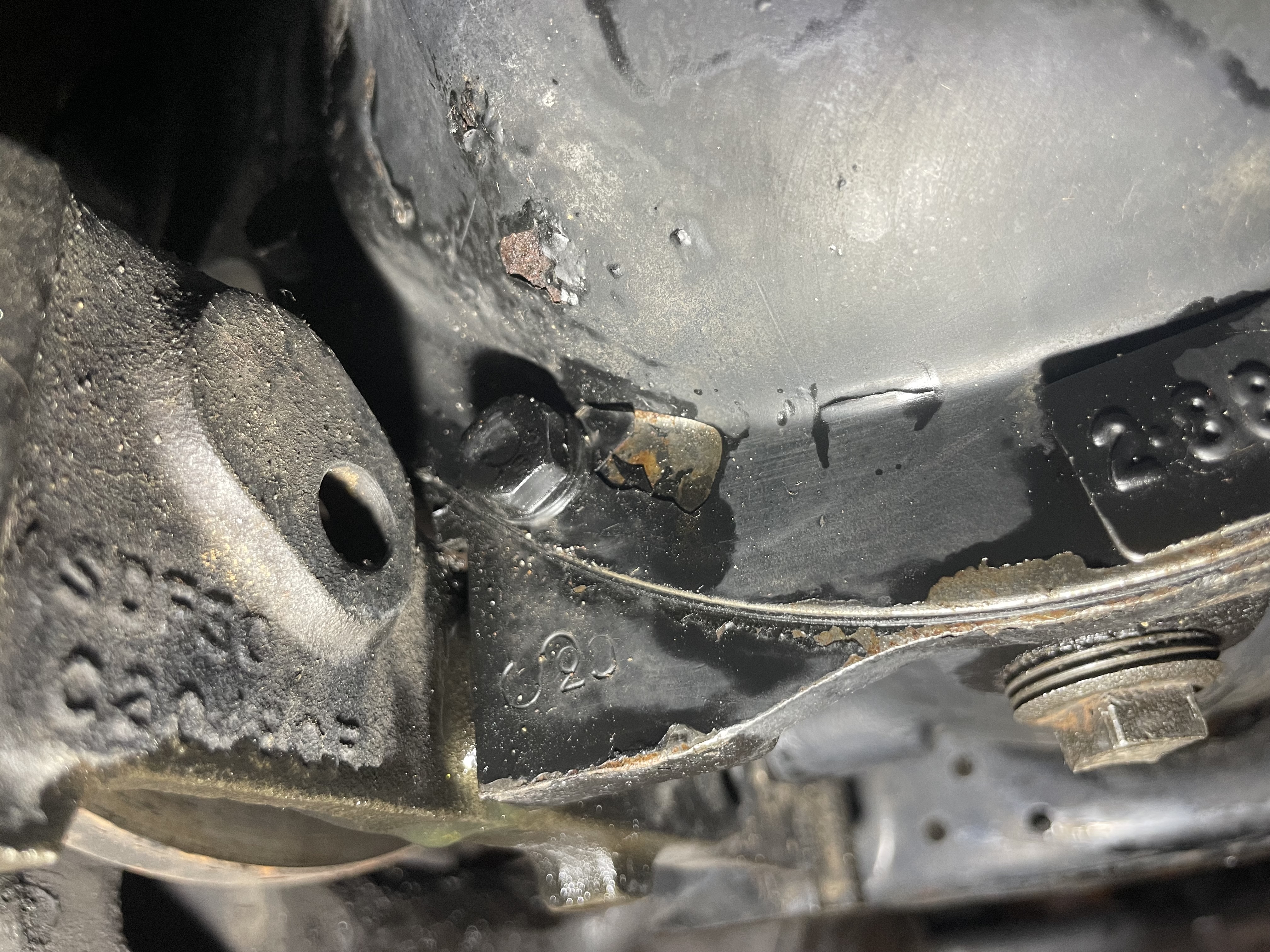
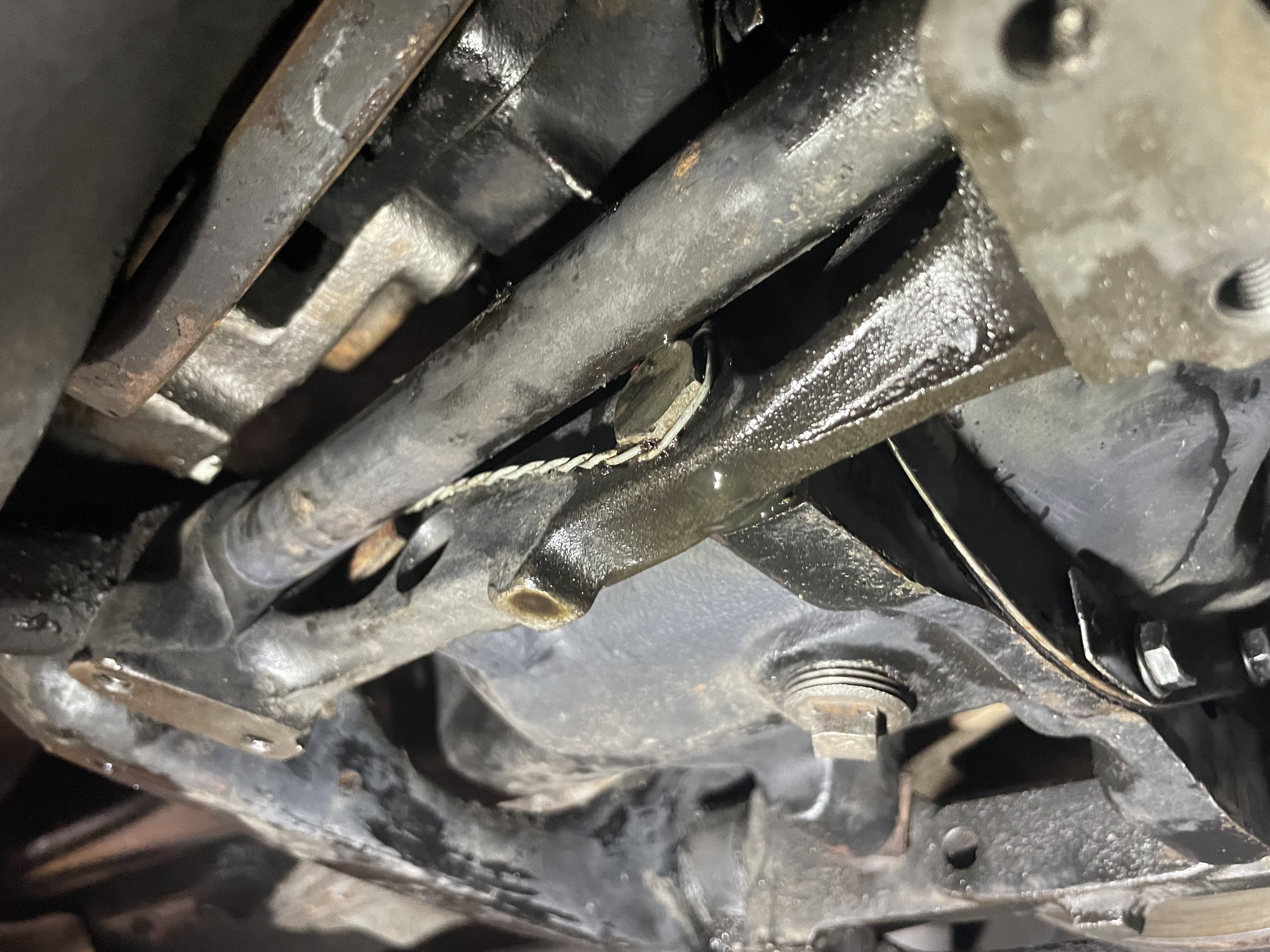
There was a pronounced leak from the driver's side of the diff, where the bottom of the diff meets the cast mounting cradle. The diff cover seems completely dry, and the vent was not clogged.
Leak from the bottom, right underneath that short headed safety wired bolt - one drop every 30 seconds or so - pretty significant.
I inspected the diff side covers (output seal area) and didn't see any evidence of oil.
Is this bolt threaded into a blind hole, or does it go into the wet area of the diff?
If the oil is not coming from above, then (and I may well be wrong about this) it is possible that it is coming from a crack in the diff casing where that short bolt is threaded into the casing. I suspect that it is more likely coming from the rear diff cover above though.
That bolt (one of two) holds that so-called "dog bone casting" to the diff, and this casting holds the inner fulcrum for the bottom wishbone (suspension control arm).
If the oil is for certain coming from nowhere else, the only thing to do is to remove the suspension cage, remove the bottom wishbone inner fulctum, unbolt that casting, and take a careful look. There is lots of stuff on the XJS forum about how to do this, if you have not done it before. It is not beyond anyone to do it, given covered space and steady work!
Last edited by Greg in France; Oct 19, 2022 at 09:26 AM.
If the oil is not coming from above, then (and I may well be wrong about this) it is possible that it is coming from a crack in the diff casing where that short bolt is threaded into the casing. I suspect that it is more likely coming from the rear diff cover above though.
That bolt (one of two) holds that so-called "dog bone casting" to the diff, and this casting holds the inner fulcrum for the bottom wishbone (suspension control arm).
If the oil is for certain coming from nowhere else, the only thing to do is to remove the suspension cage, remove the bottom wishbone inner fulctum, unbolt that casting, and take a careful look. There is lots of stuff on the XJS forum about how to do this, if you have not done it before. It is not beyond anyone to do it, given covered space and steady work!
Interesting theory. The idea of it being a crack crossed my mind too as those usually remain "invisible" until you identify them with a UV light/dye or similar method, but it seems unlikely that a casting as robust as the diff housing would crack.
I plan on properly blasting the whole diff with some more brake clean tonight and seeing if I can better pinpoint the cause. I would like to at least rule out the cover or output side seal. This car needs the trailing arm bushings and subframe mounts replaced, and I wasn’t planning on dropping the cage and doing that until next year…wanted to drive the car for at least a few weeks before snow flies.
Finally - any chance that it could be leaking from being overfilled? I refilled the diff a year ago or so, and when I pulled the fill plug to check the level last night (to make sure not all of it had leaked out), I still had a steady trickle of oil coming out.
Here is a picture of the output shaft and carrier. #3 is an O-ring on the carrier that seals to the differential case, no gasket is used. If that O-ring was left out there would be a small leak, I would imagine, but probably not to the extent you describe. In your opening post you outline the large leak after sitting for a number of years. After some mechanical repairs, still had very minor leak. After driving recently, the larger leak reappeared as we see in your pictures, is this the gist of it?
So it would seem that the leak you noticed that nearly drained the diff about a year ago is still there. Minimal leaking when parked, but much more when driven. During the mechanical work a year ago, I assume you had the cover off and beyond that you don't say. Do you remember noticing the leak at that time and where it might be coming from? If the car has not been run since the pictures, has the leak nearly stopped again?
My only suggestion is to clean the whole area again and find a way to see everything on that side of the differential and run the drive line again, maybe with a partner in the drivers seat. I have had good luck looking into blind spots with a combination of a mechanics mirror and flashlight. I have also used what is called an "inspection camera" which has an extremely small camera on the end of a flexible stalk and will show a live video of whatever is in front of it. Places like Lowe's or Home Depot usually have them because building inspectors use them in their line of work. Auto part stores also have them, of course.
Greg's suggestion that a crack in the main housing might be the cause shouldn't be dismissed out of hand. You will just need to get in a position to see where the leak is coming from.
No I don't think overfilling would cause a leak if the breather is open and seals good. Your description of a trickle of oil coming out of the hole is about where you want the level.
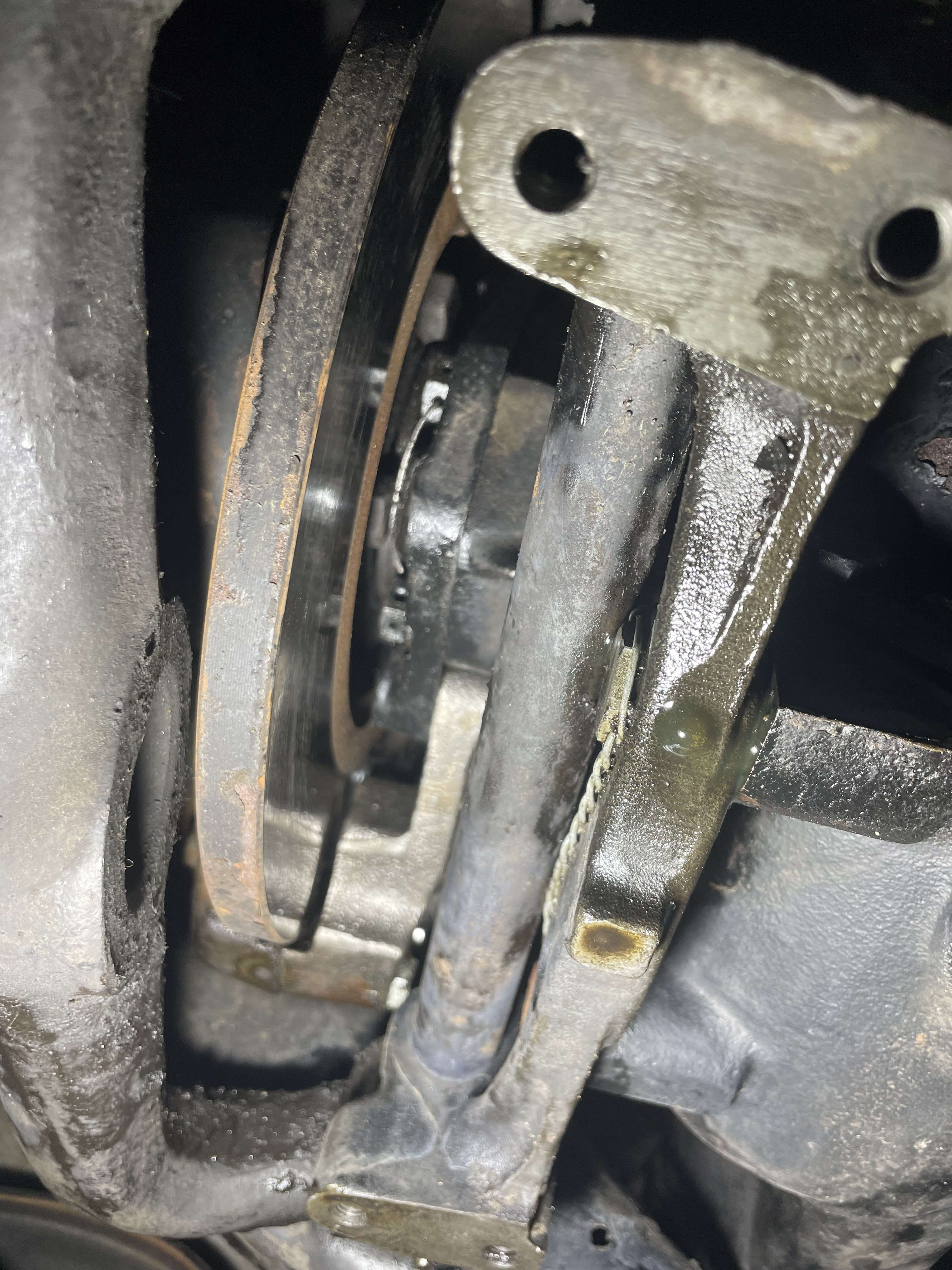
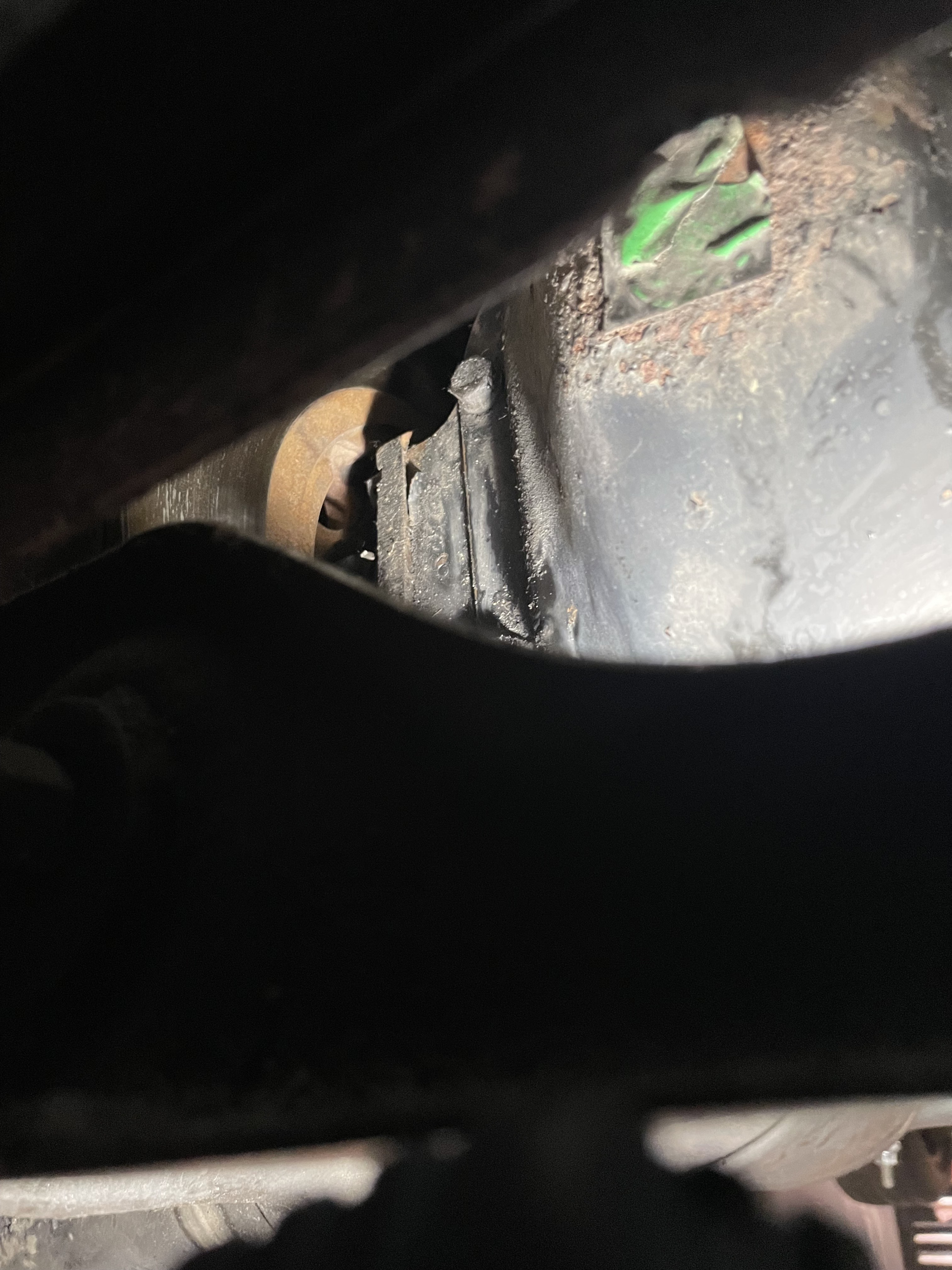
After emptying 3 cans of brake clean on the diff and running it up to 70 on the lift again this morning, the driver's side weep hole showed itself to be the cause of the leak.
So, here's the question - what's the purpose of these 2 holes? I can't imagine that it's for venting since there is a dedicated vent on the rear cover. Any reason I can't plug those holes up with some RTV?
After emptying 3 cans of brake clean on the diff and running it up to 70 on the lift again this morning, the driver's side weep hole showed itself to be the cause of the leak.
So, here's the question - what's the purpose of these 2 holes? I can't imagine that it's for venting since there is a dedicated vent on the rear cover. Any reason I can't plug those holes up with some RTV?
I completely rebuilt my differential and laid hands on every square inch of the housing(s), there are no open holes that I found. The holes in your pictures don't appear to be drilled, but look like casting errors, which doesn't sound reasonable either. Are there holes on both sides of the diff housing? Picture #1 shows a lot of distressed or damaged looking metal, I can't orient that hole location exactly. If someone else has experience with this situation, feel free to chime in.
The fitting in the back cover should be more than enough to relieve internal pressure.
I completely rebuilt my differential and laid hands on every square inch of the housing(s), there are no open holes that I found. The holes in your pictures don't appear to be drilled, but look like casting errors, which doesn't sound reasonable either. Are there holes on both sides of the diff housing? Picture #1 shows a lot of distressed or damaged looking metal, I can't orient that hole location exactly. If someone else has experience with this situation, feel free to chime in.
The fitting in the back cover should be more than enough to relieve internal pressure.
Dave
I agree. Can the OP take some photos from a bit further back so we can see better exactly where these are?
Secondly, those holes are not the source of the leak I think, they are just the outlet for a leak. I suspect that the output shaft seals are leaking and the oil is finding its way out there, and then draining out through the holes as a secondary matter.
It is straightforward to remove the output shafts and the cage does not have to come out.
Last edited by Greg in France; Oct 20, 2022 at 11:10 PM.
As it was explained to me on another forum, the holes are cast in place to provide a place for oil to drip down should it leak past the output shaft seals. If the holes weren't there, the oil would leak out where the output shaft enters the diff and drip all over the hot rotors.
Although I do want to drop the cage to perform a bunch of maintenance, it would be nice to just replace that seal to be able to enjoy some driving before the season ends. Does anyone have a document or reference for that job?
As it was explained to me on another forum, the holes are cast in place to provide a place for oil to drip down should it leak past the output shaft seals. If the holes weren't there, the oil would leak out where the output shaft enters the diff and drip all over the hot rotors.
After looking at the holes, the piece that can be seen inside is dry and normally open to the weather (through the hole). Greg's point of the hole not being the source of the leak, just the outlet, holds water. But the only way I can see that happening is if the O-ring seal on the outside of the output shaft carrier is not there. That would allow the oil to seep between the carrier and differential housing, then through this hole. If the hole wasn't there, the oil would continue out to the machined flange on the carrier and seep out there, because there is no gasket at that point.
The mystery of how the leak is increased when the differential is run might tie into this theory. Normal oil level is not usually set high enough to bathe the output shaft (axle) bearings at rest. The oil is funneled down to the bearings when the ring gear/carrier is turning and churning and splashing the oil around, at rest the oil is just below the diameter of the output shaft carrier. If that O-ring is not in place or has been damaged, the oil will seep out along the outside of the carrier, slowly, if at all, at rest and more quickly when the oil is churned around. But we are talking about two different seals here. The output shaft seals are at the extreme outer side of the output shaft bearings. The O-ring seals are between the outside of the output shaft carrier and the differential housing. If the axle shaft seals leak, it's visible where the shaft exits the carrier. If the output shaft carrier O-ring seal leaks, it would run out the hole shown in the pictures. I still don't remember seeing holes like that in my differential, when I have the car on jack stands this winter, I'll have to take a look.
The carrier O-ring is much easier to replace than the axle seals, by far.
I'm not very familiar with the design and layout of the Jag IRS, admittedly. What's involved in the carrier o-ring replacement? I am assuming the half shaft has to be disconnected from the output shaft, brake caliper taken off, rotor removed to get in there.
I'm not very familiar with the design and layout of the Jag IRS, admittedly. What's involved in the carrier o-ring replacement? I am assuming the half shaft has to be disconnected from the output shaft, brake caliper taken off, rotor removed to get in there.
You've just outlined the process. Once you have done those things, cut safety wires and remove (4) bolts holding the carrier to the diff housing. The carrier/axle assembly should pull straight out as a unit. If the O-ring is still in there, it will pull a little harder. When re-assembling, be sure to lubricate the O-ring with gear oil or grease.
Thanks! I will try to dig into it this weekend and take photos of the progress. Very relieved that I don't have to pull the cage. It seems like an easy job to drop it, but I know that if I do I'll go off the deep end all winter. Trying to enjoy a few more weeks of driving before it gets snowy.
Thanks! I will try to dig into it this weekend and take photos of the progress. Very relieved that I don't have to pull the cage. It seems like an easy job to drop it, but I know that if I do I'll go off the deep end all winter. Trying to enjoy a few more weeks of driving before it gets snowy.
I can't remember if the O-ring is a standard round (cross-section) or a square (cross-section) one. Study the diagrams in my post to see how things fit together. DO NOT mess with the big nut holding the bearings and shaft together, should be a groove around outside of carrier for the O-ring.
I give you folks credit for working on these cars and being so enthusiastic about their "charming engineering". Last night was a battle of the wills in the garage as I went back and forth deciding whether I should drop the entire cage, or just try to remove the driver's side caliper and rotor to get to the offending seal. I even went so far as to unbolt the driveshaft from the pinion, before trying one last time to remove the parking brake and subsequent caliper bolts. I finally ended up removing the caliper by the end of the night, but it took me about 3 hours of "learning the layout" to get there. Once I saw that the rotor wasn't stuck to the stub axle like many of them are on conventional brakes, I knew I was in the home stretch - until I tried to free the rotor and found it hit the lower wishbone. At that point it seemed like a good place to call it a night. The good news is that the car saw few if any winters so there is nearly no corrosion on anything. Next step will be to remove the long fulcrum bolt from the inner lower control arm - making sure to keep all the washers and bearings in order - and swing it out of the way to get the rotor off. THEN I can unbolt the stub axle carrier and check out which seal is bad.
nsogiba,
Read this thread before you do anything else, post #30 and on is probably of most interest right now. The lower wishbone will swing down to allow removing the rotor if you have the car jacked up enough. I you are mentally adding up the number of times you have rolled under the car on your creeper so far, you can appreciate why removing the cage for most maint/repair is nicer.



 Odd Differential Leak