


blue smoke after a long downhill


Thread Starter
|
Senior Member
Joined: Apr 2011
Posts: 249
Likes: 51
From: Carolina Beach, NC
 blue smoke after a long downhill
Of course, when I bought the car two months ago, the seller assured me there was no evidence of oil consumption between changes.. well...
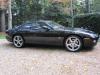
1997 XK8, just turned 100,000 miles. Driving around town and on short trips no smoke, oil level unchanged. This weekend I took it up into the mountains, several continental divide passes in the mix. I found when I push on the throttle after a long down hill (coasting and even having to brake) I get a large puff of blue smoke. The longer the downhill, the larger the volume of smoke.
I searched the internets and this forum, long downhills create negative cylander pressure that draws oil past the rings or valve guides seems to be the consensuses. I gather from reading here that oil past the rings would also show up as blow-by upon engine load, and have signs of oil in the air filter/filter box as the crankcase vents. The air filter, replaced in February according to records, looks new, and the box does not have any oily residue. I also pulled the nasty plastic fitting over the "part load breather" and the hole was not blocked.
So, facing a long trip this next weekend, any advice for an easy fix or at least something to mitigate the problem would be helpful.
Many thanks to this great forum!
1997 XK8, just turned 100,000 miles. Driving around town and on short trips no smoke, oil level unchanged. This weekend I took it up into the mountains, several continental divide passes in the mix. I found when I push on the throttle after a long down hill (coasting and even having to brake) I get a large puff of blue smoke. The longer the downhill, the larger the volume of smoke.
I searched the internets and this forum, long downhills create negative cylander pressure that draws oil past the rings or valve guides seems to be the consensuses. I gather from reading here that oil past the rings would also show up as blow-by upon engine load, and have signs of oil in the air filter/filter box as the crankcase vents. The air filter, replaced in February according to records, looks new, and the box does not have any oily residue. I also pulled the nasty plastic fitting over the "part load breather" and the hole was not blocked.
So, facing a long trip this next weekend, any advice for an easy fix or at least something to mitigate the problem would be helpful.
Many thanks to this great forum!

Senior Member
Joined: Sep 2010
Posts: 168
Likes: 12
From: Utah
When you are driving down hill with the foot off the accelerator it puts the cylinders in a negitive pressure situation. There will be sume oil pulled past the rings and valve stems. In a used engine with loose tolerances it is quit common. When you hit the gas again the oil burns creating smoke. It is not serious, and you will see it in a lot of high milage cars. The only fix is an engine overhaul putting everything back to new engine specification. Don't worry untill the oil consumption starts to bother you.
Thread Starter
|
Senior Member
Joined: Apr 2011
Posts: 249
Likes: 51
From: Carolina Beach, NC
I appreciate the feedback above, but I think I understand these issues. Allow me to clarify:
1. If it is worn lined cylinder walls with oil getting past during negative pressure situations, wouldn't this also manifest itself in blow-by during positive pressure situations, resulting in oil getting in the crankcase ventilation system, thus soiling the air filter? The car would also smoke during normal operation. This is not happening.
2. If oil is then getting past the valve guides, what can I do to remedy the situation? I remember in the older engines there were valve guide seals that could be more readily replaced vs. a more drastic valve "job."
3. I ask if there is any experience with worn valve guides that is specific to the MY of my XK8.
Please understand that I have a moderate-good knowledge of auto mechanics and am seeking something more specific with the XK8 with these specific symptoms, if there is such information or experience.
Thank you,
John
1. If it is worn lined cylinder walls with oil getting past during negative pressure situations, wouldn't this also manifest itself in blow-by during positive pressure situations, resulting in oil getting in the crankcase ventilation system, thus soiling the air filter? The car would also smoke during normal operation. This is not happening.
2. If oil is then getting past the valve guides, what can I do to remedy the situation? I remember in the older engines there were valve guide seals that could be more readily replaced vs. a more drastic valve "job."
3. I ask if there is any experience with worn valve guides that is specific to the MY of my XK8.
Please understand that I have a moderate-good knowledge of auto mechanics and am seeking something more specific with the XK8 with these specific symptoms, if there is such information or experience.
Thank you,
John

Senior Member
Joined: Feb 2011
Posts: 701
Likes: 240
From: Louisville, KY
Smoke from leaking valve guide seals normally shows up at start-up, e.g. small-block Chevys. The oil continues to seep down the valve stem while the engine is off, collects in the cylinders and when started, a puff of blue smoke is seen. Oil on cylinder walls runs down while the engine is off and doesn't normally exhibit this behavior.
Nobody said anything about worn cylinder walls. A lot of modern engines, especially with plated cylinders, employ low-tension piston rings in order to reduce engine drag (better fuel economy) and scuffing/pre-mature wear of plating. That makes them more prone to sticking in the ring lands and and allowing a certain amount of oil to be pulled past them during negative pressure situations. More frequent oil changes with quality, hi-detergent oil may eventually reverse the issue. I would not recommend using an oil flush in a plated engine. And unless the smoking is severe I wouldn't be too concerned about it.
Nobody said anything about worn cylinder walls. A lot of modern engines, especially with plated cylinders, employ low-tension piston rings in order to reduce engine drag (better fuel economy) and scuffing/pre-mature wear of plating. That makes them more prone to sticking in the ring lands and and allowing a certain amount of oil to be pulled past them during negative pressure situations. More frequent oil changes with quality, hi-detergent oil may eventually reverse the issue. I would not recommend using an oil flush in a plated engine. And unless the smoking is severe I wouldn't be too concerned about it.

Veteran Member


Joined: Sep 2010
Posts: 1,713
Likes: 451
From: New Jersey
John,
FWIW, here's how it looks to me:
Pretty clearly a worn engine. But oil is cheap and worn engines can run a long time, consuming a little oil along the way, without giving up the ghost.
Maybe a good first step would be to measure oil consumption and get a handle on just how bad it is. Next, the old standby test of injecting oil into cylinders to see if it effects compression should sort out rings from valve guides.
Easy does it; nothing you've described spells pending disaster.
Good luck,
FWIW, here's how it looks to me:
Pretty clearly a worn engine. But oil is cheap and worn engines can run a long time, consuming a little oil along the way, without giving up the ghost.
Maybe a good first step would be to measure oil consumption and get a handle on just how bad it is. Next, the old standby test of injecting oil into cylinders to see if it effects compression should sort out rings from valve guides.
Easy does it; nothing you've described spells pending disaster.
Good luck,
Thread Starter
|
Senior Member
Joined: Apr 2011
Posts: 249
Likes: 51
From: Carolina Beach, NC
Gents,
Thank you, thank you; and I apologize if I sounded a bit arrogant in my second post. You both have explained things very well, and brought me three decades into the present
I have a 1700 mile trip in a few days, and it looks like the temps will be hovering around 100. Should I consider 10w-40?
thanks -
Thank you, thank you; and I apologize if I sounded a bit arrogant in my second post. You both have explained things very well, and brought me three decades into the present
I have a 1700 mile trip in a few days, and it looks like the temps will be hovering around 100. Should I consider 10w-40?
thanks -
Trending Topics
Veteran Member
Joined: Jun 2008
Posts: 1,714
Likes: 326
From: Chesapeake Bay area, Virginia
Another take on this....if the crankcase is overfilled even slightly, the forward attitude on the downhill will allow the crank to whip oil into the forward cylinder spigots and some of it will find its way into the combustion chambers.
When the throttle plate is closed on coasting, the intake manifold vacuum rises, sucking on the cylinders when the intake valve opens, pulling oil past worn rings or in through worn valve guides and seals . The thing is, as it does this, the oil goes in the cylinder but does not burn because the injectors are shut off when coasting at speed, so when you hit the throttle, the injectors put in the fuel, and it burns together with the oil suddenly. I would do a compression test to see if the rings are sealing. This is a Nikasil engine and there may be some premature bore wear. Then you will know more.
When the throttle plate is closed on coasting, the intake manifold vacuum rises, sucking on the cylinders when the intake valve opens, pulling oil past worn rings or in through worn valve guides and seals . The thing is, as it does this, the oil goes in the cylinder but does not burn because the injectors are shut off when coasting at speed, so when you hit the throttle, the injectors put in the fuel, and it burns together with the oil suddenly. I would do a compression test to see if the rings are sealing. This is a Nikasil engine and there may be some premature bore wear. Then you will know more.

Senior Member
Joined: Sep 2013
Posts: 729
Likes: 257
From: Cincinnati,Ohio USA
you can do a smokeless oil change using smokeless engine oil, or add a bottle of stp smoke treatment,.
But first confirm your oil level is not overfilled.
Then Confirm the driver side oil vapor hose on the valve cover nipple is not clogged with carbon.
But first confirm your oil level is not overfilled.
Then Confirm the driver side oil vapor hose on the valve cover nipple is not clogged with carbon.

Veteran Member
Joined: Dec 2010
Posts: 8,833
Likes: 2,920
From: Douglasville Ga.
I use 10W 40 synthetic in both of my cars. With the temperature you will be experiencing and the miles on the engine, probably a good choice.

Thread
Thread Starter
Forum
Replies
Last Post
Wolfy
XJ ( X351 )
58
May 28, 2024 08:06 AM

Currently Active Users Viewing This Thread: 1 (0 members and 1 guests)