When you click on links to various merchants on this site and make a purchase, this can result in this site earning a commission. Affiliate programs and affiliations include, but are not limited to, the eBay Partner Network.
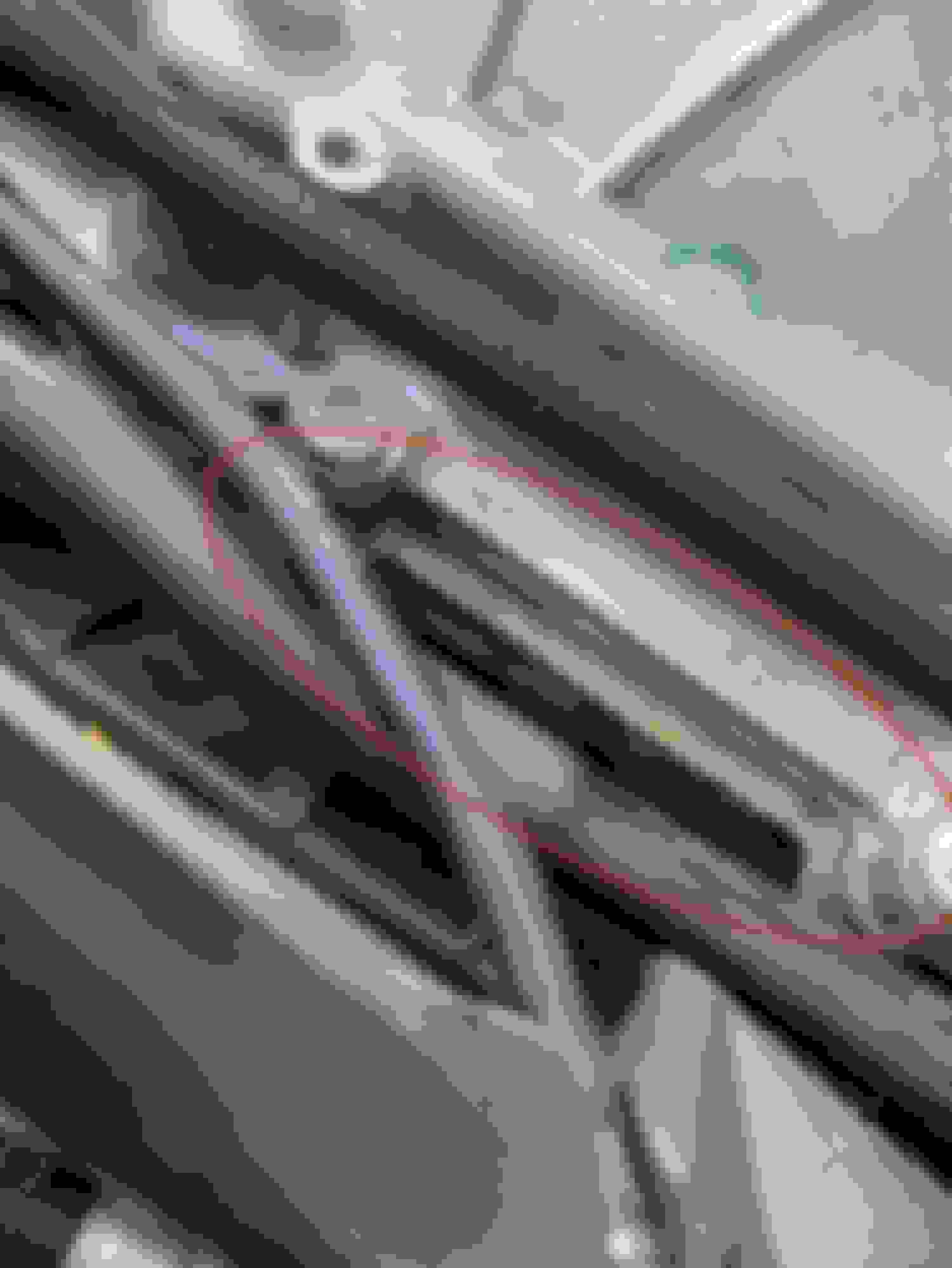
Hello everyone! I have a 2015 F-Type V6, and I was about 1L low on coolant in the expansion tank. I topped it off, and have an appointment in a week or so with my local jag mechanic, but I decided to peek around the engine bay and see what was going on. I couldn't find any leaks, and the system still seems pressurized (air pops when I take the lid off after cooling the car down) - but I noticed this on top of the supercharger:
Now, my car previously needed some coolant lines removed for service so this could just be spilled coolant... or? Something worse?
BTW - I'm familiar with the Y-pipe and I think that's what I'll need done. But for now, my coolant level seems to not be changing at all.
A few decades ago I had a shop pressure test the cooling system on a new car (Vauxhall) that was losing coolant and they claimed it tested okay. The mechanic had then walked under the car pulling on the various hoses and one came away in his hands - the clip hadn't been fully tightened at the factory! So a pressure test pass doesn't always mean all is well. On the same car I reported it was using oil (about a litre per 10,000 miles) which was unusual for that model, in my experience. The mechanic patronisingly explained that "modern engines do burn a bit of oil" but interestingly, when they replaced the leaky fuel pump seal, the oil level never dropped between services.
A few decades ago I had a shop pressure test the cooling system on a new car (Vauxhall) that was losing coolant and they claimed it tested okay. The mechanic had then walked under the car pulling on the various hoses and one came away in his hands - the clip hadn't been fully tightened at the factory! So a pressure test pass doesn't always mean all is well. On the same car I reported it was using oil (about a litre per 10,000 miles) which was unusual for that model, in my experience. The mechanic patronisingly explained that "modern engines do burn a bit of oil" but interestingly, when they replaced the leaky fuel pump seal, the oil level never dropped between services.
COMPONENT TEST - OIL CONSUMPTION TEST
GENERAL REMARKS
The amount of oil an engine uses will vary with the way the vehicle is driven in addition to normal engine-to-engine variation. This is especially true during the first 16,100 km (10,000 miles) when a new engine is being broken in or until certain internal components become conditioned. Vehicles used in heavy-duty operation may use more oil. The following are examples of heavy-duty operation:
Trailer towing applications
Severe loading applications
Sustained high speed operation
Engines need oil to lubricate the following internal components:
Cylinder block cylinder walls
Pistons and piston rings
Intake and exhaust valve stems
Intake and exhaust valve guides
All internal engine components
When the pistons move downward, a thin film of oil is left on the cylinder walls. As the vehicle is operated, some oil is also drawn into the combustion chambers past the intake and exhaust valve stem seals and burned.
The following are examples of conditions that can affect oil consumption rates:
Engine size
Operator driving habits
Ambient temperatures
Quality and viscosity of oil
Engine is being run in an overfilled condition (check the oil level at least five minutes after a hot shutdown with the vehicle parked on a level surface. The oil level should not be above the top of the cross-hatched area and the letter "F" in FULL).
Operation under varying conditions can frequently be misleading. A vehicle that has been run for several thousand miles on short trips or in below-freezing ambient temperatures may have consumed a "normal" amount of oil. However, when checking the engine oil level, it may measure up to the full mark on the oil level indicator due to dilution (condensation and fuel) in the engine crankcase. The vehicle then might be driven at high speeds on the highway where the condensation and fuel boil off. The next time the engine oil is checked it may appear that a liter of oil was used in about 160 km (100 miles). Oil consumption rate is about one liter per 2,400 km (1,500 miles).
Make sure the selected engine oil meets Jaguar specification and the recommended API Performance category "SG" and SAE viscosity grade as shown in the vehicle Owner's Guide. It is also important that the engine oil is changed at the intervals specified for the typical operating conditions.
Oil consumption rate is about one liter per 2,400 km (1,500 miles).
I don't know where this came from, but I've clearly never had a vehicle this refers to. The only car I've had that ever needed top-ups between services (c.10,000 mile intervals) (apart from the above mention leaky vehicle) was a "finely engineered" VW Golf which used about a litre per 1,000 miles, the worst car I've ever owned - I'll never buy VW again.
Whilst I agree that oil usage varies according to driving conditions, the quoted section from Rummy636 post is clearly very outdated, it references oil of API category SG which has been obsolete for over twenty years
Whilst I agree that oil usage varies according to driving conditions, the quoted section from Rummy636 post is clearly very outdated, it references oil of API category SG which has been obsolete for over twenty years
This came from TOPIx for a MY18 F-Type R. It says the same for a brand new F-Type with a V8 in it. Oil consumption numbers haven't changed.
This came from TOPIx for a MY18 F-Type R. It says the same for a brand new F-Type with a V8 in it. Oil consumption numbers haven't changed.
Hear what you're saying, the problems with manuals on Topix is they sometimes contain large passages lifted from years ago or from other models.
I have read a few references to F type "rear seats " which I suspect came from a manual for an entirely different model.
Either way, whilst I believe all engines burn oil and mine needs topping up between 16,000 / yearly services it certainly doesn't come close to 1L per 1500 miles.
Hear what you're saying, the problems with manuals on Topix is they sometimes contain large passages lifted from years ago or from other models.
I have read a few references to F type "rear seats " which I suspect came from a manual for an entirely different model.
Either way, whilst I believe all engines burn oil and mine needs topping up between 16,000 / yearly services it certainly doesn't come close to 1L per 1500 miles.
A classic example is the jacking points shown in both the F-Type Owners Handbook and the Workshop Manual.
The diagrams are dead wrong and appear to be carried over from either the XK or XF handbook/manual.
And my F-Type has never consumed a single drop of oil between oil changes.
I exaggerate only a tad, all cars consume some engine oil, but my oil level read-out has never budged off "max".
Sounds like you need your shop to pressure test it and track down the leak. Could be more than one
Common places are the water pump, crossover pipe, several other hard plastic couplings, and the header tank itself (or its cap)
My 2012 XF V8 is doing the same thing.....
i could smell coolant. Then suddenly, it got much worse and worse.
Now it's losing a quart of coolant every 10 miles.
does anyone know the complete parts list for water pump and crossover pipe replacement?
My 2012 XF V8 is doing the same thing.....
i could smell coolant. Then suddenly, it got much worse and worse.
Now it's losing a quart of coolant every 10 miles.
does anyone know the complete parts list for water pump and crossover pipe replacement?
Presumably an XF if it's 2012? So not quite the right section of the forum. You should repost in the X250 section.
Don't drive it!!!! Seriously. If it's losing a quart in 10 miles, it's a serious leak. It could easily dump coolant and overheat the engine - and that is likely death to your engine (the aluminum block doesn't take well to overheating). And a replacement engine is >>value of the car...
Welp, pressure tested overnight and it didn't budge. I think this may be a failing cap, allowing it to slowly evaporate or something. I'm replacing my filler cap.
Pressure test should show if the cap is leaking too. So if it passed the pressure test then unlikely to be the cap. Unfortunately may mean something more serious - leaking when engine is running. Have you checked your oil to see if coolant is getting in via head gasket?
Pressure test should show if the cap is leaking too. So if it passed the pressure test then unlikely to be the cap. Unfortunately may mean something more serious - leaking when engine is running. Have you checked your oil to see if coolant is getting in via head gasket?
well, it's worse now. I drove away, gave it a spirited run; then my water pump shot water all over the front of the engine.



 The case of the disappearing coolant