


62 mk2 intro


Thread Starter
|
Junior Member
Joined: Oct 2012
Posts: 13
Likes: 3
From: ontario, california
 62 mk2 intro


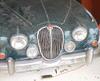
So little history on this car, it is a 1962 MK2 my uncle bought it back in the early 70s, he drove it and was passed on to all my aunts and uncles and dad. So, I feel it needs to be brought back to life. At some point in the 80s, the engine blew up. They took it out with good intentions, but it never made it back in. It sat out in a field in southern California from then til about 2008ish when I brought it into the garage, Currently has no engine or trans, I'm not going back to stock or doing a true restoration on it. But will be installing a 5.3 LS engine with 4l60e trans. Probably end up building the engine a little to make about 450-500hp. I will do the body work and paint it the dark jagaur green. Hopefully I can get to start on this sometime this year!

Veteran Member


Joined: Aug 2020
Posts: 2,293
Likes: 1,463
From: Oxford, UK
Welcome to the 'club'. It's hard to see from the pictures, but, from what I can, the door gaps look fair which is always a good sign. My Mk2 has also passed around the family. Strangely enough, it's Jaguar Opalescent Dark Green and, if/when I finish the restoration, it's going to be Old English White.
Thread Starter
|
Junior Member
Joined: Oct 2012
Posts: 13
Likes: 3
From: ontario, california
Welcome to the 'club'. It's hard to see from the pictures, but, from what I can, the door gaps look fair which is always a good sign. My Mk2 has also passed around the family. Strangely enough, it's Jaguar Opalescent Dark Green and, if/when I finish the restoration, it's going to be Old English White.

Veteran Member


Joined: Jun 2011
Posts: 1,113
Likes: 315
From: California
Welcome to the forum. I have done exactly what you are talking about but in the slightly different 3.8s variant sedan. It will fit, and that power is what the car really needs, you just need to be steadfast and not let little things stop the project. Here is my thread on my car, https://www.jaguarforums.com/forum/m...st-done-73952/
I will be posting updates in about 3 weeks as I put over 220,000 miles on the LS1 and now it has been fully built to a high quality with forged internals putting out around 500 HP.
I will be posting updates in about 3 weeks as I put over 220,000 miles on the LS1 and now it has been fully built to a high quality with forged internals putting out around 500 HP.
Thread Starter
|
Junior Member
Joined: Oct 2012
Posts: 13
Likes: 3
From: ontario, california
Welcome to the forum. I have done exactly what you are talking about but in the slightly different 3.8s variant sedan. It will fit, and that power is what the car really needs, you just need to be steadfast and not let little things stop the project. Here is my thread on my car, https://www.jaguarforums.com/forum/m...st-done-73952/
I will be posting updates in about 3 weeks as I put over 220,000 miles on the LS1 and now it has been fully built to a high quality with forged internals putting out around 500 HP.
I will be posting updates in about 3 weeks as I put over 220,000 miles on the LS1 and now it has been fully built to a high quality with forged internals putting out around 500 HP.
Last edited by tjpolzin; Mar 4, 2022 at 10:09 AM.
Trending Topics

Veteran Member

Joined: Dec 2009
Posts: 9,555
Likes: 2,553
From: Crewe, England
The Jaguar S-type of the 60s was based on the Mark 2, but the rear part of the body shell was extensively modified to fit the independent rear suspension. The rear is also a completely different style too. A small V8 will fit because Jaguar produced a Daimler version of the Mark 2 called the Daimler 250 V8 which used the Daimler-developed V8 of 2.5 litres. It was designed by Edward Turner who had, before WW2, designed the parallel twin engine for the Triumph Speed Twin motorcycle. Whether a larger V8 like the LS will fit is another matter. The engine bay of the Mark 2 is very tight especially towards the front.
Thread Starter
|
Junior Member
Joined: Oct 2012
Posts: 13
Likes: 3
From: ontario, california
The Jaguar S-type of the 60s was based on the Mark 2, but the rear part of the body shell was extensively modified to fit the independent rear suspension. The rear is also a completely different style too. A small V8 will fit because Jaguar produced a Daimler version of the Mark 2 called the Daimler 250 V8 which used the Daimler-developed V8 of 2.5 litres. It was designed by Edward Turner who had, before WW2, designed the parallel twin engine for the Triumph Speed Twin motorcycle. Whether a larger V8 like the LS will fit is another matter. The engine bay of the Mark 2 is very tight especially towards the front.
Last edited by tjpolzin; Mar 4, 2022 at 09:43 PM.
Thread Starter
|
Junior Member
Joined: Oct 2012
Posts: 13
Likes: 3
From: ontario, california
You can use budget for anything! 😂😂 People said I couldn't build my suburban for what I did.. but I managed. I did an LS swap on my 72 suburban, with 10" lift and am only into it for $5500 including cost of the burb, lift, tires, 6.0 LS engine 4l80e trans and all. I did all the work myself including the wiring harness. I have a welder to fabricate mounts. The only real cost is going to be engine/trans and finding the fuel system. Can probably complete the swap for around $4,000-4500. I can get an LS for approx $900 with trans, new cam and valve springs for another $700 refresh the engine for about $1000. Then the little things to do the swap. It's only as expensive as the work you can't complete.
Veteran Member
Joined: Jun 2011
Posts: 1,113
Likes: 315
From: California

You can use budget for anything! 😂😂 People said I couldn't build my suburban for what I did.. but I managed. I did an LS swap on my 72 suburban, with 10" lift and am only into it for $5500 including cost of the burb, lift, tires, 6.0 LS engine 4l80e trans and all. I did all the work myself including the wiring harness. I have a welder to fabricate mounts. The only real cost is going to be engine/trans and finding the fuel system. Can probably complete the swap for around $4,000-4500. I can get an LS for approx $900 with trans, new cam and valve springs for another $700 refresh the engine for about $1000. Then the little things to do the swap. It's only as expensive as the work you can't complete.
* the space is so tight that many other elements will need more work to fit like AC, air intake, power steering, etc.
* extra attention needed to overcome lack of airflow thru the engine bay to keep it all cool, it is not a radiator issue but a flow issue, look at my post for how I dealt with it
* what makes these sedans iconic and cool is the book matched wood, that is not a typical easy DIY job so that can be challenging or costly
* lack of high performance parts like suspension A-arms, you can now get good Foseway brake kits, but you need to really search hard otherwise adapting other
performance parts can be challenging or could require one off custom parts to make them fit, etc.
* some Jag parts can be pricey and that is just the way it is
I did the initial engine upgrade when LS swaps were relatively new so that make it harder. Now there are more universal LS swap parts that can be used like headers, more options for serpentine kits, etc. What is also creates more creativity is that most people on Jaguar forums tend to put down modifying anything so you will have to find the few of us whom have done it for advice as you will get very little from other Jaguar owners. Now that LS engines are so popular the prices are higher as core changes are now $2500 so finding prices you stated now are very rare. Don't let all my comments phase you, just be prepared for a lot of challenges that will suck up more time than you often would have thought and hopefully money does not stop the project. My initial engine was a budget deal and that shows how reliable the LS powerplant can be as I got way over 225,000 miles and could have stretched it another 50,000 or more but my car is a daily driver so I wanted to avoid an unplanned failure.
Good luck, be persistent, and feel free to ask for guidance here as there are at least a few here whom can help...
Last edited by primaz; Mar 5, 2022 at 04:08 AM.

Junior Member
Joined: Mar 2022
Posts: 10
Likes: 9
I think choosing an engine of the right weight would be a good idea. I owned a Damiler V8-250 for 14 years and put about 150k miles on it. I only sold it because I moved to an area in which it would not be secure. The engine was lighter than any of the Jag units and this made the car handle much better, it had lighter springs of course to match. It was a much nicer drive and the lighter weight meant a manual 2.5 V8 was almost as quick as the 3.4 Jag.
I am a purist at heart but given what you have I can understand the attraction of a cheaply maintainable V8 provided the gearing, weight and suspension all match up. You mentioned the 6.0 LS unit. I think that come in over 580 lbs which is heavier than the old XK. I wonder if the alloy block versions, although slightly less capacity would make a better match at circa 500 lbs. The Damiler 2.5 v8 was about 420 lbs and I can vouch that weight made the car a lot nicer to drive.
P
I am a purist at heart but given what you have I can understand the attraction of a cheaply maintainable V8 provided the gearing, weight and suspension all match up. You mentioned the 6.0 LS unit. I think that come in over 580 lbs which is heavier than the old XK. I wonder if the alloy block versions, although slightly less capacity would make a better match at circa 500 lbs. The Damiler 2.5 v8 was about 420 lbs and I can vouch that weight made the car a lot nicer to drive.
P

Senior Member
Joined: Oct 2012
Posts: 795
Likes: 200
From: Ohio
Aluminum Dart block, aluminum heads, and aluminum intake will do the trick to keep the weight down. But that blows the budget.
I'd be surprised if the 3.8 is heavier than an LS. Likewise the DG cast iron tranny was a heavy piece. An aluminum cased 5 or 6 speed is 25-40% lighter.
I'd be surprised if the 3.8 is heavier than an LS. Likewise the DG cast iron tranny was a heavy piece. An aluminum cased 5 or 6 speed is 25-40% lighter.
Veteran Member
Joined: Jun 2011
Posts: 1,113
Likes: 315
From: California
I think choosing an engine of the right weight would be a good idea. I owned a Damiler V8-250 for 14 years and put about 150k miles on it. I only sold it because I moved to an area in which it would not be secure. The engine was lighter than any of the Jag units and this made the car handle much better, it had lighter springs of course to match. It was a much nicer drive and the lighter weight meant a manual 2.5 V8 was almost as quick as the 3.4 Jag.
I am a purist at heart but given what you have I can understand the attraction of a cheaply maintainable V8 provided the gearing, weight and suspension all match up. You mentioned the 6.0 LS unit. I think that come in over 580 lbs which is heavier than the old XK. I wonder if the alloy block versions, although slightly less capacity would make a better match at circa 500 lbs. The Damiler 2.5 v8 was about 420 lbs and I can vouch that weight made the car a lot nicer to drive.
P
I am a purist at heart but given what you have I can understand the attraction of a cheaply maintainable V8 provided the gearing, weight and suspension all match up. You mentioned the 6.0 LS unit. I think that come in over 580 lbs which is heavier than the old XK. I wonder if the alloy block versions, although slightly less capacity would make a better match at circa 500 lbs. The Damiler 2.5 v8 was about 420 lbs and I can vouch that weight made the car a lot nicer to drive.
P
For the Jaguar sedans I would say anywhere from 400 HP to 550 HP is ideal as that will give you plenty of power and not require chassis mods, etc. How I started was the inexpensive way which is an LS1 truck engine with matching 4L60 that had a mild rebuild that I got for a deal for $5K. You can still get some deals like that but they are getting more rare as the demand is increasing the used engine prices lately; people are charging $2000 to $2500 for a core. That put out about 400 HP which was good for 0-60 in 4 seconds. The new rebuild is around 500 HP with all forged internals that was the same performance and quality parts as crate options for a fair amount less.
Veteran Member
Joined: Aug 2020
Posts: 2,293
Likes: 1,463
From: Oxford, UK
If you're not worried about the last 100 or so hp, the Ford Duratec and Cyclone V6 engines might be good options. They will save a great deal of weight, are relatively compact and come with a very nice choice of transmissions. The Duratec even has a Jaguarised version, which may be the smoothest, strongest and most powerful.
Thread Starter
|
Junior Member
Joined: Oct 2012
Posts: 13
Likes: 3
From: ontario, california
If you're not worried about the last 100 or so hp, the Ford Duratec and Cyclone V6 engines might be good options. They will save a great deal of weight, are relatively compact and come with a very nice choice of transmissions. The Duratec even has a Jaguarised version, which may be the smoothest, strongest and most powerful.
Junior Member
Joined: Mar 2022
Posts: 10
Likes: 9
according to https://www.gomog.com/allmorgan/engineweights.html the weight of the 3.8 XK engine is 592 lbs. I think the tall cast iron block and long steel crank push the weight up. As they made the Daimler version with a small 2.5 V8 the Daimler enthusiasts were always keen on fitting the larger Daimler 4.5 V8. However, it is not just a stroked and bored version, the 4.5 is a physically larger block and heavier so I have never seen or herd of that being done - it would be very awkward.
I think an engine up to 420 lbs gives a better weight distribution and much better handling, certainly better for going fast on twisty roads in the English countryside.
Modern engines are certainly a good plan in terms of getting plenty of power for lower wight but the issue with modern crate engines of high power is that the live rear axle will have difficulty handling the power, you lose traction especially out of corners and the old panhard rod tends to snap. Axles from hard driven 3.8 or tuned up 3.4 mark 2s tended to suffer distortions and premature wear. I know because I sold a couple of used axles from Daimlers and 2.4 Jags to people rebuilding 3.8s. I think the Mk 2 is not good aerodynamically above about 130 mph and the wind noise is high so I think the high power has less use unless you want to drag race from the lights and whilst it is great for sharp overtaking, the suspension and brakes would need a lot of work to get anywhere near a modern higher performance vehicle. And I am one who loves throwing a Mk 2 around. For practical purposes on UK roads, handling trumps brute power almost always. A different story if you have long straight roads with no speed limits of course.
My daily driver is an XF with the 5.0 V8 and it doesn't t have the refinement of a 6 or 12 cylinder engine even though it is one of the more refined V8s.
I think an engine up to 420 lbs gives a better weight distribution and much better handling, certainly better for going fast on twisty roads in the English countryside.
Modern engines are certainly a good plan in terms of getting plenty of power for lower wight but the issue with modern crate engines of high power is that the live rear axle will have difficulty handling the power, you lose traction especially out of corners and the old panhard rod tends to snap. Axles from hard driven 3.8 or tuned up 3.4 mark 2s tended to suffer distortions and premature wear. I know because I sold a couple of used axles from Daimlers and 2.4 Jags to people rebuilding 3.8s. I think the Mk 2 is not good aerodynamically above about 130 mph and the wind noise is high so I think the high power has less use unless you want to drag race from the lights and whilst it is great for sharp overtaking, the suspension and brakes would need a lot of work to get anywhere near a modern higher performance vehicle. And I am one who loves throwing a Mk 2 around. For practical purposes on UK roads, handling trumps brute power almost always. A different story if you have long straight roads with no speed limits of course.
My daily driver is an XF with the 5.0 V8 and it doesn't t have the refinement of a 6 or 12 cylinder engine even though it is one of the more refined V8s.
Veteran Member
Joined: Aug 2020
Posts: 2,293
Likes: 1,463
From: Oxford, UK
Apart from manufacturing, which they are very good at, I don't believe there's a great deal of Ford in the Duratec V6. It's more the work of Porsche, modified by Cosworth, Mazda and Jaguar. Apparently, Ford had some difficulty in designing aluminium blocks. The Cyclone could be heavily based on the Duratec, or at least experience of it, I don't know. In terms of the fun factor, I agree with Paul that reducing weight over the front wheels (or at least disguising it) is worth a lot of horsepower (once you've reached 240hp or so). I also agree with him on the shortcomings in the rear suspension. For total weight, it's worth keeping in mind that most traditional automatic transmissions weigh a good 100 ponds or more than a manual.
A MK2 with a Duratec AJV6 and a turbo or a centrifugal supercharger might be an exciting project. Especially, if the UK DVLA allowed it to keep its historical status.
As I recall (from several decades ago), wind noise in a Mk2 is pretty significant at 120 mph. But that's true of almost all old cars above 80 mph and often at a lot less than that. It's a matter of door seals, flexing of the side window frames and turbulence from the rain gutters.
A MK2 with a Duratec AJV6 and a turbo or a centrifugal supercharger might be an exciting project. Especially, if the UK DVLA allowed it to keep its historical status.
As I recall (from several decades ago), wind noise in a Mk2 is pretty significant at 120 mph. But that's true of almost all old cars above 80 mph and often at a lot less than that. It's a matter of door seals, flexing of the side window frames and turbulence from the rain gutters.

Veteran Member
Joined: Jul 2012
Posts: 5,546
Likes: 1,495
From: Llandudno, Cape Town, South Africa
Just for God sake do something someone else has done & had all the battles to fit then & you can learn from their solutions. e.g. Primaz.
Last edited by Glyn M Ruck; Mar 19, 2022 at 06:38 PM.