When you click on links to various merchants on this site and make a purchase, this can result in this site earning a commission. Affiliate programs and affiliations include, but are not limited to, the eBay Partner Network.
Interesting and I guess it is that tinny rasp that I've found irritating on an E36 M3 that had a stainless steel system and became really unpleasant at around 3 to 4k revs which corresponds with our motorway speeds, I managed to fit an original system and it was just so pleasant by comparison, but do understand the rot factor the mild steel ones don't last well its true...
I have a Double S stainless steel system on my S Type. The factory is only 30 miles from me in Devon. My previous owner had up graded the rear sections with a system from Double S so during my rebuild I bought the front half from the same company (as this was still mild steel and rotting out) so I knew the front and back would fit together.
I have not been able to compare the noise against another car with a different system but I find the noise to be pleasant. Quiet on tick over, hardly audible when driving at 60 over the road noise but when you floor it at low speeds with the windows open it has a great grumble sound which is what I want from a Jaguar.
I spent an hour under my Mk2 this morning, undoing nuts to remove the exhaust. One rarely mentioned, but inestimably great advantage of stainless steel is avoiding the shower of rust that fallis in your face even from a relatively healthy mild steel system. I'd rate this above sound or longevity. In fact, my experience has been that Jaguar OE exhausts always lasted well, though I guess OE for these cars must be long gone.
Yes ~ The standard "OE" mild steel exhaust that a Jaguar dealer will sell you today is junk.
Nice stainless band clamps also help. Not those stupid U bolt clamps than squash the pipework, rust badly etc. Require a cutting torch to remove at times.
Last edited by Glyn M Ruck; Feb 4, 2021 at 11:17 AM.
Wow Glyn, excellent restoration. Attention to detail of which these cars have many. Doctor in the little town I grew up had a 3.8S but I was personally never involved in them until we acquired a MK X in 2014 for the annual BullRun, a race here in SA. It was only then when I realized how advanced these vehicles were at that time.
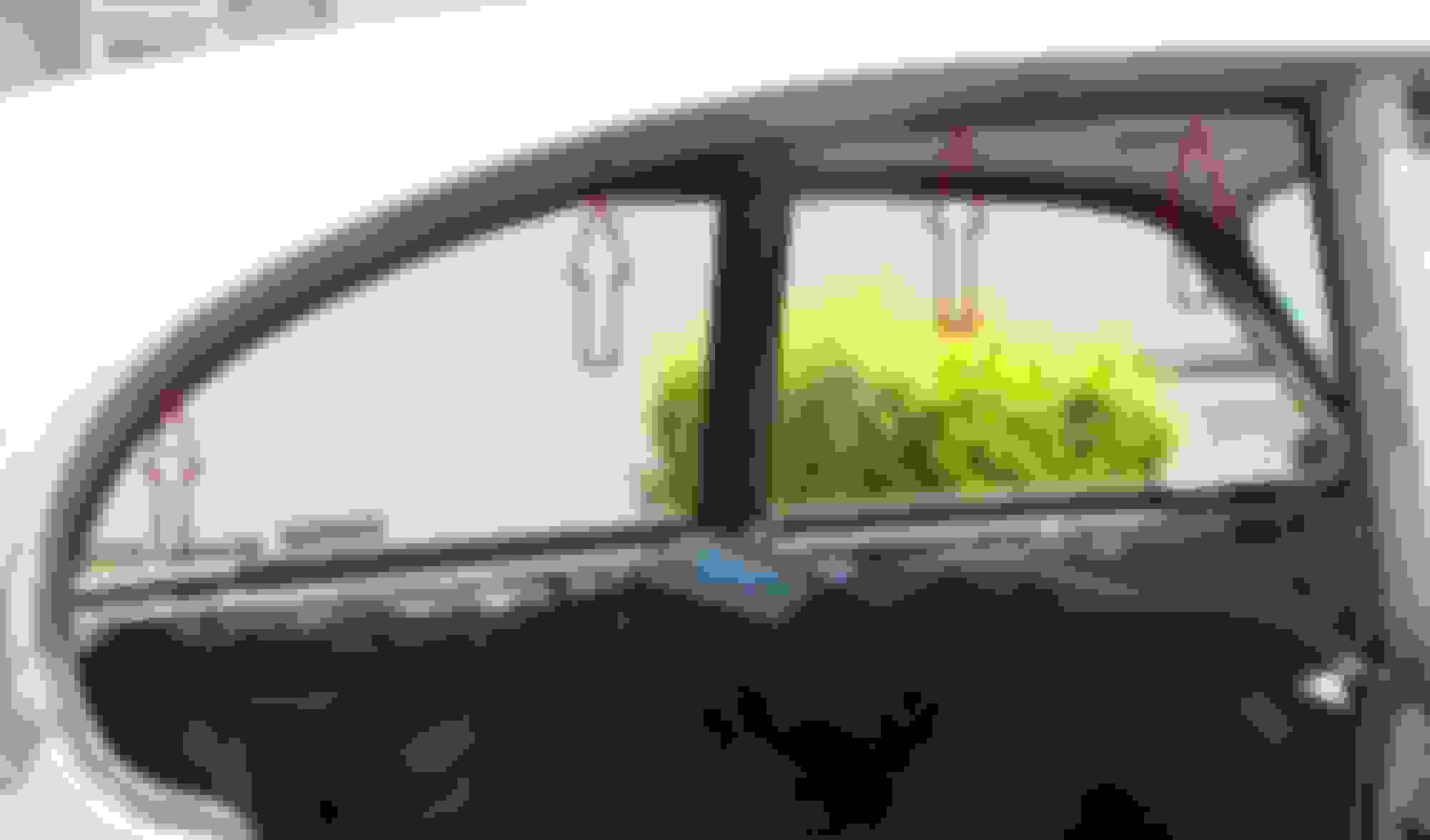
Dave the inside curved wood or hockey sticks above the rear doors are just screwed on. Problem is the screws are going from the outside through the metal door frame into the back of the wood so they cannot be seen. The heads of the screws are then hidden by the rubber door seals. To get to the heads of the screws and I think from memory there are four you have to peel back the rubber door seal which is glued into place to find them. You should be able to feel the tops of the screws under the rubber which negates the need to pull all the rubber off. The inner wood over the top of the front doors is attached the same way.
I have attached a photo which shows the position of the screws taken during my initial strip down. There maybe a fifth screw towards the rear but I cannot tell from this photo.
.
Last edited by Cass3958; Jul 11, 2021 at 04:27 AM.
Dave ~ Cass/Rob has explained the wood rail above the doors attachment just as well as I could. Attachment is by external screws in the door rubber channel. I bought a whole assortment of stainless screws in different lengths as they vary in length & the originals rust. Why I always recommend fitting top of door rubbers last. Take note of which length screws come from which attachment point/location or you can crack the wood on reassembly with an over length screw. Also critical that the Furflex is fitted at the correct radius.
EDIT: My car is an SA CKD built vehicle. I remember more screws than Rob shows which could have been local practice.
Good luck
Last edited by Glyn M Ruck; Jul 11, 2021 at 11:51 AM.
"All woodwork was hand sanded back to base [veneer]. Lightly stained to the desired colour & many layers of lacquer applied with sanding in between layers. We had no curing acceleration/baking facility available to us so we used good old sunlight. Sinking or slumping into the soft grain is a common problem with Jaguar woodwork so we sun exposed all the lacquered wood for 6 months prior to doing final lacquer coats, sanding & polishing. [British Autowood bakes his lacquer to accelerate curing]
We made a conscious decision not to use stripper on the wood. Business friends from BASF/Glasurit warned us that it is very difficult to fully neutralise it in this application & can cause issues down the line."
This was the sort of issue they explained if you don't achieve the required neutralisation of paint stripper
Last edited by Glyn M Ruck; Jul 11, 2021 at 07:34 PM.
Glyn
Lovely car. I am not a concourse person but I can admire them from afar
I have successfully stripped old lacquer and varnish off Jag woodwork by using acetone or methyl ethyl keytone.(note, not MEKP which is an chemical used in the fibreglass industry) These chemicals are used in the aviation industry to strip old "dope" which is a type of lacquer off fabric surfaces. My ex airforce CAC Winjeel aeroplane has fabric covered control surfaces and I have had to strip the dope off a couple of times in the 40 years I have owned it
The method I use is to lay a couple of layers of singlet class material over the area to be stripped. The chemical is then poured onto the material to thoroughly wet it and the whole thing is then wrapped in aluminium foil to reduce evaporation. Typically this will remove old lacquer in 10 minutes and varnish in 20 minutes. Note - this will not work on XJ6 woodwork which appears to be some type of plastic finish.
Cheers
Bill Mac
MK1
MK2
S3XJ6
X300
Bill. Thanks for that valuable input that can hopefully help others. Being from the oil industry I am completely "au fait" with Acetone & MEK & your advice makes total sense.
EDIT: Probably the only caution is that both are highly flammable at room temperature & thus due caution should take place. Work in a well ventilated area & away from sources of ignition.
Last edited by Glyn M Ruck; Jul 12, 2021 at 09:12 AM.
Radial 185R X 15 - What tyre pressures do people run on their S Types? I'm running 2.5 bar ~ 36 psi all round. Feels too soft on front. Spring Rates reset & new shock absorbers. Front of car sits slightly high. Still settling.