


Removing Starter


Thread Starter
|
Junior Member
Joined: Dec 2017
Posts: 2
Likes: 0
From: VA
 Removing Starter
Hey all, I'm trying to remove the starter from my 1965 Jaguar S Type 3.8 L and I found it impossible without removing other parts to access it. If anyone has any knowledge on which parts to remove to access the starter would be much obliged.

Member
Joined: Jun 2017
Posts: 50
Likes: 0
From: Carson City NV
I spent 6 hours trying to get my starter out, I gave up, called a mobile mechanic who came over and did it in 20 minutes. He took a pneumatic wrench with the correct socket and dropped it carefully down behind the cam cover, through all the interfering hydraulic and water lines, and then when it was lined up properly he took a long handled screwdriver to actuate the wrench. I tipped him an extra $100.
P.
P.

Veteran Member


Joined: Mar 2007
Posts: 9,137
Likes: 2,659
From: Florida
removing the carbs? NOOOO!!
Just disconnect and remove the Battery and its holdown, that is Numero Uno.
You will need a very long 9/16" wrench to grab the rear of the top bolt or NUT, depending on the last way it was put on.
What I did was to get a regular long 9/16" open end wrench, slid it over the nut, and clamped the other end with Locking pliers, so I had over 16 inches of tool sticking up.
then you disconnect the Oil Gauge Sender wire and maybe remove the sender too, (the perfect time to replace it, they do wear out),
then I took a 3/8" ratchet with a 12" extension and 9/16" socket and started to loosen the bolt until it was released from the nut.
to reach the lower bolt, you get under the car. you don't even need to raise it. But if you don't fit, just raise the car with the jack and put a concrete block under the front tire for safety. Make sure the transmission is in PARK and the emergency Brake real tight.
After both bolts and nuts are off, and if your car still has the "C" bracket and it is removed, then comes the fight:
It will not come out between the chassis and the Oil Filter Head, UNLESS you remove the Oil filter Head assembly TOO, and then you will need a new Gasket for the Oil Filter Head, so I decided against so much disassembly and too much oil mess.
I pulled it slowly towards the FRONT, removing the Brake Servo Breather Filter first, and the Automatic Transmission Dipstick, and then releasing the nut holding the dipstick Tube so I could move it.
It will take strength (the starter weighs a lot), and patience, and a little at a time to move it forward since you will have a number of obstructions to deal with, but it will finally come out VERTICALLY.
Wear fabric gloves for grabbing power, it might be greasy.
Just disconnect and remove the Battery and its holdown, that is Numero Uno.
You will need a very long 9/16" wrench to grab the rear of the top bolt or NUT, depending on the last way it was put on.
What I did was to get a regular long 9/16" open end wrench, slid it over the nut, and clamped the other end with Locking pliers, so I had over 16 inches of tool sticking up.
then you disconnect the Oil Gauge Sender wire and maybe remove the sender too, (the perfect time to replace it, they do wear out),
then I took a 3/8" ratchet with a 12" extension and 9/16" socket and started to loosen the bolt until it was released from the nut.
to reach the lower bolt, you get under the car. you don't even need to raise it. But if you don't fit, just raise the car with the jack and put a concrete block under the front tire for safety. Make sure the transmission is in PARK and the emergency Brake real tight.
After both bolts and nuts are off, and if your car still has the "C" bracket and it is removed, then comes the fight:
It will not come out between the chassis and the Oil Filter Head, UNLESS you remove the Oil filter Head assembly TOO, and then you will need a new Gasket for the Oil Filter Head, so I decided against so much disassembly and too much oil mess.
I pulled it slowly towards the FRONT, removing the Brake Servo Breather Filter first, and the Automatic Transmission Dipstick, and then releasing the nut holding the dipstick Tube so I could move it.
It will take strength (the starter weighs a lot), and patience, and a little at a time to move it forward since you will have a number of obstructions to deal with, but it will finally come out VERTICALLY.
Wear fabric gloves for grabbing power, it might be greasy.
Veteran Member
Joined: Mar 2007
Posts: 9,137
Likes: 2,659
From: Florida
since you already have the battery outside, you can use Jumper cables from the battery to the starter, to test the Starter but be warned, the starter will JUMP and hit you in the face like a Giant Steel Enchilada, so make sure you put all your weight on it before you even try to test it.
otherwise just remove the nose piece and grease the gearing.
if it is bad, send it to Mike Martinez at Star Electric in California, he the man.
Star Auto Electric Company - Company Information
otherwise just remove the nose piece and grease the gearing.
if it is bad, send it to Mike Martinez at Star Electric in California, he the man.
Star Auto Electric Company - Company Information

Veteran Member

Joined: Aug 2013
Posts: 1,828
Likes: 805
From: Lake Cowichan BC Canada
I just found it easier to take the carbs off, rather then removing the battery, and even with the battery out of the way, wouldn't it be quite difficult to remove the cable from the starter ?
T o each his own I guess.
T o each his own I guess.
Veteran Member
Joined: Mar 2007
Posts: 9,137
Likes: 2,659
From: Florida
you mean the hot cable at the front of the starter? that's nothing compared to messing with the carbs. But yes, whatever gets you thru the night...
Trending Topics
Veteran Member
Joined: Aug 2013
Posts: 1,828
Likes: 805
From: Lake Cowichan BC Canada
Yes, the hot cable on the starter.
I just like to have things out of the way, it takes me 15 or 20 minutes to get the carbs off, if that...
Of course that assumes the engine bay is nice and clean with no rusted seized nuts.
With any British car, it's always the nuts.
The threads are closer tolerance, so one spends a long time turning a given nut one flat a time with an open end wrench.
On my engine, once the nuts are loose, I can simply spin them off with my fingers.
I've even changed my exhaust manifold nuts to stainless, a little shot of oil, and they spin right off.
I just like to have things out of the way, it takes me 15 or 20 minutes to get the carbs off, if that...
Of course that assumes the engine bay is nice and clean with no rusted seized nuts.
With any British car, it's always the nuts.
The threads are closer tolerance, so one spends a long time turning a given nut one flat a time with an open end wrench.
On my engine, once the nuts are loose, I can simply spin them off with my fingers.
I've even changed my exhaust manifold nuts to stainless, a little shot of oil, and they spin right off.
Veteran Member

Joined: Nov 2013
Posts: 3,415
Likes: 1,647
From: Regional NSW, Australia
. . . and then there is the SMART way . . . developed and used by just about everyone back in the days when these things (Mk1 & especially, the 4L+ Mk2s) were raced. Most of us even had a floor template for preparing each new car long before it reached the track. Alas, much of this knowledge has been lost, although you might try the historic racing crowd.
Jose has given a good step-by-step of the removal sequence - although we found it quicker to R&R the oil filter head and a new gasket was never a limiting problem. The real problem, as all have found, is the upper N&B of the starter motor's standard arrangement - and worse if the N&B are "reversed".
Step 1 . . . first remove starter using trained snake and hours of skinned knuckles. Remove footwell carpet (never present in comp cars). Now, the template provides for a cutout of the "floor tunnel" surrounding the protrusion in the bell housing that accommodates the nose of the starter. Without a template, you will have have to eyeball it . . . the hole cut into the sheetmetal was about 120mm (5") dia, nibbled neatly to avoid distortion and cutout used as a template for a 150mm (6") patch from stock that was fastened back on with 3 or 4 pk sheetmetal screws.
Step 2 . . . modify starter by tack welding nuts ("1 ping only, Vasili") to the forward face of the fixing flange. Now you may balk at this in your concourse carriage, but bear with me. From now on, fixing bolts can only go on when pointed forward through bell housing - hence the access hole in tunnel.
Step 3 . . . from under car (per Jose, but OF head off), offer up starter, register lip into bell housing and align holes.
Step 4 . . . from inside car, use open access hole to insert bolts, catch into nuts and use rattle gun to tighten.
I kid you not . . . I have seen a well practiced young pit man turn this nightmare task of R&R starter into a single-man 1-2 minute no-brainer! So impressed, that all our 50s and 60s road going compacts were so modified.
Is the modified car weakened? Yep, probably . . . nut no driver here will ever stress their beast to the extent those racers were.
Is the car disfigured in any way? Are you kidding . . . these areas are so well hidden that invisibility is a given.
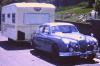
The car in my avatar, my very first Jaguar started life as a 2.4L Mk1 which I acquired over 50yrs ago. Young, restless, and ever seeking track like performance, it is seen in avatar and attached pic in rather different specs . . . bored & stroked to 3L, custom 10:1 CR pistons, gold top straight port head and triple 2" SUs straight from an E-Type but with semi-comp high lift cams . . . ridiculous amount of inner guard panel work to fit carbs . . . and all street legal at end of 60s. The later, all synchro manual box & electric O/D made for a real wolf in sheep's clothing.
Hope some of this proves helpful . . . most have spent a whole weekend wrestling with a starter motor . . . even way back then, I had far better things to do.
Cheers,
Jose has given a good step-by-step of the removal sequence - although we found it quicker to R&R the oil filter head and a new gasket was never a limiting problem. The real problem, as all have found, is the upper N&B of the starter motor's standard arrangement - and worse if the N&B are "reversed".
Step 1 . . . first remove starter using trained snake and hours of skinned knuckles. Remove footwell carpet (never present in comp cars). Now, the template provides for a cutout of the "floor tunnel" surrounding the protrusion in the bell housing that accommodates the nose of the starter. Without a template, you will have have to eyeball it . . . the hole cut into the sheetmetal was about 120mm (5") dia, nibbled neatly to avoid distortion and cutout used as a template for a 150mm (6") patch from stock that was fastened back on with 3 or 4 pk sheetmetal screws.
Step 2 . . . modify starter by tack welding nuts ("1 ping only, Vasili") to the forward face of the fixing flange. Now you may balk at this in your concourse carriage, but bear with me. From now on, fixing bolts can only go on when pointed forward through bell housing - hence the access hole in tunnel.
Step 3 . . . from under car (per Jose, but OF head off), offer up starter, register lip into bell housing and align holes.
Step 4 . . . from inside car, use open access hole to insert bolts, catch into nuts and use rattle gun to tighten.
I kid you not . . . I have seen a well practiced young pit man turn this nightmare task of R&R starter into a single-man 1-2 minute no-brainer! So impressed, that all our 50s and 60s road going compacts were so modified.
Is the modified car weakened? Yep, probably . . . nut no driver here will ever stress their beast to the extent those racers were.
Is the car disfigured in any way? Are you kidding . . . these areas are so well hidden that invisibility is a given.
The car in my avatar, my very first Jaguar started life as a 2.4L Mk1 which I acquired over 50yrs ago. Young, restless, and ever seeking track like performance, it is seen in avatar and attached pic in rather different specs . . . bored & stroked to 3L, custom 10:1 CR pistons, gold top straight port head and triple 2" SUs straight from an E-Type but with semi-comp high lift cams . . . ridiculous amount of inner guard panel work to fit carbs . . . and all street legal at end of 60s. The later, all synchro manual box & electric O/D made for a real wolf in sheep's clothing.
Hope some of this proves helpful . . . most have spent a whole weekend wrestling with a starter motor . . . even way back then, I had far better things to do.
Cheers,


Veteran Member
Joined: Nov 2013
Posts: 3,415
Likes: 1,647
From: Regional NSW, Australia
Oops . . . forgot to attach pics I referenced . . . first, with snow storm pending; no under-bonnet pics survive . . . second, the day my now near 50yo started walking with gorgeous lady Chris sharing passion for Jags, which now lives on in our daughter (XK8).
Note the twin 2.5" straight through exhausts
Note the twin 2.5" straight through exhausts
Veteran Member
Joined: Mar 2007
Posts: 9,137
Likes: 2,659
From: Florida
cat_as_trophy,
I like the tip on Step No. 2: Weld nuts. Great idea.
except I would weld them to the back side of the transmission's bell housing, so the long bolts are easily threaded from the front.
and how could I forget: The S type has removeable panels on either side of the transmission tunnel !! (used to access the solenoid for the 2nd Gear Hold on one side, the other to adjust the transmission Bands).
However, the starter nuts are quite a distance from that opening, so it would still be a chore and a second person would need to hold the wrench.
The way I did it is a one person job.
I like the tip on Step No. 2: Weld nuts. Great idea.
except I would weld them to the back side of the transmission's bell housing, so the long bolts are easily threaded from the front.
and how could I forget: The S type has removeable panels on either side of the transmission tunnel !! (used to access the solenoid for the 2nd Gear Hold on one side, the other to adjust the transmission Bands).
However, the starter nuts are quite a distance from that opening, so it would still be a chore and a second person would need to hold the wrench.
The way I did it is a one person job.
Veteran Member
Joined: Aug 2013
Posts: 1,828
Likes: 805
From: Lake Cowichan BC Canada
My bolts have been welded together at their heads by a piece of heavy gauged curved rod.
The curve follows the shape of the bell housing of course.
This allows the bolts to sit in place and are kept from turning when tightening the nuts.
I thought they were all like this ?
The curve follows the shape of the bell housing of course.
This allows the bolts to sit in place and are kept from turning when tightening the nuts.
I thought they were all like this ?
Veteran Member
Joined: Nov 2013
Posts: 3,415
Likes: 1,647
From: Regional NSW, Australia
Jose; I see where you are coming from and today, welding (or chem bonding) steel nuts to alloy bell housing may be doable . . . not so easy then . . . good for DIY to ponder. Big time saver if my access hole is positioned correctly, is socket on standard extension on rattle gun has bolts on/off in seconds with none of the under-engine ratcheting.
Your point re 1-man operation is well made and you will recall I mentioned it . . . only ever found 1 instance where either worn starter flange or, more likely, bellhousing, caused starter to sag while engaging bolts. This prompted the making of a wooden notched stick that could be jammed under front of starter when about to move into car . . . yet another instance of a great "tool" solution once used but then forgotten. This reminds me . . . lent my eccentric stud remover and I now have an exhaust manifold job where I'll need it.
Great to see this sort of discussion that prompts "thinking outside the box" and I guess racing still does that . . . just watch how quickly mechanics can R&R an entire F1 nose & wing assembly, even after extensive damage. Old off; new on; then wait, wait . . . finally, last wheel on . . . all in 3seconds!
Still related but not to starters, enjoyed watching the Jaguar video of the robotic assembly of the X100 (XK8) at Browns Lane . . . entire pre-assembled dash board was grabbed, maneuvered into next car on line, and fixed off while a single human does wiring connectors and slaps a label on . . . 45 seconds for entire process! Even at AU$120 per hour, I wonder if any mechanic would accept just $3 for the 2-way R&R of a complete dashboard? Perhaps a tad more to R&R steering wheel? Perhaps not?
Cheers,

Ken
Your point re 1-man operation is well made and you will recall I mentioned it . . . only ever found 1 instance where either worn starter flange or, more likely, bellhousing, caused starter to sag while engaging bolts. This prompted the making of a wooden notched stick that could be jammed under front of starter when about to move into car . . . yet another instance of a great "tool" solution once used but then forgotten. This reminds me . . . lent my eccentric stud remover and I now have an exhaust manifold job where I'll need it.
Great to see this sort of discussion that prompts "thinking outside the box" and I guess racing still does that . . . just watch how quickly mechanics can R&R an entire F1 nose & wing assembly, even after extensive damage. Old off; new on; then wait, wait . . . finally, last wheel on . . . all in 3seconds!
Still related but not to starters, enjoyed watching the Jaguar video of the robotic assembly of the X100 (XK8) at Browns Lane . . . entire pre-assembled dash board was grabbed, maneuvered into next car on line, and fixed off while a single human does wiring connectors and slaps a label on . . . 45 seconds for entire process! Even at AU$120 per hour, I wonder if any mechanic would accept just $3 for the 2-way R&R of a complete dashboard? Perhaps a tad more to R&R steering wheel? Perhaps not?
Cheers,
Ken
Veteran Member
Joined: Mar 2007
Posts: 9,137
Likes: 2,659
From: Florida
My bolts have been welded together at their heads by a piece of heavy gauged curved rod. The curve follows the shape of the bell housing of course. This allows the bolts to sit in place and are kept from turning when tightening the nuts. I thought they were all like this ?
I still think the bolts should have been welded or bonded to the bell housing so that the starter could be pulled forward from the bolts after undoing the nuts.
there ought to be an easier way!!
Veteran Member
Joined: Mar 2007
Posts: 9,137
Likes: 2,659
From: Florida
cat_as-trophy,
wood and money are a wonderful thing!!
wood and money are a wonderful thing!!
Jose; I see where you are coming from and today, welding (or chem bonding) steel nuts to alloy bell housing may be doable . . . not so easy then . . . good for DIY to ponder. Big time saver if my access hole is positioned correctly, is socket on standard extension on rattle gun has bolts on/off in seconds with none of the under-engine ratcheting.
Your point re 1-man operation is well made and you will recall I mentioned it . . . only ever found 1 instance where either worn starter flange or, more likely, bellhousing, caused starter to sag while engaging bolts. This prompted the making of a wooden notched stick that could be jammed under front of starter when about to move into car . . . yet another instance of a great "tool" solution once used but then forgotten. This reminds me . . . lent my eccentric stud remover and I now have an exhaust manifold job where I'll need it.
Great to see this sort of discussion that prompts "thinking outside the box" and I guess racing still does that . . . just watch how quickly mechanics can R&R an entire F1 nose & wing assembly, even after extensive damage. Old off; new on; then wait, wait . . . finally, last wheel on . . . all in 3seconds!
Still related but not to starters, enjoyed watching the Jaguar video of the robotic assembly of the X100 (XK8) at Browns Lane . . . entire pre-assembled dash board was grabbed, maneuvered into next car on line, and fixed off while a single human does wiring connectors and slaps a label on . . . 45 seconds for entire process! Even at AU$120 per hour, I wonder if any mechanic would accept just $3 for the 2-way R&R of a complete dashboard? Perhaps a tad more to R&R steering wheel? Perhaps not?
Cheers,
Ken
Your point re 1-man operation is well made and you will recall I mentioned it . . . only ever found 1 instance where either worn starter flange or, more likely, bellhousing, caused starter to sag while engaging bolts. This prompted the making of a wooden notched stick that could be jammed under front of starter when about to move into car . . . yet another instance of a great "tool" solution once used but then forgotten. This reminds me . . . lent my eccentric stud remover and I now have an exhaust manifold job where I'll need it.
Great to see this sort of discussion that prompts "thinking outside the box" and I guess racing still does that . . . just watch how quickly mechanics can R&R an entire F1 nose & wing assembly, even after extensive damage. Old off; new on; then wait, wait . . . finally, last wheel on . . . all in 3seconds!
Still related but not to starters, enjoyed watching the Jaguar video of the robotic assembly of the X100 (XK8) at Browns Lane . . . entire pre-assembled dash board was grabbed, maneuvered into next car on line, and fixed off while a single human does wiring connectors and slaps a label on . . . 45 seconds for entire process! Even at AU$120 per hour, I wonder if any mechanic would accept just $3 for the 2-way R&R of a complete dashboard? Perhaps a tad more to R&R steering wheel? Perhaps not?
Cheers,
Ken

Thread
Thread Starter
Forum
Replies
Last Post
jimborino
XK8 / XKR ( X100 )
13
Aug 18, 2019 09:59 PM
seawind
XK8 / XKR ( X100 )
8
Mar 25, 2016 09:58 AM
Currently Active Users Viewing This Thread: 1 (0 members and 1 guests)