


Steering wheel wood rim


Thread Starter
|
Junior Member
Joined: Jul 2015
Posts: 28
Likes: 0
From: Baja California
 Steering wheel wood rim
Hi everybody.
Just joined the MK1 forum. Found a 1956 Mark 1 that needs total attention. will try to post pics. Restoration is just on the planning stage. The steereing wheel wood has completle dried out and I'm looking to restore it. Does any one know where I can find the wooden rim kit to repair mine.
Thanks
Al
Just joined the MK1 forum. Found a 1956 Mark 1 that needs total attention. will try to post pics. Restoration is just on the planning stage. The steereing wheel wood has completle dried out and I'm looking to restore it. Does any one know where I can find the wooden rim kit to repair mine.
Thanks
Al
Veteran Member


Joined: Mar 2007
Posts: 9,134
Likes: 2,656
From: Florida
there are restorers who will do a total refurbish of any steering wheel. Expensive.
you can also replace it with a MK-2/ S type/ 420/ MK-10/ 420G steering wheel.
the MK-1 steering wheel was originally black Bakelite, not wood.
you can also replace it with a MK-2/ S type/ 420/ MK-10/ 420G steering wheel.
the MK-1 steering wheel was originally black Bakelite, not wood.

Veteran Member


Joined: Jun 2011
Posts: 1,113
Likes: 315
From: California
http://www.ebay.com/itm/Jaguar-E-typ...p2054897.l4275
Last edited by primaz; Aug 2, 2015 at 03:12 PM.
Thread Starter
|
Junior Member
Joined: Jul 2015
Posts: 28
Likes: 0
From: Baja California
Rust frozen steering wheel
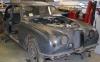
I finally did it. My steering wheel was rusted frozen solid in it’s shaft. Hub is 4 inches wide with no bolt treads like the newer ones, so a regular hub extractor would not go over it to grab the underside. Removed the nut and mixed a 50/50 batch of lacquer thinner and ATF fluid and poured some drops on the shaft to dissolve the rust out. Got a 3 ½ inch steel tube base (from the pluming department) a big bolt and nut from home depot and used my regular clamps to press on the inner steering shaft. Slowly screwing the clamp’s screw in an alternating way, released the rust bond and I was able to pull it out. (Total cost is about 7 bucks). Here are some pics.
 s/wheel
I finally did it. My steering wheel was rusted frozen solid in it’s shaft. Hub is 4 inches wide with no bolt treads like the newer ones, so a regular hub extractor would not go over it to grab the underside. Removed the nut and mixed a 50/50 batch of lacquer thinner and ATF fluid and poured some drops on the shaft to dissolve the rust out. Got a 3 ½ inch steel tube base (from the pluming department) a big bolt and nut from home depot and used my regular clamps to press on the inner steering shaft. Slowly screwing the clamp’s screw in an alternating way, released the rust bond and I was able to pull it out. (Total cost is about 7 bucks). Here are some pics.
looks like a early e type to me.
 s/wheel
I mean the steering wheel is series 1 e type not the car , I have the same wheel that is leather bound and is off a series 2 e type on my mk1.
Trending Topics
Thread Starter
|
Junior Member
Joined: Jul 2015
Posts: 28
Likes: 0
From: Baja California
Restoration in process
I guess some time back, steering wheel was replaced with an E type unit. Couldn’t find replacement wood rims. Decided to restore the original rims so I polished the aluminium frame, lightly sanded both halves and mixed carpenters wood glue with some water and brushed the rims covering splits and crevasses. Let dry for a day or two and after sanding the wood back, completely covered them with mahogany wood paste. I’m in the process of sanding the filling off and will proceed to finishing the wood with some reddish varnish of sort. Some pics.

Veteran Member
Joined: Aug 2013
Posts: 1,822
Likes: 801
From: Lake Cowichan BC Canada
I guess some time back, steering wheel was replaced with an E type unit. Couldn’t find replacement wood rims. Decided to restore the original rims so I polished the aluminium frame, lightly sanded both halves and mixed carpenters wood glue with some water and brushed the rims covering splits and crevasses. Let dry for a day or two and after sanding the wood back, completely covered them with mahogany wood paste. I’m in the process of sanding the filling off and will proceed to finishing the wood with some reddish varnish of sort. Some pics.
Epoxy that takes a long time to cure has more time to penetrate into the lamination of the wood _ better then a watered down wood glue.
Epoxy is also better suited for the harsh environment in a car, it can withstand drastic temperature changes better as well as humidity changes.
If you haven't already done so, you can still use epoxy to glue the wood onto the metal rim of the wheel. (assuming that it was glued on in the first place)
Sand the metal on the wheel to remove all rust and old glue _ you want it to be silver.
Finish up with a very course grit to give the epoxy something to bite into _ you may even take a small file and score the circumference for better results.
Clean the the wheel with lacquer thinner until your rags come clean _ use gloves so as not to get any oil from your skin after cleaning.
This type of clamp works well and are cheap _ you'll need allot of them.

You can just use some sort of adhesive tape, but the clamps can be moved around and adjusted right where you need pressure.
They come in all sorts of sizes and strengths, you want to get some that are strong, but not so strong that they bight into the steering wheel.
You can try use bits of cardboard to protect the wheel if need be.
Last edited by JeffR1; Sep 28, 2015 at 02:37 PM.
Thread Starter
|
Junior Member
Joined: Jul 2015
Posts: 28
Likes: 0
From: Baja California
Thanks JeffR1
I guess I should have done some research to find out the best adhesive to use. Maybe the wood filling I used to seal the crevasses may be able to help in avoiding splitting the laminated wood in the future ( I hope). I’ll have to wait to see if sand finishing and varnishing the wood will help in time. I’m surely following you advise and using my dremel to clean the steel rim to get rid of years of rust and grime before gluing together bout halves of the wood rim. I will use clamps to hold them together during the curing process.
Can you maybe recommend a proper type of epoxy glue for this project. I’m not sure if just regular two part epoxy from home depot will do the job. Thanks again.
I guess I should have done some research to find out the best adhesive to use. Maybe the wood filling I used to seal the crevasses may be able to help in avoiding splitting the laminated wood in the future ( I hope). I’ll have to wait to see if sand finishing and varnishing the wood will help in time. I’m surely following you advise and using my dremel to clean the steel rim to get rid of years of rust and grime before gluing together bout halves of the wood rim. I will use clamps to hold them together during the curing process.
Can you maybe recommend a proper type of epoxy glue for this project. I’m not sure if just regular two part epoxy from home depot will do the job. Thanks again.
Veteran Member
Joined: Aug 2013
Posts: 1,822
Likes: 801
From: Lake Cowichan BC Canada
Thanks JeffR1
I guess I should have done some research to find out the best adhesive to use. Maybe the wood filling I used to seal the crevasses may be able to help in avoiding splitting the laminated wood in the future ( I hope). I’ll have to wait to see if sand finishing and varnishing the wood will help in time. I’m surely following you advise and using my dremel to clean the steel rim to get rid of years of rust and grime before gluing together bout halves of the wood rim. I will use clamps to hold them together during the curing process.
Can you maybe recommend a proper type of epoxy glue for this project. I’m not sure if just regular two part epoxy from home depot will do the job. Thanks again.
I guess I should have done some research to find out the best adhesive to use. Maybe the wood filling I used to seal the crevasses may be able to help in avoiding splitting the laminated wood in the future ( I hope). I’ll have to wait to see if sand finishing and varnishing the wood will help in time. I’m surely following you advise and using my dremel to clean the steel rim to get rid of years of rust and grime before gluing together bout halves of the wood rim. I will use clamps to hold them together during the curing process.
Can you maybe recommend a proper type of epoxy glue for this project. I’m not sure if just regular two part epoxy from home depot will do the job. Thanks again.
G1, G2 Epoxy - Lee Valley Tools
Make sure it's 24 hour, you want the maximum cure time so it will soak into the wood and give a lots of time to adjust things.
If you bugger it up, the heat from a heat gun will break the GT epoxy down. The epoxy will break down before the wood burns.
A local boating supply store is a good choice as well, more knowledgeable people then Homedepot too.
Tell the staff person at the boat place what you're doing with it, and they should be quite helpful.
Try not to be careful with the stuff, you want it to ooze out when you apply the clamps.
Most epoxies clean up with methyl hydrate.
When you remove any excess cured epoxy from the wheel use a fine file, you have lots of control this way so you don't bite into the soft wood of the wheel.
With a file you can see exactly how much epoxy is removed, when you reached the wood and when to stop.
Don't use sand paper to remove the epoxy.
Take your time, nothing looks worse then a rushed job.
If any store tries to sell you urea formaldehyde or epoxy for fibre glass _ walk away.
Both of those are ancient technology and don't last.
Also, you have a fair amount of wood filler in there as well, is it the type of filler that darkens in when the stain/finish is applied ?
Last edited by JeffR1; Sep 29, 2015 at 09:34 PM.

Thread
Thread Starter
Forum
Replies
Last Post
FS[SouthWest]: Momo Wooden Steering Wheel
RobertTheBloke
PRIVATE For Sale / Trade or Buy Classifieds
3
Sep 24, 2015 11:48 AM
1964Daimler
MKI / MKII S type 240 340 & Daimler
0
Sep 9, 2015 11:28 AM
Currently Active Users Viewing This Thread: 1 (0 members and 1 guests)

