When you click on links to various merchants on this site and make a purchase, this can result in this site earning a commission. Affiliate programs and affiliations include, but are not limited to, the eBay Partner Network.
My car used to have one. I have to admit to being guilty of its loss in the course of cutting out rust and welding new pieces into the seat pan. It might be a (subconscious?) reflection of the low opinion I have of the work Pressed Steel did for Jaguar.
I've a vague memory there might have been a small tag with the car body number as well.
Last edited by Peter3442; Apr 30, 2023 at 04:46 PM.
one time I was cleaning the trunk / boot of my 1984 XJ-6 and the vacuum cleaner pulled a section of the carpet that is normally glued to the floor and in a flash I noticed there was something like a sticker under it.
I raised the carpeting on purpose and indeed it is a political sticker that reads:
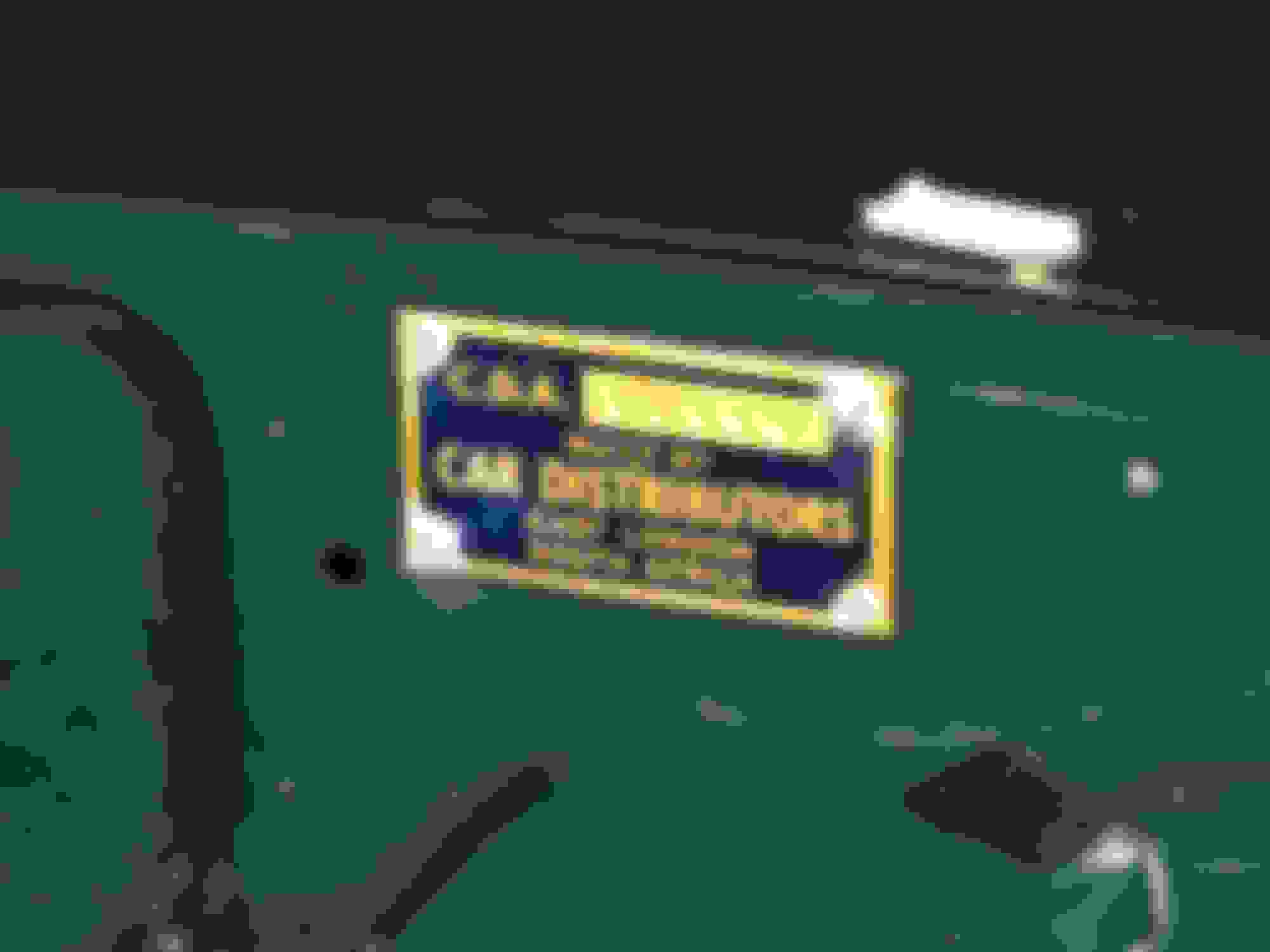
It is a plate fitted by the makers of the bodyshell, Pressed Steel Ltd, at Cowley, Oxford. The plate contains a list of patents, and at the bottom, the text "other patents pending". There wasn't one on my Mark 2 bodyshell, which was a very late shell.
I have sat in a cafe in Banbury in the late 60s, watching trucks passing carrying Jaguar Mark 2 shells north to Coventry.
On S Types the body number is stamped on a small plate attached to the right-hand side of the body behind the rear bumper near the mounting point. (It should not be confused with a similar plate on the left-hand side that shows the Pressed Steel reference number.)
My 1959 MK2 has one but my 1967 MK2 doesn't as far as I can remember.
It just seems to be a tag added by pressed steel who made the bodies.
Looks like there are a whole bunch of numbers on the label. Is there really any significance to the info? I will try and clean it off and post a better photo, but I suppose it is just a bit of the history of the car, and really does not add anything.
Thanks
Looks like there are a whole bunch of numbers on the label. Is there really any significance to the info? I will try and clean it off and post a better photo, but I suppose it is just a bit of the history of the car, and really does not add anything.
Thanks
jjsandsms
As above they are patent numbers from what I can remember, nothing specific to that particular car.
There are also some numbers on plates behind the rear bumper, I don't think a record is kept of these though but I assume it was something to do with identifying the bodies as they were being built at factory.
On the S Type the body number behind the back bumper is repeated on the scuttle plate other than CKD cars where it is on a separate CDA etc. plate on the LHS inner front fender and the scuttle plate left blank. Mk2's also carried a CDA plate until all production was moved to Blackheath ~ Cape Town which was also the Land Rover plant..
Last edited by Glyn M Ruck; May 1, 2023 at 06:54 AM.
It is a plate fitted by the makers of the bodyshell, Pressed Steel Ltd, at Cowley, Oxford. The plate contains a list of patents, and at the bottom, the text "other patents pending". There wasn't one on my Mark 2 bodyshell, which was a very late shell.
I have sat in a cafe in Banbury in the late 60s, watching trucks passing carrying Jaguar Mark 2 shells north to Coventry.
WOW, imagine sitting in that cafe today and seeing new rust free MK2 shells going by. I just wonder how many of us and others would love to get our hands on one of those! Which brings up an interesting exercise.
Years ago on another car forum, the subject came up as to whether one could build a car from scratch with parts available now. I think it was a forum on Porsche Speedster bodies as there is a company in Canada striving to supply every last body panel to construct a new shell. Also are not MGB bodies in while available still?
I had a similar sheet metal tag attached to the left inner fender on my 1966 Volvo P1800. The bodies were made by Pressed Steel Ltd. Very early ones were assembled by Jensen.
I remember in something like 1976, there were two new Mk2 body shells advertised in one of the magazines at £500 each. My father and I seriously thought of buying one to keep, but there was some objection from my mother about where we intended to store it and, most of all, it seemed a lot of money. If only ... .
I think it would preferable to get ones hands on a CKD kit. Assemble it properly & go from there. We built well over 2000 Mk2's in SA without Pressed Steel's assembly flaws. Their pressing was not too bad. Their assembly was shocking.
Last edited by Glyn M Ruck; May 1, 2023 at 10:33 AM.
I think it would preferable to get ones hands on a CKD kit. Assemble it properly & go from there. We built well over 2000 Mk2's in SA without Pressed Steel's assembly flaws. Their pressing was not too bad. Their assembly was shocking.
Yes. In fact, I thought of adding to my comment: provided the body wasn't one of those Jaguar sent back. Judging by my car, even some they accepted were very poorly assembled. Some areas are so covered with spot welds, it's close to impossible to drill them out. Some flanges are pulled together without aligning the panels. Our dog had greater attention to detail. Strangely, the three quarters of the car that has the most rust is passably assembled, the quarter where corrosion is less severe was welded by the monkey. In my opinion, a lot of the detail design by the Pressed Steel draughtsmen is also poor, not helping assembly or structural stiffness.
Jaguar also made it difficult for themselves with the exposed pillar/B post between the doors. It "might" have been done for structural reasons but I've seen those things all over the place globally. A brave design or just plain stoopid. Fortunately the day my car was built the guy that installed them did not have a hangover. Definitely not a Monday car. Mine was only No 4 off the local line so maybe they were trying harder. Although generally our bodies were pretty good. None of that crazy misalignment below the grill that so many Browns Lane cars suffered. They were assembled over bucks provided by that very same Browns Lane. Maybe things were as envisaged. Lyons was present when the first S Types rolled off the line even though we had built Mk1 & Mk2. He wanted to give his tick of approval that they were up to Jaguar standards. Maybe he should rather have been kicking some butts at Pressed Steel.
I think the best Lyons could have done was bring assembly in house, but even that would have been a major operation in those days.
The B-post is close to a zero member structurally. The joints will have severe plastic deformations before transferring much force. The B-post serves as something for closing the front door to and hanging the back one from. As to why it was exposed, it seems a step backwards in styling as it wasn't on the Mk VII. Did someone, most likely Pressed Steel, think it would give better control over door gaps in the uni-body?



 What is this under my rear seat on 1960 mk2