When you click on links to various merchants on this site and make a purchase, this can result in this site earning a commission. Affiliate programs and affiliations include, but are not limited to, the eBay Partner Network.
2003 Stype 4.2L (non turbo) coolant leak at rear of engine
Thanks to the assistance of this forum, I just finished replacing the radiator in my 2003 stype 4.2L non-turbo - Arizona based, 118,000 miles - and didn't have any leaks as a result of that. However, after I drove the car for about 50 miles, a leak appeared under the car dripping down from around the junction between the engine and the transmission. Can you give me an idea of what coolant lines are in that vicinity?
I did not find any visible leaks anywhere on the top of the engine compartment.
Thanks,
Bob
Often times sealing up one leaking component will cause another marginal component to fail... I believe the V8 has a coolant hose that runs under the intake manifold; it is commonly referred to as the "valley hose". A forum search under that term should be informative...
Often times sealing up one leaking component will cause another marginal component to fail...
Been there, done that, got the T-shirt...
For any kind of coolant leak, I HIGHLY recommend using a cooling system pressure tester.
For starters, the internal pressure typically won't build up very high just running at idle. A manual pressure tester lets you pump up the system to maximum rated pressure. This helps find leaks that may not be present at lower pressure.
The other big advantage is you can test with the system cold and engine off. With hot coolant and the fan blowing, minor leaks often evaporate immediately and you can't see them.
Also, coolant leakage tends to blow around while driving and collect in other places. This can be very misleading. I don't care to discuss how I know this... This is another advantage for a pressure tester.
One caveat: If a hose is not full of coolant while being tested, you won't see any liquid escaping. Some of the upper hoses can partially drain down a little when coolant is not circulating. But if you do the pressure decay test and it fails, you'll know you have a leak somewhere. If no leaks are visible, then you'd know to examine the upper hoses more carefully.
Some parts stores will loan a pressure tester for free.
Pressure tested to verify the leak/ 2003 stype 4.2 non turbo
I got a free pressure tester loan from Auto Zone, Tested the system at 15psi cool and verified that the leak is coming from the rear of the engine area. The next step is do remove the intake manifold to get at the valley hoses.
Bob 15 psi cold system The only leak that showed up..
I had the same issue of a new leak after radiator replacement...mine ended up being fairly easy...it was a hose down by the auxiliary coolant/heater pump.... apparently my old radiator was leaking before it blew and masked the other one...found it with my pressure tester... unfortunately i think yours definitely near the throttle body....if you want a better view of that area, remove the windshield lower cowl and the cross brace underneath it and then you can see a lot better...but, as others have mentioned if it is the valley hose, there are some great wtite ups with pics here on the forum
Thanks for that, I was hoping it would be a leak more accessible! I'll start on the intake removal today. Could you refer me to those appropriate posts for that process? Also, any tricks you use in searching the forum?
Thanks again,
Bob of Arizona
Thanks for that, I was hoping it would be a leak more accessible! I'll start on the intake removal today. Could you refer me to those appropriate posts for that process? Also, any tricks you use in searching the forum?
Thanks again,
Bob of Arizona
Only trick i know is keywords like valley pipe or remove 4.2 liter intake....hopefully other members will link..i do not know how...do your pressure check again after removing the x over and hopefully the leak will be there and a straightforward fix....let us know what you find
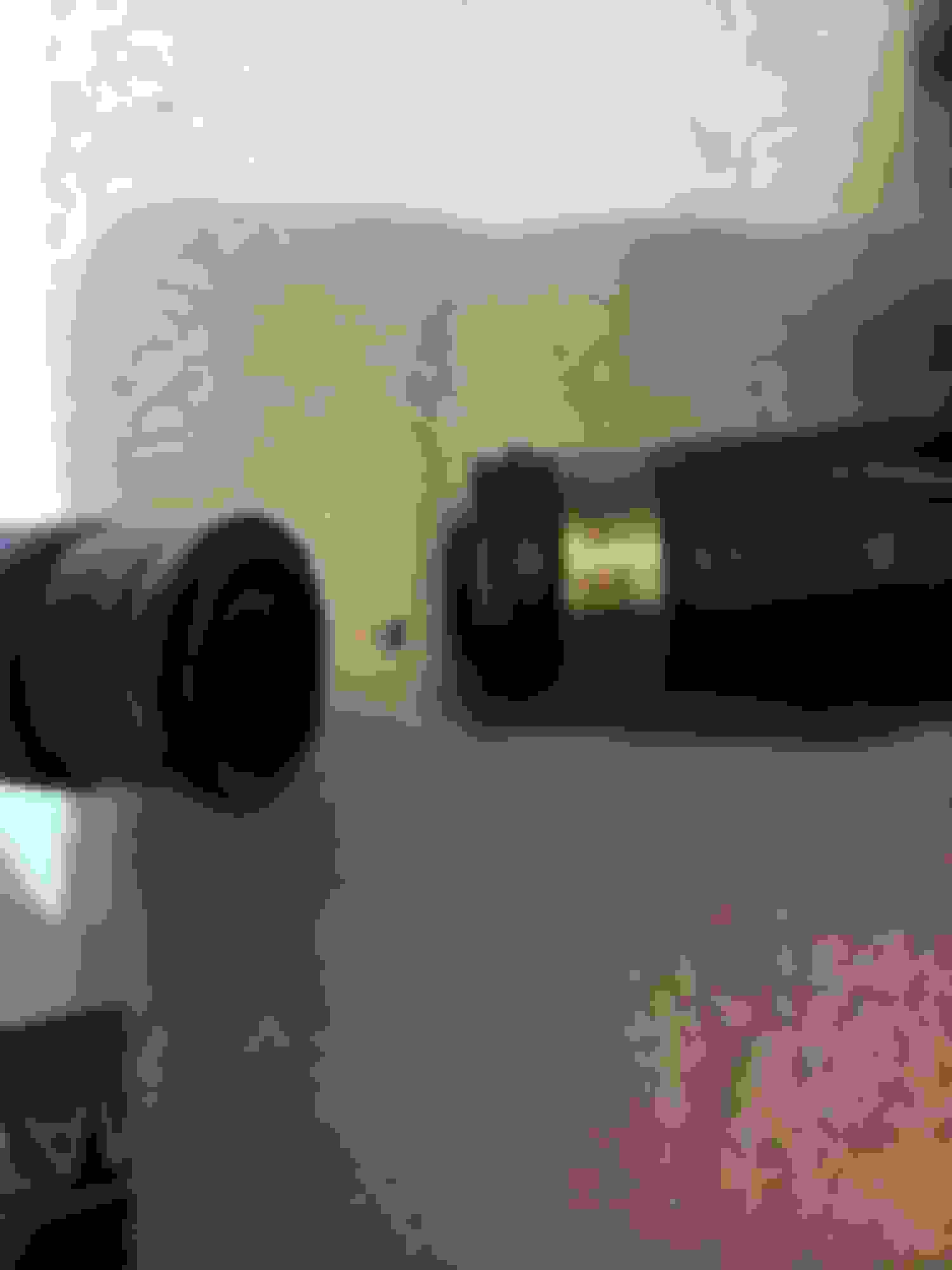
I got the intake manifold off thanks to the forum and, as predicted, found the throttle body coolant return line had failed. Quite the job, but electrical connectors are my biggest challenge. I think I spend more time trying to figure them out than anything else I do! If anyone one has seen a guide for auto electrical connector removal, I'd like to know.
Thanks again,
Bob Had to celebrate getting the manifold off! the hose just past the thermostat snapped right off The hose
Unless its been replaced very recently, change the water outlet assembly as well whilst the inlet manifold is removed as the bolts into the block are easier to access.




 2003 Stype 4.2L (non turbo) coolant leak at rear of engine