When you click on links to various merchants on this site and make a purchase, this can result in this site earning a commission. Affiliate programs and affiliations include, but are not limited to, the eBay Partner Network.
AS we are "Iced-in" here in Niagara, I've put my idle mind to a plan for bleeding and flushing the brakes on my SIII. I've bled many brakes, including those on my long gone SIII E-Type, so I'm up on the basic process. I've also read that excessive pedal travel when bleeding these older cars can pump debris inot the system and destroy otherwise sound seals, so would like to avoid that if possible.
Is there a "reverse" flushing procedure that would expel the dirty stuff before a bleed?
Maybe I should just leave it all alone, as my brakes work flawlessly now. Kind of "if it ain't broke, don't fix it.
For cars that sit, I bleed annually.
For cars with out ABS, start with the farther away from the master, usually RR in LHD models. Pump slowly three times and hold. Open and close bleeder quickly while the helper lets the pedal ease to the floor. Close the bleeder before releasing the pedal. Repeat before moving to the LR, etc.
the opening & closing of the bleeder gets any air out to the end of the line quicker.
Going around the circle twice insures clean fluid in all four corners and the master.
A crow bar between the seat & the pedal can be your helper if a one person operation.
Hard pedal pumping or pounding will blow seals or dislodge dirt, fail a master. But it was likely to go anyway.
Thanks Clyde,
The bleeding process I am familiar with, and I suppose if you bleed a few times then you have effectively performed a flush. Will wait until I have a helper and the garage is above 32F!
A I've also read that excessive pedal travel when bleeding these older cars can pump debris inot the system and destroy otherwise sound seals, so would like to avoid that if possible.
Pushing the pedal right to the floor can be a problem as the master cylinder pistons and seals move into unused territory....often corroded or gunky or rough....damaging the seals. So, the trick is to avoid pushing the brake pedal right down to the floor with an old master cylinder
Is there a "reverse" flushing procedure that would expel the dirty stuff before a bleed?
"Reverse" process is not needed
Maybe I should just leave it all alone, as my brakes work flawlessly now. Kind of "if it ain't broke, don't fix it.
Brake fluid does degrade...and absorb moisture. I flush mine every 2-3 years or 36,000 miles.
Flushing the fluid is a bit easier than bleeding. Rather than removing air you're just pushing out old fluid and replacing with new....so it should be very easy and quick. No air bubbles to worry about. The trick is to never let the master cylinder run dry.....which draws air into the system. If that happens then you *will* be bleeding rather than merely flushing
So, using a turkey baster or similar remove most (not all) of the old fluid from the master cylinder. Top off with fresh fluid. Now go wheel to wheel just as you would if bleeding a system. I generally find the 10 strokes per wheel is enough to push out old fluid. But if your old fluid is dark you'll be able to easily see when the last of it is gone and the new, fresh fluid is coming out at each of the wheels. Top off the master cylinder frequently.
I knew an old Rolls Royce mechanic that used to throw a ball pein hammer under the brake pedal before he let the assistant 'pump-the-pedal'.
As Doug stated, that insured that the pedal would not go much farther than it normally does so the debris at the bottom of the master cylinder did not contact the seals. Too many times after bleeding the brakes, the pedal would start to 'bypass' because the seals were clogged/damaged.
You can try to control yourself by using short strokes. You can also use the entire cylinder stroke IF the Master Cylinder is NEW.
There are PRESSURE BLEEDERS, and VACUUM BLEEDERS available.
Jaguar recommended that we were to REPLACE BRAKE FLUID EVERY 2 YEARS as part of the scheduled maintenance.
Or you can do whatever you want, after all, it is YOUR CAR.
bob
Last edited by motorcarman; Apr 16, 2018 at 10:19 AM.
Adding my vote to leave alone if it's working well.
I prefer to use a vacuum bleeder on older systems, they are gentler than the pumping of the master cylinder. If you want to flush out the old lines open up the caliper bleeders, disconnect the master cylinder and blow compressed air through the lines to blow out crud. Then put a couple of containers of brake fluid through to wash through any remaining dirt and to check for leaks.
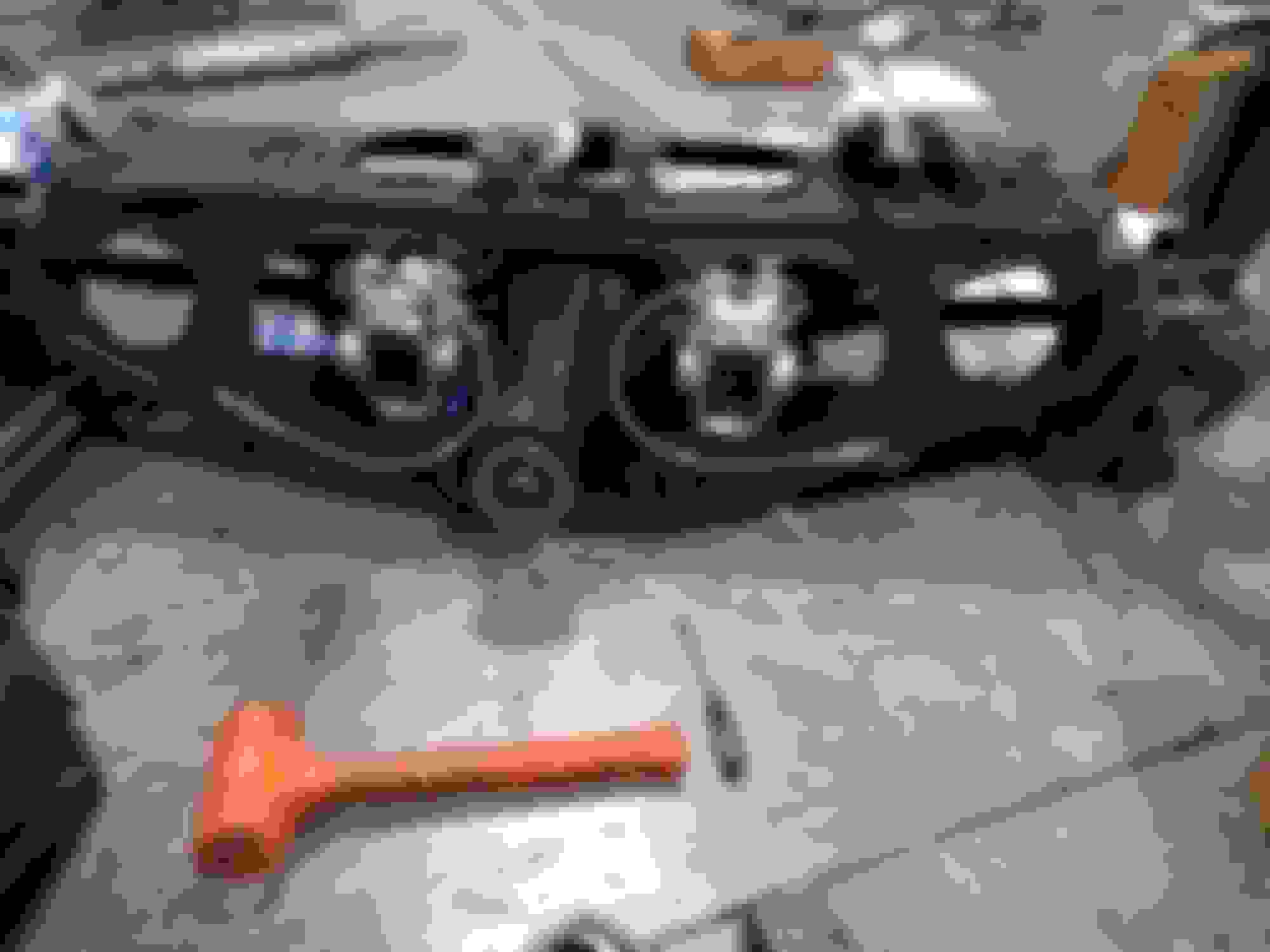
I put remote bleeders on my rear axles, makes life easier...
picture here is before I welded tabs on to point bleeder downwards above scrub line
Thanks for the flushing procedure. I like the idea of a remote bleeding system. Are those Aeroquip lines and fittings?
I used this speedway (USA) shopping list I had copied from the web
1 6174133 1/8"NPT TO #3 BRAKE FITTING $9.99
1 91031310 BRAKE LINE TABS W/CLIPS(4 $9.99
2 8352200063 1/8"BLEED RPR/ASSY SNGL $3.99
2 91031892-3 19" BRAKE LINE W/90* END $14.99
2 6176116 FLARED BULKHEAD #3 $3.99
Next time I will use 1 19" brake line and 1 Stainless 12 Inch Brake Line with 90 Degree End # 91031897 and put the two bleeders in the same place on the subframe.
RE my post about bleeding above I meant to say 'If you want to flush out the old lines, disconnect the brake lines to the calipers and disconnect the master cylinder and then blow compressed air through the lines to blow out crud.' Make sure you catch all the junk in jars taped to the lines...
Last edited by olivermarks; Apr 18, 2018 at 08:28 PM.
brakes were bled about 3 months ago ,flushed what debris we could, rusty /dirty!
clear fluid finally, brakes worked fine , set 3months, out today for drive/excercise.
brakes felt hard pedal driving , would not stop well at all.
pulled back into garage hard pedal stop going forward,, BUT when backing up brakes work perfect, light pedal pressure, pull forward hard pedal barely stopped!!
I used this speedway (USA) shopping list I had copied from the web
1 6174133 1/8"NPT TO #3 BRAKE FITTING $9.99
1 91031310 BRAKE LINE TABS W/CLIPS(4 $9.99
2 8352200063 1/8"BLEED RPR/ASSY SNGL $3.99
2 91031892-3 19" BRAKE LINE W/90* END $14.99
2 6176116 FLARED BULKHEAD #3 $3.99
Next time I will use 1 19" brake line and 1 Stainless 12 Inch Brake Line with 90 Degree End # 91031897 and put the two bleeders in the same place on the subframe.
RE my post about bleeding above I meant to say 'If you want to flush out the old lines, disconnect the brake lines to the calipers and disconnect the master cylinder and then blow compressed air through the lines to blow out crud.' Make sure you catch all the junk in jars taped to the lines...
I like that modification. Motorhomes with 4 rear wheels use a similar extension system for adding air to the unreachable air valves in the inner wheels. They use stainless steel braided hoses, brackets, and adaptors.
On my SIII where the LH exhaust passes thru the suspension cage, it runs within 1/8" from the LH brake caliper bleeder screw. So close in fact that I could not get a wrench on the bleeder. I ended up slackening the joint in the exhaust pipe (fitted with an "olive") and twisting it so I now have about 1'2" clearance. The caliper seems no worse for living in such close proximity to the hot pipe.
On my SIII where the LH exhaust passes thru the suspension cage, it runs within 1/8" from the LH brake caliper bleeder screw. So close in fact that I could not get a wrench on the bleeder. I ended up slackening the joint in the exhaust pipe (fitted with an "olive") and twisting it so I now have about 1'2" clearance. The caliper seems no worse for living in such close proximity to the hot pipe.
Not sure about that, most inboard brake jags have leaky calipers, which leads to contaminated discs, high rotor heat etc. Some have converted to later outboard discs, the exhaust heat can't help .
Adding my vote to leave alone if it's working well.
I prefer to use a vacuum bleeder on older systems, they are gentler than the pumping of the master cylinder. If you want to flush out the old lines open up the caliper bleeders, disconnect the master cylinder and blow compressed air through the lines to blow out crud. Then put a couple of containers of brake fluid through to wash through any remaining dirt and to check for leaks.
I put remote bleeders on my rear axles, makes life easier...
picture here is before I welded tabs on to point bleeder downwards above scrub line
Hi Oliver,
Where did you buy the remote bleeders from? I have the IRS unit out of my XJ-SC currently so I was thinking about installing remote bleeders.
Thanks,
Vadim.
I've posted this before. Brake fluid DOES get wasted over time. I had to remove my balancing valve, take it apart and clean it from gunked up wasted brake fluid. Indications were the rear brakes were starting to stick.



 Correct and risk free brake bleeding procedure







 .
.


