When you click on links to various merchants on this site and make a purchase, this can result in this site earning a commission. Affiliate programs and affiliations include, but are not limited to, the eBay Partner Network.
I suspect that the tensioner part # 8W93-6K254-CA is for the Tsubaki chain system, not the INA. The jaguar part # for the Tsubaki tensioner is AJ811487, and doesn't have any supersessions. Web searches on these part numbers don't yield anything conclusive. It's possible that the engine you show in the pics above with the 8W93-6K254-CA tensioners, somehow had the Tusbaki tensioners with the INA chain system.
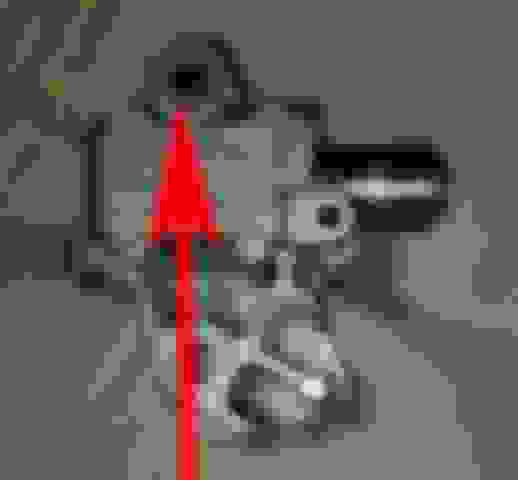
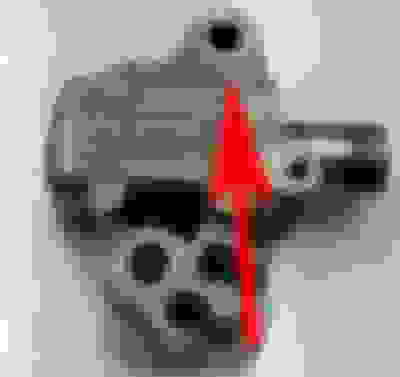
The bolt positions changed with the 3rd and latest tensioner design. So first and second designs were the same bolt pattern but different plungers and the third changed to give it more of an angle and thus improved mechanical advantage against the new guide which has the steel button. The closer to the fulcrum of the guide, the more movement can be achieved although this does reduce the force that gets applied. Its many years since I learned about the physics and terminology but I think you can make out my fumbling for the correct words.
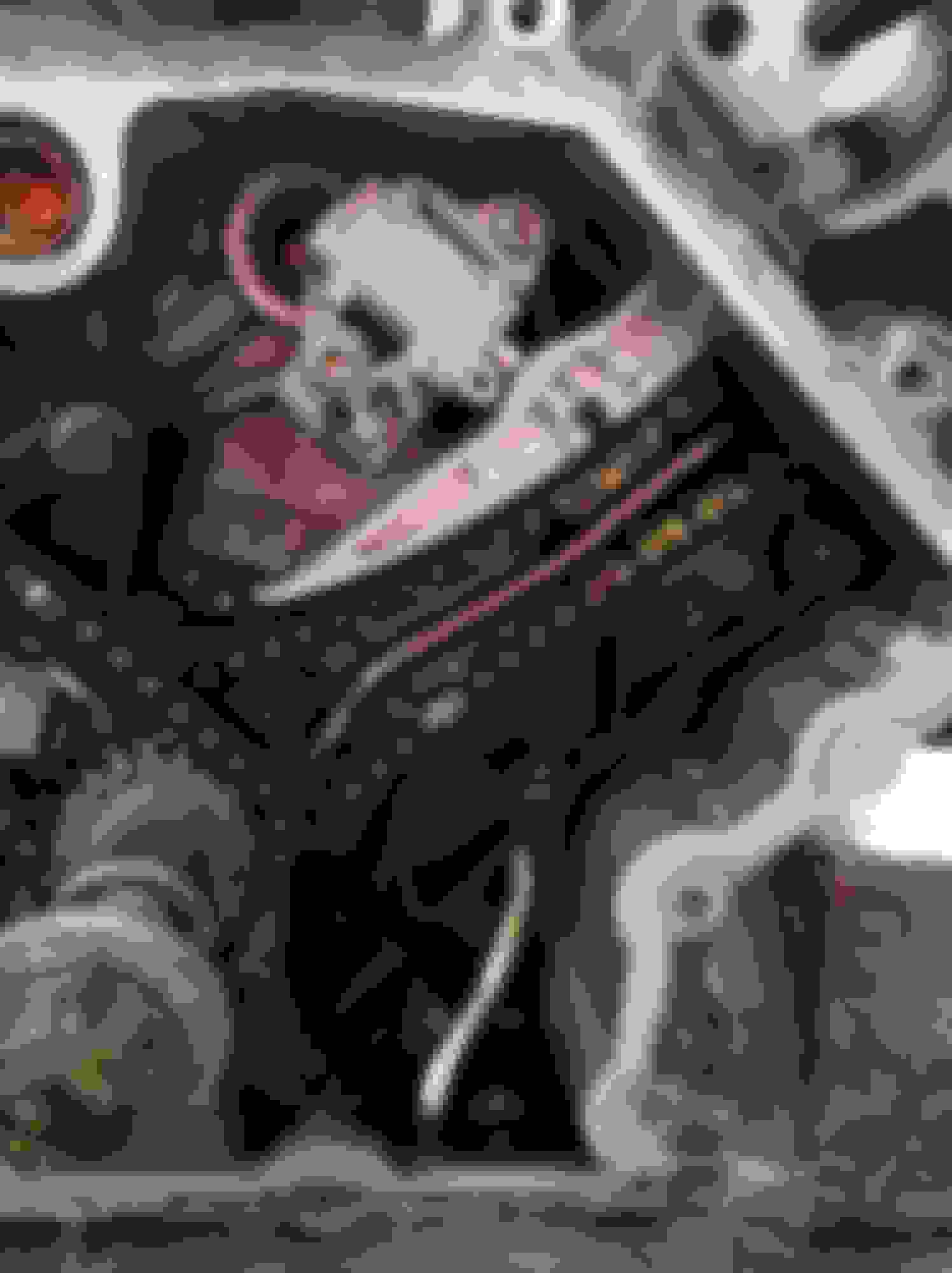
Furthermore you can see the steel button on the guide in your first photo in your previous post but the plunger does not press against it due to the old bolt pattern.
I rotated the images to get them all at approximately the same angle.
1. Original INA with original tensioner and guide,
2. Intermediate INA tensioner but with the latest steel button guide. (obviously fitted in error during a previous job)
3. Latest INA with latest tensioner and guide.
I rotated the images to get them all at approximately the same angle.
1. Original INA with original tensioner and guide,
2. Intermediate INA tensioner but with the latest steel button guide. (obviously fitted in error during a previous job)
3. Latest INA with latest tensioner and guide.
Interesting and thanks. Why do you think the second picture shows an interim design tensioner when it has the same part number as the one in the top picture?
Last edited by kansanbrit; Jun 30, 2023 at 11:11 AM.
Interesting and thanks. Why do you think the second picture shows an interim design tensioner when it has the same part number as the one in the top picture?
You are right. I got myself confused - it is the original.
So basically the tensioner changed at the same time as the guide changed. I hadn't realized that but it makes perfect sense. And the dirty engine photo in the middle shows it had been fitted with new guides but with old tensioners.
Last edited by kansanbrit; Jun 30, 2023 at 01:03 PM.
Hi, I understand this thread is old but I can shed a little bit of light about the interim tensioner deisgn, for XFR for instance, this is what my car has, INA chain, with new slider with the aluminium insert, but tensioner finishing in AA. You can see the VIN numbers from and to. So after that VIN number, the new tensioner was installed (CA I assume)
looking at the cam variators, the Tsubaki is definitely smaller than the INA. In theory the new crank sprocket would match the “tooth pattern” and all should line up from a rotational sense? Are the cam profiles identical or different? I noticed all my camshaft part number are “95X” instead of “97X.” My engine was a Tsubaki style that I converted.
Everything seemed fairly straight forward except the timing marks didn’t line up quite as nicely as the other engines I’ve done, but that could also just be chain maker differences.
One thing I did notice and I’m wondering if any of you have come across, after swapping the oil pump, fuel pump and inner crank sprocket, my accessory drive chain only lines up every 9th “timing alignment.”
I feel like this can’t be right, but I’ve swapped so many different things on this engine, there’s a chance I missed something. (FYI, this was a 2010 XFR engine I “converted” to an LR engine.). The engine ran for about 20ish seconds then quit. Inspection showed a 25-30psi lower compression on the left bank and I suspect that when my machinist milled the block, he didn’t actually check the block deck flatness like he said he did and the head gasket failed. (Insert very angry face here…although in fairness I was in a hurry to get the engine together and in the car because I was moving, and I broke one of my own rules and didn’t double check everything!!).
Since I’ve got the heads off…again…I thought I’d cross check with y’all and see what your thoughts are. FYI, I’ve got a set of newer LR heads and cams I’ll be swapping in just to be safe…but that still doesn’t explain the “4-link” accessory chain progression from timing alignment to timing alignment.
looking at the cam variators, the Tsubaki is definitely smaller than the INA. In theory the new crank sprocket would match the “tooth pattern” and all should line up from a rotational sense? Are the cam profiles identical or different? I noticed all my camshaft part number are “95X” instead of “97X.” My engine was a Tsubaki style that I converted.
Everything seemed fairly straight forward except the timing marks didn’t line up quite as nicely as the other engines I’ve done, but that could also just be chain maker differences.
One thing I did notice and I’m wondering if any of you have come across, after swapping the oil pump, fuel pump and inner crank sprocket, my accessory drive chain only lines up every 9th “timing alignment.”
I feel like this can’t be right, but I’ve swapped so many different things on this engine, there’s a chance I missed something. (FYI, this was a 2010 XFR engine I “converted” to an LR engine.). The engine ran for about 20ish seconds then quit. Inspection showed a 25-30psi lower compression on the left bank and I suspect that when my machinist milled the block, he didn’t actually check the block deck flatness like he said he did and the head gasket failed. (Insert very angry face here…although in fairness I was in a hurry to get the engine together and in the car because I was moving, and I broke one of my own rules and didn’t double check everything!!).
Since I’ve got the heads off…again…I thought I’d cross check with y’all and see what your thoughts are. FYI, I’ve got a set of newer LR heads and cams I’ll be swapping in just to be safe…but that still doesn’t explain the “4-link” accessory chain progression from timing alignment to timing alignment.
LR cams are different to XFR cams hence 95X and 97X. Head gasket problem won't stop the engine running and won't fail in 20 seconds. You are overthinking accessory timing marks, if they were lined up properly when you fitted the chain then they are correct.
@kansanbrit , thanks for the info. I had originally planned on using the LR heads I already had on hand, but the JAG engine was in better shape, so I had those machined instead. In truth, even though I swapped all the Tsubaki gear off, I never even thought about swapping the LR cams over.
I'll sort the compression/left bank issue soon. I'm just trying to make sure I 100% rule out any Tsubaki to INA conversion issues. Cause I'm not going to lie, I was REALLY hoping I had just slipped a tooth and that was causing the low compression.
It is interesting though, the Tsubaki VVT's are substantially smaller than the INA...I wonder if this is the reason they had issues with the Tsubaki chains stretching? (Too much torque to rotate the cams?).
As for the accessory drive, thanks for reassurance, I needed it! Everything was aligned perfectly when I started, and every 8th or 9th timing alignment it all lines up again. Just one of those weird things I never actually checked in all the other times I've done chains on these things....Probably because I always did it in the car and never really worried about it all that much. I mean seriously, who designed this crazy high pressure fuel pump timing system anyway?!?!?! Give me a good old CP3 or something belt driven that'll provide PLENTY of fuel rail pressure without any timing issues! I'm just glad I had the engine out and could swap the fuel pump cam as that's not possible to convert to INA unless the engine is out and oil pan is off.
@kansanbrit , thanks for the info. I had originally planned on using the LR heads I already had on hand, but the JAG engine was in better shape, so I had those machined instead. In truth, even though I swapped all the Tsubaki gear off, I never even thought about swapping the LR cams over.
I'll sort the compression/left bank issue soon. I'm just trying to make sure I 100% rule out any Tsubaki to INA conversion issues. Cause I'm not going to lie, I was REALLY hoping I had just slipped a tooth and that was causing the low compression.
It is interesting though, the Tsubaki VVT's are substantially smaller than the INA...I wonder if this is the reason they had issues with the Tsubaki chains stretching? (Too much torque to rotate the cams?).
As for the accessory drive, thanks for reassurance, I needed it! Everything was aligned perfectly when I started, and every 8th or 9th timing alignment it all lines up again. Just one of those weird things I never actually checked in all the other times I've done chains on these things....Probably because I always did it in the car and never really worried about it all that much. I mean seriously, who designed this crazy high pressure fuel pump timing system anyway?!?!?! Give me a good old CP3 or something belt driven that'll provide PLENTY of fuel rail pressure without any timing issues! I'm just glad I had the engine out and could swap the fuel pump cam as that's not possible to convert to INA unless the engine is out and oil pan is off.
I have never heard of the Tsubaki chains stretching and when I refurbished my XFR engine I left the original Tsubaki chains and guides on it as they were so good. I am pretty sure Ford was behind the change to the INA setup purely to save money. The Tsubaki chains are way higher quality.
Not sure why you think the high pressure pump design is crazy, how else will you get 1500 psi to the injectors? The fuel pulse needs to be timed as it has to be synchronized withe the injector opening.
I totally agree the Tsubaki chains are a better product!! In truth, I too was planning on leaving them in place. However, the fact that I had the engine out and could change everything, and the fact that if something were to break I could never get replacement parts, pushed me over the edge. Although arguably, if something breaks…so does the engine.
I had read somewhere that JLR had issues with the early Tsubaki chains stretching as one of the reasons for switching over. Honestly, I agree with you and think it was merely a money saving thing for an inferior product.
As for the HP fuel pump, I’ve had several diesel engines with a cp3 belt driven pump that puts out well over 15000psi (sometimes 30000+psi when really getting on it). It just seems to me this would be less complex and more efficient, that’s all. No precise pulse required.
That said, the cp3 is the same size as the alternator, so from a weight standpoint, the existing system is better. And I’m sure we could get into the different chemical properties of gas vs diesel flash points, burn rates and compression issues etc… as to why one is better than the other, but that’s fairly outside the scope of this thread lol!
The timing stuff changes along with the terrible plastic cooling pipes were changes made by TATA after they purchased of JLR from Ford in 2008. Now was Ford planning on down grading the engine parts in the future? I don't know but that could be possible.
No one knows for sure but a redesign to save cost sure looks likely!
.
.
.
The timing stuff changes along with the terrible plastic cooling pipes were changes made by TATA after they purchased of JLR from Ford in 2008. Now was Ford planning on down grading the engine parts in the future? I don't know but that could be possible.
No one knows for sure but a redesign to save cost sure looks likely!
.
.
.
I don't think Tata had any direct influence in the design, unlike Ford they are not a car manufacturer. The reason I think Ford were instrumental in the timing chain design change is that I believe all parts, new and old design, have FoMoCo on them. I personally have never seen the Jaguar logo on any parts on this engine which I think would have been the case if Ford had already sold them when the tooling was made. Maybe you have ?
I totally agree the Tsubaki chains are a better product!! In truth, I too was planning on leaving them in place. However, the fact that I had the engine out and could change everything, and the fact that if something were to break I could never get replacement parts, pushed me over the edge. Although arguably, if something breaks…so does the engine.
I had read somewhere that JLR had issues with the early Tsubaki chains stretching as one of the reasons for switching over. Honestly, I agree with you and think it was merely a money saving thing for an inferior product.
As for the HP fuel pump, I’ve had several diesel engines with a cp3 belt driven pump that puts out well over 15000psi (sometimes 30000+psi when really getting on it). It just seems to me this would be less complex and more efficient, that’s all. No precise pulse required.
That said, the cp3 is the same size as the alternator, so from a weight standpoint, the existing system is better. And I’m sure we could get into the different chemical properties of gas vs diesel flash points, burn rates and compression issues etc… as to why one is better than the other, but that’s fairly outside the scope of this thread lol!
Not sure what you are talking about, a diesel injection pump is timed to the engine also.
I don't think Tata had any direct influence in the design, unlike Ford they are not a car manufacturer. The reason I think Ford were instrumental in the timing chain design change is that I believe all parts, new and old design, have FoMoCo on them. I personally have never seen the Jaguar logo on any parts on this engine which I think would have been the case if Ford had already sold them when the tooling was made. Maybe you have ?
No, I too have never seen anything other than “FoMoCo” on all the “genuine” parts. And I agree, I think Ford was the sole proponent for the change. Perhaps this was due to the fact that JLR developed the engine independently, but then Ford manufactured it? It could have been something as simple as we got our stuff from, “insert sub contractor here” and they said they can make something similar for half the cost.
Maybe that’ll change now that JLR has started producing the engine themselves?
Not sure what you are talking about, a diesel injection pump is timed to the engine also.
I can’t speak to the older models, but all the common rail Cummins and Ford Powerstroke diesels (probably duramax too, but I’ve not worked on them) from at least 2003 forward run a belt driven CP3 or CP4 high pressure fuel pump. This was all supplemented by an externally mounted electric lift pump to supply fuel to them. No timing was required as it was just another pulley on the serpentine belt. All that matters is the fuel rail pressure be maintained.
That said, the standard rail pressure is well above 10000psi, and each injector actually fires multiple times for each combustion event. I’m guessing it has something to do with flash point temperature and pressure, as well as injection timing as to why they don’t run gas engines at similar pressures to their diesel counterparts.
Regardless, it would just be nice to be able to get rid of the 3rd chain on the crank altogether. I’m just a firm believer in “simple” is easier and less likely to cause problems. Maybe I’ll try and build one with an external oil and fuel pump…probably not.