When you click on links to various merchants on this site and make a purchase, this can result in this site earning a commission. Affiliate programs and affiliations include, but are not limited to, the eBay Partner Network.
I'm looking for some help on 1) suggestions for a repair shop to help or 2) how to communicate with my normal repair shop on this issue.
Car is a 2003 Super V8.
Short story is that I have the ever common ABS module failure. I originally took my car to a shop and they were able to diagnose an ABS module failure (and confirmed that the pump is good). I do not know specific codes they pulled, but I have access to an AutoEnginuity tool and was able to retrieve code C1095 which would confirm their diagnosis. Based on this, I purchased a used module off of eBay. Upon installation of the used module, the car did not accept the module and showed the "incorrect part fitted/low brake fluid" error in the dash module. Upon inspection the used module appears to have been rebuilt at some timeI assumed that this meant the used module was not a good module. Instead of doing my research first, I purchased a rebuilt unit from one of the eBay sellers. The rebuilt module had the same behavior. This morning putting the AutoEnginuity reader on it again, the replacement module gives code U2500 So it appears for whatever reason that my car is one that will need the replacement module "configured". I have seen the various threads indicating that this is sometimes an issue. I assume that the AutoEnginuity tool does not have the capability to do this configuration - but would be happy for someone to tell me I'm missing something. I am fine taking the car back to a shop and/or the dealer. Here is my challenge:
When I described this issue to both my independent shop and to a local dealer, I got a response of "that module shouldn't need programming, it should be plug and play". I'm hoping to be a bit more armed with some information on the actual procedure to be used in configuration so I can hopefully speak to the person who will be doing the actual work and step him/her through it. Would also be fantastic if anyone has specific suggestions on shops in Atlanta to take it to. I really don't mind paying someone a reasonable amount to get it configured.
When a module sits around for a while, the capacitors discharge and the module seems to default to a NEW module. (not configured to the network)
The CORRECT module can be configured to any correct car and then transferred to another CORRECT car. The module should not need any more configuration.
WDS/IDS configuration procedure is to navigate to SETUP and CONFIGURATION. Find the ABS or Braking setup and configure ABS as NEW MODULE.
If you install an incorrect module, you will not be able to configure it to the car.
The correct module for your car is JLM21323 (FROM VIN F00035)
The number on the module case is NOT the correct Jaguar part number.
Last edited by motorcarman; Nov 7, 2020 at 11:05 AM.
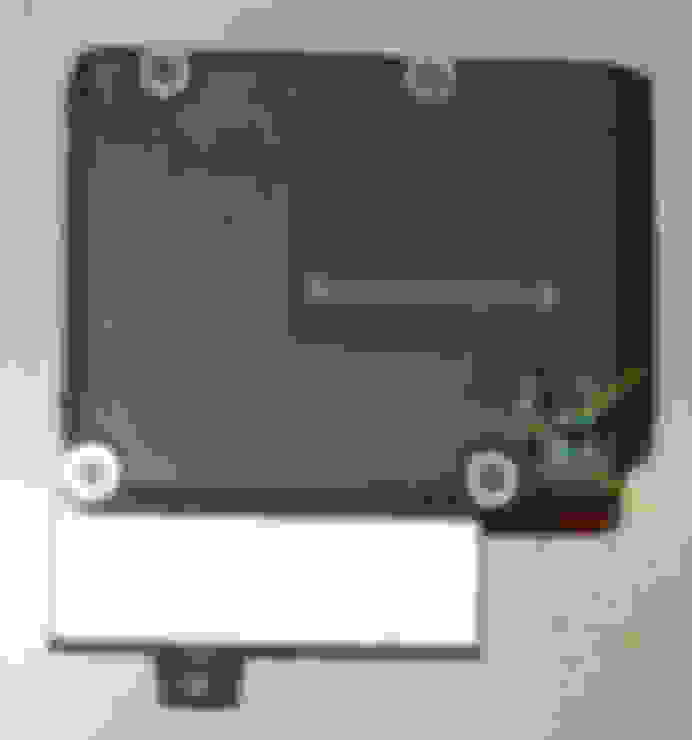
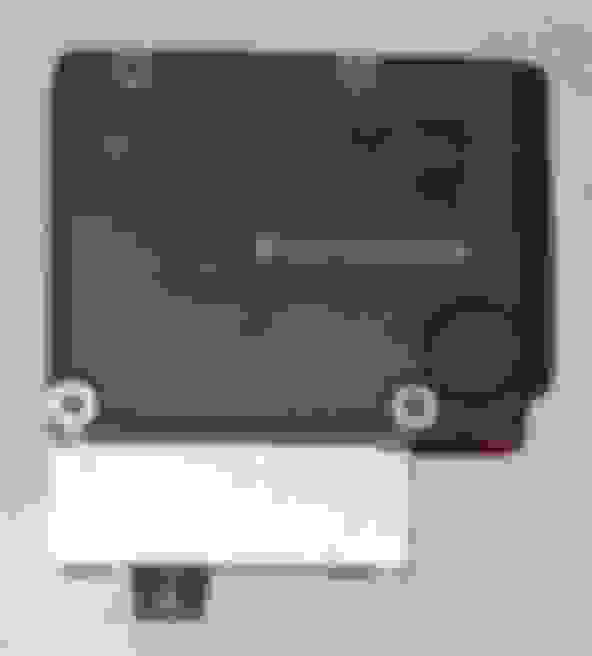
The two modules appear identical. This is the original module (replacement is in the car now). Part number is same, FNF2210AD. Only difference between the two modules is the number/letter sequences in asterisks on the lower left of the label. That looks like a serial number to me.
The two modules appear identical. This is the original module (replacement is in the car now). Part number is same, FNF2210AD.
LNF2210AD is not listed by the Jag parts catalogue nor by the parts suppliers but it appears to be the correct number. Parts catalogue lists the ABS module as JLM20556 (up to VIN 878717) and JLM21323 (from VIN F00035). However, it seems that for both, JLM20556 up to VIN 878717 and JLM21323 from VIN F00035, the number on the ABS control module itself is the same, LNF2210AD. My 1999 Super V8 (up to VIN 878717) has LNF2210AD on it.
The original control unit shown on your picture appears to have been previously repaired. If it is accepted by the system but just causes code C1095 (ABS Hydraulic Pump Motor Circuit Failure), and the motor itself is good, the most common cause of this are deteriorated solders inside the module to which the motor connects. Resoldering of the contacts usually cures the problem. It can be done without removing the module plastic cover - you cut a circular hole as shown on the picture below (very carefully in order not to cut into the electronics beneath) and resolder the two marked points.
As to the rebuilt module showing code U2500, it means it does not communicate over the "network" so it probably needs to be configured, as advised by "motorcarman".
LNF2210AD is not listed by the Jag parts catalogue nor by the parts suppliers but it appears to be the correct number. Parts catalogue lists the ABS module as JLM20556 (up to VIN 878717) and JLM21323 (from VIN F00035). However, it seems that for both, JLM20556 up to VIN 878717 and JLM21323 from VIN F00035, the number on the ABS control module itself is the same, LNF2210AD. My 1999 Super V8 (up to VIN 878717) has LNF2210AD on it.
The original control unit shown on your picture appears to have been previously repaired. If it is accepted by the system but just causes code C1095 (ABS Hydraulic Pump Motor Circuit Failure), and the motor itself is good, the most common cause of this are deteriorated solders inside the module to which the motor connects. Resoldering of the contacts usually cures the problem. It can be done without removing the module plastic cover - you cut a circular hole as shown on the picture below (very carefully in order not to cut into the electronics beneath) and resolder the two marked points.
As to the rebuilt module showing code U2500, it means it does not communicate over the "network" so it probably needs to be configured, as advised by "motorcarman".
Doesn't the module software version also have to match to be properly recognized on the CAN buss? I remember reading in a forum about a very similar problem and the solution was to reflash the module with the proper version. If the module data structure doesn't match, it won't be recognized and issue a code. I am fairly sure it was an ABS module. A simple update during factory initialization changes the response by the module.
The solution was to send both modules and have the "newer" unit flashed to match the older.
Best I remember, plug and play can be a roll of the dice.



 ABS Module Repair - Replacement Module Configuration Issue