When you click on links to various merchants on this site and make a purchase, this can result in this site earning a commission. Affiliate programs and affiliations include, but are not limited to, the eBay Partner Network.
Essentially a 1 amp draw is huge! Do you have anything that’s aftermarket installed in the car?
If your answer is no, in my experience of current draws in these cars, these are the most common components of failure for excessive draw.
Body processor module (BPM)
Security locking control module (SLCM)
Door module. There’s 1 in each door.
Excluding the alternator, what have you done so far to try and diagnose or narrow down your excessive current draw? Do you lock the car door with the key and all the locks pop up and down? There is also a timeframe in which all the modules go into “sleep mode” after you lock the car. I find that 30-60 minutes is the norm and that’s when the ma number for the draw is at the most accurate.
Last thought. How old is the battery and is it a good quality one? Sometimes when I perform a draw test I need to use a new battery just to rule out the possibility that the battery itself isn’t the issue of giving me a false draw number.
Just measured the draw again yesterday after waiting an hour. It's 350 to 430 ma.
I don’t know of any videos for replacing the door modules. The thing is, you don’t want to just go throw door modules (or any other module for that fact.) at your car unless you have an abundance of parts at your disposal and just don’t want to diagnose. Another thing to take into consideration is that if you diagnosed a module to be a culprit for your excessive draw, who’s to say that the replacement module you got is the same if not worse of a current draw than what you had? That’s the downfall of things.
However, if you really want to diagnose the door modules, this is what you gotta do. Open all 4 doors and latch all of the doors as if they were closed (but they’re wide open) move both front seats as far forward as you can, remove both rear heel boards to gain clear access to the fuse boxes. Fuse #13 & 15 of both fuse boxes (all 4 fuses are 25 amps). After the modules are “supposedly asleep” and you see your roughly 400 ma draw, pull ONE of those 4 fuses out and take note of your current draw. DO NOT put that fuse back in. It’ll wake up that door module and you’ll have to wait another 15-30 minutes for them to go back to sleep. Make your notes about the ma drop (if any) and go on to the next door module fuse. You have 4 of them to do so get that done next.
Essentially a 1 amp draw is huge! Do you have anything that’s aftermarket installed in the car?
If your answer is no, in my experience of current draws in these cars, these are the most common components of failure for excessive draw.
Body processor module (BPM)
Security locking control module (SLCM)
Door module. There’s 1 in each door.
Excluding the alternator, what have you done so far to try and diagnose or narrow down your excessive current draw? Do you lock the car door with the key and all the locks pop up and down? There is also a timeframe in which all the modules go into “sleep mode” after you lock the car. I find that 30-60 minutes is the norm and that’s when the ma number for the draw is at the most accurate.
Last thought. How old is the battery and is it a good quality one? Sometimes when I perform a draw test I need to use a new battery just to rule out the possibility that the battery itself isn’t the issue of giving me a false draw number.
Update on battery drain. I bought a rear door module because that door had problems opening in the past. Replaced it disabled the trunk light and connected the meter between the neg. cable and post waited 45 minutes and draw came down to 33ma. I thinking that would be normal???? I connected the battery now to see if it will keep the charge. Thanks for the tip.
I don’t know of any videos for replacing the door modules. The thing is, you don’t want to just go throw door modules (or any other module for that fact.) at your car unless you have an abundance of parts at your disposal and just don’t want to diagnose. Another thing to take into consideration is that if you diagnosed a module to be a culprit for your excessive draw, who’s to say that the replacement module you got is the same if not worse of a current draw than what you had? That’s the downfall of things.
However, if you really want to diagnose the door modules, this is what you gotta do. Open all 4 doors and latch all of the doors as if they were closed (but they’re wide open) move both front seats as far forward as you can, remove both rear heel boards to gain clear access to the fuse boxes. Fuse #13 & 15 of both fuse boxes (all 4 fuses are 25 amps). After the modules are “supposedly asleep” and you see your roughly 400 ma draw, pull ONE of those 4 fuses out and take note of your current draw. DO NOT put that fuse back in. It’ll wake up that door module and you’ll have to wait another 15-30 minutes for them to go back to sleep. Make your notes about the ma drop (if any) and go on to the next door module fuse. You have 4 of them to do so get that done next.
Door module was 20 clams and that same door had issues in the past that were never corrected. So far seems to have stopped the big draw. I will know for sure in a couple days.
Replacing the module was quite simple 3 screws 2 plugs. The door panel was the hardest part. Thanks for that tip, I will keep that reference to try when needed.
Essentially a 1 amp draw is huge! Do you have anything that’s aftermarket installed in the car?
If your answer is no, in my experience of current draws in these cars, these are the most common components of failure for excessive draw.
Body processor module (BPM)
Security locking control module (SLCM)
Door module. There’s 1 in each door.
Excluding the alternator, what have you done so far to try and diagnose or narrow down your excessive current draw? Do you lock the car door with the key and all the locks pop up and down? There is also a timeframe in which all the modules go into “sleep mode” after you lock the car. I find that 30-60 minutes is the norm and that’s when the ma number for the draw is at the most accurate.
Last thought. How old is the battery and is it a good quality one? Sometimes when I perform a draw test I need to use a new battery just to rule out the possibility that the battery itself isn’t the issue of giving me a false draw number.
Looks like I took my victory lap a bit too soon. Battery went down again. Did another draw test and its 191 mah draw. I still think its one of the reasons listed above. Hopefully the 10 yr issue will be solved once and for all. I didn't have the doors locked during my test, should I have had them locked?
There was a resent posting that was an important note that the final sleep mode has to be tested with the trunk closed otherwise the security system doesn't think the car is buttoned up yet
You may be able to tap into the bus protection module terminal nuts with a couple of lead wires with the meter outside the closed trunk to do a valid test
Other then that there is another test procedure to do to isolate your problem ..........
There was a resent posting that was an important note that the final sleep mode has to be tested with the trunk closed otherwise the security system doesn't think the car is buttoned up yet
You may be able to tap into the bus protection module terminal nuts with a couple of lead wires with the meter outside the closed trunk to do a valid test
Other then that there is another test procedure to do to isolate your problem ..........
....----.......
I had the trunk open bc the light was off, I guess I can close it, but the draw is still around 197 maH. I'd love to try anything new for this 10+ yr old issue.
You have 2 refed to as ignition positive relays the second one located in the Left Heelboard Fuse Box and the first one located Engine Compartment fuse box ( and not the other Engine Management fuse box )
With your keys in your pocket the King relays will be relaxed or open and this is a basis for trouble shooting
An important distention on the fuse boxes is that most of the fuses are hot at all times and don't reiie on the king relays to be closed but some do relie on the king relay in the fuse box to be closed
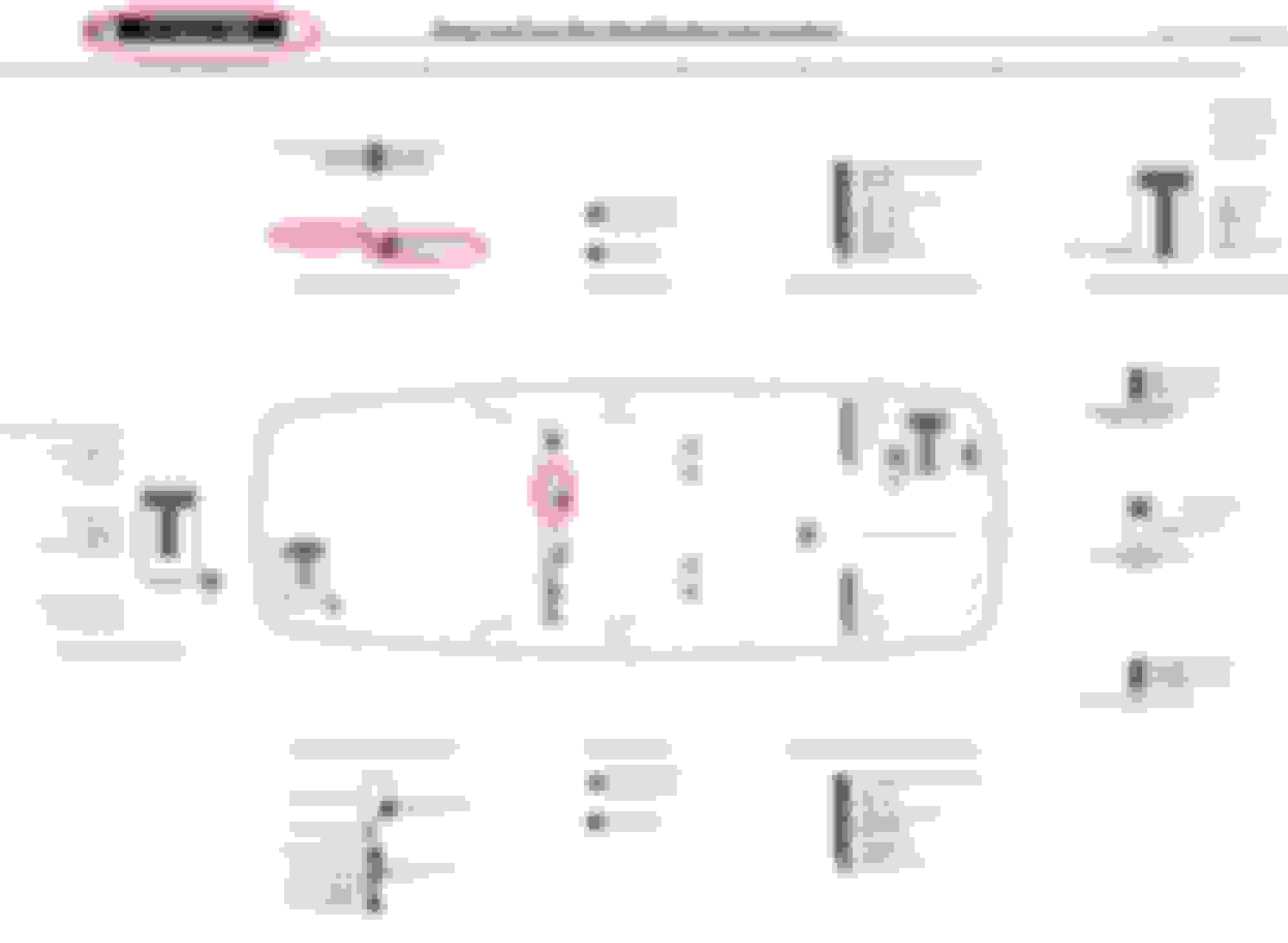
This can be seen on page 31 compaired to page Y
An example would be the Left Heelboard fuse box with the labeled vertical wires one being Battery Power Bus ( hot at all times as it bypasses the ignition positive relay at point 3 square ) and ignition Power Bus ( reiies on the relay to close at point 2 double hash circle )
This point 2 double hash is on page 34 left side of page so the fuse 10 , 12 , 14 , 16 rely on the relay to close
Point 4 square is on page 33 right side of page so fuse 1 - 9 and 11 , 13 , 15 , 17 and 18 are hot at all times , this is the same for all fuse boxes
An example is the SLCM fuse in the trunk that is hot at all times
But we will be looking at your electrical distribution as the bigger picture with the SLCM ( and associated security system parts like your door module ) as a potion of that
You can have one of these relays remaining closed ( controlled by a faulty ignition switch ) on a intermittent timing basis or the inside power contacts "floating "
Break time for morning meds
We will be removing these king relays to measure your battery drainage
Let me go back up in the text and specify which relays to pull and you may see something immediately on your meter if your intermittent issue is faulting at this time




 ....
.... ....
....