When you click on links to various merchants on this site and make a purchase, this can result in this site earning a commission. Affiliate programs and affiliations include, but are not limited to, the eBay Partner Network.
I am back after some time.
Timing updated with OEM parts but the engine is still knocking. I will remove it for revision.
FYI both secondary tensioners were cracked but they still keep pressure. There is metal cylinder inside which keeps shape and pressure thus I expect that they worked...somehow. Primary tensioners were in a good shape. Primary guides cracked and blades scratched by chain. Some pictures will follow.
Don B: I have no idea why Jag mechanic told me that 5.0 Pulley bolt is weaker compared to 4.0 bolts. I think it was related to material quality but I have to ask him again to clarify that.
I have a question regarding torque spec from your table above. My engine has split locking ring thus I expect it should be torqued directly to 375 Nm and not via Stage 1 80 Nm and Stage 2 80 degrees? Am I right?
I have a question regarding torque spec from your table above. My engine has split locking ring thus I expect it should be torqued directly to 375 Nm and not via Stage 1 80 Nm and Stage 2 80 degrees? Am I right?
Yes, as I understand the Workshop Manual, if you have the split collet "locking ring," you can torque the bolt to spec without the 2-stage process. The bolt will stretch when the split collet fully seats.
The torque table in the manual says 375 Nm, but the actual crank damper replacement procedure in the manual says 364 - 386 Nm. Either way you should be good at 375 Nm. Bear in mind that the SAE considers a torque wrench sufficiently accurate if it torques to within +/- 4% of spec.
I'm so glad you replaced those cracked tensioners - they were a ticking time bomb as too many have discovered the hard way.
I'm very sorry to hear that the engine is still knocking after all of your hard work. How frustrating! Do you have a mechanic's stethoscope to probe around the engine to see if you can better locate the area of the knock? A long socket extension or screwdrive can work also if held to your ear while probing various points on the engine, but they are more awkward to use and less maneuverable than a stethoscope. Most auto parts stores carry them, and Harbor Freight carries one that works well at a very low price.
Don B: replacing tensioners was quite fun but yes, I would prefer to have the engine done already! Removing the engine is something I would prefer to avoid...
I have a stethoscope but localization is a bit difficult this time. Knocking can be heard at many places at the top and also at the bottom of the engine etc. It is strongest at the thermostat tower and maybe oil pan. There is not much to inspect and the source is 99% connecting rod bearings as this is quite common problem if the engine is running without sufficient oil level or with very old oil. Once bearings become slightly worn it is progressing more and more and knocking is main symptome AFAIK.
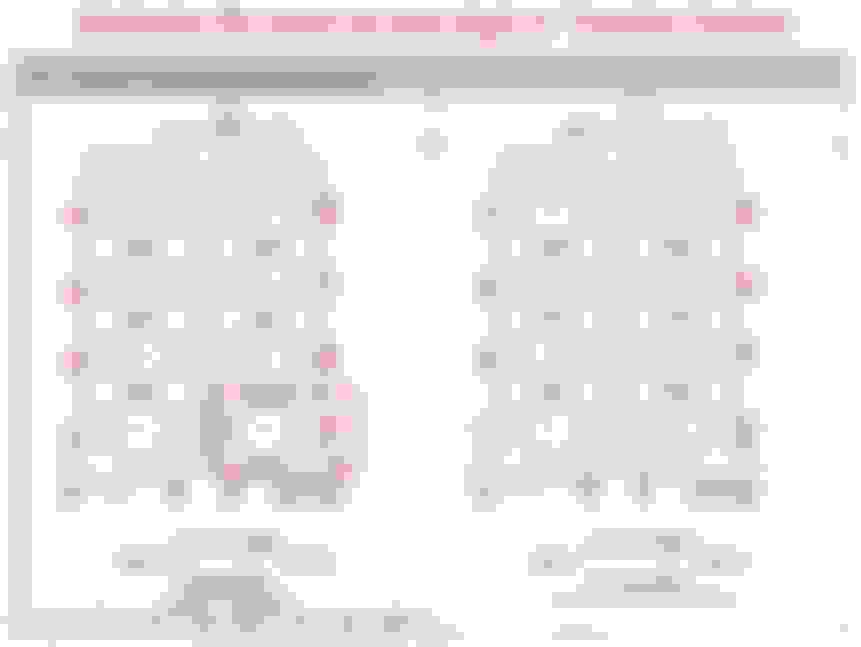
Today I was unplugging coils and LH bank front is influencing cnocking. See highlighted cylinder at the picture below. When unplugged knocking amplitude (volume) is increased. Knocking almost dissapears when the engine reaches operating temperature.
After quite some time I am returning to my garage trying to identify knocking. I was sick two months and then finishing what I missed due to the sickness and now back on track!
Yesterday I removed upper oil pan and inspected all connecting rods bearings and piston rods - all looking good. The sound comes from flywheel area. When I place stethoscope at flywheel I can hear the click noise. I cannot hear it with stethoscope at connecting rods.
Would it be possible to have a problem at flywheel-gearbox side? Few pictures and video follows.
Just a long shot and trying to think of things that might be moving when you rock the engine back and forth.
If you suspect a piston wrist pin that might require you to drop the oil pan and check to see if anything is loose?
.
.
.






 Removing the engine is something I would prefer to avoid...