When you click on links to various merchants on this site and make a purchase, this can result in this site earning a commission. Affiliate programs and affiliations include, but are not limited to, the eBay Partner Network.
I was preparing for some suspension work in the last weeks, and tried to understand the differences in ride height.
As you know, the XJ and XJR came in a standard ride height for most countries (both for the comfort and sport suspension), but with a lower setting for the XJR for the ROW.
I always assumed that the ride height was the result of different spring length.
But, on closer study, I see the top packing/locator (item 4 on the below parts list) comes in 2 different thicknesses, 1.5 and 4.5mm, and that there is no difference in spring parts number for the NAS and ROW, not any for the other suspension parts.
So, is this packing/locator how Jaguar adjusted the ride height for the different markets? Or am I spinning?
On coilovers, ride height is often set by moving the perches. Changing perch thickness can work as well. Is it possible part #2 also has more than one part number? The 3mm difference for part #4 isn't enough to make the difference assuming you are talking about ROW. Assuming the upper spring mount point, front lower control arm, it's bushings, and the spindle are the same, the only way to lower front end is to reduce the length of the spring assembly.
WRT to the ride height in North America, my 2003 XJR is noticeably lower than the 1999 VDP and they both have stock suspensions.
The 3mm difference for part #4 isn't enough to make the difference assuming you are talking about ROW.
Assuming the upper spring mount point, front lower control arm, it's bushings, and the spindle are the same, the only way to lower front end is to reduce the length of the spring assembly.
There, that was my thinking as well.
But why does Jaguar offer different thicknesses for the packing?
I messed up, you have to consider that the lower control arm is a lever with the fulcrum being the inner lower joint. The spring force holding up the car is applied in between this fulcrum and the outer ball joint (the end of the lever). If the spring is 1/2 way in between the inner joint and the outer joint, a 3mm change in spring length will mean a 6mm change at the outer ball joint. If the spring is closer to the fulcrum (the inner joint), the change in ride height from a change in spring length is over 2 times larger. Given that the top perch is bent inwards, I believe this to be the case.
Long story short, the difference could all be in that #4 spacer - the change in ride height from changing that spacer is greater than the thickness of the spacer.
Long story short, the difference could all be in that #4 spacer - the change in ride height from changing that spacer is greater than the thickness of the spacer.
Mike, you are surely correct on that, reason why you have to be cautious cutting your spring if you want to drop the car, cause it doubles till quadruples.
Still, it should be nice if someone with specific knowledge could confirm the ride height comes from this item only, and all springs are equal (which should, by the way, also make perfect sense from the manufacturers point of view, only to carry comfort and sport ones).
It should make lowering some of our cars much easier .
As I rebuilt my friends 99 Sovereign, it had the little, thin 'shims' between the spring and pan. So basically nothing. My XJ has them too, but my car is still lower... So no, it isn't only the little spacers...
On the older Jags (1980s era) that I'm most familiar with Jaguar used 3.1mm shims/spacers between the spring and the spring pan. Each spacer yields about 10mm difference in ride height. I've seen as few as one and as many as three on identical spec cars.
My impression has always been that springs were the primary factor and the shims were used, *as needed*, for correction purposes only. I've always presumed they had some sort of method of determining how many shims would or wouldn't be needed as the suspension was assembled.....some sort of assembly jig and method of measurement....as they surely wouldn't do this after the car was fully assembled.
But, then again, in the 80s there wasn't an "R" version with a desired/designed lower ride height. It's perfectly plausible that these spacers could be used to provide the designed ride height rather than merely correct discrepancies.
On the older Jags (1980s era) that I'm most familiar with Jaguar used 3.1mm shims/spacers between the spring and the spring pan. Each spacer yields about 10mm difference in ride height. I've seen as few as one and as many as three on identical spec cars.
Considering the suspension lay-out, a leverage of some 1 to 3 seems to be correct, and also confirms with the lowering information I have collected from some members.
But then, according Jaguar, the ride height between a low XJR and a normal XJ8 is some 2cm, so that can't be obtained by the 3mm difference in the top packing alone.
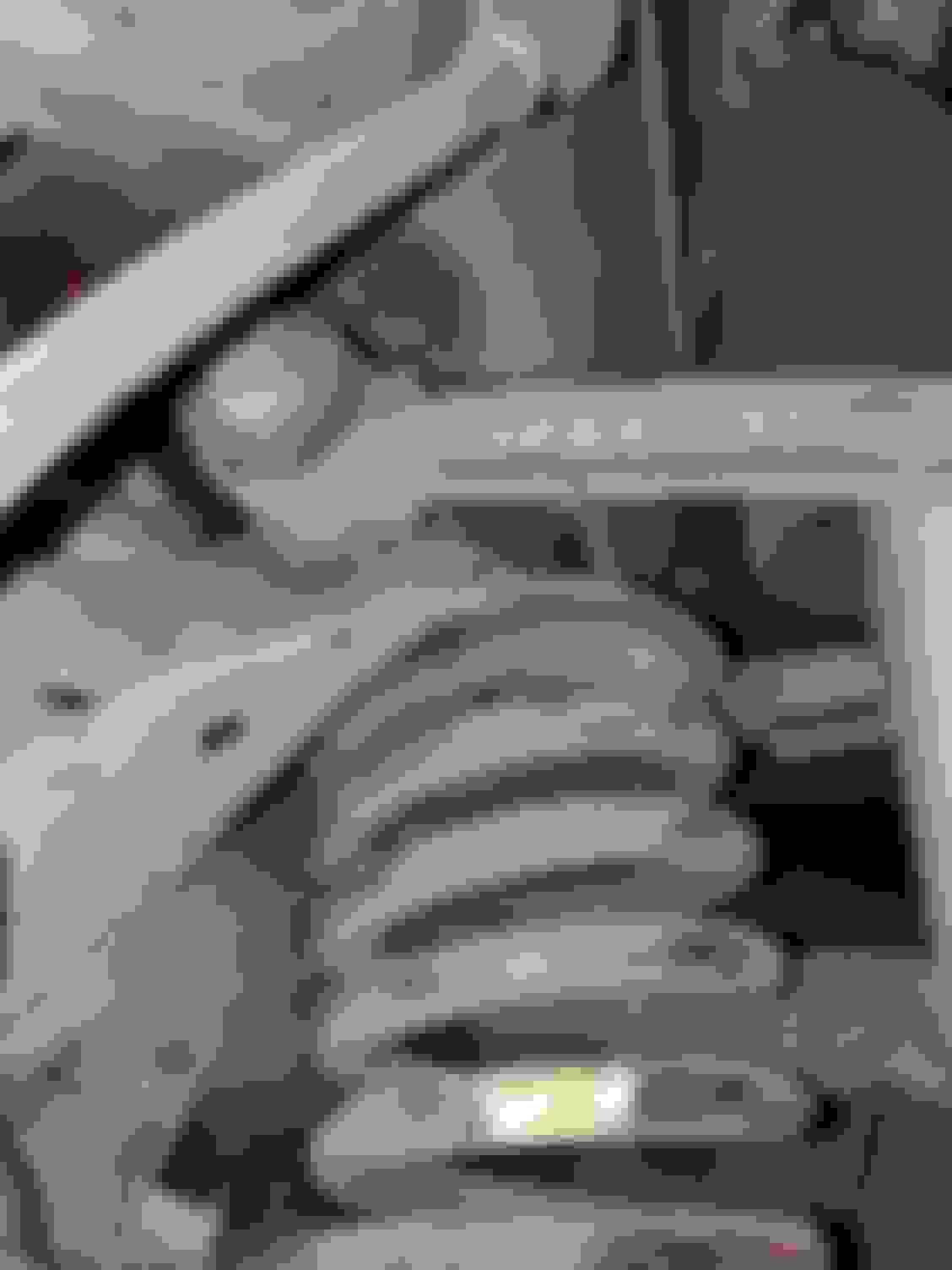
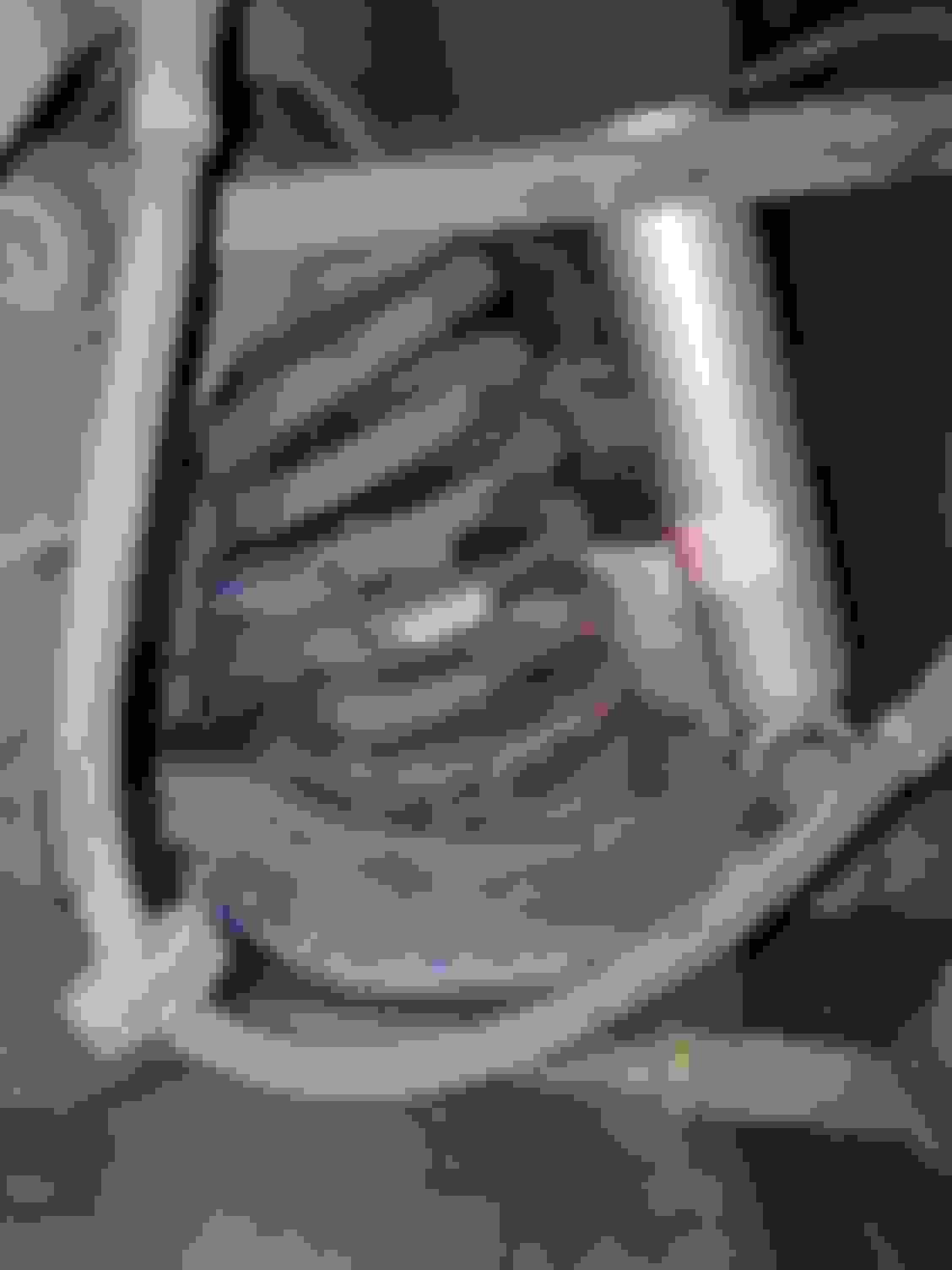
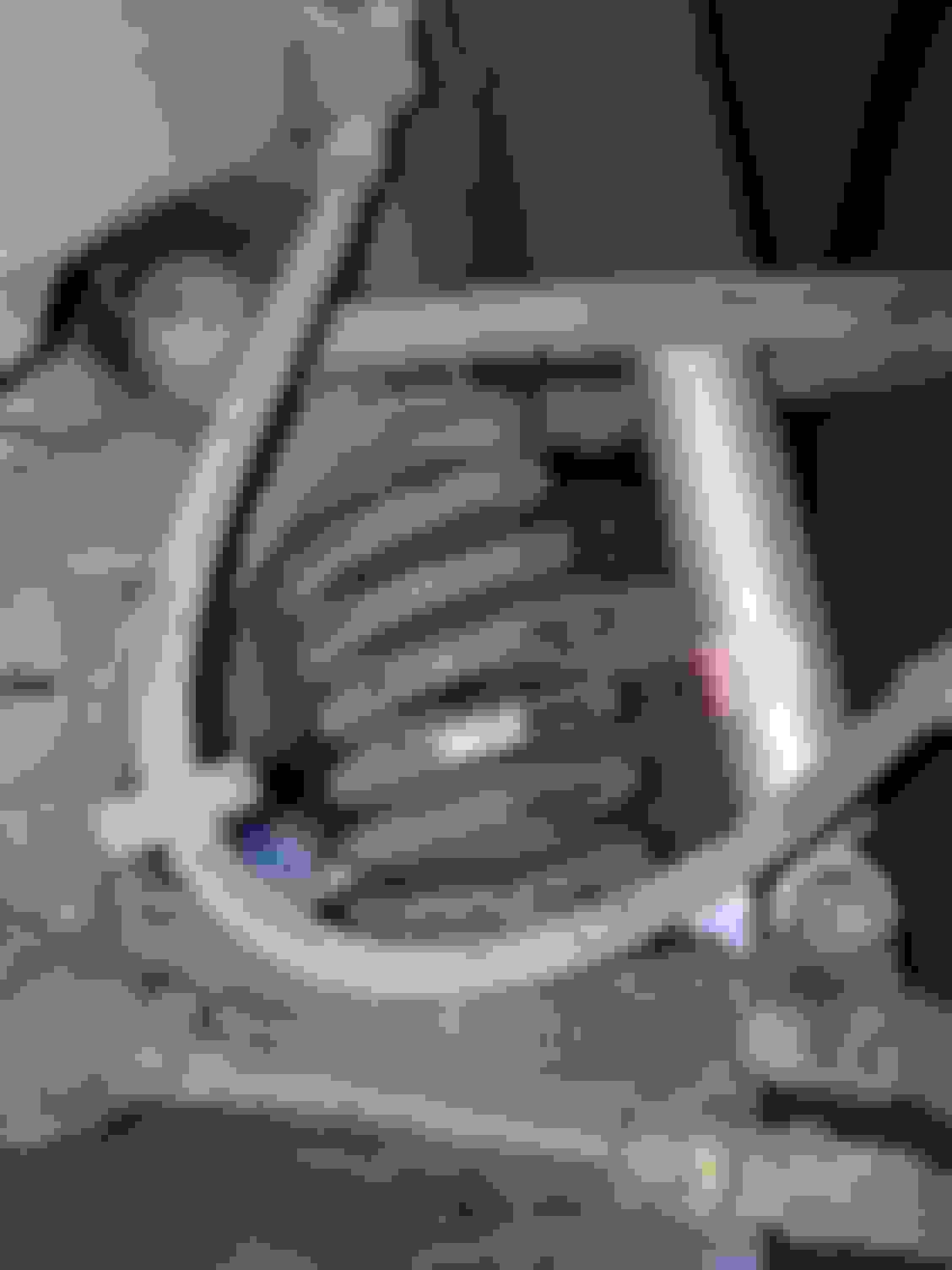
Anyway, I had my wheels off to replace the front shocks, and saw my springs are red-marked, are not cut, and with all packings and locators in place.
There is very little info on the net, but it seems red was for the comfort springs, at least for the XJ40, anyone know?
That should also make them "long" if there was any variation in spring length.
That is kind of confirmed if I search the net, where each and every Sovereign or VDP I have seen rides ''high'', surely after installing new shocks (here a recent one: https://www.jaguarforums.com/forum/x...7/#post1625472 ).
Now, with these red springs, and new shocks, my VDP rides at the exact low height of a XJR ROW, although originally spec-ed and delivered for the USA.
The answer might be found in the chart from post #1....which states that discrepancies of +/- 15mm are acceptable due to build/production variances.
This mirrors many other manufacturers. Back in my dealership days most manufacturers dictated that ride height must be xxx-amount out of spec before any rectification should be attempted under warranty.
The answer might be found in the chart from post #1....which states that discrepancies of +/- 15mm are acceptable due to build/production variances.
Yeah Doug, you might be right, although I think 15mm is a crazy tolerance, and only comes into play if the shocks fail, and the car drops as the consequence.
I guess it will always be a mystery.
Checked the ride height on my '01 XJ8 and with full tank/fluids came up with:
FRONT 14.25"
REAR 14.6"
My question: What is the likely culprit is here? Carnival Kid (Glen) has been helping me address this issue, so I've included pictures of the passenger side front suspension for him and anyone else who'd like to chime in. If you need better angles of something that would help you diagnose, please let me know.






 How did Jaguar manage the ride height?


 .
.