When you click on links to various merchants on this site and make a purchase, this can result in this site earning a commission. Affiliate programs and affiliations include, but are not limited to, the eBay Partner Network.
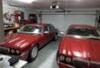
I noticed on a recent post a discussion about having a transmission dipstick. On my recently purchased XJR there is a capped cover that looks like it could be a dipstick. Does this cover come off and can a dipstick be inserted? If so, where can I get one and what is the procedure for changing the fluid? I already have the filter and gasket and a number of liters of Pentosin trans fluid. Is that what these Mercedes transmissions take or can i get away with fairly normal fluid? I'm not opposed to using the Pentosin but I want to use the correct fluid and being able to fill it from the top would be great!
Thanks!
Yes, remove cap, insert any of the gajillions of mb 722.6 dipsticks available on amazon, ebay or whatever. Its a measuring tool only so it doesnt stay in there.
Given that it has this tube, you can just drain and refill but obviously dropping the pan to do the filter is preferred.
Depends what pentosin fluid it is. I used shell 134 atf. Its gotta meet the mb 236.14 standard i think
Quad, anything odd need to be done with the dipstick though? I saw a video on an XKR that showed the mb dipstick was too long and he had it marked at a certain point for his car. Does this also apply to the XJR or is it just drop in and its the right length.
This will be one on my winter maintenance items on my 01. Dipstick tube has no cap so id like to flush out any possible contaminants and change the filter.
Quad, anything odd need to be done with the dipstick though? I saw a video on an XKR that showed the mb dipstick was too long and he had it marked at a certain point for his car. Does this also apply to the XJR or is it just drop in and its the right length.
This will be one on my winter maintenance items on my 01. Dipstick tube has no cap so id like to flush out any possible contaminants and change the filter.
One size fits all: I found it coils and stays put in the tool box if left at full length, depending on which you buy it can be anything from 8-12" too long, of course cutting to fit isn't an issue. They're to check Mercedes Sprinter vans etc so need to be quite annoyingly long. You can buy the trans filler caps and red lock tabs from either Merc or Jag.
The MB 722.6 dipstick is not made to suit any tube length because the level measurement procedure requires that the dipstick tip contacts the transmission sump. The dipstick length is therefore irrelevant so it is deliberately made longer than the longest tube used on the 722.6 transmission to suit all cases.
Check eBay for a dipstick. Find one specifically for the 722.6 that has temperature range markings on the plastic tip that guide you in measuring the fluid level at 25°C and 80°C:
Some of the fluids I am aware of that are approved by M-B in the 722.6 are:
Mercedes-Benz Genuine ATF 236.14
Fuchs Titan ATF 4134
LiquiMoly Top Tec ATF 1600
Mobil ATF 134
Motul ATF 236.14
Pentosin ATF 134
Ravenol ATF M 9-serie
Shell ATF 134
Shell Spirax S6 ATF 134M
Valvoline ATF Pro 236.14
You can check the most recent approved fluids list at this link:
Do not use a fluid a manufacturer claims is "suitable" for the 722.6 unless it appears on the M-B approved list. There are many fluids like Valvoline MaxLife Multi-Vehicle ATF that are claimed to meet MB 236.14, but to also meet many other standards, like MB 236.15, which is a completely different specification with a much lower viscosity (and dyed blue), so Valvoline's claims are completely implausible. Plenty of other unacceptable examples exist.
BTW the tool is supposed to stick out far from the measuring tube, it's normal, it actually measures by bottoming out the plastic level gauge. So no need to cut. Attaching a file with instructions on this process, use the first section (722.6)
The MB 722.6 dipstick is not made to suit any tube length because the level measurement procedure requires that the dipstick tip contacts the transmission sump. The dipstick length is therefore irrelevant so it is deliberately made longer than the longest tube used on the 722.6 transmission to suit all cases.
That perfectly answers my exact question as it wasn't covered by the video, but it waas implied by the youtuber guy that there was a particular way to use it correctly, depending on the vehicle being checked.
Thanks guys! David, sorry for hijacking your thread, but I tried to stay on topic.
You can drive out the tiny retainer pin in the handle of the dipstick, cut several feet off, put the handle back on, and drive in the retainer pin. Makes it much more wieldy. I cut mine so that it's maybe 6" too long instead of 3 feet too long. I remember that I also put a mark on the dipstick at the top of the dipstick tube, so I know for sure that I have inserted it all the way. Usually it goes right to the bottom of the pan and stops, so you don't have to worry about it, but I like to be sure.
For the red locking tab, I had bought a pack of 3 years ago, I don't see it available now. But I saw this, at least you'll have the part number for reference... https://expedition-imports.com/trans...xxtransmission
I just wish there was a suitable replacement for that transmission dipstick to just stay sealed in there. An example is a GM one that could fit at the proper length, flip the lever and the rubber just under the lever squishes against the tube and seals it up.
The dipstick does NOT go all the way to the bottom of the pan.(remove the pan and insert the tool to verify that it stops short of going a short distance below the pan upper surface)
There is a 'ball' in the plastic end that is a STOP in the tube for a reliable level indication.
The pan bottom is a poor indication of oil level because a dent in the bottom or a change in the capacity (deeper pan) could cause all sorts of complications.
The OFFICIAL JAGUAR TOOL has a definite BALL or enlarged area to prevent the plastic end from going too far into the pan area giving a false reading.
The little 'wings' on the upper area of the pictured tool simulates the BALL of the original?
Over the years this was discussed and the tool is always a subject of contention.
You can run a piece of wire to hit the pan bottom but be sure the level is correct for your car before relying on it for correct level indication.
Yes, there have been different opinions as to whether the dipstick tip hits the bottom of the gearbox sump or not. But I just follow the instructions in the Jaguar manual:
It clearly states "tip contact with the fluid pan" (is this possibly an error in the manual?). The Mercedes instructions appear to say the same thing:
I also found a picture of the jaguar dipstick tube according to which the dipstick's plastic segment is not stopped by the tube's bottom extension but goes fully through it meaning the dipstick will be stopped when its tip hits the bottom of the sump.
Thanks you to all the guys that responded about the dipstick! I placed an order for one that comes with the replacement cap and red tabs. Appreciate it a bunch!
I marked my dipstick against the top of the tube when it was fully inserted (hit the sump bottom). The length measured from the dipstick tip to the mark is 704 mm. I did this before pouring new fluid (the sump clean and dry) and I could clearly hear the "bonk" as the dipstick tip hit the bottom. To double check this measurement, I used a length of sleeve of a bicycle brake cable (which is easier to insert and feel when it hits the sump bottom) - it confirmed the said length.
Inserting the dipstick and making sure it is fully in can be a bit tricky. It does encounter some resistance at a couple of points (the bends) and needs to be wiggled to continue. For subsequent checks of the fluid level, I use the mark I made for easy verification that the dipstick is fully in.
Being sure that the dipstick is fully in is very important. Not being fully in will result in overfilling and the manual warns that "...excess fluid MUST be removed".
Oil does not have to be 236.14. There were not 236.14 when these gearboxes wre maid. Shell ATF 3403 M115 is 236.10. You can but newer oil in yes unless you bought 236.15. I used Amsoil SS multivechicle-ATF. It has 236.10. Works great.
So my '01 XJR has a trans full of Valvoline MAX Life ATF - did this a few years back based upon recommendations I read here. I had the engine/trans out at the time so even pulled the torque converter to drain it. After 20k miles or so the trans shifts fine under normal and heavy loads but sometimes is a little ambivalent when shifting under light load - sort of slides into gear versus a discreet shift. I'm not sure if this could be the fluid or the 85k miles on the drivetrain. My wife's '99 XJR with 35k and original fluid always shifts flawlessly. Should I replace the MAX Life fluid with one of the ones recommended above or is this not necessary or is it too late? If it might help to drain and replace what's the best way to do this other than just emptying the pan? On my old Tundra I disconnected the cooler line and ran the fluid out while adding new fluid (a couple of quarts at a time) in an effort to replace the oil in the converter. Is this an acceptable procedure or a no no? And finally, how can one quart of ATF cost $5 and another $45 and both meet the same spec? I'm very confused. Thanks for your thoughts.





 Transmission Dipstick for XJR?