


newbie in a state of confusion


Thread Starter
|
Junior Member
Joined: Jan 2013
Posts: 11
Likes: 1
From: California
 newbie in a state of confusion
Hello members!!!! newbie confused..I must be a man who likes pain. Ive owned a lotus and now a jaguar..lol I changed my oil last night in my 1992 sovereign (not my first time) The vehicle ran fine before I changed the oil. I had a little trouble with a tight oil filter but got her off. After completing the job I tried to start the vehicle and it starts, revs high then dies. I have tried to do this several times. I can keep the car running if I feather the gas pedal but she sputters and backfires. Any suggestions would be greatly appreciated.
Thank You
Michael
I can keep the car running if I feather the gas pedal but she sputters and backfires. Any suggestions would be greatly appreciated.Thank You
Michael

Veteran Member


Joined: Sep 2012
Posts: 2,729
Likes: 1,910
From: Victoria BC Canada
Just a suggestion but the throttle position sensor is located on the bottom of the throttle body just above the oil filter so is it possible you interfered with it or its wiring harness when strong armin' the filter off? That would cause the problems you describe for sure!

Veteran member
Joined: Jun 2010
Posts: 1,444
Likes: 329
From: Wisconsin, United States
Michael:
Has the check engine light come on since this problem began? And, if so, what codes are being shown by the Vehicle Control Monitor (VCM)? You can check that by turning the car off, switching the key to position II (without starting) and pressing the VCM button. A code should then appear on the display. Report back!
Scott
PS- welcome to the club
Has the check engine light come on since this problem began? And, if so, what codes are being shown by the Vehicle Control Monitor (VCM)? You can check that by turning the car off, switching the key to position II (without starting) and pressing the VCM button. A code should then appear on the display. Report back!
Scott
PS- welcome to the club
Veteran Member
Joined: Sep 2012
Posts: 2,729
Likes: 1,910
From: Victoria BC Canada
I do know the TPS is a sensitive component in the air intake system and a damaged/maladjusted/dirty one would cause all sorts of running problems.
Trending Topics
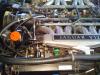
If your engine is racing up and down it's your TPS. All of us that own Jags have dealt with this at sometime or other. They get jammed up with oil, that leaks from above. If you remove the throttle housing and such you will see. Be sure to mark the position of the 8mm bolts prior to taking it off.
lol/j/k I have the manuals, it just takes forever to look them up and scan them.
Veteran Member
Joined: Sep 2012
Posts: 2,729
Likes: 1,910
From: Victoria BC Canada
 but Bob Gauff (Motorcarman) uploaded a manual to this forum that has all the illustrations in high res (and a whole lot more) - everyone should get a copy!
(find it in the files downloads area)
It's called S91_AJ6 4.0 Engine Management.pdf


Thread Starter
|
Junior Member
Joined: Jan 2013
Posts: 11
Likes: 1
From: California
Finally had time and removed the throttle body and removed the TPS. There
is a lot of oil where the TPS attaches to the throttle body. Cleaned everything. Is there a way to determine if the TPS was knocked out of position? Should I just loosen the bolts and turn the TPS while someone feathers the throttle? Should I just buy a new TPS? I replaced the fuel filter and the fuel pump is delivering fuel, so I know it is not one of those two problems. Thank you everyone, you all have been great !!!
is a lot of oil where the TPS attaches to the throttle body. Cleaned everything. Is there a way to determine if the TPS was knocked out of position? Should I just loosen the bolts and turn the TPS while someone feathers the throttle? Should I just buy a new TPS? I replaced the fuel filter and the fuel pump is delivering fuel, so I know it is not one of those two problems. Thank you everyone, you all have been great !!!
Veteran Member
Joined: Sep 2012
Posts: 2,729
Likes: 1,910
From: Victoria BC Canada
mrtalkradio's illustration above explains the functionality of the TPS and there are instructions for setting it up in the engine management.pdf mentioned earlier.
If you have a multimeter and a feeler gauge, you can calibrate it properly - it doesn't look too difficult.
If I were you, I'd clean out and decarbonize the throttle body first, then refit it to the car to calibrate the TPS.
The TPS is basically a volume control, like on a radio. The TPS translates the throttle butterfly position (mechanical) into a variable electrical signal that the ECU can understand (so it knows how open the throttle butterfly is). The base setting at idle is 0.6v. with the throttle butterfly set with the feeler gauge. If the TPS is working correctly your multimeter readings should increase and decrease smoothly between the min and max ranges (noted in the .pdf) as you open and close the throttle.
If you have a multimeter and a feeler gauge, you can calibrate it properly - it doesn't look too difficult.
If I were you, I'd clean out and decarbonize the throttle body first, then refit it to the car to calibrate the TPS.
The TPS is basically a volume control, like on a radio. The TPS translates the throttle butterfly position (mechanical) into a variable electrical signal that the ECU can understand (so it knows how open the throttle butterfly is). The base setting at idle is 0.6v. with the throttle butterfly set with the feeler gauge. If the TPS is working correctly your multimeter readings should increase and decrease smoothly between the min and max ranges (noted in the .pdf) as you open and close the throttle.

Veteran Member
Joined: Sep 2012
Posts: 2,729
Likes: 1,910
From: Victoria BC Canada
Sorry I was mistaken, the feeler gauge info isn't in the .pdf, it's in Haynes, Section 4-11.
If you don't have a copy you really should get one or download the Haynes .pdf
Adjustment (copied and pasted from Haynes)
17 Remove the air intake duct to expose the throttle body and butterfly valve.
18 Make sure the throttle body is clean and free of burrs, nicks or carbon build-up.
19 Measure the clearance between the butterfly valve (throttle plate) and the wall of
the throttle body. It should be 0.05 mm (0.002 inch).20
If the gap is incorrect, loosen the throttle stop locknut and turn the throttle stop screw until the correct clearance is attained.
21 Refit the air intake duct and surrounding components.
The procedure is also illustrated in the book.
cheers
If you don't have a copy you really should get one or download the Haynes .pdf
Adjustment (copied and pasted from Haynes)
17 Remove the air intake duct to expose the throttle body and butterfly valve.
18 Make sure the throttle body is clean and free of burrs, nicks or carbon build-up.
19 Measure the clearance between the butterfly valve (throttle plate) and the wall of
the throttle body. It should be 0.05 mm (0.002 inch).20
If the gap is incorrect, loosen the throttle stop locknut and turn the throttle stop screw until the correct clearance is attained.
21 Refit the air intake duct and surrounding components.
The procedure is also illustrated in the book.
cheers