When you click on links to various merchants on this site and make a purchase, this can result in this site earning a commission. Affiliate programs and affiliations include, but are not limited to, the eBay Partner Network.
I re-read that article by Roger Bywater on the EFI system used on the Series III XJ6 recently. One thing he mentions which I hadn't really paid attention to before was the need to have an air intake horn fitted to the front of the tube that feeds air into the filter box.
In the parts book this is P/N EAC2512, and I think it is made of rubber, to judge from photos of used ones on eBay etc. Suffice it to say mine was missing, and none of the suppliers that I use had one in stock (even though they list the part).
I noticed that air intake horns are sold locally (here in Thailand) as a popular accessory for small motorbikes, presumably to improve performance a bit over standard, and that the sizes looked close to that of the XJ6 air intake. It was tricky to find one of the correct diameter as they are mostly advertised as being suitable for a particular model of motorbike, rather than being listed by diameter. After some reseacrch I found out that the correct diameter of 45mm is the same as that used on a Honda Dash so I bought one and fitted it. I had to get the front of the air intake tube nicely round again to fit as it was slightly deformed. The new air horn is made of aluminium and has a stepped ridge on the inside so it is a snug friction fit on the end of the intake tube.
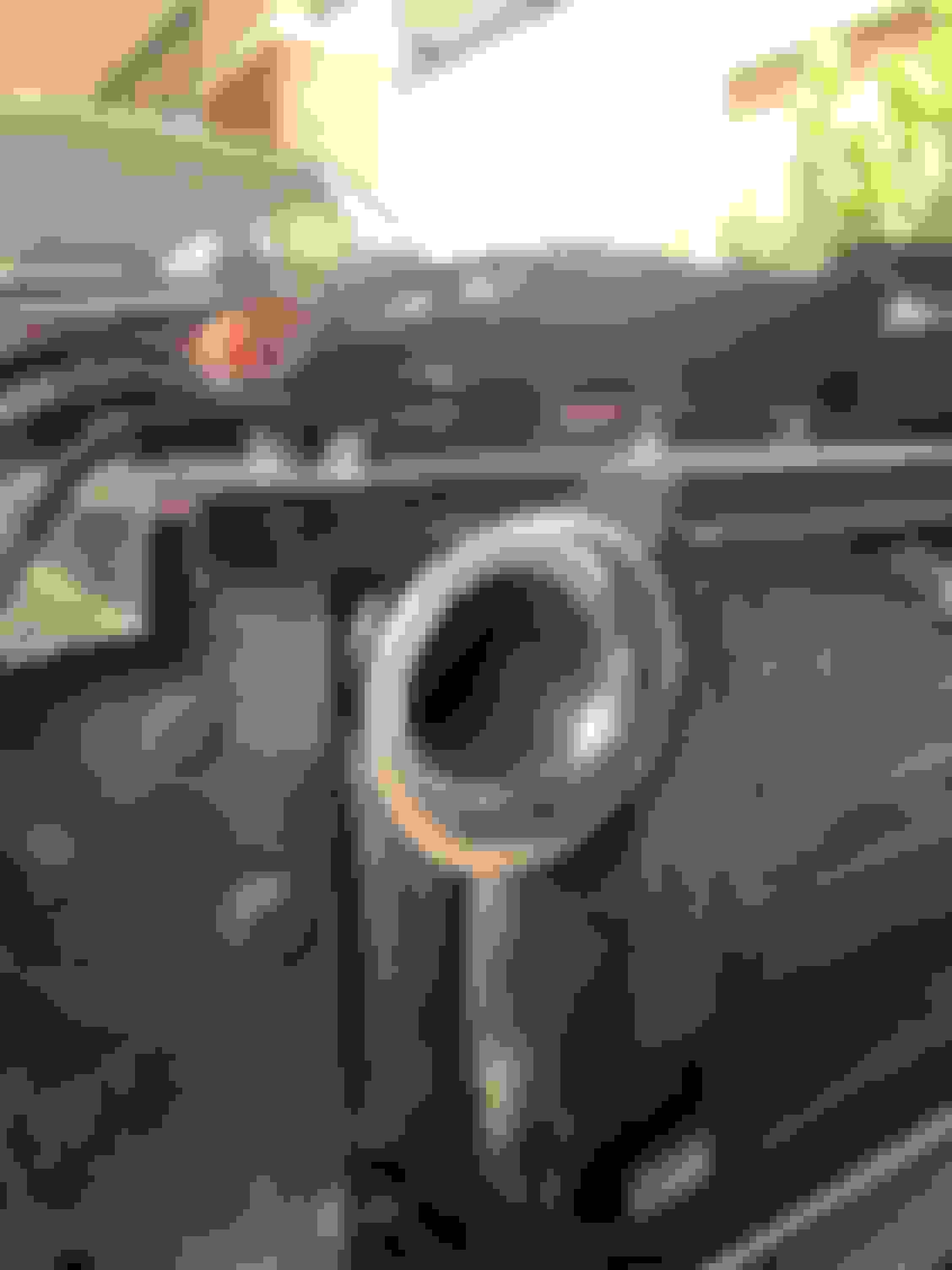
Here is a picture of the air horn fitted.
I can confirm that the car does indeed perform better with this fitted. It is noticably more eager than it was before. Very pleased with this addition and it only cost about $3-$4 equivalent.
Well done ! I remember my 1980 XJ6 having that intake trumpet, and reading about it in an articled in the AJ6 Engineering website. Roger Bywater, the proprietor, worked for Jaguar at the time the early analogue EFI systems were under development.
my 1984 has the original trumpet and it is made of thin steel painted gloss black. There is a foam filler pad where it goes through the radiator opening. . The front edge has a rubber "mouth" attached to the edge.
The "mouth" is what I am referring to as a "trumpet". There are many terms in use: trumpet, horn, ram etc.
I still have the thin steel tube from the air cleaner box emerging alongside the radiator, and have added the alloy "trumpet" to the front as shown in the pic.
It would seem that the idea is to force more air in due to larger catchment area in front of the trumpet. I wouldn't be surprised if a lot of the original rubber ones have deteriorated or gone missing as mine had, over the years. Hence thought worth mentioning here as I definitely notice an improvement in performance.
in my minivan the air intake "mouth" is behind the grille ahead of radiator and condenser, and connected to the air filter box which is behind it but inside the engine bay. The "mouth" has a screen mesh to prevent entry from bugs or debris.
Great job Andy and from experience, I concur that it does make the S3 cars feel more responsive. FYI... one way of sympathetically going a step further (which I have done successfully over the years on my own and on customer vehicles) is to re-purpose the plastic "concertina" hose that comes off the back of the outboard headlamp escutcheon (originally going to the manually-actuated footwell vents). Since here in Australia the heat justifies almost constant use of air-conditioning; these vents are almost never used... so by sealing up the footwell vent aperture and re-routing the hose onto the metal intake tube upon which you fitted your trumpet; it gives a form of mildly forced induction of fresh, cold air that comes directly from the outside of the car, is "captured" by the headlamp aperture and forced through the tube (that is how the footwell got its air) and straight into the engine air intake. In approximate terms, I would say it doubles the imrovemment that you have already experienced with your terrific trumpet addition. There are no mixture issues to be dealt with either, as the airflow meter works already works on air volume/velocity. Just another approach I felt you might find interesting. One of the other benefits already mentioned, is that the headlamp escutcheon already has a factory fitted gauze too!
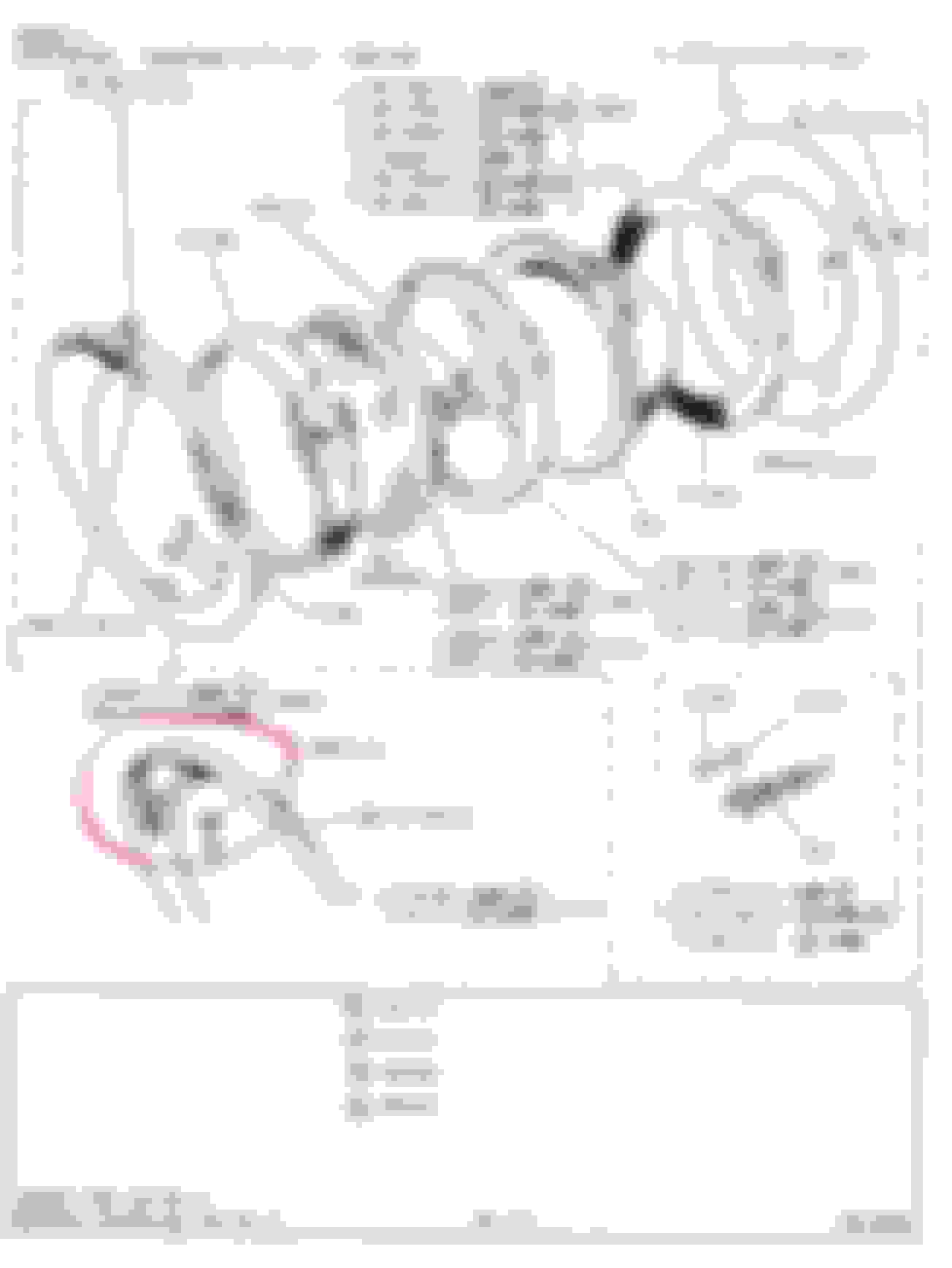
A few (badly edited pics) to illustrate...
1. Original track of flex pipe from back of outboard headlamp down to footwell.
2. Footwell "fresh air" vent made redundant (showing flex tube / ducting).
3. Headlamp escutcheon showing mesh (actual attachment for ducting is part of the front mudguard (fender) that mounts the outboard headlamp. 1. Track of ducting before modification. 2. Redundant fotwell vent (to be sealed-off). 3. Vented chrome headlamp surround with mesh.
i recal;l that mine was a hard plastic and busted!! I have read that many are. never got to replacement with another or a better one. teh one pictured in the prior post is far better..
I am familiar with these unused fresh air hoses in the outer wings of the Series 3 XJ but there is no exit to the engine compartment and there is not a very effective way to attach the hose to the metal trumpet, so I only guess that the inner wing must be cut to pass this hose through and similarly the trumpet must be cut to connect this hose to it ahead of the air filter canister.
However this gives me an idea for my 1965 S type which has a very crude air intake that takes air through a hose in front of the radiator, the worst place for intake air to the carburators! Unfortunately the S type headlamp escutcheons do not have the cutaways / apertures or the mesh / gauze of the XJ outer wing escutcheons.
A few (badly edited pics) to illustrate...
1. Original track of flex pipe from back of outboard headlamp down to footwell.
2. Footwell "fresh air" vent made redundant (showing flex tube / ducting).
3. Headlamp escutcheon showing mesh (actual attachment for ducting is part of the front mudguard (fender) that mounts the outboard headlamp.
1. Track of ducting before modification.
2. Redundant fotwell vent (to be sealed-off).
3. Vented chrome headlamp surround with mesh.
Could we please have a photo of a finished installation in the car?
(';')
Yes Jose, an aperture does need to be sympathetically let into the engine bay valance. What we do, is when we close-off the footwell vents, we use small, flat sheetmetal plate and handmade gasket, shaped and drilled to fit the existing holes. This allows removal of the mechanism completely, but is completely reversible, should a later owner wish to do so (it also removes those annoying diesel smells that intrude into the cabin when following a truck - even when the air-conditioning is in recirculation mode - it is the footwell vents that are usually the site of leakage). When we (reluctantly) wreck and XJ for parts, we cut out the section of the footwell vents (bottom of "A" pillar) that was the original mount point for that concertina plastic hose/duct. This is what we use to make an "original-ish" access through the valance.
We do not cut the intake tubes as they are slightly conical and once the intake trumpet (or more likely, what is left of it; if anything) is removed, the ducting hose slides on to make a tight, interference fit.
I certainly agree with you on the poor siting of the intake point on the classic S-Types... one little tweak we did was to use the "V" shaped metal outlet from a windscreen demister hot air delivery vent (can't recall from what model) and it made a perfect "collector" mounted discreetly force-feeding air into the original hose in your diagram; gave nice improvements in throttle response in the middle rev. range (once vehicle velocity increased).
Last edited by imperialmotorcars; Aug 26, 2021 at 09:42 PM.
I will hunt around and see if I kept any... it is a minor mod., so I am not sure if I would've felt the need to keep any for reference. If I didn't, I certainly will take step-by-step pictures of the next one I do and post them here.
Diesel exhaust is very unhealthy. The black soot of the exhaust gets into your lungs. I don't understand why anyone would buy a diesel-fueled vehicle. Also diesel is more expensive than gasoline in the USA.
In the S type (MK-3) I eliminated the flex hose shown in the diagram. Only ambient air comes in through the pipe facing down from the air filter housing that looks like a muffler. This same housing and arrangement was used in the MK-1 and 420 but not in the MK-2.
Why did Jaguar choose to collect air from the front of the radiator is unknown to me. It is hot air, as hot as you can get with help from the Fan.
I am going to study if I can set up a hose in the S type similar to the XJ wing headlamp setup. The escutcheons are similar but without the air apertures.
Jose, I am certainly with you on the offensiveness of diesel emissions... fo many decades, it was subsidized here in Australia and sold much cheaper than petrol (gasolene). Thankfully the worm has now turned and with the subsidy removed it is finally more expensive; but still all too common.
If I may offer two points to consider...
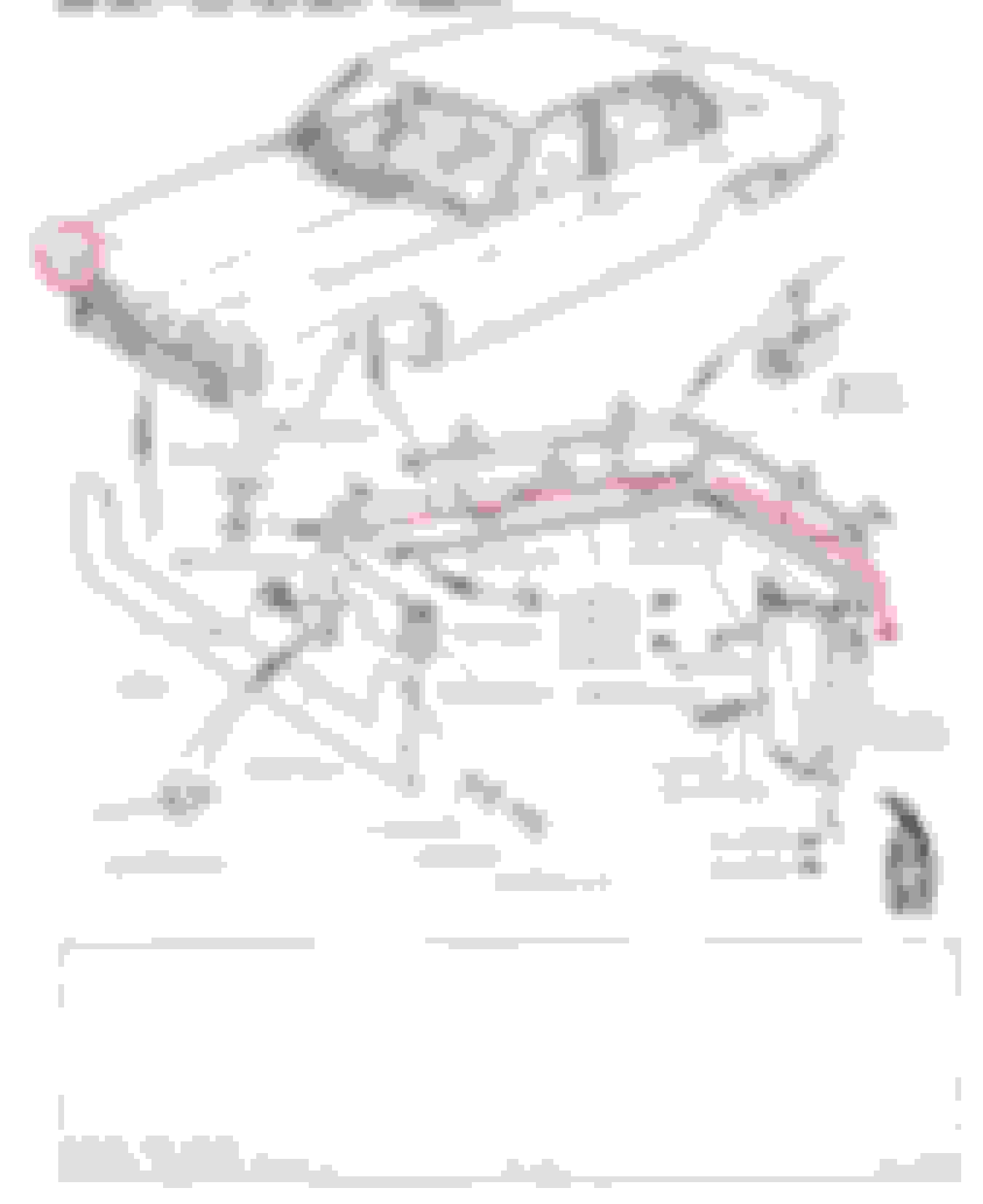
In th two pictures, I'll show the location of the air intake horn I previously mentioned - that is picture 1 (red circle) when painted "chassis black" it was almost invisible. The second picture may, or may not be relevant, but I recall that USA number (licence?) plates are smaller than Australian ones (about 3/4 size) and about half the size of the standard UK plates - if I recall correctly? I once saw a track spec., but still road regstered 3.8 Mark 2 that had a ram air intake let into the numberplate carrier (yellow circle) Cold air intake location (made from demister outlet). Ram air intake let into the number plate baking board.
. It was a clever place to disguise the intake, was right on the front of the car to gain maximum benefit from oncoming cold air at speed and required no structural modifications - just a thought perhaps for your car?
That's interesting about the fresh air intake - my car doesn't have that. Fresh air is drawn from the scuttle vent only. It was sold new in Hong Kong apparently, so perhaps did not have fresh air vents due to the tropical climate there. Car is now in Thailand where the climate is the same and air conditioning is always on. I have modified the recirculation flaps on my car to always recirculate (the Delanaire system is mostly inoperative). I have also forced the windscreen demister ducts always closed as you don't want cool air on the screen in a tropical climate as it causes condensation on the outside.






 Series III air intake horn