


Fuel smell, start issues, back pressure 92 XJS V12


Thread Starter
|
Member


Joined: Jun 2013
Posts: 55
Likes: 23
From: St. Louis, MO US
 Fuel smell, start issues, back pressure 92 XJS V12
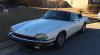
I've been fixing up a nice 92 XJS. New suspension, brakes, calipers, rack and many other bits and pieces.
I'm having an issue with starting the vehicle after it is warm. When it is cold, it starts right up, but when it is warm I have to pump the gas pedal to get it to start. Additionally, when I drive it and park it in the garage it has a gas smell which goes away by morning. Opening the gas cap, a huge amount of pressure/air comes out of the tank. So much so, that when I went to fill the car up at the gas pump, quite a bit fuel spit out of the cap under pressure.
Short background. I bought this vehicle which had not be run much over the past 20 years. I'm suspecting fuel filters, but need some experienced advice.
I'm having an issue with starting the vehicle after it is warm. When it is cold, it starts right up, but when it is warm I have to pump the gas pedal to get it to start. Additionally, when I drive it and park it in the garage it has a gas smell which goes away by morning. Opening the gas cap, a huge amount of pressure/air comes out of the tank. So much so, that when I went to fill the car up at the gas pump, quite a bit fuel spit out of the cap under pressure.
Short background. I bought this vehicle which had not be run much over the past 20 years. I'm suspecting fuel filters, but need some experienced advice.


Veteran Member
Joined: Mar 2008
Posts: 25,538
Likes: 11,735
From: Pacific Northwest USA
Hopefully someone will come along with an easy fix.
Over the years Jaguar has used various ...um...."interesting"....schemes to control tank venting, typically involving a conglomeration vacuum delay valves, check valves, relief valves, purge valves. I have a hard time even wrapping my head around correct operation, much less tracing out a *fault*. I can't imagine even beginning the process without the applicable service manuals and diagrams to work with.
A week's pay says that many owners have defeated these systems and devised a way to simply let the tank vent to atmosphere and be done with it.
Sorry I can't offer anything more than commiseration.
Cheers
DD
Over the years Jaguar has used various ...um...."interesting"....schemes to control tank venting, typically involving a conglomeration vacuum delay valves, check valves, relief valves, purge valves. I have a hard time even wrapping my head around correct operation, much less tracing out a *fault*. I can't imagine even beginning the process without the applicable service manuals and diagrams to work with.
A week's pay says that many owners have defeated these systems and devised a way to simply let the tank vent to atmosphere and be done with it.
Sorry I can't offer anything more than commiseration.
Cheers
DD

Veteran Member
Joined: Jan 2012
Posts: 14,612
Likes: 10,809
From: France
The easiest way is to block off two of the three exit pipes that go out of the top left of the tank. Then buy a two way breather valve nd fit it UPRIGHT to one of them, and lead the tube from the other end out into the drain tube from the boot gutter; or buy a fuel cap with a breather incorporated in it.
Greg
Greg

Veteran Member
Joined: Mar 2008
Posts: 25,538
Likes: 11,735
From: Pacific Northwest USA
The easiest way is to block off two of the three exit pipes that go out of the top left of the tank. Then buy a two way breather valve nd fit it UPRIGHT to one of them, and lead the tube from the other end out into the drain tube from the boot gutter; or buy a fuel cap with a breather incorporated in it.
Greg
Greg
Have you done this? Do you have an example/suggestion for such a valve?
Cheers
DD

Veteran Member
Joined: Dec 2014
Posts: 1,894
Likes: 984
From: California
Are you sure that the fuel smell is coming from the tank or that area?
Given the car's age, it's right on schedule for a failing injector rail hose, which can be a rather dangerous surprise so please double check the origin of the smell.
Given the car's age, it's right on schedule for a failing injector rail hose, which can be a rather dangerous surprise so please double check the origin of the smell.
Trending Topics
Veteran Member
Joined: Jan 2012
Posts: 14,612
Likes: 10,809
From: France
https://www.merlinmotorsport.co.uk/s...breather-valve
Standard procedure in motor racing. They can be installed just about anywhere, but need to be upright I am pretty sure.
Greg
Veteran Member
Joined: Aug 2014
Posts: 1,858
Likes: 366
From: Pensacola Florida USA
the 1992 only has 2 fuel inject hoses that cross the valley to connect the two fuel rails... the injector plug directly in to the fuel rail...
on mine the rear crossover hose had a pin hole leak. easily replaced...
the leak was a spray when I flexed it with my finger...
and pressure when you open the cap to fill up on mine is normal
(with in reason of course...)
on mine the rear crossover hose had a pin hole leak. easily replaced...
the leak was a spray when I flexed it with my finger...
and pressure when you open the cap to fill up on mine is normal
(with in reason of course...)
Thread Starter
|
Member
Joined: Jun 2013
Posts: 55
Likes: 23
From: St. Louis, MO US
Ok, I've got all my fuel smell issues fixed, but the pressure build up in the tank when running the XJS for a long period of time is huge. When I open the fuel lid, it will spit out gas there is so much pressure.
A friend of mine, and Classic Jaguar mechanic told me it sounded like I had a Rochester valve issue. Looking it up, I found that there is a pressure control valve, CBC7714 (discontinued). I purchased another valve that many said was the same thing for a GM. They look identical. Now my problem is finding where this valve exist. According to the diagram, it should be somewhere in the trunk or rear fender area.
Any help is appreciated.
A friend of mine, and Classic Jaguar mechanic told me it sounded like I had a Rochester valve issue. Looking it up, I found that there is a pressure control valve, CBC7714 (discontinued). I purchased another valve that many said was the same thing for a GM. They look identical. Now my problem is finding where this valve exist. According to the diagram, it should be somewhere in the trunk or rear fender area.
Any help is appreciated.

Veteran Member
Joined: Oct 2015
Posts: 1,247
Likes: 543
From: Vancouver
https://www.terrysjag.com/category/X...E-NON-ELC.html
Are you looking for item #2? looks like it would be on top of the tank or top/right corner?
Are you looking for item #2? looks like it would be on top of the tank or top/right corner?
Veteran Member
Joined: Jan 2012
Posts: 14,612
Likes: 10,809
From: France
Yes, top RH side of the tank, and back behind the canister inside the buttress. This valve exits to a very thin steel pipe that runs along the rear bottom of the fuel tank and exits just in front of the LHS chassis leg, in the inner side, in front of the LHS rear wheel. At this point it is joined to a rubber pipe that leads to the evaporative charcoal canister in cavity in front of the front wheel, on US models. If you can from a regulatory point of view, get rid of everything from the chassis leg forward, including all the gismos and tubes leading into the manifolds.
In any event, remove the rubber tube from the exit point by the rear wheel and check that the thin steel pipe is unblocked. It is easiest to fit a modern valve such as those suggested on post no. 8 above, if you cannot find an OEM Rochester valve. Stressing the tank will make it fail, so worth getting this fixed sooner than later.
In any event, remove the rubber tube from the exit point by the rear wheel and check that the thin steel pipe is unblocked. It is easiest to fit a modern valve such as those suggested on post no. 8 above, if you cannot find an OEM Rochester valve. Stressing the tank will make it fail, so worth getting this fixed sooner than later.
Thread Starter
|
Member
Joined: Jun 2013
Posts: 55
Likes: 23
From: St. Louis, MO US
Yes, #2 in diagram...thanks.
Greg, there is a bolted in steel shield in the trunk which would give access to the gas tank. I'm assuming I need to take that off to access this tubing and valve on top of the tank.
Greg, there is a bolted in steel shield in the trunk which would give access to the gas tank. I'm assuming I need to take that off to access this tubing and valve on top of the tank.
Veteran Member
Joined: Jan 2012
Posts: 14,612
Likes: 10,809
From: France
Which model do you have?
Veteran Member
Joined: Jan 2012
Posts: 14,612
Likes: 10,809
From: France
OK, I am not sure whether you have an in tank pump but I suspect you do. If so, that has a different breathing arrangement from the earlier not-in-tank fuel pump models.
Unbolting the shield will reveal all, and if you do have something that looks like this diagram:

The breathing tube (no 10) is different, and where it goes to may be too,; BUT it does still have a vapour canister in the front LHS cavity. Essentially you have to get the tank out (if the system does look like the above) to access the components. What you could try though, before removing the tank, is to see if the system is blocked OUTSIDE the tank area components. Do this by disconnecting the line to the vapour canister in the front wheel space; this should be pretty obvious under the car where the breather line appears out of the trunk under the car at the rear somewhere, then see if that enables the tank to breath. If so no need to get at the tank. If not, you have to get at it.
Hopefully someone with practical experience of this model will chime in, as these ideas are just from basic principles, I have no experience of the facelifted convertible.
Unbolting the shield will reveal all, and if you do have something that looks like this diagram:
The breathing tube (no 10) is different, and where it goes to may be too,; BUT it does still have a vapour canister in the front LHS cavity. Essentially you have to get the tank out (if the system does look like the above) to access the components. What you could try though, before removing the tank, is to see if the system is blocked OUTSIDE the tank area components. Do this by disconnecting the line to the vapour canister in the front wheel space; this should be pretty obvious under the car where the breather line appears out of the trunk under the car at the rear somewhere, then see if that enables the tank to breath. If so no need to get at the tank. If not, you have to get at it.
Hopefully someone with practical experience of this model will chime in, as these ideas are just from basic principles, I have no experience of the facelifted convertible.
Last edited by Greg in France; Sep 6, 2017 at 09:36 AM.

Member

Joined: Aug 2016
Posts: 66
Likes: 28
From: Denton, TX
Ok, I've got all my fuel smell issues fixed, but the pressure build up in the tank when running the XJS for a long period of time is huge. When I open the fuel lid, it will spit out gas there is so much pressure.
A friend of mine, and Classic Jaguar mechanic told me it sounded like I had a Rochester valve issue. Looking it up, I found that there is a pressure control valve, CBC7714 (discontinued). I purchased another valve that many said was the same thing for a GM. They look identical. Now my problem is finding where this valve exist. According to the diagram, it should be somewhere in the trunk or rear fender area.
Any help is appreciated.
A friend of mine, and Classic Jaguar mechanic told me it sounded like I had a Rochester valve issue. Looking it up, I found that there is a pressure control valve, CBC7714 (discontinued). I purchased another valve that many said was the same thing for a GM. They look identical. Now my problem is finding where this valve exist. According to the diagram, it should be somewhere in the trunk or rear fender area.
Any help is appreciated.
I've got the opposite problem with my '91 coupe. When refueling, it takes the grip of Hercules and arms like steel bands to get the (non-standard) gas cap off, and victory is greeted by a loud "poof." No fuel spitting, though.
Thread Starter
|
Member
Joined: Jun 2013
Posts: 55
Likes: 23
From: St. Louis, MO US
Replaced the breather valve with the GM version and looks to have solved my problem. By the way, I used a CDelco 214-552 Valve Fuel V and got it at Walmart. No pressure issue at all...
Thanks for all the help!
Now on to the next issue with this 25 year old...
Thanks for all the help!
Now on to the next issue with this 25 year old...
Last edited by RacerXK; Sep 7, 2017 at 08:28 AM.
