


Selling my XK


Veteran Member
Joined: Sep 2013
Posts: 5,209
Likes: 1,847
From: NY

I'd consider placing it up for auction with a large auction house. Mecum or Barrett Jackson perhaps. Pretty sure that as soon as you consign you will be free and clear. You may take a hit on the commission (typically 10% for reserve) but this might be the best place for this type of car and you should be able to find on regionally. Buyers looking for these types of cars will be in attendance.
I plan on taking my 08 XKR to Barrett Jackson Northeast in June 2018. Probably list it on ebay and car gurus starting in January.
I plan on taking my 08 XKR to Barrett Jackson Northeast in June 2018. Probably list it on ebay and car gurus starting in January.

Veteran Member
Joined: Mar 2015
Posts: 7,420
Likes: 2,396
From: Hastings
I have a lot of respect for Mazda based a simple fact. They have always thrived to give the average person that which the cookie-cutter manufacturers did not care to give. Sure today we can cite many cars in the category better than the Miata. However, when the Miata was launched, there was no one else, everyone else had abandoned the category or never produced it. Mazda is also an innovator not satisfied with combustion engines from 70 years ago. You should see their new combustion process. 45% more efficiency!

Veteran Member


Joined: Apr 2013
Posts: 11,906
Likes: 6,417
From: Kaysville, Utah, US
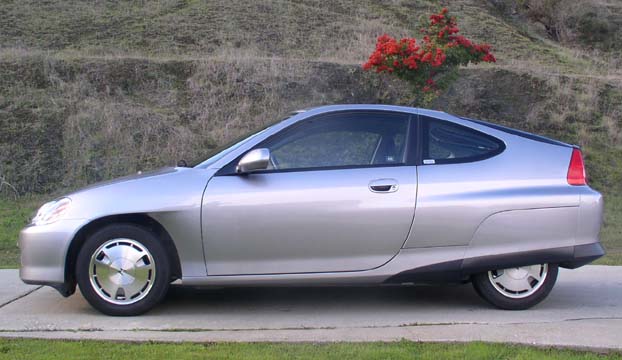
1972 Honda Civic CVCCs got 40-48 MPG with bad gas, poor machining, lousy oil and inferior materials (compared to nowadays). Where is all the superior technology now? Forget about mandated safety and emissions regulations, that can't possibly make it that horrible, comparatively. It's been forty five years since then, for cryin' out loud. Fuel mileage/gal should be over 100 easy.
Sorry for going so far off-thread.
Sorry for going so far off-thread.
Veteran Member
Joined: Mar 2015
Posts: 7,420
Likes: 2,396
From: Hastings
2Cv from the 1940's got 64MPG.....
And went 0-40 in 40 seconds.
Explained beautifully here: The Citroen 2CV: cleantech from the 1940s - LOW-TECH MAGAZINE
And went 0-40 in 40 seconds.
Explained beautifully here: The Citroen 2CV: cleantech from the 1940s - LOW-TECH MAGAZINE

Member
Joined: Sep 2017
Posts: 83
Likes: 11
From: York, Pennsylvania
1972 Honda Civic CVCCs got 40-48 MPG with bad gas, poor machining, lousy oil and inferior materials (compared to nowadays). Where is all the superior technology now? Forget about mandated safety and emissions regulations, that can't possibly make it that horrible, comparatively. It's been forty five years since then, for cryin' out loud. Fuel mileage/gal should be over 100 easy.
Sorry for going so far off-thread.
Sorry for going so far off-thread.
And today we get excited when a hybrid breaks 40MPG... We've lost something over the years...


Veteran Member
Joined: Oct 2015
Posts: 2,181
Likes: 656
From: Carolinas
Look at deaths/serious injuries per accident.
Look at the comfort of a car.
Also something to think about, MPG is speed dependent. Taking that old Japanese car wound out at speed it isn't getting 40MPG...where as a modern car can cruise at 80MPH with reasonable MPG.

Veteran Member
Joined: Mar 2015
Posts: 7,420
Likes: 2,396
From: Hastings
And $200 in Listerine and a lifetime of therapy.

Veteran Member
Joined: Jun 2013
Posts: 8,946
Likes: 4,747
From: USA
Gas was 35 cents per gallon too.
Veteran Member
Joined: Mar 2015
Posts: 7,420
Likes: 2,396
From: Hastings
I own a 70's Toyota in mint condition, it gives 6 MPG, and I suspect it would be more like 2mpg on the highway, because it has the aerodynamics of a brick. But I dont know because it cannot travel at highway speeds. So the actual mpg may even be 1. And its a 12 gallon tank. p.s. Speed limit in the 70's was 55mph.
Last edited by Queen and Country; Nov 8, 2017 at 09:58 AM.

Veteran Member
Joined: May 2013
Posts: 2,376
Likes: 699
From: Florida
Update:
I gave a couple of F-Types a good test drive (6 & 8 cylinders) and while they were both fabulous cars, I was not 100% convinced that they were 'better' cars than my 2007 XK.
One would think that after ten years of development, there would be absolutely no comparison between the two, however the 2007 XK was so well executed in its time, that even after a decade...it's still a force to be reckoned with.
Driving the XK is an experience like no other, and for that reason, I am staying with it. Maybe one day I will pursue an F-Type, but not today.
I gave a couple of F-Types a good test drive (6 & 8 cylinders) and while they were both fabulous cars, I was not 100% convinced that they were 'better' cars than my 2007 XK.
One would think that after ten years of development, there would be absolutely no comparison between the two, however the 2007 XK was so well executed in its time, that even after a decade...it's still a force to be reckoned with.
Driving the XK is an experience like no other, and for that reason, I am staying with it. Maybe one day I will pursue an F-Type, but not today.
Member
Joined: Sep 2017
Posts: 83
Likes: 11
From: York, Pennsylvania
True...but a buck back then is worth about $5.51 today, based on inflation, though that $0.35 gallon of gas would retail today for ~$1.90/gallon.
Veteran Member
Joined: Oct 2015
Posts: 2,181
Likes: 656
From: Carolinas
Exactly, holistic thinking takes time.
I own a 70's Toyota in mint condition, it gives 6 MPG, and I suspect it would be more like 2mpg on the highway, because it has the aerodynamics of a brick. But I dont know because it cannot travel at highway speeds. So the actual mpg may even be 1. And its a 12 gallon tank. p.s. Speed limit in the 70's was 55mph.
I own a 70's Toyota in mint condition, it gives 6 MPG, and I suspect it would be more like 2mpg on the highway, because it has the aerodynamics of a brick. But I dont know because it cannot travel at highway speeds. So the actual mpg may even be 1. And its a 12 gallon tank. p.s. Speed limit in the 70's was 55mph.
In a similar manner, the EPA must update to account for real world conditions changing, speed limits, road design, and the intentional planning to bring cars to a stop by off sync stop lights in shopping areas.
These changes have resulted in a need for a different testing standard, and the standard changes.
This means you cannot apples to apples compare the rated MPG of a 2015 in 2015 to the rated MPG of a 1972 in 2015.
Especially some of the smaller engined cars(Such as the 2CV) that can't even make it to the speeds a modern EPA test subjects cars to. (70MPH last I looked at it.)
The first time I ever saw a 2CV was a beautiful example in Monte Carlo, it was parked in a row of more modern "expensive" cars; and its age yet perfect condition caused it to stand out from the Ferrari's, Bently's, and Lamborghini's that was surrounded by.
Another factor is the performance, you can get better MPG by narrowing down the power band to just enough power to maintain cruise speed, but not enough power to accelerate beyond that. By running unrestricted at full throttle, efficiency is increased. Of course this results in anemic acceleration.
Even a modern Ford Van can go 0-60MPH at a rate to match former vintage sports cars.
I see that automobiles have come a very long way since the 1970's. Comfort, speed, performance. When I start up my X150 there isn't the same smell of an older car that doesn't have catalytic converters either.
Should Cee Jay wish to have an average speed of 15MPH, then he could be getting over 5,000MPG based on results in the Shell Eco Marathon.
MPG improvements are to some extent being lost in the standard of our high speed congested living.
http://www.shell.com/energy-and-inno...s-gasoline.pdf
From 42MPG in a not very crash safe civic to 5,000MPG in a not very crash safe prototype. Yes, I'd say the modern crash safety and our desire for comfort plays a big role in things "not advancing", they have advanced; just we use those advances to also see increased performance, safety, and comfort. Strip those away, and you find out just how far we've come.
Last edited by Tervuren; Nov 9, 2017 at 09:56 PM.



Veteran Member
Joined: Jun 2013
Posts: 8,946
Likes: 4,747
From: USA
Well now, if you going to apply logic, then game over man.
Veteran Member
Joined: Mar 2015
Posts: 7,420
Likes: 2,396
From: Hastings
I am convinced after 2 decades of designing holistically and unconventionally, folks actually prefer the easier approach of excelling in one parameter, even at the cost of failing in all others. In your world an example would be a flashlight that has twice the lumens over 1/10th the area. Where the extreme contrast actually makes you see less.
Veteran Member
Joined: Oct 2015
Posts: 2,181
Likes: 656
From: Carolinas
I am convinced after 2 decades of designing holistically and unconventionally, folks actually prefer the easier approach of excelling in one parameter, even at the cost of failing in all others. In your world an example would be a flashlight that has twice the lumens over 1/10th the area. Where the extreme contrast actually makes you see less.
However the real difficulty lies in a zooming fixture that continues to provide a pleasing source across a variety of beam angles.
In a similar vein this is why high quality cameras come with fixed or narrow zoom lenses. The cost of keeping that quality across a wide range of focal lengths is monumentally expensive from the precision multi piece optics required.
However, rather than your exact example being true, there is another in that recent LED house and architectural lights have put a premium on raw output over getting the light where it is actually wanted, and keeping it from where it isn't. Ideally in a house light you do not see the source at all, otherwise known as glare. Most of what is out there is taking a high out put fixture and inefficiently cutting off source rather than creating a source that focuses output within the desired area to start with.
In a 50 foot convention center ceiling, imagine how badly dazzling it would be you saw every single light fixture in the ceiling. Instead a narrower set is desirable to keep the eye on the exhibition instead of competing with the ceiling.
That high power flashlight is going to be harder to achieve. I suppose this is part of what drives its desirability even if it is a sacrifice of usefulness in most situations beyond shooting.