


No alcohol mileage test.


Senior Member
Joined: Jan 2012
Posts: 880
Likes: 182
From: BC Canada

However, Jag recommends a minimum of 91 octane to avoid problems with detonation. If an increased load (acceleration or hill-climbing) is placed on the engine, the computer advances the timing to avoid or minimize detonation. It's much more likely to do that on 87 octane but, in any event, the result is that the fuel is burned less efficiently.
All I meant to say was that an increase of 4 mpg between E10 and plain gas seems just as likely as getting 30 mpg in a 4.2L Jag running on 87 octane. Hey, you may both be right!

Veteran Member
Joined: Feb 2011
Posts: 9,733
Likes: 2,203
From: on-the-edge
They're not 25% bigger, just 20%, apparently.
https://www.wolframalpha.com/input/?...ial+gal+to+gal
https://www.wolframalpha.com/input/?...ial+gal+to+gal
At 128 and 160 fluid ounces, but easier to think of using quarts since the numbers
are then 32 and 40 ounces respectively,
the 32 ounce difference between a US gallon and an Imperial gallon is 25 percent
of the US gallon
therefore, the Imperial gallon is larger by 25 percent of the US gallon
or, the US gallon is smaller by 20 percent of the Imperial gallon
It's all in how the sentence is stated or parsed.

Veteran Member
Joined: Feb 2011
Posts: 9,733
Likes: 2,203
From: on-the-edge
at low speed going downhill driving like a granny.
fuel economy: gas mileage, fuel efficiency & fuel mileage calculator
30 mpg US = 36 mpg Imperial = 7.84 liters/100 km
those conversions are before the "greater than" consideration
Veteran Member
Joined: Feb 2011
Posts: 9,733
Likes: 2,203
From: on-the-edge
semantics
"retards less" or "advances more"
yields the same result as "absolute instantaneous ignition advance"
of course, one can datalog with odb-ii and observe two absolutes for
two tanks of different fuel:
LTFT
ignition advance
additional data that would be useful would be:
speed
air mass
Jaguar does not reveal its advance strategy in detail, but it is known that
many ecu implementations have large limits on advance and advance
is controlled by, and adapted by, knock sensor activity amongst
other factors.
We do know however that JF member XJREngineer has stated that in his
personal knowledge Jaguar adopted less than optimal advance parameters
on the AJ6. His products are intended to reverse that choice.
Given that the considerations regarding tolerance drift and warranty claims
would not disappear with the V8, it is reasonable to believe that those
considerations were also applied to the V8 development program.
"retards less" or "advances more"
yields the same result as "absolute instantaneous ignition advance"
of course, one can datalog with odb-ii and observe two absolutes for
two tanks of different fuel:
LTFT
ignition advance
additional data that would be useful would be:
speed
air mass
Jaguar does not reveal its advance strategy in detail, but it is known that
many ecu implementations have large limits on advance and advance
is controlled by, and adapted by, knock sensor activity amongst
other factors.
We do know however that JF member XJREngineer has stated that in his
personal knowledge Jaguar adopted less than optimal advance parameters
on the AJ6. His products are intended to reverse that choice.
Given that the considerations regarding tolerance drift and warranty claims
would not disappear with the V8, it is reasonable to believe that those
considerations were also applied to the V8 development program.
Last edited by plums; Apr 10, 2014 at 02:32 PM.
Veteran Member
Joined: Feb 2011
Posts: 9,733
Likes: 2,203
From: on-the-edge
How did you derive the 30+ mpg number?
Did you do a manual conversion from L/100km as displayed on the onboard computer?
Or, did you flip the onboard computer to a mpg reading?
If the second, then it's time for an experiment.
Obtain both the L/100km and mpg readings from the onboard computer display
and post them here.
Why?
Because your S-Type is a Canadian market vehicle and imperial gallons was
the standard of measure in Canada prior to the introduction of metric measure.
Jaguar may very well have programmed the mpg display to use imperial gallons
as that would be the expected gallon measure in Canada.
Veteran Member
Joined: Feb 2011
Posts: 9,733
Likes: 2,203
From: on-the-edge
Wow there sure are a lot of people trying to come up with something?
...
The winter versus spring gas formulation is not one I had heard could have an effect on mileage? What's the basis for this idea? Remember, there's no alcohol at all 365 days a year in this particular fuel.
...
The winter versus spring gas formulation is not one I had heard could have an effect on mileage? What's the basis for this idea? Remember, there's no alcohol at all 365 days a year in this particular fuel.
THE TRUTH ABOUT WINTER GAS. BY JOHN HUNKINS
...
As specified by state law, reformulated winter gas contains any number of lighter, lower-boiling-point hydrocarbons (butane, propane, etc.) that just so happen to have an excellent octane value. Added to this may be any number of oxygen-bearing ether compounds (MTBE, ETBE, ethanol) that improve emissions and also have a relatively high octane blending value.
...
"The oxygen-bearing compounds displace fuel components, so it takes more fuel to get the job done. Normal gasoline has a stoichiometric ratio of 14.7:1, reformulated winter fuel runs between 14.3 and 14.4:1," says Mitch Markusich.
As specified by state law, reformulated winter gas contains any number of lighter, lower-boiling-point hydrocarbons (butane, propane, etc.) that just so happen to have an excellent octane value. Added to this may be any number of oxygen-bearing ether compounds (MTBE, ETBE, ethanol) that improve emissions and also have a relatively high octane blending value.
...
"The oxygen-bearing compounds displace fuel components, so it takes more fuel to get the job done. Normal gasoline has a stoichiometric ratio of 14.7:1, reformulated winter fuel runs between 14.3 and 14.4:1," says Mitch Markusich.
As for "coming up with something", your tests need to be repeated for you to trust your
own results. Long trips on the same route would be good.
I have done this and posted in the past about it.
It is pretty much the same result in that higher octane and ethanol free fuel are both
contributing factors. I have done the tests for each factor alone and combined.
The uphill/downhill factor is isolated by considering the outbound and return trips to
be separate tests only comparable with other matching outbound/inbound legs.
Each leg is a 5 hour leg at 80+ mph cruise without cruise control. The trip computer
is reset at the beginning of each leg just as the vehicle hits cruising speed and is
left alone after that even for rest stops.
The consistent real world result is that greatest mpg is using premium
ethanol free fuel.
Given that the greater $/gallon is offset by the greater mpg, I now only use
premium ethanol free fuel.
BTW, fuel science predicts that your outcome is the expected outcome.

Veteran Member


Joined: May 2009
Posts: 27,546
Likes: 4,924
From: Yorkshire, England
The percentage would depend on which was being used as the base.
At 128 and 160 fluid ounces, but easier to think of using quarts since the numbers
are then 32 and 40 ounces respectively,
the 32 ounce difference between a US gallon and an Imperial gallon is 25 percent
of the US gallon
therefore, the Imperial gallon is larger by 25 percent of the US gallon
or, the US gallon is smaller by 20 percent of the Imperial gallon
It's all in how the sentence is stated or parsed.
At 128 and 160 fluid ounces, but easier to think of using quarts since the numbers
are then 32 and 40 ounces respectively,
the 32 ounce difference between a US gallon and an Imperial gallon is 25 percent
of the US gallon
therefore, the Imperial gallon is larger by 25 percent of the US gallon
or, the US gallon is smaller by 20 percent of the Imperial gallon
It's all in how the sentence is stated or parsed.
US and UK fluid ounces are not the same (I didn't know this). Then there are different numbers of each per gallon as well (I knew this part). It surprised me.
Senior Member
Joined: Jan 2012
Posts: 880
Likes: 182
From: BC Canada

Thread Starter
|
Veteran Member
Joined: Jun 2010
Posts: 3,135
Likes: 227
From: No. NJ
Thread Gone Wild!
Gallons, imperial gallons, litres, liters, octane irrelevancies, retard, advance! 
I wish I could drink that alcohol that didn't end up in my gas tank right about now ...
I wish I could drink that alcohol that didn't end up in my gas tank right about now ...





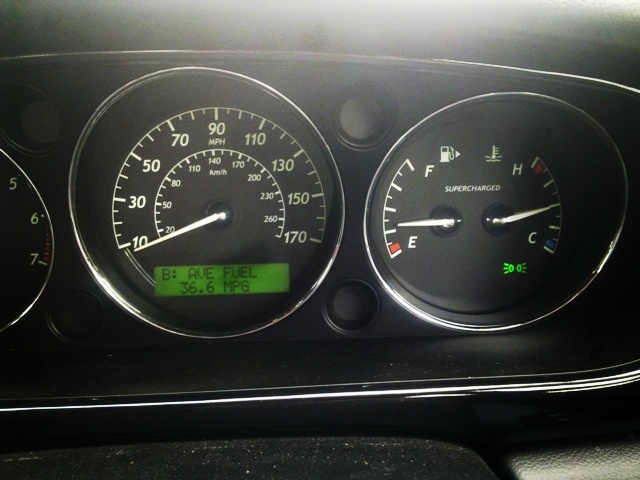


Thread Starter
|
Veteran Member
Joined: Jun 2010
Posts: 3,135
Likes: 227
From: No. NJ
Or misunderstood.

BTW you used unbelievable I used surprised.
So you think the car reported erroneously?
I'd characterize you judgements in this thread as dismissive whereas I'd like to figure this out.
I agree only that I'm surprised by the huge difference. Calling it unbelievable doesn't help to explain anything.


Joined: Oct 2009
Posts: 11,057
Likes: 2,272
From: Perth Ontario Canada
Yes, that's the message I've been trying to convey. The calculators on the car are more of an on-board entertainment device rather than something that's intended to give accurate, credible results.
Claims that a switch between two fuels returning a 15% difference are instantly suspect- even if the person doesn't know the science behind it. If this were a typical result of using E10 vs. pure gas- why has their not been huge public outcry?
Claims that a switch between two fuels returning a 15% difference are instantly suspect- even if the person doesn't know the science behind it. If this were a typical result of using E10 vs. pure gas- why has their not been huge public outcry?
Thread Starter
|
Veteran Member
Joined: Jun 2010
Posts: 3,135
Likes: 227
From: No. NJ
I checked the mileage info early on in the car's ownership and I never notice any issues. That was on a trip from Atlanta where I bought the car to NJ over a two day run. I did have to change out the the gas levels senders in the beginning though.
But I can't see how changing the type of gas would make it erroneous so if it is then it's always reading wrong which is pretty depressing because most of the time the mileage numbers suck which would mean it's even worse!
OK I don't know when I'll have a chance but I'll check over 1/4 tank of gas on a local drive then on a long highway drive and see if the calculated average equals what the pump and odometer report.
Or should I ignore the odometer too?
But I can't see how changing the type of gas would make it erroneous so if it is then it's always reading wrong which is pretty depressing because most of the time the mileage numbers suck which would mean it's even worse!
OK I don't know when I'll have a chance but I'll check over 1/4 tank of gas on a local drive then on a long highway drive and see if the calculated average equals what the pump and odometer report.
Or should I ignore the odometer too?
Joined: Oct 2009
Posts: 11,057
Likes: 2,272
From: Perth Ontario Canada
Keep this in mind when doing additional testing.: