When you click on links to various merchants on this site and make a purchase, this can result in this site earning a commission. Affiliate programs and affiliations include, but are not limited to, the eBay Partner Network.
Did we get an idea of costs on the TCP intake? I saw some numbers thrown around but I don't think anything final.
$700 is a laughable no, but half that would be reasonable for a quality euro aftermarket part
I thought I saw on their website it was advertised around $300..
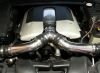
I personally think it's mediocre, there's too much silicone... It has a barely noticeable aluminum tube on the driver side, 6"-7" piece on the passenger side, the y-pipe that is also barely noticeable and then just silicone tubing.. Why not just make the entire bend from aluminum and just use silicon couplers verse tubing... but that's just my opinion
I thought I saw on their website it was advertised around $300..
I personally think it's mediocre, there's too much silicone... It has a barely noticeable aluminum tube on the driver side, 6"-7" piece on the passenger side, the y-pipe that is also barely noticeable and then just silicone tubing.. Why not just make the entire bend from aluminum and just use silicon couplers verse tubing... but that's just my opinion
From everything I've read and heard about intakes, the worst material for intake tubing is metal, especially knowing that our engine bay temperatures promote heat soak. The plastic takes longer to heat up and cools down quicker so maybe it's the same with the silicone and that's why they used a disproportionate amount compared to the aluminum.
I thought I saw on their website it was advertised around $300..
I personally think it's mediocre, there's too much silicone... It has a barely noticeable aluminum tube on the driver side, 6"-7" piece on the passenger side, the y-pipe that is also barely noticeable and then just silicone tubing.. Why not just make the entire bend from aluminum and just use silicon couplers verse tubing... but that's just my opinion
Originally Posted by 2010 Kyanite XFR
From everything I've read and heard about intakes, the worst material for intake tubing is metal, especially knowing that our engine bay temperatures promote heat soak. The plastic takes longer to heat up and cools down quicker so maybe it's the same with the silicone and that's why they used a disproportionate amount compared to the aluminum.
The silicone must also act as a vibration dampener, as the corrugated arms of the factory plastic intake did. Performance is not always pretty..lol
From everything I've read and heard about intakes, the worst material for intake tubing is metal, especially knowing that our engine bay temperatures promote heat soak. The plastic takes longer to heat up and cools down quicker so maybe it's the same with the silicone and that's why they used a disproportionate amount compared to the aluminum.
Even if it held more heat, it's not going to effect HP especially at WOT. It'll only heat theair minimally if your in stop & go traffic. Plastic or aluminum it's nothing that will increase/decrease performance on this car with where the intake is. I ran an aluminum intake on a twin turbo vehicle, winter/summer here in PHX and I could put my hand on the aluminum piping right after a drive and it was not hot. On this car unless you relocate it somehow I feel it's just what's more appealing to the eye. The main benefit of any aftermarket intake for XFR is the fact that it will be true 3" verse the stock and getting rid of the resonators for better sound a better flow. For a boosted vehicle, aluminum in my opinion is also a safer route to go. If the silicone acted better than aluminum, why not just make the whole thing from silicone? I know this debate can go on for century's so it is what is
From everything I've read and heard about intakes, the worst material for intake tubing is metal, especially knowing that our engine bay temperatures promote heat soak. The plastic takes longer to heat up and cools down quicker so maybe it's the same with the silicone and that's why they used a disproportionate amount compared to the aluminum.
I do not see it being an issue. After our discussions last month about lowering the IAT and my experimenting it dawned on me that IAT sensor is most likely after the throttle body. Which makes sense on a supercharged car the intake temps will always increase when compressed it doesn't really matter what you do with the intake before the throttle body the ECU is not looking at that temperature. Even this morning when it was 45° outside the IATs were 30° above ambient just like they were when the ambient temperature was 90° in October.
Making the intercooler more efficient or at the very least figuring out how to insulate the cold lines of the intercooler would probably gain us something or as mentioned before swapping out to a better cooling system for the intercooler would definitely help. Unfortunately we have no room to do that in the engine bay short of throwing it in the trunk i am not sure where else it would go.
Insulating the entire intake only helped minimize heat soak of the intake when idle it did nothing for the IATs while driving.
Here is real data, I took the TCP intake off, put stock on and just came back from a cruise and the Intake temp stayed around 97 and under boost it dropped, then coming off throttle it would go up. But pretty steady at 97. So I parked and it reached 104. This was with stock intake.
Next day I installed the TCP aluminum intake and followed the same procedure. The car when on steady throttle stayed around 91, which is 6 degrees better than the stock intake and when parked, it sat at 100 vs 104 with stock.
This could all be due to the weather, temps are in the 50's. So in cooler weather the aluminum TCP wins this battle. I will be very curious when the weather here reaches 100 degrees if the outcome is the same.
Even if it held more heat, it's not going to effect HP especially at WOT. It'll only heat theair minimally if your in stop & go traffic. Plastic or aluminum it's nothing that will increase/decrease performance on this car with where the intake is. I ran an aluminum intake on a twin turbo vehicle, winter/summer here in PHX and I could put my hand on the aluminum piping right after a drive and it was not hot. On this car unless you relocate it somehow I feel it's just what's more appealing to the eye. The main benefit of any aftermarket intake for XFR is the fact that it will be true 3" verse the stock and getting rid of the resonators for better sound a better flow. For a boosted vehicle, aluminum in my opinion is also a safer route to go. If the silicone acted better than aluminum, why not just make the whole thing from silicone? I know this debate can go on for century's so it is what is
I agree that for "boost" Aluminum is the way to go, but there is no boost going through the intake tract of the AJ133, only air under vacuum. And at this point unless you do your own hi flo intake in aluminum, or the $700 Fluid Motor Union one off, TCP ($300) and factory($380) are the only options. And since I'm upgrading from factory???..LOL
Last edited by Bigg Will; Jan 10, 2015 at 02:22 PM.
Here is real data, I took the TCP intake off, put stock on and just came back from a cruise and the Intake temp stayed around 97 and under boost it dropped, then coming off throttle it would go up. But pretty steady at 97. So I parked and it reached 104. This was with stock intake.
Next day I installed the TCP aluminum intake and followed the same procedure. The car when on steady throttle stayed around 91, which is 6 degrees better than the stock intake and when parked, it sat at 100 vs 104 with stock.
This could all be due to the weather, temps are in the 50's. So in cooler weather the aluminum TCP wins this battle. I will be very curious when the weather here reaches 100 degrees if the outcome is the same.
Stock TCP
Appreciate the scientific numbers. I was speaking in theory as I haven't ever changed a complete intake. And since you have both to compare, it's something I can't do. Love the forum for these things.
Now I'm thinking I should get a TCP intake because it won't hurt temps and it will sound and look better :-)
I agree that for "boost" Aluminum is the way to go, but there is no boost going through the intake tract of the AJ133, only air under vacuum. And at this point unless you do your own hi flo intake in aluminum, or the $700 Fluid Motor Union one off, TCP ($300) and factory($380) are the only options. And since I'm upgrading from factory???..LOL
Ya like I said getting away from factory intake is still better cause of the resonators and the fact the it will be a true 3". Also, I am building an all aluminum one 😁, just haven't had time. Hoping to have it done this month I already bought the parts.
Any noticeable HP/TQ gain on your dashcommand app from the TCP intake? Any other thoughts on comparing the stock to TCP intake? Thanks, appreciate the info.
I built a custom intake pretty much the same as the TCP one - I noticed big differences but agree that the metal piping is an issue in this engine bay. I wrapped it in metal heat wrap which made a difference but without that you couldn't touch the metal pipe after a run because it was so hot! Looking at alternatives, possibly plastic piping?
chXFS, Any noticeable HP/TQ gain on your dashcommand app from the TCP intake? Any other thoughts on comparing the stock to TCP intake? Thanks, appreciate the info.
Yes, don't know how reliable it is, but showed 25 HP/ 30 TQ and 2psi more vac. Can't say I got more boost cause it stayed at 11psi as the max. As far as the HP and TQ its reading from the ECU so that would translate to much less rear wheel numbers.
Got mine in, took about an hour, an easy install with a little jockying and lube..lol But the car LOVES IT! And with just a hint of supercharger whine..
Will, when you say the car loves it what do you mean? Throttle response? Revs quicker? Pulls better at certain rpm?
Taking off the resonators from the stock intake should increase the intake noise and supercharger whine, but was curious whether you hear it more at all rpm levels and throttle positions or is it just more pronounced at WOT?
Last edited by 2010 Kyanite XFR; Jan 25, 2015 at 08:03 PM.
Hello all,
I have a 2012 Range Rover fullsize and i was wondering if the TCP intake would be compatible? I know it is the same AJ133 supercharged 5.0L as you all have.
Any advice from you guru's would be much appreciated.
Hello all,
I have a 2012 Range Rover fullsize and i was wondering if the TCP intake would be compatible? I know it is the same AJ133 supercharged 5.0L as you all have.
Any advice from you guru's would be much appreciated.
Thanks,
Taylor
The stock 5L Supercharged XF intake layout is much different than the Range Rovers so the TCP intake would not fit. The XF stock intake Y's down into one throttle body and it appears that the Range Rover has two separate throttle bodies. Email them for more info and they might be able to put one together for you.
Last edited by Blackcoog; Jan 26, 2015 at 08:31 AM.
Will, when you say the car loves it what do you mean? Throttle response? Revs quicker? Pulls better at certain rpm?
Taking off the resonators from the stock intake should increase the intake noise and supercharger whine, but was curious whether you hear it more at all rpm levels and throttle positions or is it just more pronounced at WOT?
This whine is heard at the top of the gears, where before I heard nothing and the car pulls stronger from about 2000 rpm on. My belief is the Jag intake was a compromise to fit the budget not performance, so the 5.0 SC intake is the same as the 5.0 NA intake even though the SC makes 100+ more HP.
We now have a viable replacement for the stock intake, that cost less and flows better than stock and is READY TO BE INSTALLED out the box.
My stock intake is now the backup.