When you click on links to various merchants on this site and make a purchase, this can result in this site earning a commission. Affiliate programs and affiliations include, but are not limited to, the eBay Partner Network.
Re: 2008 Jaguar XJ VDP
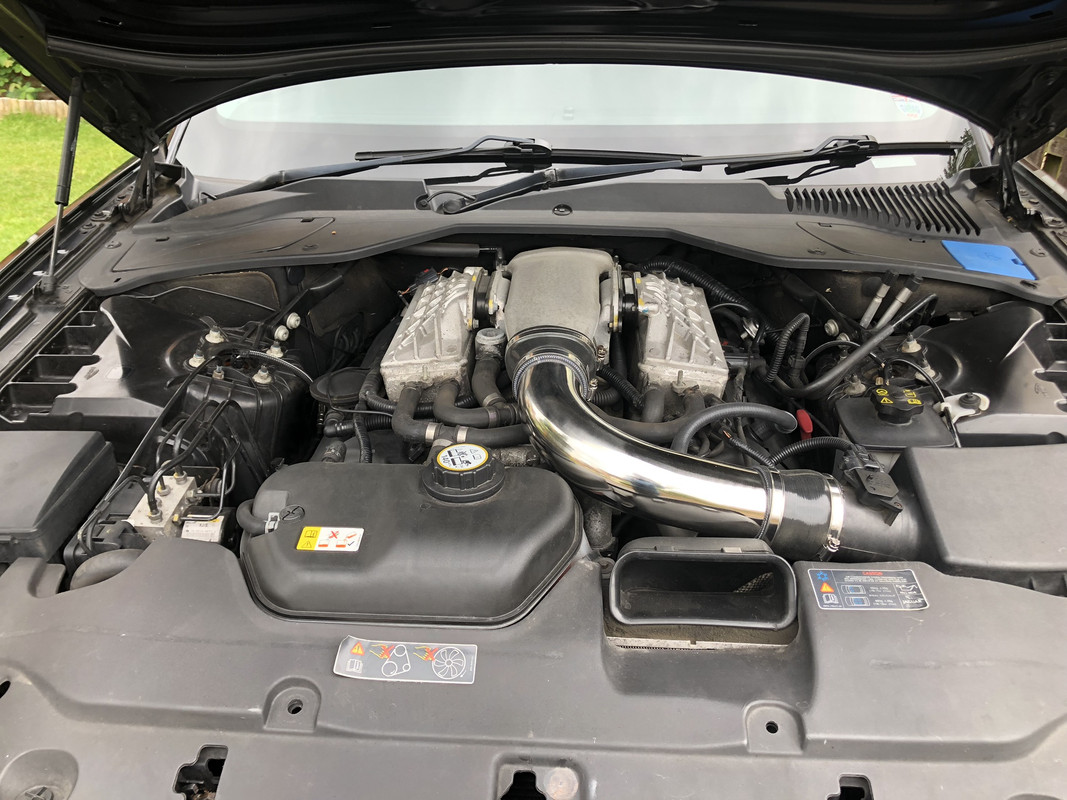
Just curious, how many of you feel that the hard black plastic engine cover is more decorative than truly useful. I have recently had to order a Secondary Air Injection System vacuum hose assy C2C22716 because the the minute tubing was fried and brittle and snapped to the touch under that cover. I can just imagine what the intense engine heat is doing to all the wiring and electronic components under that cover. I'm inclined to just leave it off or cut it to allow more air circulation. fried by the heat
Just for looks and they do trap heat. I've had a lot of Supercharged GM cars and the first thing you do is remove their engine cover, they trap all of that heat from the blower and do exactly as you've seen to the components underneath. I actually had mine off of the Jag the other day when doing some service and ended up putting it back on, but might just leave it off then next time I need to remove it.
I may modify it to allow better air movement like trimming back the sides, front and back. may even symmetrically drill 1/2 breather holes in the top panels. May just leave it off too.
Lots of us over on the F-Type sub-forum leave it off.
At least one of the posters (Unhingd) has taken temp measurements with and without the cover on and the top of the engine was significantly cooler without the cover.
More so on an F-Type due to the heat generated by the supercharger, that extra heat exacerbates one of the F-Types main issues, plastic engine coolant pipes and tubes under and near the supercharger cracking/splitting/leaking.
The cover serves three purposes - appearance, sound deadening and protection from water - although all three are subjective especially the last one.
Off; it's there mostly for sound attenuation, unfortunately it is also a good heat insulator, thus the charge intake is warmer and less dense, reducing power.



 Engine cover or not











 i m h o


