When you click on links to various merchants on this site and make a purchase, this can result in this site earning a commission. Affiliate programs and affiliations include, but are not limited to, the eBay Partner Network.
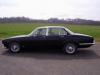
I have a lovely 95 XJ6, and a very dear old friend that runs a shop just swapped out about every suspension part, front and rear, that you can do. When he got to the rear upper shock bushings, which as you probably know is the most annoying thing in the world with these cars when they go (clack clack clack rattle rattle), he simply couldn't find a way to replace them without removing the gas tank.
That didn't sound right to me, and I've spent time here trying to verify it, and it doesn't appear that the tank needs to come out. Can someone (I'm looking at you, Jose haha), type out or point me to some clear instructions that I can give him so he can get this last step completed? I've been driving the car for a few days, and with everything he replaced it drives like a new car, except for the clack clack clack.
He's getting up in age and mainly works on American cars, but he's a hell of a mechanic and he still does it 7 days a week. Some simple, clear instructions that I can hand off to him will enable him to knock it out quickly. Many thanks!
(and I sure hope it's not true that the tank has to come out!)
Thanks for that. I'm wondering since it's a 97 (308) if that would apply to a 95/96 (300)? I've had a few x308 cars and I'm pretty sure there were some major changes to the suspension?
The rear suspension on the X308 is identical to the X300. Only the front suspension had major changes on the later car.
The fuel tank is in the boot so not sure how removing that would help? May be your mechanic thinks there is access to the top of the shock behind the tank? You can tell him there isn't. Everything is from underneath.
That's fantastic news. He can definitely handle taking the shocks out and putting the bushings on.
I have a set of bushings I bought from Rock Auto months ago, I assume they are correct but can someone point me to a US supplier with the precise part number, the best kind to get, just to make sure before I take it back to him?
Ok, I'm glad you posted that. He doesn't have a lift, which certainly hasn't stopped him from doing shock replacements for the last 40 years, but the video that was posted above makes it seem like it's literally 15 minutes per side to pull the shock/spring out. Are you saying that in that video, that tech is doing what you're talking about?
Sorry for my ignorance on this stuff...I can change alternators, starters, hoses, electrical, etc but I don't know bunk about suspensions. Like I mentioned in the original post, my friend has already replaced almost every component to the suspension, front and back, other than the springs and shocks, because they are still in good shape. The car has 90k gentle, well maintained miles on it.
I'm wondering if I should just take this to my other shop that is more of a full service facility, instead of asking him to mess with this on his knees/back. He will want to do it, because that's the kind of mechanic he is (2 man shop, in his 70s and still doing it day and night 7 days a week because he loves it), but I don't want to burden him with this if it's not going to be a quick in/out with the springs/shocks.
Any opinions on that aspect of it would be greatly appreciated.
Thanks much for that. I'm in Ohio and have used Welsh many times over the last 25 years.
Those are spring dampers, not upper rear shock bushings, right? The upper bushings are definitely the issue with the clack clack clack, but I'm thinking that since they are going to have to remove both shocks to do them, I might as well get all of the other spring dampers and such so they can do it all at once.
So I guess I'm asking, if you were going to pull the shocks and springs completely out of your x300/x308 to do the upper rear bushings, what is the complete list of parts that you would replace while doing that job?
Again sorry for my lack of knowledge on suspensions. And no, this 95 XJ6 doesn't have ride leveling.
Thanks again for any advice, to all of you.
Last edited by skepcat67; Mar 3, 2024 at 12:41 PM.
The large 'donut' pictured is called a SPRING ISOLATOR.
That should be replaced at the same time as the upper damper (shock) bushes.
P.S.
I did not see the mechanic (in the video) remove the bolts from the lower plate like I do so I can't say that is the way he did it.
Like I stated, I use a small scissor jack to press between the top of the hub and the /rubber 'bump-stop' to help widen the gap between the body and lower control arm.
Last edited by motorcarman; Mar 3, 2024 at 01:17 PM.
Hi again guys, how about this for some irony. My fuel pump just died haha! It's the original pump so I knew it was gonna go at some point. It's just so funny (or is it?) that we have been talking about not taking the tank out, and now the tank is definitely coming out. Unbelievable lol.
Thanks for the advice on everything, I'll order those spring dampers and make sure I have the right rear upper bushings, and order a fuel pump.
I'm guessing I should get something a bit better than all of the $40 fuel pumps on eBay, or are there any under $100 that are good quality? I'm seeing Carter, Delphi and Denso at both eBay and Rock Auto?
Last edited by skepcat67; Mar 3, 2024 at 04:44 PM.
The fuel pump is enabled by the crankshaft position sensor , this sensor very rarely gives a code of P0335
The fuel pump relay is provided a closing ground by the ECU which is powered by the left engine bay fuse box and the large # 5 ECU control relay ( which itself powers the fuel injectors )
When you first rotate the key it will run for 3 seconds only , once the CKPS sees engine rotation it will enable the fuel pump for the rest of your drive , safety design
Inertia / crash switch ? trips for no reason
Fuse # 10 right heelboard fuse box for fuel pump relay control
Relay swapping in the right heelboard fuse box to power the # 10 fuse
Really appreciate that info. If I can describe what happened today, maybe that will shed some light.
I've had this car for 7 years. It never fails to instantly start. I got it back from my mechanic early this past week, and drove it every day with no problems, back and forth from the ICU hospital that my wife has been in for 75 days. Lots of starts, short trips, turn off, start again, go a few miles, shut off, start again, etc.
Last night running home to feed our dogs, I went to gently pass someone, going from maybe 35 mph...when it got to about 45/50, it kind of started to stutter or lurch a bit. The rest of the trip home was about 40 mph.
This morning, as I'm pulling into the hospital (10 mile drive from home), it just hard stalls, like instantly. I kind of glide into a parking spot, turn it off and wait about 15 minutes to make sure it's going to start again. It just cranked and cranked, no start. I sat for another 5 minutes or so, it finally started, ran for maybe 60 seconds, and hard stalled again.
I went into the hospital and came out about 2 hours later to see if it would start. First time, crank crank, no start. Wait 5 minutes, it barely started, and I was able to pull it 100 yards to a more open area of the parking lot to make room for a tow truck. When I got to that spot, I just let it idle...it did for maybe another minute, and hard stalled again. I went back in the hospital for awhile, came back out, started first time fairly easily, ran for maybe a minute, hard stall. I waited a bit and tried a few times to start it again, waiting 5 minutes between tries, and it never started again.
This is on a full tank of gas I put in this past Tuesday, same place right by our house I get gas from for years.
I've had many of these cars over the years, and this sure seems like a bad fuel pump, but I would love to find out it's not.
Sorry for the very long note, but I really appreciate all of the help from all of you and I just want to get this right. Either way it's being towed right now to the full service shop I mentioned earlier.
Last edited by skepcat67; Mar 3, 2024 at 07:38 PM.
You can jumper the inertia switch with a paper clip on the 2 White wires of the connector
This switch will always be on the car's right side
This wlil be a pic someone made from a right hand steering model
cmng
There are some relays you can swap that power the ECU , this enables fuel pump
Right engine bay fuse box # 9 and large right # 5 ECU control relay
Swapping options : left engine bay fuse box ( only runs the car horn ) Jaguar # T4N15704 / 40 amp and the large headlights , fog , AC clutch as long as they have the same part # LNA6706AA
Good to keep in your trunk as a tool with a spare crankshaft position sensor , this is a generic part available at the auto parts store ( 10 or 8 mm socket on a extension at the front crankshaft flywhel ) . You don't need to remove the pulley belts , no adjustment or timing required
To directly power the fuel pump at all times
This will drain the battery with the keys in your pocket , so plan accordingly
Socket 3 ( power ) to 5 ( pump ) , best with medium gauge wire with blade type wire ends , the automotive parts store can make one for you with a kit box behind the cash register
Yes, that has been my experience with close to a dozen Jaguar sedans (and two XK8) over the years. This one has 91k miles, and like I mentioned above, it's never failed to instantly start, and then suddenly it won't, or when it does, it only runs for a minute or so.
Please remind me, is there a filter in the gas tank, as well as one in the actual fuel line? It's been a long time since I've dealt with this.
Either way the shop is testing the pump and everything else to verify if it's the pump or something else.
The pump will run for 3 seconds only with key rotation
again the ECU has to be powered to do this ( 2 relays ) and fuse # 10 of the right heelboard fuse box and the relay in it's corner must close
The fuel pressure is charged / trapped in the fuel lines ( different then cylinder priming ) by the fuel pressure regulator , a check valve inside the fuel pump and the fuel injectors.



 1995 XJ6 Rear Upper Shock Bushings