When you click on links to various merchants on this site and make a purchase, this can result in this site earning a commission. Affiliate programs and affiliations include, but are not limited to, the eBay Partner Network.
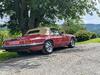
I'm in the process of reviving my XJ40 that I recently got, after it's been sitting for 20-25 years. It's a 1990 US Spec w/ the 4.0.
Have some questions that I figured would best be answered in one thread:
The fluid for the SLS/PAS seems to be a little low, what's the go-to replacement fluid for the system these days? I've seen some posts about HMSO, or maybe LHM+? Preferably something easy to get here in the US.
The power/auto seatbelts work sometimes. I've seen some references to a control module around the cluster or steering column that can get cracked solder joints over time? They worked perfectly when i first hooked power to it after getting it home, then stopped working, but then started working again today after letting the car sit out in the sun with all the windows up for most of the day so the interior was very hot... which definitely makes me lean towards the cracked solder joints in the module problem.
The brakes are.... not the best. I haven't driven it much further than around the field a couple of times, but it almost feels like I don't have power assistance. Accumulator problem? Power steering and the SLS seems to be working. Could just be the rusty rotors, but the pedal feels like manual brakes.
The AC Compressor is seized, is it the same as an X300 compressor, or an earlier XJ40? Or should I be looking specifically for a 1990-1994 4.0 XJ6 compressor.
Sometimes the transmission warning light stays on for a minute or two after starting the car, other times it doesn't come on at all (past the key-on bulb check). I've read this could be a relay problem?
Sometimes when parked with the light switch off, the parking/underhood lights sometimes flick on and off, with a noticeable clicking sound, presumably another relay issue.
The transmission mount is pretty wasted judging by the feel of things, and it looks very similar to my XJS trans mount. Presumably the spring is in good shape and I just need the foam/rubber pieces. Anyone have the part numbers or know of a kit from SNG or anywhere?
Source of lug nuts and/or studs? A few on the back are pretty messed up.
RC9YC Spark plugs? A few of the plug wires are cracked, so I figure I should do the plugs whenever I do those. I'd be open to a nicer/better iridium plug if anyone has any recommendations.
Get all the part numbers you need by entering the VIN into this site and then googling the numbers to source suppliers. Rock auto is a good source too.
The A/C is an R12 system so keep in mind the X300 compressor is an R134A system. Again part number for correct type is by VIN, not year.
Some time ago- not very recently- I was able to source the mineral oil for the suspension under the Mercedes brand (but not from them of course).
Your brake system may just need bled. If theres an accumulator problem I think the brake light stays on. There are threads on bleeding the brakes, and all or most of the other questions youre asking. Also check the stickies up at the top.
My 3 all have the Sanden compressors, but Rock auto lists a Harrison too. Im not sure where that one would be used.
Those attack seatbelts are a pain. I have a plan to swap mine out for the later passive ones-- once I get time...
Good luck.
That's a great-looking XJ40! My '89 had the same teardrop wheels and I always liked them.
Regarding hydraulic mineral oil, I have not used it in an XJ40, but in almost every other vehicle I work on that needs hydraulic mineral oil I use Pentosin CHF 11S, which is a synthetic fluid. You might do some research to see if it might be suitable. Amazon carries it (prices vary wildly so shop around). Another option may be Shell AeroShell 41, if it is still available. One other thought: many bicycles today use hydraulic mineral oil in their disc brake systems. I haven't looked into the specifics of the fluids used but they might be suitable also.
Regarding spark plugs, my experience with two different XJ40s is that the AJ6 engine likes the original cheap copper Champions just fine and doesn't seem to run any better on more expensive precious-metal plugs like platinums and iridiums or plugs with multiple ground electrodes instead of one. I recommend that you save your money for other parts and supplies you will need and go with the Champion RCY9C / 344. Rock Auto usually has them for less than $2.00 each.
Here are some links to reference documents that may be helpful in your XJ40 journey:
Some time ago- not very recently- I was able to source the mineral oil for the suspension under the Mercedes brand (but not from them of course).
Your brake system may just need bled. If theres an accumulator problem I think the brake light stays on. There are threads on bleeding the brakes, and all or most of the other questions youre asking. Also check the stickies up at the top.
My 3 all have the Sanden compressors, but Rock auto lists a Harrison too. Im not sure where that one would be used.
Those attack seatbelts are a pain. I have a plan to swap mine out for the later passive ones-- once I get time...
Good luck.
I suppose I could order the green LHM+ or whatever Rolls Royce/Bentley derivatives called it, it's available through places like Flying Spares for like ~$20/Liter shipped.
I tried bleeding the brakes today, but no real change to be honest. The BRAKE light doesn't stay on, so I don't think it's the accumulator. Still doesn't feel like I have power assistance... but the brakes are decent enough that I'll have to investigate it at a future date.
Originally Posted by Don B
Hi BuckleSpring,
That's a great-looking XJ40! My '89 had the same teardrop wheels and I always liked them.
Regarding hydraulic mineral oil, I have not used it in an XJ40, but in almost every other vehicle I work on that needs hydraulic mineral oil I use Pentosin CHF 11S, which is a synthetic fluid. You might do some research to see if it might be suitable. Amazon carries it (prices vary wildly so shop around). Another option may be Shell AeroShell 41, if it is still available. One other thought: many bicycles today use hydraulic mineral oil in their disc brake systems. I haven't looked into the specifics of the fluids used but they might be suitable also.
Regarding spark plugs, my experience with two different XJ40s is that the AJ6 engine likes the original cheap copper Champions just fine and doesn't seem to run any better on more expensive precious-metal plugs like platinums and iridiums or plugs with multiple ground electrodes instead of one. I recommend that you save your money for other parts and supplies you will need and go with the Champion RCY9C / 344. Rock Auto usually has them for less than $2.00 each.
Here are some links to reference documents that may be helpful in your XJ40 journey:
Regarding the hydraulic fluid, I'd ideally like to just add to what's already there (and have some spare to top off with if I discover a leak that hasn't made itself known as of yet). I'll have to do some research and see if CHF11S is compatible, I have a can of it sitting around from some Saab stuff. Worst case scenario, I'll order the actual green Rolls Royce/Citroen stuff from Flying Spares or similar.
I figured as much on the plugs, I ran the RC9YC's in my XJR6, as everyone swore by them in that application. Maybe I'll try out the Bosch Iridiums or NGK Platinums or something if they're on sale when I get around to it. I pulled the plugs today for a basic inspection while I'm waiting on my plug wires from FCP to arrive, and weirdly they were the RC12YC, which are several steps hotter heat range than the 9's, weirdly. Kind of carbon-y, but hard to make any determination since it's been sitting for so long and probably has only ran for maybe an hour and a half total since I've had it.
I tried bleeding the brakes today, but no real change to be honest. The BRAKE light doesn't stay on, so I don't think it's the accumulator. Still doesn't feel like I have power assistance... but the brakes are decent enough that I'll have to investigate it at a future date.
I can't recall the details, but for the 1990 there may be a special procedure for bleeding the rears that requires running the electric ABS pump. You might check the archives at the Jag-Lovers forum.
Accumulator failure is very, very common at this age. I don't know what options are available today, but for many years there was an AC Delco accumulator that fit and worked on at least some model year cars and was significanlty less expensive than the Ate/Jaguar options.
Originally Posted by BuckleSpring
I figured as much on the plugs, I ran the RC9YC's in my XJR6, as everyone swore by them in that application. Maybe I'll try out the Bosch Iridiums or NGK Platinums or something if they're on sale when I get around to it. I pulled the plugs today for a basic inspection while I'm waiting on my plug wires from FCP to arrive, and weirdly they were the RC12YC, which are several steps hotter heat range than the 9's, weirdly. Kind of carbon-y, but hard to make any determination since it's been sitting for so long and probably has only ran for maybe an hour and a half total since I've had it.
The RC12YC was used in the later AJ16 engine in the X300. My recollection is that the early AJ16s came with the RC9YCC (CC for double copper), but that at some point Jaguar revised the specification to the RC12YCC to resolve some common issue like rough idle. The "CC" plugs are no longer available, but the regular "C" part numbers are presumably similar double-copper technology and are what we've all used for many years.
I like your stable. Before the photo loaded, I thought the 505 was a signal red XJ40. Regardless, another classic 80s! I loved the time when it was easy to identify a car in a lot, and not hidden behind something twice the height.
With some new plug wires and a few other odds and ends, it it definitely running significantly better.
Still has a vacuum leak I've not been able to find as of yet, which greatly hampers off-idle throttle response, and low-rpm power. Fairly certain it's coming from the underside of the intake manifold, I can almost hear something around the #3 Intake runner. I was debating on deleting the Air pump, which would give me a lot more access to the alternator, and the various vacuum lines under the intake.
Definitely still no action from the ABS. I got it up to a bit of speed today, jammed on the brakes, and was able to lock them up... No ABS intervention. I will try a bleed and fresh fluid to see if that changes anything, but I doubt it.
Seatbelts are iffy, sometimes they work, sometimes they don't. Haven't been able to find out why as of yet. Considering looking into the seatbelt recall at the dealer once I get all of the other aspects of the car sorted and fully roadworthy.
For some reason, someone chopped the brake wear sensors and just left the wiring hanging in the suspension... I have no idea why, considering they're less than a few bucks a piece to just replace. Did find the nice surprise of new front brakes (calipers, pads, rotors) after I removed the wheels to inspect everything.
Easy way to find a vacuum leak.
Get a 3 foot length of clear 1/8-inch or 3/16 internal size flexible fuel hose.
Place one end very near your ear and move the other end around the area of the suspected vacuum leak.
Any leak will produce a quite loud " hiss" in your ear.
Way ahead of you on that one, didn't find anything. It's definitely not coming from the HVAC system, or the Cruise Control system, I capped both and it made no change. Definitely coming from somewhere under the intake
A very common leak point is the underside of the plastic air intake elbow where it meets the accordion hose to the throttle body. If the hose clamp is overtightened, the plastic pipe collapses slightly, creating a leak. Hard to see unless you disconnect the accordion hose from the TB and remove the pipe and accordion hose assembly.
A very common leak point is the underside of the plastic air intake elbow where it meets the accordion hose to the throttle body. If the hose clamp is overtightened, the plastic pipe collapses slightly, creating a leak. Hard to see unless you disconnect the accordion hose from the TB and remove the pipe and accordion hose assembly.
Cheers,
Don
Unfortunately no dice on finding cracks in the elbow or the accordion boot. However, I'm taking the opportunity, while it's off, to clean out the decades of crankcase deposit buildup.
Assuming no change after reassembling this, I believe I'm left with the two hoses that run from the small breather(?) vacuum manifold assembly on top to somewhere under the intake:
You aren't necessarily looking for cracks or tears in the elbow or accordion boot ...although that would be a problem ....a vacuum leak is created by over tightening the clamp, which slightly collapses and distorts the elbow allowing unmetered air into the engine, i.e. vacuum leak. When the clamp is released, the elbow returns to shape.
You aren't necessarily looking for cracks or tears in the elbow or accordion boot ...although that would be a problem ....a vacuum leak is created by over tightening the clamp, which slightly collapses and distorts the elbow allowing unmetered air into the engine, i.e. vacuum leak. When the clamp is released, the elbow returns to shape.
Reassembled and no change, unfortunately. Tried different clamp pressures as well, unfortunately no change there either.
Your elbow seems to look fine. On one of our XJ40s, I think the '93, the air intake elbow had developed a "memory" and was slightly gapped from the accordion hose even before the clamp began to tighten. Somehow I found a way to reinforce the air intake pipe to prevent it from collapsing. I seem to recall pop-riveting a reinforcement plate on the inside at the area where it wanted to bend inward, but I can't remember for certain.
The crankcase breather hoses you mention are another common source of vacuum leaks. The metal component in your photo is a coolant-heated breather restrictor that controls the rate of air flow from the crankcase into the intake. The small hoses carry coolant to and from the restrictor.
Other common vacuum leak points are the oil filler cap seal, oil dipstick tube seal, oil filler pipe seal, camshaft cover gasket, intake manifold gaskets, secondary air injection plumbing, etc. Smoke tests may help you track down any leaks.
The EGR port on the underside of the intake manifold, behind the throttle body, clogs up with carbon and causes running issues.
Does your car have any diagnostic trouble codes stored? To check, turn the ignition ON but do not start the engine. Press the VCM button on the trip computer and watch for a message in the small odometer display window below the speedometer. Codes show up in the form of FF or Fuel Fail and two numerals, such as FF23 or Fuel Fail 23. Let us know if you get a code and we'll try to help (and will explain how to check for additional codes).
Your elbow seems to look fine. On one of our XJ40s, I think the '93, the air intake elbow had developed a "memory" and was slightly gapped from the accordion hose even before the clamp began to tighten. Somehow I found a way to reinforce the air intake pipe to prevent it from collapsing. I seem to recall pop-riveting a reinforcement plate on the inside at the area where it wanted to bend inward, but I can't remember for certain.
The crankcase breather hoses you mention are another common source of vacuum leaks. The metal component in your photo is a coolant-heated breather restrictor that controls the rate of air flow from the crankcase into the intake. The small hoses carry coolant to and from the restrictor.
Other common vacuum leak points are the oil filler cap seal, oil dipstick tube seal, oil filler pipe seal, camshaft cover gasket, intake manifold gaskets, secondary air injection plumbing, etc. Smoke tests may help you track down any leaks.
The EGR port on the underside of the intake manifold, behind the throttle body, clogs up with carbon and causes running issues.
Does your car have any diagnostic trouble codes stored? To check, turn the ignition ON but do not start the engine. Press the VCM button on the trip computer and watch for a message in the small odometer display window below the speedometer. Codes show up in the form of FF or Fuel Fail and two numerals, such as FF23 or Fuel Fail 23. Let us know if you get a code and we'll try to help (and will explain how to check for additional codes).
Cheers,
Don
Negative on the codes, just one for the cut brake rear brake wear sensor.
Double checked my fitment with the accordion boot and everything looked fine.
Clamped off a few of the crankcase breather hoses with it running and it made no difference. The cam cover isn't leaking oil, so presumably no vac leak there, although I guess it's not impossible.
SAI/Smog pump is a possibility, I was leaning towards deleting that system entirely and freeing up space and simplifying the engine bay. Intake manifold gasket is also a possibility, but no discernible change while running when spraying the mating surface with starting fluid while it was running... A smoke tester would definitely verify that though.
I will clean the EGR port the next day I have good weather and time, and see if it changes anything.
If no change from cleaning the EGR Port, I will see what needs to be done to remove the SAI/Smog Pump system in its entirety, as I was going to probably do that whether or not it was the source of the vacuum issue I'm having anyway. Perhaps I will order a smoke machine this week.
Another thing that occurred to me is that the Idle Control Valve body tends to clog up with carbon so the pintle on the stepper motor cannot close completely, allowing unmetered air into the intake. The stepper motor is Part 2 in this diagram. You can remove the valve assembly from the manifold, then carefully remove the stepper motor and clean the valve and motor pintle. I recall that there is some risk of the pintle threading all the way out of the motor if the electrical power is left connected. I also recall that someone had discovered that a stepper motor from a Renault Megane was the same part, and I successfully replaced the motor on our '93 with the Megane part found inexpensively on ebay. I think you can find information on this in the archives at the Jag-Lovers forum.
Another thing that occurred to me is that the Idle Control Valve body tends to clog up with carbon so the pintle on the stepper motor cannot close completely, allowing unmetered air into the intake. The stepper motor is Part 2 in this diagram. You can remove the valve assembly from the manifold, then carefully remove the stepper motor and clean the valve and motor pintle. I recall that there is some risk of the pintle threading all the way out of the motor if the electrical power is left connected. I also recall that someone had discovered that a stepper motor from a Renault Megane was the same part, and I successfully replaced the motor on our '93 with the Megane part found inexpensively on ebay. I think you can find information on this in the archives at the Jag-Lovers forum.
It was definitely not sealing properly, judging by the ring of deposit buildup on the pintle.
I cleaned everything in my ultrasonic and it came out looking like new.
As a result, it is slightly improved.
It can now pull itself up a small slope from a standstill, which it definitely couldn't do before, although it still certainly isn't happy about it. Idle is maybe 25% better. Throttle response is maybe 35% better.
Obviously this isn't the root cause of what's going on, but it definitely needed doing anyway.
Last edited by BuckleSpring; Jun 16, 2025 at 02:42 PM.
Another idea occurred to me. With your rubber hose stethoscope, listen to all the fuel injector O-rings. XJ40s are now old enough that those O-rings are failing.
Also, could fuel pressure be part of the issue? There's no easy access point on an XJ40 fuel system to insert a fuel pressure gauge without special metric fittings, but an easy check of the fuel pressure regulator is to carefully pull off the rubber vacuum hose and inspect for wet fuel at the hose nipple on the regulator, which indicates diaphragm failure. If you don't see any wet fuel, start the engine briefly then check again. Very common for the diaphragm in the FPR to fail.
In addition to cleaning the EGR port under the intake manifold, you can test the EGR valve to see if it holds vacuum, and test the EGR solenoid to confirm that it opens and closes.
Have you changed the fuel filter? Any chance of contaminated fuel?





 XJ40 Revival Questions