When you click on links to various merchants on this site and make a purchase, this can result in this site earning a commission. Affiliate programs and affiliations include, but are not limited to, the eBay Partner Network.
The cams are almost identical I don't think you would see the difference with your eyes, you would need to measure. The 6.0L has 0.001" less lift and the side of the camshaft is slightly more sloped to open the valve slower.
So which cams are better? 5.3HE or 6.0?
I hold in my hands both types. It looks like the same.
.
xjsv12,, almost impossible to see cam changes by eyeball, unless there is radical change!
i do know that driving the pre-HE they would easily run past 6000'6500 rpm, still pulling !
and some of the HE cars start to run out of steam at 5500 rpm. same displacment 5.3L.
never had much time with a 6.0L but most likely they fall off above 4500rpm.
you guys think your V12 is a race engine , but it is NOT.
there primary purpose is smooth quiet driving ,with reasonable MPG.
nobody needs 12 cylinders or rpm's above 2500rpm , most people drive less rpm than that 99% of the time .
and i like torque more often than big HP, respectable HP occurs above 100MPH ++, torque you need from a stop or passing anywhere from 40mph till like 80/90mph , MOST time things are over by then.
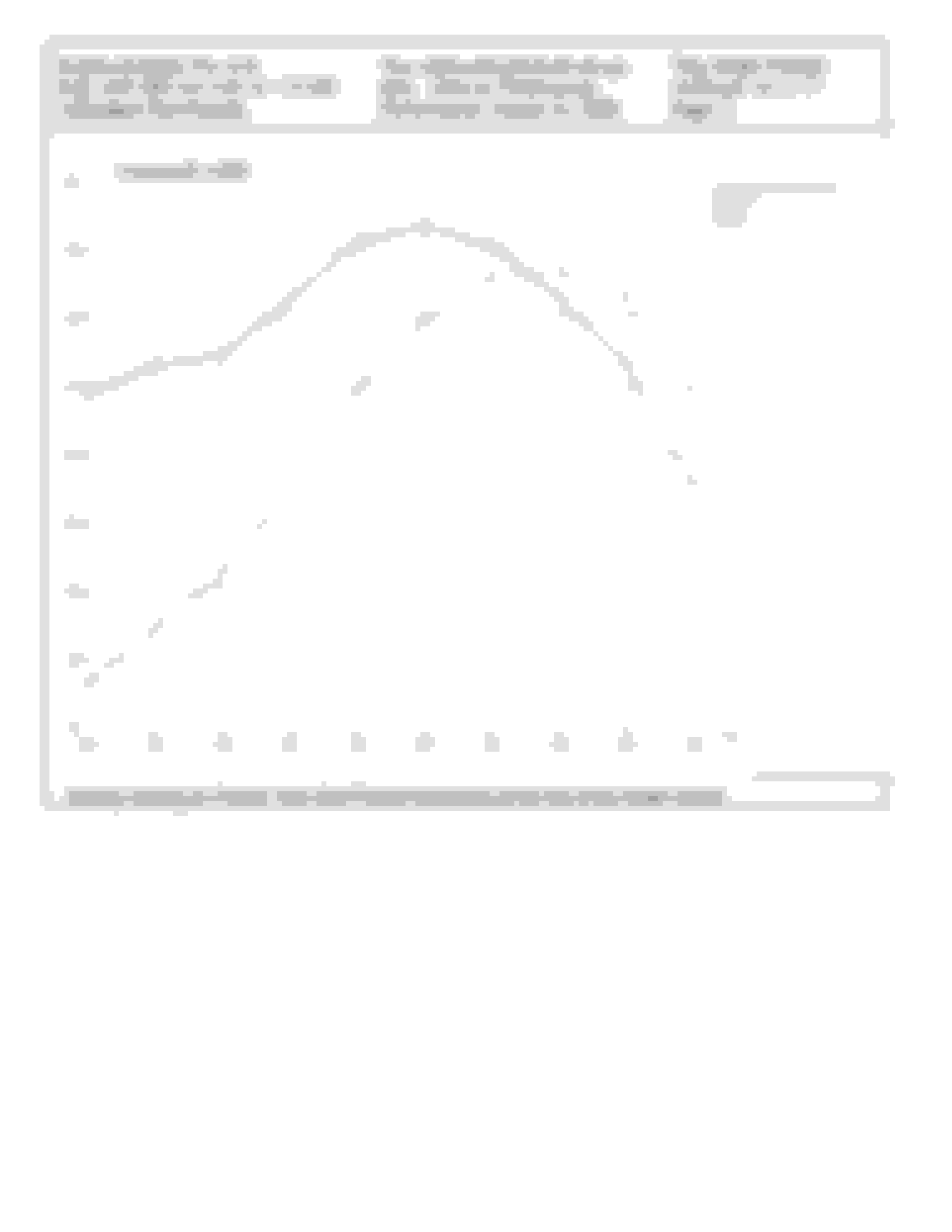
Yep Ron, that's why I'm building my 6.7L with stock cams. Peak torque will be 530fl/lb at 2000rpm with 300ft/lb still at 5500rpm. Making 150hp at 1500rpm and 300hp at 3000rpm.
Peak power however will be somewhere between 360-420hp at 4500-5500rpm depending on a few variables like intake manifolds etc.
Warren I think torque and hp are the same at 5252rpm. So if you have 300ft/lbs at 5500rpm you will have about 300hp at 5500rpm. Per the calculator 300 x 5500 / 5252 = 314hp. Please correct me if I’m wrong. I’m thinking you will have more hp and torque at the top end.
Last edited by LongJohn; Oct 31, 2017 at 04:18 PM.
Warren I think torque and hp are the same at 5252rpm. So if you have 300ft/lbs at 5500rpm you will have about 300hp at 5500rpm. Per the calculator 300 x 5500 / 5252 = 314hp. Please correct me if I’m wrong. I’m thinking you will have more hp and torque at the top end.
john, that formula is OK with a petrol/gas engine!
how would it work with a diesel engine that cant make 5252 rpm?
300HP & torque around 700ft.lbs, at 2400rpm.
also a Tesla dyno tested at 950 ft lb torque at 45 mph at the wheels.
some of those old theory formula need to be changed .
Ron you can’t change relationship between hp and ft/lbs torque. The formula is therefore fixed. It works fine for diesel, electric, steam and anything else.
Your diesel example 700 ft/lbs x 2400rpm / 5252 = 320hp.
Warren I think torque and hp are the same at 5252rpm. So if you have 300ft/lbs at 5500rpm you will have about 300hp at 5500rpm. Per the calculator 300 x 5500 / 5252 = 314hp. Please correct me if I’m wrong. I’m thinking you will have more hp and torque at the top end.
Yep you are correct power and torque at 5250 are about 340
Because I'm using stock valve train torque fall away 5000rpm.
Warren did you get your own copy of SportsCompact Dyno or is that chart from Norman? Does it allow you input and model intake manifold and exhaust systems?
I have the program, the data in that graph is with stock intake and exhaust manifolds but I have used my head flow data instead of the stock data. Although that head flow data was before I had the mutli-angle valve job, so flow would be slightly better.
Norm gave me all the basic parameters, which by the way when entered for 5.3L produce power and torque within a few % of what the factory claim.
It does not allow modeling of the exhaust, it has a drop down where you can pick from restrictive to tuned length headers. Intake allows for CFM and then has a drop down to pick from carbie to tuned FI.
Warren if you are using 30mm inlet ports the Wallace Racing calc shows the choke point for your bore and stroke as 4500rpm which ties up with the SportsCompact simulation.
Does SportsCompact allow you to select LSX style inlet runners?
I saw a workshop here making tapered and tuned length runners for an old Pontiac V8. Circa 100mm long ally tube angle with flange bolted onto the inlet port. At the other end another a flanged was bolted and o ringed (not welded because they said it distorted too much) into an ally box with throttle body. Interesting part was 3D printed plastic tapered and curved trumpets that were joined to the ally tube inside the box. They said the length and taper was calculated using a computer program.
I used that calculator to estimate what port size I needed, the actual choke point which is at the valve guide is a little smaller than 30mm2 because of the guide boss.
No LSx in the IM selection.
I will run stock IM initially just ported slightly. Plan is to build a fiberglass plenum for the stock runners. I will model the stock plenum so the glass one looks OEM but bigger, and deeper especially from the wall to 1 and 6 inlet.
That Engine simulation dyno graph is fascinating. I've been using Engine Analyzer Pro for my project. It helped me get my SBC powered Coupe in the mid 12's @111 MPH with a very mild camshaft.
Peak torque at 2000 RPM and falling from there suggests that the 6.7L v12 is severely constrained by the head flow. 2000 RPM is right above converter stall so this is not ideal. I would try the simulation again and add 10 to 12 degrees to the exhaust only and see if that wakes up the engine at higher RPM's.
I've attached a dyno sheet of my engine for fun... I've got a date with a real dyno in December for a professional tune and maybe the high 11's.
The cams the V12 are timed at 17/59 cams and my engine is close at 21/59 on the intake and 18/72 on the exhaust. My engine is just 6.6L
Last edited by icsamerica; Nov 3, 2017 at 07:41 AM.
I deliberated on this for a while before deciding on stock cam grind. Norm recommended I stick with stock grind. BMEP doesn't start to fall away until 3500rpm.
Most of my driving is open road 100-110km/h so this will make a great cruiser with effortless overtaking ability.
I did try playing with the cam timing and 38/70 74/34 increased power and moved up the RPM without adding lift.
This simulation is just changing the plenum, which is too small for the 5.3L and WAY too small for the 6.7L. Modifying the Intake is on the TODO list once I have the engine in and tuned.
Warren, this is some fascinating stuff! Ypu said the plenums are too small for a 5.3l? Can you explain? The diameter of the runners is the same or nearly the same as the heads have, so it can't be them. Is just the volume between runners ans throttle bodies too small? Just trying to understand
The runners being the same diameter as the port is a restriction. As you increase the length of a pipe you also increase the resistance and this causes a pressure drop. So flowing a head without the IM will always flow more CFM. When you bolt the IM on the flow drops.
BUT the intake is not a static flow and a smaller diameter IM runner will have the pulse in the runner moving faster. It kind of works like cars at a traffic light, as the light goes green ( intake valve opening) the traffic moves starting from the front until the last car in the line moves but this might be after the light has gone red (intake valve closing). The larger the diameter of the IM runner the slower the air will start moving.
Air is HEAVY at 20°C it weighs 1.2kg/m3 so that is 20kg of air per min at 600CFM
There are 2 main problems with the IM.
1) The plenum is too small
2) The distance from the entry of runner 1 & 6 is too close to the wall of the plenum, the rule of thumb is the distance should be no less than 1.7 times the ID of the runner. This restricts the flow into 1 and 6 making them run rich
i have been aware of the 5.3L small port/plenum chamber since 1994, the reason i had the manifolds and plenums opened up by Extrude honing with a nice smooth surface and removing some of humps and bumps from the raw casting!
back then there was very little info about Jaguar plenums,or any information about modifieng Jag V12s.
of course i'm using the flat chambered Pre-HE heads , with 3mm oversize inlet valves, and 2MM exhaust, port matched to the manifolds, and all casting flash in heads,bowls opened to match valve daimeter, back cut both inlets/exh, forged SS .
also when TWR was deep into racing the XJS, it cost the Jaguar factory close to a million dollars, to get just 500hp out of a 5.3L V12, and 3 years of the best R&D UK had to offer. but all power was way above 4500rpm , reaching into the 7500 area.
no torque atall down in the 2000/3500 area.
i have the head flow bench charts from Jaguar,( i'll try to find them), but way back then they used different methods of head calculations.
when CRANE did my performance cams for V12, they sent them with a disc, me being computor illeterete, could not in any way understand screen , they actually broke things down to MINUTES of each degree, scramble my brain for sure, NO explanations with the disc.
YES i lost the disc too. to many years ago, but talking with the head guy at crane, he said seat to seat timing was around 300 degrees both inlet and exhaust, lift which measured only ,410 thou.
driving the car torque peak is in the 4200/4500rpm, power falls off by 6500rpm.
it will go 7000 but there is nothing happening.
best dyno ever(one time) made 355 wheel HP, at 6500, but average HP about 335 WHP. anyones guess what flywheel would be?
and truthfully i was never really satisfied with the performance, i was brought up on SBC/BBC chevys , that anything you do makes more power.
BUT my take is warjon's will be great , mostly contributing to the long 6.0L stroke, all things considered!
as i remember DYno guy said the smoothest long flat curve he ever seen.