When you click on links to various merchants on this site and make a purchase, this can result in this site earning a commission. Affiliate programs and affiliations include, but are not limited to, the eBay Partner Network.
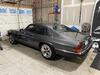
I have seen a few options for the Electronic Fuel Injection (EFI) system. Keep the original system with the air pump, new air control tubes and valves, Mobeck / Tekniske V12 electronic computer EFI kit and a couple of other brand of electronic controls with mapping and fuel injection heads. Part of me wants to keep the car system original or at the least the same look. Part of me wants to upgrade the systems for the best performance and most reliable. I have upgraded lighting and controls with automatic exterior on off control to eliminate the possibility of leaving the lights on and draining the battery, upgrading the Bosch alternator to a 125 amp, adding an electronic exciter on the alternator to start the charging the battery once the engine is started in lieu of increasing the throttle to start the charging the battery, dual electric cooling with time delay off on one of the fans to keep cooling the engine down after the engine has been shutdown, What are some of the suggestion on the upgrades to the operational systems that people have performed on the EFI System? Any suggestions regarding increasing the opening size of air intake butterfly, new high flow air filters and increasing the air intake cone maybe extending the intake cone towards the front grill for cooler air?
The rebuild of the car is taking a lot longer than I had expected. Thanks for everyone's experience and suggestions, It has helped a lot!
Hi Patrick, since your car is an '89 it already has the Marrelli ignition which is far superior to the previous Lucas system. We had an '88 H&E with the Lucas ignition and back then looked at a '90 which had Marrelli and there was a marked difference in performance. Our '88 was in good running condition as I had gone through rebuilding the distributor (vacuum capsule shot and mechanical advance stuck) synchronizing the throttles and more. But the '90 felt like it had 50 more cubic inches. True, the '88 ran on plus whereas the '90 used premium like your '89 does but the extra torque due to running more advance through the curve made a big difference. On your year car you can eliminate the air injection system without it having any impact on the ECU, as it only runs for a short time after each startup and isn't monitored like it is on my '94 and '95. The Mobeck system is great if you want to spend that kind of money, probably the best especially when added on top of some of his other parts. Megasquirt is capable to running the engine and can even accommodate EDIS with two 6 cyl coil packs. But in my opinion, which isn't worth too much, just keep what you have and make sure it's in good running order.
Probably one of the more bang for the buck mods would be to do something with the exhaust as that vintage still has some pretty stuffed down pipes and cats causing a lot of restriction. For a good look at what is available for worthwhile mods go to AJ6 engineering and look at their offerings as well as the info he has on the V12, it's well worth the read.
If you really want a performer you can't beat the 6.0l with the 4L60e and 3.54 gearset in the rear. There is no comparison, beats the 5.3l 3spd 2.88 geared cars by a long shot. Much more fun to drive.
Also, if you haven't already, grab Kirby Palms' XJS help ebook, lots of good info there too.
The EFI is very reliable in factory form, I really see no need to change it.
The throttles are plenty big enough already, they can easily support 500hp. A larger throttle can improve power at very high revs, in the V12's case that has been shown to above 7000 rpm before any difference is measurable. If you have the original transmission it will have come apart long before those sorts of revs.
Roger Bywater has just published a new book about the V12, and he describes how various systems were designed and many falicies people hold about the V12. One is intake size, the standard intake can provide plenty of air for the engine, it isn't a restriction. Bigger trumpets don't flow any more air, but they are noiser.
The air intakes are where they are because hot air improves fuel economy and idle quality by helping vapourize the fuel. As the vehicle speed increases, so does the airflow through the engine bay until at highway speed the temperature airflow is only slightly above ambient. So you automatically get power at higher speed and economy at low speed, which is where you are most likely need each attribute.
For filters, I would stick to the Mann brand. They are very high quality and flow quite well which providing good filtration. The K&N filters generally provide quite poor filtration. One of the members on one of the other forums used to manage a major oil companies race team and they tested all the filters to see what worked best. They found Mann was the best. He described a K&N as only effective at keeping out "boulders" and said it was only slightly better than no filter at all.
For filters, I would stick to the Mann brand. They are very high quality and flow quite well which providing good filtration. The K&N filters generally provide quite poor filtration. One of the members on one of the other forums used to manage a major oil companies race team and they tested all the filters to see what worked best. They found Mann was the best. He described a K&N as only effective at keeping out "boulders" and said it was only slightly better than no filter at all.
How true, K&N did a lot of marketing for their product with false advertising. I have somewhere a document that shows testing done on K&N and just how bad they are. Basically just use a scarf or T-shirt and you'll get the same results or maybe even better. Pretty sad how some of us have been duped all these years since the early '80's.
I have purchased the stainless steel Bell exhaust system, eliminating the two CAT's on each side welded in hubs for the O2 sensors, with the two down pipes each side to one straight through pipe eliminating the first silencer to the mid-silencer in front of the rear wheels to a Simply Performance flow through resonator to an enlarged tailpipe with the original round flared design. Hopefully the exhaust sound will not be too loud.
Any thoughts on companies in the USA or the UK that can rebuild the fuel rail with newer high performance injectors, new fuel injection hoses, clean and paint the rail system, check spray pattern and balanced fuel injectors, etc.? Any recommended brand and model fuel injectors?
Mr Injector does rebuilds of standard OEM injectors and the rail.
I must emphasise though, that there is no point whatsoever in changing th injectors unless they will be part of an entire modern package, such as Mobec. My car runs perfectly on 40 year old injectors and the Lucas ignition.
Good decision on the Bell exhaust, it will be LOUD though without the middle boxes!
I was surprised how quiet mine was with the exhaust pipes disconnected at the exhaust manifolds, when i drove it from one garage, to another for motor and trans removal.
, What are some of the suggestion on the upgrades to the operational systems that people have performed on the EFI System? Any suggestions regarding increasing the opening size of air intake butterfly, new high flow air filters and increasing the air intake cone maybe extending the intake cone towards the front grill for cooler air?
In my experience air intake mods don't do much of anything.
Low restriction exhaust helps a little, not a lot.
By far the most successful bang-for-the-buck performance improvements I've made have been going from a 2.88 to 3.31 differential, minor mods to the TH400 better response, and an a/c compressor cut-out.
The rebuild of the car is taking a lot longer than I had expected.
Another option with the trans is to use a low gear set and a 2 speed stall converter. I came across someone a few years back that was selling just such a trans. He told me that a guy (now deceased) in CA sold him the kit. It consisted of a gearset from an ambulance which had a lower set of gears, a modified pump and 2 speed torque converter. He said that it made the biggest difference in transforming his XJS.
I know that the converter works well. I used to own a '63 Riviera that was heavily modified, fully ported heads, full length headers, dual quads, big cam and a '65 Buick T400 and switch pitch converter. I had a converter custom built with a 1400 low stall and 2400 high stall. It would flash more near 2800 under heavy acceleration. Made the T400 seem more like a 4spd. Had the stator switch wired to the brakes to unload the engine at a stop as well as a switch on the shifter to engage high stall at any time and hold it for any length of time. Had 315/40/20's out back under stock wheel wells and boy did it dig in and fly.
Very few people know about the switch-pitch converter and some don't like it because they don't understand it but works and works great, I know that for a fact. Combine that with a low gear set and your Jag will seem like a whole different animal.
It's a torque converter that gives two different stall speeds. The vanes inside are two position, electrically switched. For fast acceleration the higher stall speed is used, allowing the engine RPM to climb more easily. GM used them circa 1965-67 in certain models. Buick and Oldsmobile primarily, as I recall.
I don't know what it would take to make the conversion. It's more than just buying and installing the TC. I think the pumps are different and the oil passages in the case are different, plus the switchgear.
I've owned and driven cars with a switch pitch; it is a unique driving experience.
Please explain what this sort of converter is and what it does.
There's 4 components plus and extra oil passage to accomplish the job. Converter, input shaft, pump and solenoid. It seems like there may still be some sources for a conversion. It was mainly a Buick option. Started in '65 and I don't know if they continued to offer it with the new big block 430 in '67 or not. Mine was the ole' nailhead. Been 20+ years since I built that transmission, sold the car in '21 (which I regret to this day) never had any trouble with it.
The solenoid engages a second oil passage in the pump to change from low to high angle on the stator (if I remember correctly).
High stall was initiated by a micro switch on the throttle linkage from the factory. I had mine hooked to the brake light switch to unload the engine at stops because of the large cam as well as a switch on the shifter so I could hold stall for a length of time. Once your foot was of the brake high stall went away, so if I wanted a fast takeoff then I just held it on manually.
Can't really see them but those are 315's in the rear under stock wheel wells.
If you're going to all that work, why not put in a modern overdrive transmission? Something like the ZF 8 speed? I can't see the point of removing the TH400, spending lots of money sourcing obscure parts and ending up back with a 3 speed non-lockup transmission.
I disagree, for one it would be far less expensive and require no other modifications. It would not require an engine adapter, crossmember modification, driveshaft modification, ski slope modification, new shifer along with an external controller and associated wiring. What are we looking at, 6k or more in expenses?
A wide ratio gear set is something that is readily available. And the other components aren't that difficult.
Also, why would one really need an 8 speed? It's not like we have 2.0l bi-turbo that needs to be kept within it's puny little narrow 200 rpm power band that needs to shift 50 times a mile. I could see possibly using a 6 spd as they are more readily available, have a good track record and have after market support as far as controllers go. To me having an 8 spd is more for bragging rights than anything else.
As far as lockup goes, our '88 H&E gave us 22 mpg on the highway, which for what it was, is not really too bad. Our '99 XJR only beat that by 2 mpg. The star was our '04 XJ8 which would yield 29 mph highway.
The point is that for far less money one can have much improved performance without excessive expense and worrying about so many other necessary changes.
We all know that the cams in the v12 are a little much for a road car with the 2.88 gearset. Roger Bywater used to sell a cam that made 5hp less but had more midrange. Unfortunately it was hard to market because of the hp drop. I think most of us have gotten past the idea of peak hp as being the end all and have come to realize the more under the curve is far more desirable in the end. That being said, the higher stall or the switch pitch would allow the engine to operate, when wanted, in a more desirable rpm range to boost performance.
Yes, it would not be the most desirable solution but on a modest budget would transform the rather anemic performance of the car resulting in a much more pleasurable driving experience.
Part of the reason for an 8 speed is its compact, it is slightly smaller than the TH400 so no modification to the body is needed. Typical 6 speeds are a bit bigger. It's just an example of something that could be done and gain significant improvements in the process.
I myself wouldn't got the to work of taking a transmission out without doing a refresh to it while it was on the bench, and that's not cheap now. Similarly, finding 60 year old parts for the Buick in servicable condition isn't easy either. I had a 4L80E torque converter opened up and the friction material replaced in the lockup clutch and that was close to $600 to have done. Changing the converter seems like a lot of money and effort for not much gain. I personally find the TH400 has a huge gap between second and third, I'd like an intermediate gear there, and an overdrive of course. While I'm at it, a deeper first would be nice too, as we all know with the 2.88 rear the car isn't very fast off the line
Anything transmission is expensive to do now, especially if parts have to be be brought in from the US; it's much easier to get parts from Europe for me. So I wouldn't consider keeping the TH400 if failed and needed to be replaced.
I have to wonder if any and every TH400 can be modified for the switch pitch converter. The 400 was produced in umpteen sub-variations over the decades; lots of subtle changes. And as we know the Jaguar version was unique. I think it would sorta cool to have....especially, heh heh, if some previous owner had already gone thru the effort and expense
Anyhow, if desired, the old 400 can be made a bit more tolerable in the XJS quite easily with a mild shift kit, a modified kickdown circuit, ensuring the part-throttle kickdown works, and modifying the shifter for easier manual shifting.
I've driven many where the kickdown was inoperative..... and the WOT upshifts occurred so early that the engine never comes to a boil, so to speak.
I've driven many where the kickdown was inoperative..... and the WOT upshifts occurred so early that the engine never comes to a boil, so to speak.
The TH400 in my Daimler had a special governor, it would upshift at about 2400 rpm, just as the engine was starting to make power. I replaced it with one from an early 80's Suburban and it would hold gear to 5500 rpm.




 EFI Options