When you click on links to various merchants on this site and make a purchase, this can result in this site earning a commission. Affiliate programs and affiliations include, but are not limited to, the eBay Partner Network.
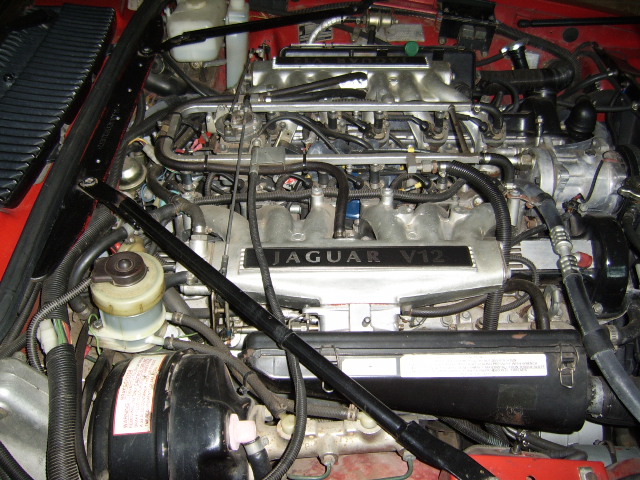
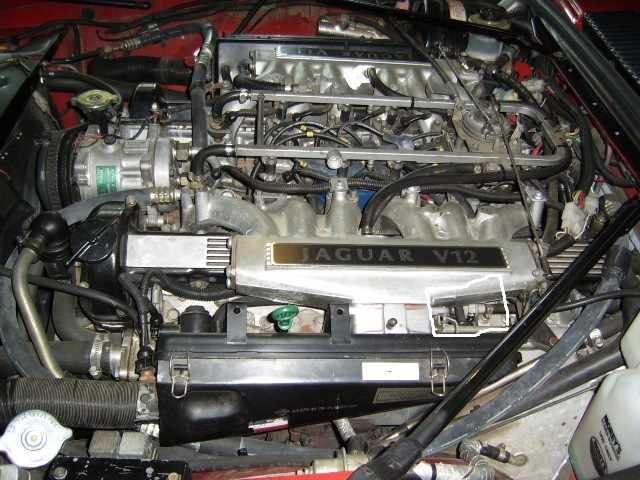
What I would really like, and haven't seen even in Haynes or the ROM (unless I missed it) is a diagram of the engine showing what is what. Mind you, it might get excessively complex....
True, there are some differences, as the date on the file is 1987, but most of it should be relevant. Or at least give me an idea of what I am looking at....
WE ARE THE BORGUAR. YOUR AUTOMOTIVE AND TECHNOLOGICAL DISTINCTIVENESS WILL BE ADDED TO OUR OWN. YOUR GARAGE WILL ADAPT TO SERVICE US. RESISTANCE IS FUTILE. (Sorry. Playing around a bit more when I really should be working....)
Neither - that was taken outside, on an overcast day. I may have massaged the white and black levels a little in post to bring out the details, however.
The Flight Station in the P3 is very intimidating at first glance but as you learn it, it's gets smaller and simpler. I simply took time to know what each component on the v-12 was, why it was there and how it interacted. How does one eat an elephant? One bite at a time!
YOUR GARAGE WILL ADAPT TO SERVICE US. RESISTANCE IS FUTILE.
(Sorry. Playing around a bit more when I really should be working....)
I haven't laughed so hard in months. Thank you.
I was a kid when the XJS came out and I remember seeing the older, wealthier people in town driving them so an XJS coupe is definitely one of the cars high on my bucket list. When I do finally clear a spot in the garage, it will have to be a v12, just because. Surely its no more confusing than the vacuum-actuated systems on my C3 Corvette.
That's what I gather from comments. The main difficulties are:
1. Having to remove several things to get at anything else.
2. Twelve of everything
3. Cramped spaces (related to 1. above)
Once you resign yourself to removing xx-number of things to reach the target, and working slowly and methodically, all the apprehension goes away. When working on a Jag V12, slower is faster, if you get what I mean.
A mechanic's mirror and those telescoping magnets will become your most valuable tools, though.....right up there with your 1/4" drive socket set
Once you resign yourself to removing xx-number of things to reach the target, and working slowly and methodically, all the apprehension goes away. When working on a Jag V12, slower is faster, if you get what I mean.
A mechanic's mirror and those telescoping magnets will become your most valuable tools, though.....right up there with your 1/4" drive socket set
Cheers
DD
I do get what you mean. Although part of the issue is knowing what needs to be removed and what doesn't. When accessing the dizzy, for example, would the cruise control link shaft need to be dismantled? And that thin pipe crossing between the intake manifolds too, I assume.... (Is that to equalize air pressure between the two manifolds, perhaps? Or does the big shiny chrome pipe at the back do that?)
Mechanic's mirror? Must keep an eye out for one. I assume it's sort of like a larger dentist's mirror. Not sure what telescoping magnets are, but will do a search. Magnets on the end of a selfie stick, perhaps. I have a (simple) socket set, but it's metric - however the wrenches in the Jaguar tool kit that came with the car are also labelled in metric, so I assume by 1992 most things in the car were metric sizes.
Magnet is a similar thing, just a magnet on the end instead of a mirror. Invaluable for retrieving dropped nuts, washers, etc.
The XJS is a mix of metric and inch sizes, handy to have both in your toolkit. I've recently come across some bolts inside the differential with metric strength designations and inch sized heads! No idea if the threads themselves are metric or inch, I have not measured.
And that thin pipe crossing between the intake manifolds too, I assume.... (Is that to equalize air pressure between the two manifolds, perhaps? Or does the big shiny chrome pipe at the back do that?).
That is the feed into the engine of the crankcase breather. This is a system that burns fumes from that part of the engine BELOW the pistons, thus keeping the environment cleaner. Those little pipes go to a place behind the B bank airbox, and that jojns the pipe coming out of the leading edge of the airbox which goes to the "pig's Snout" [(C) G Francis], which itself is the outlet from the crankcase for fumes.
Originally Posted by Some Day, Some Day
Mechanic's mirror? Must keep an eye out for one. I assume it's sort of like a larger dentist's mirror. Not sure what telescoping magnets are, but will do a search. Magnets on the end of a selfie stick, perhaps. I have a (simple) socket set, but it's metric - however the wrenches in the Jaguar tool kit that came with the car are also labelled in metric, so I assume by 1992 most things in the car were metric sizes.
Mirror guess: Correct
Magnet nearly so, it is on the end of a thin telescopic stick. ideal for retrieving sockets, nuts etc etc dropped into the maw of the V12.
Your car IS a mixture of metric and imperial, no doubt about that at all. Socket sets dirt cheap these days, just make sure the thing is made of Chrome Vanadium steel. But an undercover place to work is in my view essential - even if resourceful guys like Daim somehow manage without it. When you are cold, fed up and tired, you can just shut the door on the beast until it and you feel better!
Greg
That is the feed into the engine of the crankcase breather. This is a system that burns fumes from that part of the engine BELOW the pistons, thus keeping the environment cleaner. Those little pipes go to a place behind the B bank airbox, and that jojns the pipe coming out of the leading edge of the airbox which goes to the "pig's Snout" [(C) G Francis], which itself is the outlet from the crankcase for fumes.
Greg
So that thin pipe actually carries on inside the manifolds to join up with pipes leading into the engine somewhere, and to the crankcase somewhere else? So long as they're not full of fuel or coolant or something that won't like me removing one end to get at things below like the dizzy and leads. Although the main obstacle there is the cruise control unit.
Originally Posted by Greg in France
Mirror guess: Correct
Magnet nearly so, it is on the end of a thin telescopic stick. ideal for retrieving sockets, nuts etc etc dropped into the maw of the V12.
Your car IS a mixture of metric and imperial, no doubt about that at all. Socket sets dirt cheap these days, just make sure the thing is made of Chrome Vanadium steel. But an undercover place to work is in my view essential - even if resourceful guys like Daim somehow manage without it. When you are cold, fed up and tired, you can just shut the door on the beast until it and you feel better!
Greg
That's the tricky part - right now I don't have an undercover place to work on her. This is a situation I hope to change soon - within the year, ideally. However, I have discovered that there should be rental garages around, charging something like $3.00 an hour, and mechanics available for say $10.00 for ten minutes if you need a hand or get stuck. That might be something to look into. Though as I generally work seven days a week, time is a luxury.... (Incidentally, legally here apparently you're not allowed to have a friend [help] work on your car. Only the owner/user or a professional can....)
I just checked. My wrenches are labelled "drop-forged steel" and my socket handle at least is labelled "chrome vanadium" though the sockets themselves are not labelled with anything. I think Costco might carry non-metric sets, though they might be cheap Chinese junk. Failing that, I can always order from overseas.
Removing 'The Cruise' is a piece of Cake, the Bellows are only held in place by a Couple of Bolts and the Cable that operates it is held in place by a Couple of knurled adjusters that go on the Throttle Pedestal. (like they have on 'Push Bikes' to adjust the Gear Cables)
Once you've got the Cruise undone (15 Minutes Max) then you can tie the Cable out of the way.
When you look at the 'Cruise Bracket', you will see 3 Bolts but only undo the outside 2, unless you've got some sort of 'Death Wish' as that bolt is under pressure from the Air Con Gas.
The Hardest Part to take off is the Air Con Compressor, where the brackets have been machined to the nearest thou, which means that getting the Bolts in or out is a Nightmare!
Removing the Throttle Pedestal, isn't much fun either, where you will need to have as many Thin Fingers as 'Edward Scissor Hands' so probably best avoided unless you haven't got anything to do for the rest of the day!
As for those thin Breather Pipes that are held on by Jubilee Clips, they are no problem at all, although you might need either a pair of locking pliers or some mole wrenches, to rock them about in order to slide them off.
You can get a better idea how its done by looking near the bottom of the page, on my 'Cherry Blossom' Restoration Link.
If you intend to do any serious work on the car, I have found a set of gear wrench invaluable. They are like a ratchet and ring end wrench in one. If you get the ones with the pivoting head that make them able to get into all sorts of places a ratchet and socket can't.
Once something is removed for access, throttle pedestal is a classic, you will look at it, and carve the crap out it, so access to the sparkers is easier next time, soooooo, time saved further down the path.
Then you become seriously adventurous, like me, and take stuff off and leave it off.
Mine is CLEAN, and access is easy.
Last edited by Grant Francis; Jan 15, 2017 at 11:11 PM.
Once you pull that pedestal and look at it real well, think about its shape and what it's doing and what forces it has to deal with you might just decide those back two bolts are overkill. Mine is just peachy with the front two only. Removal becomes a five minute task.