When you click on links to various merchants on this site and make a purchase, this can result in this site earning a commission. Affiliate programs and affiliations include, but are not limited to, the eBay Partner Network.
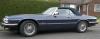
I'm in the process of recommissioning a unique 1996-built 6.0 Convertible for a friend of mine. The car has been standing for about 8 years and I'm not sure if it's been started during that time.
The oil is incredibly clean (looks brand new) and I removed one spark plug which looked in very good condition. There is some minor damage on a couple of the spark plug caps (mice?), but the wires and caps are intact. I'll probably replace them anyway. Coolant level is good, but I'll change it once we've got the car running.
I drained the fuel and put in 8 litres of fresh. Admittedly that fuel is 6 months old, so I might drain again and put in brand new 98 fuel.
The car has the Jaguar fob-insert security system, but I think it's working ok. Fuel pump fuses, are intact. The ignition switch is a bit temperamental and requires some jiggling to get the key to turn and enable the ignition circuit and warning lights.
So, the engine spins over fine but doesn't want to catch at all. I think it's fuel-related because:
- I removed the air filters, gave a quick spray of Starter spray into the butterflies, operated the starter and it then definitely tried to catch before immediately dying.
- If I cycle the ignition for a few seconds five of six times, it then gives the tiniest cough on the next turn of the starter. That might imply that the 2-second operation of Fuel Pump 1 is working?
I'm now trying to think of the immediate obvious things to check. I'd like to know if Fuel Pump 1 is working when the starter is operating. The easiest first step seems to try and get someone to backprobe Pin 87 on Fuel Pump Relay 1 whilst the starter is being operated and check for voltage output? I guess the other way could be to disconnect the fuel pipe feed to the LH injection rail and see if fuel is flowing when the starter runs (is that the feed or the return pipe on LH bank?)
The other thought I had was to check if the injector circuit is operating. I remember reading here about how the injectors should tick if I fully open the throttle capstan with the ignition on? Is that true for these late Marelli cars?
Having spent 3 days with the car, I've finally identified the prime problem. Fuel Pump 1 is not operating.
The initial examination showed that:
- Engine definitely tried to start with Eazy Start sprayed into air intakes - Conclusion - Ignition circuit working
- Engine cranked freely but showed no indication of starting - Conclusion - No fuel reaching cylinders
- Couldn't hear Fuel Pump running for 2 secs when ignition turned on, although very difficult when working alone and jumping from turning ignition key to back of car!
- However, if I cycled ignition 6 times and then cranked it, it seemed to do a minor initial flutter, so I thought the fuel rail MIGHT be getting primed but then not fuelling when cranking. (Retrospectively, I think this must have been a red herring.)
So, I was getting frustrated and decided to start pulling things apart with a friend observing.
I disconnected the fuel pipe on A bank at the fuel rail. There was a tiny dribble of fuel. I cranked the engine and no fuel emerged from pipe or rail. I then went to the boot to find the Fuel Pump and Injection relays. Oh dear!
On a late 6 litre Convertible, the relays and modules are behind the "hockey stick" panel attached to the top edge of the RH wing. The problem is that even having removed the boot strut and disconnected the nuts and bolts, you can't remove or hardly move the panel because of all the wiring attached to it, plus the roof pump and electrics are in the way. Even using a mirror, torch and slim hands I couldn't remove the relay bases from the panel. And the relays aren't even lined up together. With a lot of time and effort, I finally managed to remove Fuel Pump 1 relay. From the Electrical diagram, I established which were the power terminals (30 & 87) and made up a bridging wire which I inserted in the base with much difficulty! Result? I still couldn't hear the pump running with ignition on or when cranking. Still no fuel from the pipe or rail. Clearly, the pump wasn't running.
I then eventually found what I believed to be the Fuel Pump 2 relay attached behind that panel. Confusingly, the 1994 V12 Electrical diagram transposes the colours of the bases for Fuel Pump 2 Relay and the Fuel Injection Main Relay, but I worked out the reality by using a mirror and checking the colour of the wires. A problem I didn't need! Interestingly, I've now found a 1995/96 V12 wiring diagram and the base colours in that document are consistent with this car. So the 1994 document is either incorrect or annoyingly, Jaguar swapped over the bases in 1995!
Anyway, I then made up another bridging wire, eventually inserted it in the Fuel Pump 2 Relay base and immediately heard a pump running! Also, fuel came out of the fuel rail (not the pipe), indicating that the fuel feed in on the B bank, not as I thought, the A Bank.
So I reconnected the fuel pipe, turned the key and the car immediately started!! Hurrah and a pleasant surprise!
Oil pressure was good, no smoke at all from exhausts, idle was beautifully smooth, engine was quiet., No oil, petrol or coolant leaks that I could see. But.....temp gauge was pegged way off the gauge to the right and the battery only registers 12.1v so alternator probably not charging at all.
I ran the engine until I knew the 'stat had opened and the top hose heated up. I then turned off the engine and sat back.
We, therefore, appear to have a failed Fuel Pump 1. I'm not quite sure how to progress next. If I could find the wiring connectors for the 2 pumps before they enter the tank, I could swap them to force Fuel Pump 2 to run as the Main Pump via the Fuel Injection ECU, rather than via the Fuel Pump Control module. That theoretically gets around the starting problem, but can the car run ok above 2840 rpm with only one pump? I really don't want to be stripping out all the roof pump and electrics and dismantle the tank to change Fuel Pump 1!
But at least the engine car can run, which is a huge step forward!
As an ask:
- Does anyone know definitely the easiest way that I can find the Fuel Pump wiring connectors that come after the relay bases? Photos would really help here!
- Can the car run ok with only one pump above 2840rpm, or is the second pump really necessary for smooth running at the higher revs?
- Easiest way to check the temp transmitter or get a temporary temp gauge set up? I can't even see where is the transmitter! Can anyone share a photo for a late V12?
Paul
Very well done! Now you really know the joys of owning and maintaining a V12 XJS, and why I, halfway though some guastly inaccessible job, often think to myself: "I should have bought a 6 cylinder car"!
But then I drive th beast and all the pain evaporates...
Somewhere on the forum is a thread about getting to the tank on a convertible facelift, maybe Orangeblossom?
- Does anyone know definitely the easiest way that I can find the Fuel Pump wiring connectors that come after the relay bases? Photos would really help here!
- Can the car run ok with only one pump above 2840rpm, or is the second pump really necessary for smooth running at the higher revs?
Paul[/QUOTE]
Paul,
The fuel pump wiring comes out of the back of the relay panel and runs along the back of the tank.
On your car, the black plug and connector going to the tank is a common source of failure.
For some reason, that large connector over heats and melts the black plastic, causing an interruption.
The wires and connectors from there to the tank are smaller and I would expect them to fail sooner, but don't.
On cars with two internal pumps are regulated by three relays behind the panel.
Two of the relays can be swapped to determine a relay failure.
You are doing great work so far, and you are getting close.
Steve
The fuel pumps are a reasonably low flow rate, 90L/min, so I think that is the reason for the two pumps. Of course revs don't indicate load, so I wouldn't treat the revs as a hard limit.
Thanks so much for your thoughts and words of encouragement!
At Steve's suggestion, today, I'm going to try and find those wiring connectors from the Relays ultimately through to the tank wiring. I just know that's also going to be a pain because of the hood pump and electrics, but it needs to be done! If there's any chance that it might be the connector rather than a failure of Fuel Pump 1, that would be a great result!
I think, from my perusal of various docs, that the temp transmitter is somewhere on the coolant rail above the RH engine bank. Does that sound right? Anyone got any pics or advice? I do need to try and fix that as it worries me now running the engine without a working temp gauge.
On the 5.3 the temp gauge sensor is on the A bank front water manifold (the casting that holds the thermostats), it is just a male Lucar connector on the unit.
The engine coolant sensor for the ECU's purposes is on the B bank front water manifold and it is a EV1 connector.
Guage temp sensor A bank front
ECU temp sensor B bank front
Paul
As long as there is coolant and the fan is working, you need not worry unduly about overheating if the car is just ticking over for testing purposes. This really only happens if everything is red hot and the air temp is too.
When a V12 gets hot, believe me you can smell it is hot, just like you go into a kitchen when something is burning in the oven; though not the same smell. Once I was en route to Nice and had a really strong tail wind (over 100 kph) on a road speed limited to 110 kph. The fans had nothing to bite on, therefore, and the car got REALLY hot, the needle 2/3rds of the way to H from N. I got there OK, and in the hotel garage opened up the bonnet to let it cool, and BOY did I know the engine was hot. No damage though!
- Easiest way to check the temp transmitter or get a temporary temp gauge set up? I can't even see where is the transmitter! Can anyone share a photo for a late V12?
This is a 1994 6.0, gauge sender is on the right side at the end of the intake manifold. The light in the photo is shining on the sender.
A very frustrating day trying to access the pump wiring today! Almost impossible on a very late 6.0 Convertible without dismantling 1/2 of the car! Pics and more analysis to come tomorrow!
At the last update, I had (apparently) established that:
- Fuel Pump 1 would not run with either of the two Fuel Pump Relays, or with the Relay holder for Pump 1 bridged to force current output to the pump
- Fuel Pump 2 (which normally only cuts in at 2840rpm) can be forced to run with Pump 2 Relay holder bridged. The car could then be started using Fuel Pump 2 forced to run.
At the weekend, I tried some further tests.
The wiring from the Fuel Pump Relay holders goes into the loom and then emerges to separate white Multilock 070 plugs for each pump. A fly lead then connects the other side of those Multilocks to a plug on the top of the tank. DO NOT underestimate how difficult it is on a late 6.0 Convertible to even see any of the Relay holders, wires or plugs, let alone access or manipulate them!
With the expected amount of bloodletting, I managed to swap over the Multilock connections (or so I thought!) in an attempt to try and force Pump 2 to run as the Primary startup pump in place of Pump 1. I also thought this would be another test of Pump 1 in case the Pump 1 Relay Holder or wiring that was causing the problem. But to my surprise, I now couldn't get either pump to run, so working blind again, I swapped the plugs back and thought again.
With more blood being spilt, I then managed to disconnect the wiring plug on top of the tank. The huge challenge is moving the large panel that is fitted in front of the tank on very late cars. Removing the bolts is a real pain with the battery and hood hydraulics in place. (Putting them back is even worse! What were Jaguar thinking!) Anyway, I eventually extracted the plug and could then force voltage for Pump 2 at the plug with my Relay bridge wire in situ, but nothing for Pump 1 again. I was now resigned to the fact that Pump 1 must have failed.
I then rechecked those white Multilock plugs via a larger mirror and realised I'd made a mistake! The plugs can't be swapped as Jaguar deliberately swapped over the Male-Female order for the 2 pumps, presumably to stop idiots like me misconnecting them! So, in my blind access, I hadn't been swapping them, but merely connecting Relay Holder 1 to Relay Holder 2, and Fly lead 1 to Fly Lead 2! Doh!
In a forlorn hope that a miracle might happen, I then bridged the Relay Holder for Pump 1 yet again and turned on the ignition and.....Fuel Pump 1 ran for the appropriate 2 seconds! How on earth did that happen?!! I then removed the bridge and reinserted the Relay and.. Nothing. I then swapped over the Relay for the one from Pump 2 and...the Pump ran again!!
It therefore now seems that:
- Pump 1 Relay is faulty
- Pump 2 Relay works (now connected to Pump 1)
- Both Fuel Pumps can operate
- Either the Jaguar Gods have rewarded my persistence with a miracle, OR more likely, my repeated swapping of relays, disconnecting of plugs and application of current time and time again has woken up the wiring and also Fuel Pump 1! How has that happened? I have no idea, but I am extremely grateful! As a result, today I started the car with the normal procedure of Pump 1 running for 2 seconds with the ignition on. And then operating again as the car cranked and the engine started. A huge step forward! I just need to get a new relay for Pump 2 and I'll hopefully have a V12 that can run with both pumps as appropriate.
The temp sender and wiring seems intact but the gauge quickly rises to go way off the scale within a few minutes of the engine starting. Next step will be to check the sender resistance. A check with an infrared thermometer seemed to indicate that the engine and coolant hoses were all coming up to appropriate temps.
I've got a couple of pics on my phone on the restricted access to Relays, Wiring plugs and Tank wiring connection which I'll post below tonight. Despite the loss of blood, I think that fate has smiled on me this weekend, even if I still don't understand what really happened to get that Pump working!
The tank cover panel moved as far as possible to enable (still difficult) access to the fuel pump white wiring plug at the top of the tank (centre of pic)
The RH hockey stick panel moved as far as possible to facilitate blind access to Fuel Pump Relays and holders. The white Multilock plugs can just be seen at forward corner of the boot.
Jaguar could have permanently welded them into an impenetrable box.
Someone was sleeping in the design department.
Have you checked the fuse for the heated O2 sensor?
It's been ages since I found that to be why I wasn't getting any fuel.
As far as I can recall it was the #9 fuse near the rear of the boot on the passenger side.
Before I had that figured out I jumped 12 V directly from the battery and ran around for about 6 months.
I don't remember how many times I forgot to disconnect it and came back to a dead battery.
The three relays for the fuel pumps are generally not the issue.
If they are, it's usually the relay with the metal can and a red stripe.
Let me know if you need any of them, I think I have all of them.
I haven't sourced a reasonably-priced relay for Fuel Pump 2 yet, but the car continues to start as normal with the miraculously-revived Fuel Pump 1. So I decided to have a look at temp gauge sender (a pain to reach on the late 6 litre). I removed the sender wire and earther it and the gauge went to full deflection - past the red zone but not as high as it seemed to be reading when it quickly rose after startup and went way off the gauge. I then tried to take some readings of the resistance between the terminal and the body of the sender. The readings seemed to fluctuate and confusingly it wouldn't provide a reading when set on the 2k setting, but provided a figure of about 1.3 when set on the 20k range. I gave up for now and reconnected the terminal wire.
Today, I decided to start the car and move it outside to clean the underside so I can inspect the suspension and subframes. The car started fine, gears engaged smoothly and I carefully moved it outside. After a few minutes the temp gauge started to move up slowly, rather than the rapid excessive rise it had shown previously. As the car warmed up, the gauge slowly moved up to just past the midway point, then dropped back to exactly midway, presumably as the stats opened. Good news!!
So, with the Fuel Pump and now the Temp Gauge working, I think I should name the car "Christine" as it slowly seems to be healing itself! Another advert for why we should all use our cars regularly rather than lay them up!
Perhaps even the alternator and the door mirrors will start working this weekend?!
I agree, Steve. Although I don't need to worry about the wiring in the car I'm working on, as the Pump problem seems to be resolved; the flylead on "my" one went direct from the Multilocks in the top right corner of the boot, direct to the plug shown in my photo without any joins or that taped connection that yours shows, kansanbrit. I might politely suggest that you want to undo that tape and see what's connected in there, as I don't think there should be any wiring connections prior to the plug on the tank.
That temperature gauge movement seems about normal for the late model 4.0 and 6.0 cars. During hot weather the needle may even go a little higher until the electric fan kicks in.



 No start of 1996 V12 6 litre