When you click on links to various merchants on this site and make a purchase, this can result in this site earning a commission. Affiliate programs and affiliations include, but are not limited to, the eBay Partner Network.
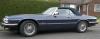
Friends, I have Hess&Eisenhardt 1988 (US version).
In my country (Czech Republic, Europe) fender position lights are prohibited. So I thought I would turn them into turn signals.
The solution was "simple", I disconnected the connector of the position lights behind the bulkhead in the front part of the front fender (wing) and brought power and ground to the position lights from the blinkers in the bumper.
Hey, it works.
BUT. The system for recognizing lighting errors (the yellow indicator light on the dashboard) does not go out, because it is logically missing one (two) bulbs in the system.
The solution could be to connect a light bulb to the connector of the position lights and hide it in the front part of the fender, or (a little unconventionally) remove the light bulb that reports the car's lighting errors from the dashboard. I don't like both solutions
Does anyone have an elegant solution to this problem please? Thanks.
The problem you have is that the wattage of the wing lights is lower than that of the proper indicator lights, so the lights out indicator thinks that a bulb is missing. I would connect the original indicator lights to the side marker lights in parallel so that the two work together. This should slove the problem.
Yes, I thought that too. I did that (i.e. left the position light connected and then connected the turn signals in parallel to the power supply of the position light) but the result was that the parking light in the main light started flashing like turn signals instead of lighting. I really didn't want that. So I disconnected the blinker, and the result is that the parking light in the main reflector and the position light do not light up. So I didn't want that either I'm going to look for a fuse position (I can't think of anything else) for the right parking and position light.
Last edited by roman_mg; Aug 21, 2024 at 10:07 AM.
You could "recalibrate" the settings of the front bulb failure modules, so that they will work with the lower wattage that they are now being supplied with only 2 bulbs. I did the same when I fitted LED sidelights to my car. I can't remember if I completed my LED thread here with the solution, so I'll look back through it and update accordingly if not. In the meantime, drop me a PM with your email address and I'll send you a pdf copy of the article that I wrote for the club magazine showing how to do it.
Thanks.
After disassembling the main headlight, I understand it fully. It was originally a European car, so it didn't have position lights but direction lights. Behind the main headlight there are two wires that carry the signal for the blinkers. OK, just connect to the position light. My main problem is that after the parallel connection, i.e. when the position light was connected and the 12V signal from the turn signal was connected to it, then after disconnecting the turn signal - i.e. returning it to the original state - there is no voltage on the parking light bulb in the main light - it does not light up. I don't know what happened, whether the circuit for testing lamps could have gone, or whether there is a diode in the circuit that broke because I sent a higher current to the wire for the position lights... I don't know. I need some advice here. If there is one advice, or I will start studying the schematic.
Last edited by roman_mg; Aug 21, 2024 at 10:09 AM.
I'm a little confused by what you've described, perhaps because we use different words to describe the lights on our cars.
In the UK, for HE XJ-Ss, they had the small following lights at the front
- "Indicator" (flashing) bulbs in the front bumper that are illuminated when turning
- "Indicator" (flashing) bulbs at the front of the front wings on the sides that are illuminated when turning
- What we call "Sidelight" bulbs inside the headlights, illuminated when the headlight switch is turned to the "Sidelight" or Headlight position
- Headlight bulbs also inside the headlights, illuminated when the headlight switch is turned to the Headlight position
The only bulbs at the front on UK cars that work in conjunction with the bulb failure system modules, are the small separate "Sidelight" bulbs inside the headlights.
I'm not sure how that relates to your car and what you're describing. If, as you say, it was originally a European market car, then I would expect those lights in the front wings to already be "Indicator" flashing bulbs. But, if it has "Sidelight" bulbs instead in those front font wings (and they are linked to the bulb failure system?), then your approach of disconnecting the holder and then spurring wires from the front Indicators in the bumper will work. Then what you need to do is recalibrate the bulb failure modules to work with only the "Sidelight" bulbs in the headlights.
Hope that makes sense. I'll email my article to you.
ptjs1 + Greg, thanks.
I'm sorry, I'm not very good at technical English (probably according to the reactions) And Google translator probably doesn't do everything right either. Ok, I'll take pictures and try to accurately describe my lights. The problem is that in the US they made some changes to the lighting that do not correspond to the UK version. In my US version of the Hess&Eisenhardt (which was originally a coupe for the UK market, only the roof was cut off and the lighting changed), the original condition is as follows: - "Indicator" (flashing) bulbs in the front bumper that are illuminated when turning
YES But these are the only indicators in the front of the car that flash when turning.
- "Indicator" (flashing) bulbs at the front of the front wings on the sides that are illuminated when turning
NO Instead, there are "Sidelight" bulbs that light up at the same time as the "Sidelight" bulbs inside the headlights.
- What we call "Sidelight" bulbs inside the headlights, illuminated when the headlight switch is turned to the "Sidelight" or Headlight position
YES But at the same time "Sidelight" on the wing and "Sidelight" inside the headlight are on. - Headlight bulbs also inside the headlights, illuminated when the headlight switch is turned to the Headlight position
YES But at the same time "Sidelight" on the wing and "Sidelight" inside the headlight are on.
I did the following thing. I disconnected the "Sidelight" connector in the wing and connected it to the front turn signal from the bumper. OK, everything worked as per the UK spec. Only the yellow bulb in the dashboard (bulb failure module output) was still on, which is understandable because the control system was missing the paralell "Sidelight" bulb on the wing.
Ok, the system is missing the "Sidelight" bulb in the wing, so I plug the "Sidelight" bulb in the wing back into the connector and I connected the parallel power from the "Indicator" in the bumper. Unfortunately, both the "Indicators" in the bumper and on the wing flashed as well as the "Sidelight" in the headlight. So I disconnected the parallel connection (restored it to its original state), but since then I have no voltage on the "Sidelight" in the headlight. So there was an error, but I don't know where (fuse, bulb failure modules, ...) . I need to get the voltage back to the "Indicator" in the headlight. This is my current problem. The other side (left in my case) works without problems.
I hope I have described it at least a little intelligibly.
Thanks.
Roman
OK, Understood. You have a US spec car.
To summarise your current position:
You have restored the lighting to original US spec,
The wing light now works with the sidelights when the lighting is switched on, BUT
the sidelight within the headlight does not now work.
Consequently the bulb out indicator on the dash is till lit.
Assuming I have this right, then the problem is one of these
the sidelight bulb has failed in the headlight
you have a poor connection to the sidelight bulb in the headlight.
So CAREFULLY check the wiring between the wing light and the headlight, as your U.S. wing light is working, the fuses and power must be OK. You just need to search for why that power is not getting to the light inside the headlight unit. You have probably got a poor conection of a poor earth. A test light is very useful for finding these sort of things:
Greg.
Yes, the US specification is restored. I did not write exactly (my mistake) that the bulb "the sidelight within the headlight" is not lit and the bulb "wing light" is also not lit. Of course, I have the main headlight disassembled and I measure the voltage with a meter on the bulb connector (I have 0V here with the lights on) to rule out the error of the bulb itself. The same applies to the GND on the connector, there is no error, the connector is grounded. It's just that somewhere after turning on the lights, the power supply to the sidelight within the headlight and wing lights is "lost along the way". These bulbs are powered in parallel, i.e. if the bulb in the headlight is not lit, then neither is the bulb on the wing. I read something in Kirby's book, page 600, so I'm going to look at the "park lamp failure sensors" under the dash. It doesn't make sense to me that there would be an error in the cabling and GND, because I didn't do anything with it.
More likely the rubbishy bullet connector that these two plug into (sited within the headlight nacelle) needs looking at.
Does the other side work OK? If so, it is the wiring localised to the headlight that does not work.
I think Greg's suggestion is much more likely, than a problem with the bulb failure module. The current merely deflects a bi-metallic strip in the module to distinguish the failure light, so it's difficult to see how that's causing the problem.
If you get the problem resolved on the sidelights, then I suggest your first approach is the right way to go, and we can sort the bulb failure light issue by the recalibration of the failure modules.
Guys.... I'm really confused about his car. The car he shows in his picture has the US quad lights, not the eurolights. If that's so then those US spec cars l believe had sealed beam lights and have the sidelight/parklight combined with the indicator in the amber light on front bumper, not in the headlights. I suspect that the sidelight wiring will also be in the headlight wiring harness as well.
Maybe someone has changed the original headlight with an H4 version with the pilot light position ??
I really don't understand why they would take a RHD UK car to the US to make it a convertible and then convert it to a complete US spec car. Did they convert it to LHD too. Is he sure it was ever a standard UK RHD car ?
You mentioned "In my US version of the Hess&Eisenhardt (which was originally a coupe for the UK market, only the roof was cut off and the lighting changed)....".
However, unless you have a very unusual H&E conversion, your car was not originally a coupe for the UK market. AFAIK, all the H&E conversions were built for the US market and were based on LHD Coupes built for the US market with a standard US lighting configuration.
Paul.
Thanks for the info, I was based on information on the Internet. It's just weird (in my opinion) that my H&E has two VINs.
UK : SAJJNWEW4JP147396
US: SAJNV5849JC147396
I'm going to take pictures and maybe get the original US spec working and then get back to converting to the flashing bulb on the wing.
I will keep You (all) posted
I believe that all US-market XJSs have 2 VINs. One is the original Jaguar VIN that is allocated to the car. This VIN is the only VIN on all other markets except the US. The second VIN is one that had to be added to US-exported cars, presumably either because of differing US legislation or else normalised US practice on VIN construction? If you ever have to talk to Jaguar in the UK, quote the original Jaguar VIN because that is the one they recognise and hold the records against.
Friends, everything is almost solved.
First of all thanks Greg, he was right again. It was the ground. Someone used the (hated by me) multi-wire connector. As the light spread, the slab inside somehow moved and the ground was lost. After repair everything works.
The original two wires remained in the main headlight, on which the signal for the flasher (sidelight) remained. It was enough to disconnect the connector under the wing and bring the signal from these wires to the flasher on the wing.
Under the fender, the marked connector became disconnected, the upward wire goes to the flasher, the other part, which goes into the grommet, remained disconnected and causes (so far) a lit "error" - a yellow bulb on the dashboard.
The result is as follows:
Last question about the bulb error (yellow light on the clock). Thanks Paul for pointing me to the "bulb failure system" and understanding it. Kirby's book helped me too. There are probably 3 possible solutions.
1. Adapt the "bulb failure error" as Paul writes. I'm an advocate of leaving everything as it is, if possible. So I take it as a last solution.
2. Connect the same 12V/4W bulb as it was originally to the free connector under the wing. And leave it hidden under the wing. This would return the total resistance of the circuit to its original level. The disadvantage is that it must be replaced if it fails.
3. The 12V4W bulb has a resistance of approx. 4.7 Ohm. It is therefore possible to connect a standard resistance of 4.7 Ohm to the connector. This would bring the circuit back to its original level by resistance. And there would be no need to change the bulb in case of failure.
I'll try option #3.
And thanks again to everyone for their contributions and help. I am happy to be a member of the Jaguar family.
I believe that all US-market XJSs have 2 VINs. One is the original Jaguar VIN that is allocated to the car. This VIN is the only VIN on all other markets except the US. The second VIN is one that had to be added to US-exported cars, presumably either because of differing US legislation or else normalised US practice on VIN construction? If you ever have to talk to Jaguar in the UK, quote the original Jaguar VIN because that is the one they recognise and hold the records against.
Paul
Right.
I'm pretty sure that Canada and Mexico adopted the USA VIN protocol with the advent of the 17-digit VIN. If I'm right then it actually is a North American thing and not just a USA thing. In any case the different character positions in the VIN have different meanings...causing confusion.



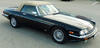


 Parking vs flashing light on the front wing