When you click on links to various merchants on this site and make a purchase, this can result in this site earning a commission. Affiliate programs and affiliations include, but are not limited to, the eBay Partner Network.
Heads are on hold until later this month, I need to get some funds in rather than pushing them out. Have a Le Mans engine under build + Lea Francis prototype for engine and special Group A inlets + XJR9 noses being layed up atm. The 1st ( sprint noses made for 30 years) and they are soooo good. ! pair of heads + carriers etc etc off to an engine builder too so happy and busy days.
I'm glad you've taken a look at 3d Sand Printing. It just seems so versatile. How difficult/desirable do you think it would be to change the valve angles so that a bit of a wedge / modern heart shaped chamber could be achieved? I would think it would slightly straighten out the exhaust port at the expense of a tighter curve in the inlet port or create the need to change the intake port's geometry.
Would a 48 valve head become more doable as a mirror 3D sand print casting of the AJ16 head (so only 1 casting is needed + an OEM head) or is it still simple easier to cut and weld?
Also correctly me if I'm wrong, but I have been under the impression that in 3d sand printing there is far less need for much if any support structure as all printing is done via powder bed (which forms the initial support structure) until unbonded powder is removed leaving behind the fresh highly accurate casting structure.
Guy , it would be a lot of work to change valve angles on a COB(cam on bucket) cylinder head type engine, valve stem has to be 90* to the camshaft lobe!
I'm working on learning Fusion at the moment, so I can't answer for sure, but I'd be more concerned about needing to modify the chain guides for the cams winding up a little farther apart (and cam tray changing angle slightly) than locking the block stud holes perpendicular to the deck (programatically), then stretching (re-angling it) the deck surface so that it has a new angle allowing for a shallow wedge-style chamber. Where do the block stud holes end up? The rest of the system (the valve stems) would remain correctly aligned to the cam.
4v jag v12...I like the idea but way too fiddly for me.
I'd did notice the X305 XJ12 sedan I have feels much faster than the multiple XJS 6.0 I've driven over the exact same roads. The X305 V12 rev's cleaner and pulls hard to 6000 RPM in sport mode. I did a bit of research and the 1996 XJ12 sedan is about 0.5 seconds faster in the 1/4 mile despite being 500 Lbs heavier. My butt dyno has some cred and published performance data about the two cars confirms this. The published HP figures for the X305 are only 20HP more than the 6.0L xjs but to me it seems more like 40.
The Last Jag V12's had Nippon Denso DIS and I doubt it could be solely responsible for such a great performance increase on it's own. Perhaps the last round of V12's got better cams and/or better heads? If someone needed an engine... a donor engine/trans/harness from a X305 is a very practical way to get significantly more power without getting too lost in development.
Last edited by icsamerica; Feb 15, 2018 at 03:48 PM.
I'd did notice the X305 XJ12 sedan I have feels much faster than the multiple XJS 6.0 I've driven over the exact same roads. ... The published HP figures for the X305 are only 20HP more than the 6.0L xjs but to me it seems more like 40.
The Last Jag V12's had Nippon Denso DIS and I doubt it could be solely responsible for such a great performance increase on it's own. Perhaps the last round of V12's got better cams and/or better heads?
The intake system is also different, and there is some speculation that simply using the curved intake tube through a straight in air filter box system as is on the X305 is the major difference, because parts wise there appears to be no other difference. (A friend of mine has compared parts manuals for part # differences, and unless he missed something, the intake is the major difference.)
But yes, I do wonder if it's easier to cut and weld an AJ16 head vs having sets 3d printed.....
The intake system is also different, and there is some speculation that simply using the curved intake tube through a straight in air filter box system as is on the X305 is the major difference, because parts wise there appears to be no other difference. (A friend of mine has compared parts manuals for part # differences, and unless he missed something, the intake is the major difference.)
But yes, I do wonder if it's easier to cut and weld an AJ16 head vs having sets 3d printed.....
~FerrariGuy
that's a fascinating theory but one of the 2 Xjs 6.0 I was using for a comparison had an aftermarket aluminum 90 degree intake pipe and filter setup with gutted cats. It had a nice growl but still felt noticeably less spry than my dead quite xj12 sedan. I think there is some other reason.
Just a quick pop in before off to Germany, The Jaguar twin cam V12 shown was pretty rubbish; so it never went further.
I wont be looking to change valve angles etc, the market for what I am doing is tiny and I cannot see anyone wanting such design and engineering.
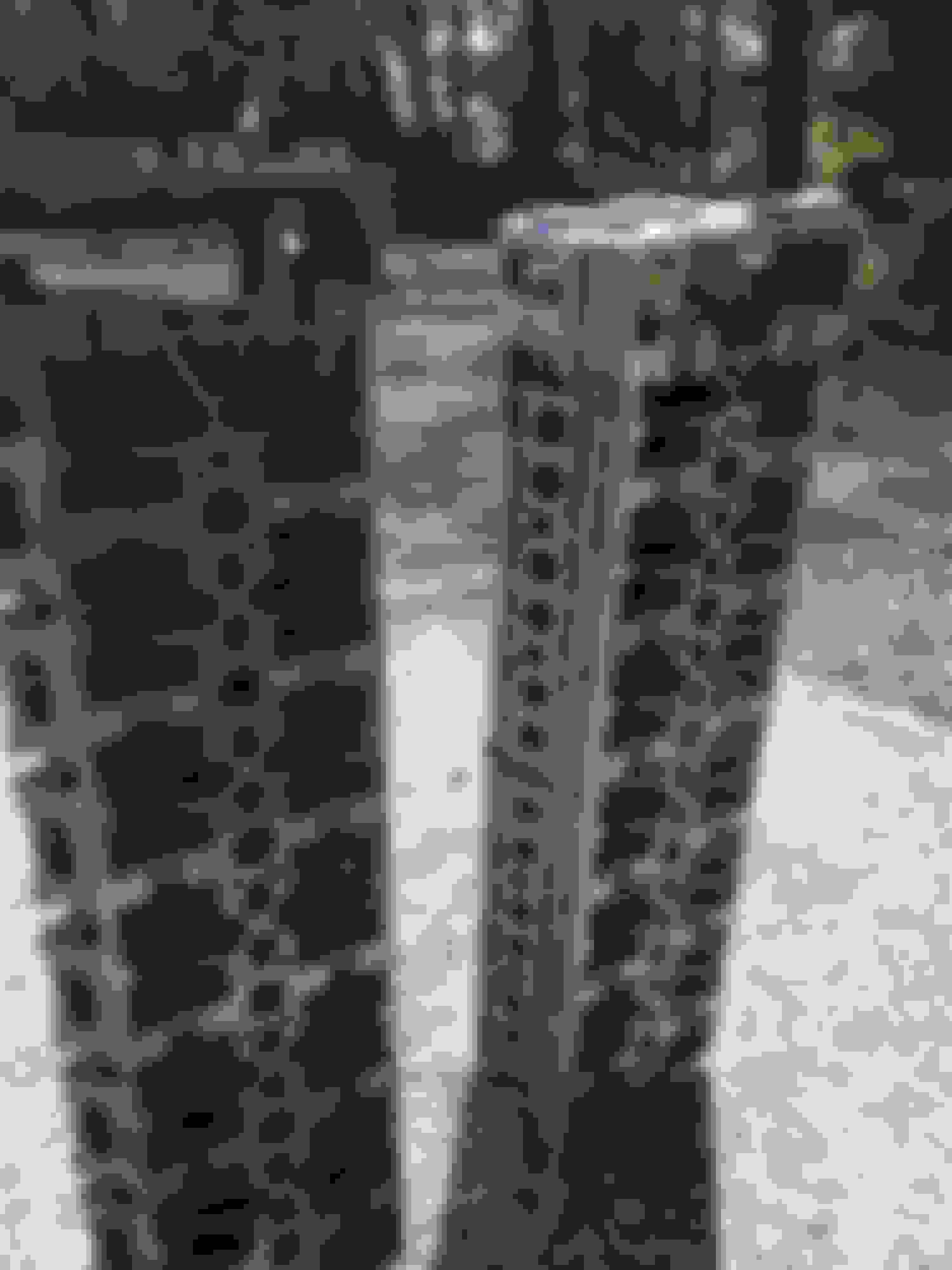
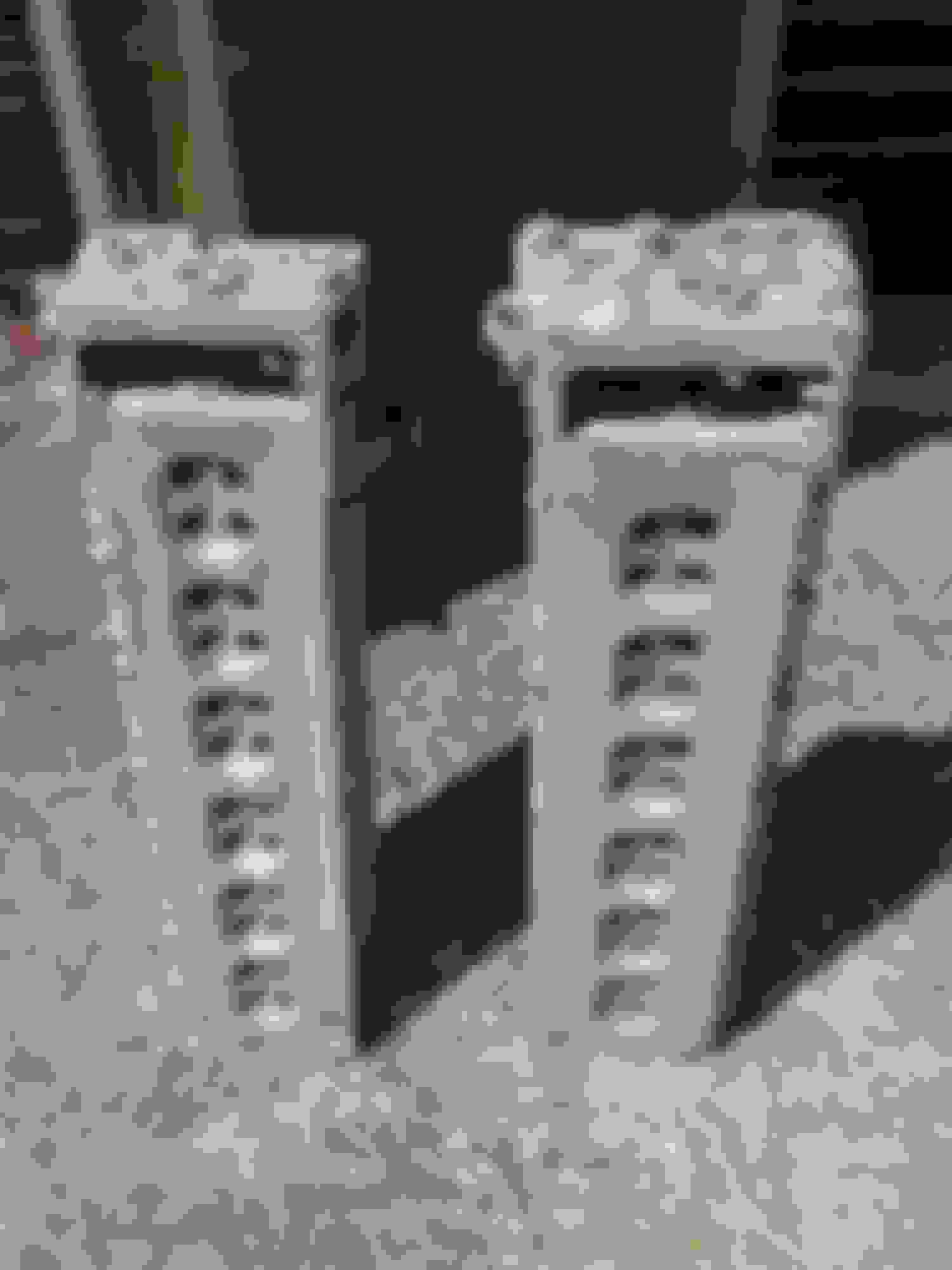
Twin cams heads, yep got those, you want to pay for them being fully machined up and finished then let me know. Until then they sit on the shelf. Yes these are real TWR quad cam heads. Gt the mag timing covers to match too.
So wont be putting these babys on CAD unless there is a run on them. But I do think having the cam carriers integral with the heads is do able like on the twin cam heads. But it really does reduce the market still further.
Anyhow enjoy the pics, I'm off to bed, another busy day tomorrow.
Not to hijack an otherwise intensely interesting thread on V12 head design...
The comments on the X305 are most interesting...I think the diff ratio in that car and the ratio on the 6L XJS were the same, and I suspect the trans was too. Sport mode, at least on the '94 XJ12, actuates a line in the trans controller, which may diddle something in the engine management, too, I don't know.
But the Denso ignition MAY be responsible, especially if they were using a knock sensor. I think a more adaptive ignition curve could easily be responsible for the extra sportiness, potentially.
Any other differences in intake and exhaust restriction elimination would of course also be good, if the fuel map has been tarted up a bit to take advantage of the extra air.
I think the XJ12's emphasis on refinement probably means the intake and exhaust are done to suit a noise target, and this is what leads me to look at the ignition map as the responsible party, esp. if a knock sensor is integrated.
Not to hijack an otherwise intensely interesting thread on V12 head design...
The comments on the X305 are most interesting...I think the diff ratio in that car and the ratio on the 6L XJS were the same, and I suspect the trans was too. Sport mode, at least on the '94 XJ12, actuates a line in the trans controller, which may diddle something in the engine management, too, I don't know.
But the Denso ignition MAY be responsible, especially if they were using a knock sensor. I think a more adaptive ignition curve could easily be responsible for the extra sportiness, potentially.
Any other differences in intake and exhaust restriction elimination would of course also be good, if the fuel map has been tarted up a bit to take advantage of the extra air.
I think the XJ12's emphasis on refinement probably means the intake and exhaust are done to suit a noise target, and this is what leads me to look at the ignition map as the responsible party, esp. if a knock sensor is integrated.
-M
Just by ditching the Lucas ignition and instead using the Marelli ignition gained power for catted models. Normally the 5.3l with cats would be making 268 hp here. Cat-free was 295 hp. As the Marelli was adopted, the 268 hp went up to 295 hp. And a noticeable gain in torque was there.
The Marelli ignition was a very basic digital ignition without the computing power of the later X305 setup. So add more adaptions and you get more power.
GOOD find,, for many years Brits said that ports have to be round for best flow! those Grp44 heads were designed and finished by USA Hot rod guys in California USA.( i have talked with Bob Tullius about them).
well along came USA hot rodders and there V8s, everything changed for the better.
look at the LS cathedral port , most would say WTF??
back some years ago, 27yrs, i was modding a BBC , had stock iron heads, ordered in a set of REHR MORRISON race aluminum heads $$.
on the same engine with same carburator, cam , headers, made 90 HP more , so experiance counts , not just a bunch of expensive parts cobbled together!
every modification needs to complement each other, not end up fighting each other!!
Daim, as said , hi-performance engines are always about the TUNE UP!
its that simple! you can buy all the best parts/ components and any other thing you want,
but it will depend on how/who does the final tuning .
this little box of trix is an amazing device! completely adjustable!
the factory gives you compromises in all its ECU settings!
so you get what they consider good enough for ordinary people!
Simple economics and mechanics... Sell what people might want but made of the most affordable (cheap) parts. Cheap parts that will always produce the base line power output. Meaning: the engines are capable of more but some to a higher degree and others to a lower degree. So use a mapping which all engines can take and done.
I'be been along the lines with my C30. It only had a 2.0l NA 4 banger BUT had, after a proper rolling road setup, instead of 145 hp, 196 hp. That is how 'detuned' that 2.0l petrol engine was. You would notice a little dent in power delivery when the switch ble intake manifold would go from long to short runners, but the power was there. And combines with the lighter weight, shorter transmission ratio etc., it was faster than the 230 hp T5 (2.5l 5 cylinder turbo) - which had very long ratios.
Port flow - a round port will flow more than any other shape IF the port is straight, as soon as the port is bent flow at the top increases and flow at the bottom decreases.
The GRP44 ports are a good shape for the sharp bend the exhaust has to navigate to keep port velocity uniform over the whole area.